 Source:
 He bamboo iris (simplified Chinese: 扁竹兰 (Iris confusa) short overview
He bamboo iris (Iris confusa) is an evergreen, rhizomatous iris from southern China, valued for its broad foliage, slender bamboo-like stems and delicate blue to white flowers. It grows best in fertile, well-drained soil with humus, in full sun or partial shade sheltered from strong wind. In the United States it is mainly suited to warm climates, protected sites and containers that can be sheltered from hard freezes.
Taxonomic classification
He bamboo iris (simplified Chinese: 扁竹兰 (Iris confusa) care guide
Light and placement
Grow in full sun to partial shade, with bright filtered light especially useful in hot climates. An east-facing or lightly shaded south- or west-facing site can protect flowers and foliage from harsh afternoon heat. Too little light may reduce flowering and make stems weak; intense exposure combined with drought can scorch foliage.
Watering and humidity
Water deeply when the upper soil begins to dry, keeping the root zone moderately moist during active growth. Reduce watering in cool or wet seasons and never leave the rhizomes in saturated winter soil. Container plants dry faster and may need more frequent checks. Average humidity is adequate; extra misting is unnecessary.
Soil and growing medium
Use fertile, humus-rich soil that drains freely while retaining moderate moisture. Neutral to slightly acidic conditions are suitable, with a slight preference toward mildly acidic soil. Avoid heavy, waterlogged ground, especially in winter, because saturated conditions can encourage rhizome and root problems.
Feeding
Apply a balanced, modest fertilizer or a thin layer of mature compost in spring as new growth begins. Avoid heavy nitrogen feeding, which can produce soft foliage and weaker stems. Do not fertilize drought-stressed, newly divided or waterlogged plants until they have resumed active growth.
Growth and habit
This iris forms an evergreen rhizomatous clump and produces upright, slender, branched flowering stems. The foliage persists in mild climates, while old stems and damaged leaves can be removed after flowering. Shelter is useful because the tall stems are more vulnerable to wind than the rhizomes.
Planting and repotting
Plant in spring or early fall where winters are mild, setting the shallow rhizomes close to the soil surface rather than deeply below it. Space plants about 18–24 inches apart to allow clump development and airflow. Water thoroughly after planting, then maintain even moisture while roots establish.
Repot container plants after flowering or when the rhizome clump has filled the container. Choose a slightly larger pot with generous drainage and a fertile, well-drained mix. Keep the shallow rhizomes near the surface rather than burying them deeply, and water carefully while the plant re-establishes.
Propagation and pruning
Propagation
Propagate by division after flowering or by seed when fresh seed is available. Stem cuttings are also reported in horticultural sources, but division is the more practical method for maintaining established garden plants. Keep divisions shallow and evenly moist while rooting.
Pruning
Remove spent flower stems after flowering and cut away dying or damaged foliage in autumn. Avoid removing healthy evergreen leaves unnecessarily, since they continue supporting the rhizome. Sterilize tools between plants when disease is suspected.
Overwintering
In Zones 9–11, mulch lightly and protect the rhizome from prolonged cold and winter wet. In colder regions, grow in a container and move it to a bright, cool, frost-free greenhouse or sheltered indoor location before hard freezes. Maintain light moisture rather than keeping the dormant or cool plant wet.
Uses
Primarily an ornamental for sheltered borders, woodland-style plantings, courtyards and containers. Its evergreen foliage provides structure outside the flowering period. It is not recommended for culinary or medicinal use because authoritative horticultural references identify the plant as harmful if eaten.
Appearance
The plant has broad, strap-like evergreen leaves and upright, slender stems with a jointed or bamboo-like appearance. The branched inflorescences carry relatively small, delicate iris flowers. Its combination of persistent foliage and cane-like flowering stems helps distinguish it from many familiar bearded irises.
Flowering
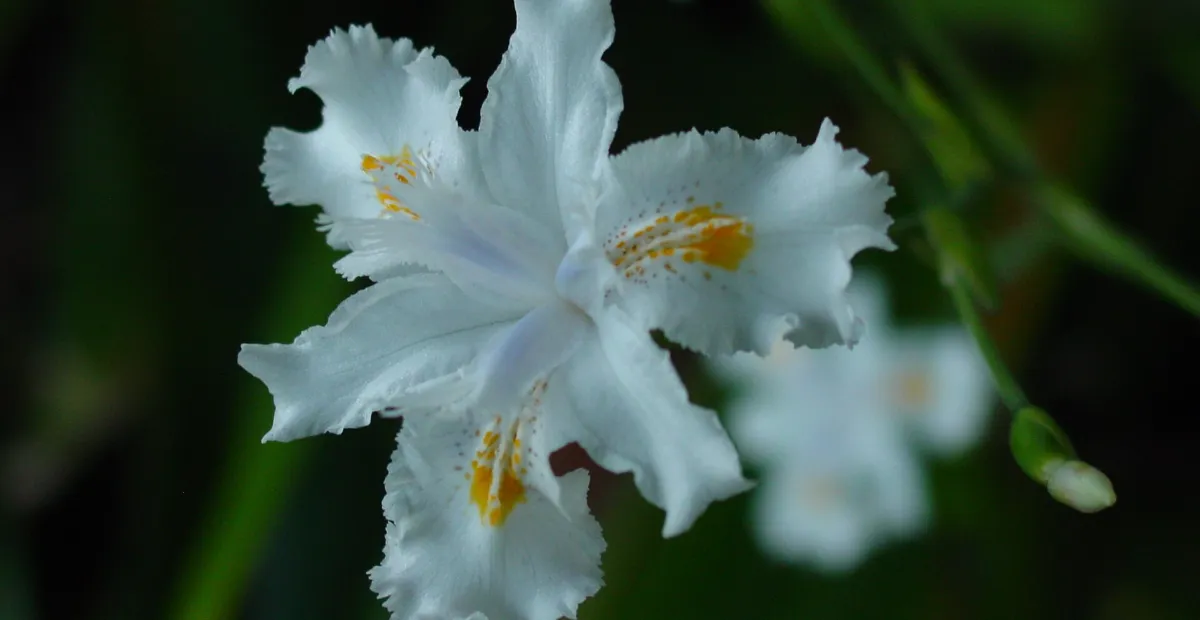
Flowers are borne on slender, branched, bamboo-like stems. Individual blooms are delicate and iris-like, usually pale blue, lavender-blue or white with contrasting yellow and violet markings. Flowering is generally in spring, though timing varies with climate and protected cultivation.
Pollination and visitors
Iris flowers are generally insect-pollinated, and bees and other insects may visit the open blooms. Reliable species-specific visitor records for Iris confusa are limited, so pollinator attraction is not rated confidently.
Iris confusa photos
Click any photo for a larger view. Source, author and license are shown separately.
Diseases and pests
Diseases
Watch for bacterial soft rot, gray mold and virus symptoms such as streaking or distorted foliage. Improve drainage and airflow, remove damaged tissue promptly and avoid overhead watering. Discard severely virus-affected plants rather than propagating them.
Pests
Slugs, snails, thrips and aphids may occur. Inspect young growth regularly, reduce hiding places for slugs and snails, and use targeted, proportionate controls only when damage is significant.
Related diseases and pests
Only Plant Doctor profiles whose host data indicate this plant may be affected are shown here.
 PestStrawberry foliar nematodeAphelenchoides fragariae
 DiseaseBacterial soft rotPectobacterium carotovorum
 DiseaseGray MoldBotrytis cinerea
 DiseaseRhizopus soft rotRhizopus stolonifer
 PestOnion thripsThrips tabaci Lindeman
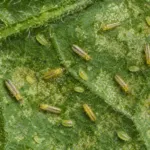 PestMelon thripsThrips palmi Karny
 PestChilli thripsScirtothrips dorsalis Hood
 DiseaseBacterial WiltRalstonia solanacearum species complex
Toxicity and pollen
RHS lists Iris confusa as harmful if eaten and advises protective handling precautions. Iris tissues should not be consumed; sap or plant material may irritate sensitive people, and ingestion can cause gastrointestinal distress. Keep away from children and pets and wear gloves when dividing or cutting plants.
- Typical season
- Spring during flowering
- Pollination / pollen
- Insect-dispersed pollen; limited airborne release expected
Iris confusa is insect-pollinated, so its pollen is not typically released in large airborne clouds like wind-pollinated grasses or trees. However, species-specific aeroallergen studies are limited, so a zero-allergy claim would not be justified. Sensitive people should avoid handling flowers or foliage if irritation occurs.
Native habitat
Native to south-central and southeastern China, where it grows in temperate environments. It is associated with moist but well-drained, humus-rich conditions and benefits from protection from severe cold and winter saturation. In cultivation, sheltered woodland-edge conditions mimic its preferred setting.
Interesting fact
The species is accepted by major taxonomic references and is native to southern China. Its common name refers to the slender, jointed-looking flowering stems rather than a true bamboo relationship. It is a rhizomatous geophyte and remains evergreen in suitable climates.
Frequently asked questions (FAQ)
The most relevant questions about this plant, with short and direct answers.
🌱Quick care
What is Iris confusa commonly called?⌄
Iris confusa is commonly called he bamboo iris, with 扁竹兰 as its simplified Chinese name. It is an evergreen, rhizomatous iris known for bamboo-like stems and spreading clumps.
How do you care for Iris confusa?⌄
Grow Iris confusa in full sun to partial shade, fertile humus-rich soil, moderate moisture, and excellent drainage. Protect it from hard frost and cold, drying winds.
Is Iris confusa evergreen?⌄
Yes, Iris confusa is generally evergreen in mild climates. Foliage may be damaged or reduced by frost, cold exposure, or harsh winter conditions.
How big does Iris confusa get?⌄
Iris confusa can reach about 3 to 5 feet tall and wide in favorable conditions. Its upright, bamboo-like stems and spreading rhizomes allow it to form substantial clumps.
🌤️Environment and placement
Does Iris confusa grow in full sun or shade?⌄
Iris confusa grows in full sun or partial shade. Partial shade is often preferable in hot climates, while brighter light generally supports stronger flowering.
Where should I plant Iris confusa?⌄
Plant Iris confusa in a sheltered border, woodland-edge setting, or protected wall-side bed with well-drained, humus-rich soil. Avoid exposed sites with strong winds or winter waterlogging.
What USDA hardiness zone is Iris confusa?⌄
Iris confusa is best suited to warm, protected US locations, generally around USDA Zones 9–11. In colder areas, grow it in a container or provide substantial winter protection.
Can Iris confusa survive frost?⌄
Iris confusa has limited frost tolerance and should be protected from hard or prolonged freezes. A sheltered site, container culture, or cool greenhouse is safer in colder climates.
What soil does Iris confusa need?⌄
Use fertile, humus-rich, well-drained soil that is neutral to slightly acidic. The plant tolerates some soil variation, but poorly drained winter soil can cause rhizome or root problems.
How much water does Iris confusa need?⌄
Water Iris confusa moderately during active growth, keeping the soil evenly but not constantly wet. Reduce watering when growth slows, especially during cool periods when excess moisture can promote rot.
Can Iris confusa grow in a container?⌄
Yes, Iris confusa can be grown in a large container with drainage holes and a fertile, fast-draining potting mix. Container plants are useful where winter protection is needed.
💧Care and problems
Why is my Iris confusa not flowering?⌄
Poor flowering is commonly associated with insufficient light, excessive winter moisture, transplant stress, or cold damage. Give it a sheltered bright position and avoid burying or disturbing the rhizomes unnecessarily.
How often should I fertilize Iris confusa?⌄
Apply a light spring feeding or a layer of well-rotted compost around Iris confusa. Avoid heavy nitrogen applications, which can encourage foliage at the expense of flowers.
Why are the leaves of my Iris confusa turning yellow?⌄
Yellow leaves may result from normal aging, overwatering, poor drainage, cold damage, or disease. Check the roots and rhizomes for softness or rot and improve drainage before increasing fertilizer.
What pests affect Iris confusa?⌄
Iris confusa may be affected by slugs, snails, thrips, aphids, and occasional iris diseases. Good air circulation, clean cultivation, and avoiding persistently wet foliage can reduce problems.
How do I prevent Iris confusa rhizome rot?⌄
Prevent rhizome rot by planting in well-drained soil, avoiding standing water, and watering moderately. Remove soft or damaged sections promptly and replant healthy material in clean, free-draining media.
🪴Planting and repotting
When is the best time to plant Iris confusa?⌄
Plant Iris confusa during mild weather, preferably after flowering or in early fall where winters are gentle. In colder regions, spring planting or container culture is safer than late-season outdoor planting.
How deep should I plant Iris confusa rhizomes?⌄
Plant Iris confusa rhizomes shallowly, with the crown near the soil surface rather than deeply buried. Cover the roots firmly, but avoid trapping the rhizome in wet soil.
How far apart should Iris confusa plants be spaced?⌄
Space Iris confusa about 2 to 3 feet apart to allow its spreading rhizomes and tall stems to develop. Closer spacing can be used for a faster-filling group but may require earlier division.
Can Iris confusa grow in clay soil?⌄
Iris confusa can grow in clay only if drainage is improved substantially. Amend the planting area with organic matter and, where necessary, plant on a raised mound or in a raised bed.
✂️Propagation and pruning
How do you propagate Iris confusa?⌄
Iris confusa can be propagated by dividing its rhizomes or by sowing seed. Division is usually the more practical method because it produces established plants more quickly.
When should I divide Iris confusa?⌄
Divide Iris confusa after flowering, during mild weather while the plant is actively recovering. Replant healthy rhizome sections promptly and keep them moderately moist while they establish.
Can Iris confusa be grown from seed?⌄
Yes, Iris confusa can be grown from seed, although germination may be slow or uneven. Sow fresh seed in a well-drained medium and keep the container protected from severe weather.
Should I cut back Iris confusa after flowering?⌄
Remove old flower stems after flowering and trim only dead, damaged, or badly discolored foliage. Avoid removing healthy evergreen leaves because they continue supporting the rhizome.
⚠️Toxicity and safety
Is Iris confusa poisonous to people?⌄
Iris confusa is harmful if eaten, particularly the rhizomes and foliage. Keep plant parts away from children and do not ingest them.
Is Iris confusa toxic to dogs and cats?⌄
Iris plants can be harmful to dogs and cats if eaten, with the rhizomes generally presenting the greatest concern. Contact a veterinarian or animal poison service promptly if ingestion is suspected.
Can Iris confusa cause skin irritation?⌄
Handling Iris confusa may irritate sensitive skin, especially when the sap or plant tissues are damaged. Wear gloves when dividing, pruning, or handling rhizomes, and wash afterward.
🌸Flowering and special interest
When does Iris confusa bloom?⌄
Iris confusa generally blooms from late spring into early summer. Bloom timing varies with climate, cultivar, winter conditions, and the amount of available light.
What do Iris confusa flowers look like?⌄
Iris confusa produces flat white flowers marked with yellow and blue coloring. Branched stems can carry numerous flowers above the fans of glossy, sword-shaped leaves.
How long does Iris confusa take to mature?⌄
Iris confusa commonly takes about 2 to 5 years to form a mature garden clump. Flowering may be lighter after planting, division, or exposure to unsuitable winter conditions.