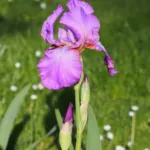
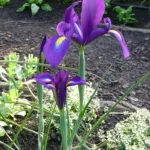
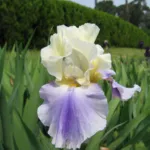
AI-generated illustration
Iris ‘Romantic Evening’ short overview
Iris 'Romantic Evening' is a tall bearded iris introduced by Joseph Ghio in 1996. Its late-midseason flowers combine lilac-blue standards with smooth blackish red-purple falls and deep brick beards, creating a dramatic two-tone display above upright, sword-shaped foliage. Plant rhizomes shallowly in full sun and sharply drained soil; established clumps prefer moderate fertility and should be divided when crowded, usually after flowering.
Taxonomic classification
Iris ‘Romantic Evening’ care guide
Light and placement
Give 6–8 hours of direct sun, ideally in an open bed with morning-to-afternoon exposure and good air movement. South- or west-facing sites usually provide enough light. Too little sun produces weak growth and fewer flowers; excessive reflected heat is generally tolerated if the rhizomes remain dry, though hot climates may benefit from light afternoon relief.
Watering and humidity
Water deeply after planting and during the first growing season whenever the upper soil begins to dry. Once established, irrigate only during prolonged drought; avoid frequent shallow watering and saturated beds. Keep water off the rhizomes and allow the soil to dry between irrigation cycles.
Soil and growing medium
Use fertile, sharply drained soil with good air circulation. A loam amended with coarse organic matter is suitable, while heavy clay should be raised or amended to prevent standing moisture around the rhizomes. Neutral to slightly alkaline conditions are generally suitable; avoid rich, constantly wet beds.
Feeding
Apply a modest balanced or relatively low-nitrogen fertilizer in early spring as growth begins, keeping granules away from the rhizome. Compost can improve poor soil, but avoid excessive nitrogen, which encourages soft foliage and may reduce flowering. Do not feed drought-stressed or freshly divided plants heavily.
Growth and habit
Forms expanding clumps from branching rhizomes. New fans develop along the rhizome, while older central sections become less productive over time. Divide when the clump is crowded or flowering declines, and orient divisions so the leaf fans face outward for balanced growth.
Planting and repotting
Plant dormant rhizomes in late summer or early fall, allowing enough time for root establishment before hard frost. Set the roots below the soil while keeping the upper rhizome at soil level or slightly exposed. Water after planting, then reduce irrigation once new growth is established.
Container-grown rhizomes can be lifted and divided after flowering or in late summer. Refresh the potting medium when it becomes compacted, and use a wide, heavy container with excellent drainage rather than a deep, water-retentive pot.
Propagation and pruning
Propagation
Division is the practical method. Lift clumps after flowering or in late summer, discard soft or damaged sections, and replant firm rhizome pieces with a healthy fan of leaves and roots. Seed propagation is mainly used for breeding because seedlings do not reproduce the named cultivar exactly.
Pruning
After flowering, remove spent flower stalks at the base. Keep healthy foliage in place while it remains green so it can replenish the rhizome. Remove yellowed or diseased leaves in late season and clear fallen debris from the bed.
Overwintering
Leave healthy foliage until it yellows naturally, then remove it and clear debris. In Zones 4–5, use drainage rather than heavy mulch for winter protection; thick wet mulch over rhizomes can promote rot. Container plants may need protection from repeated freeze-thaw cycles.
Uses
Primarily grown as an ornamental perennial for dramatic border color and as a cut flower. Its tall stems and strongly contrasting flowers suit formal iris beds, cottage gardens, and display plantings. It is not an edible plant, and rhizomes should be kept away from children and pets.
Appearance
The plant forms upright fans of narrow, sword-shaped blue-green leaves. Tall, branched flower stems rise above the foliage and carry large, sculptural blooms. The most distinctive identification feature is the strong contrast between lilac-blue upright standards, dark red-purple drooping falls, and deep brick-colored beards.
Flowering
This tall bearded iris blooms in the late-midseason period, generally in late spring to early summer in much of the United States. Each flowering stalk carries successive large, three-part iris flowers. Rebloom has been reported in some climates, but it is not dependable everywhere.
Pollination and visitors
Open iris flowers can be visited by insects, but reliable cultivar-specific records identifying a dominant visitor group were not found. The flower structure is more important ornamentally than as a documented high-value pollinator resource.
Diseases and pests
Diseases
Avoid overhead irrigation and crowded planting. Remove diseased foliage and divide congested clumps. Watch for bacterial soft rot, fungal leaf spot, and rhizome decay, especially where drainage is poor or rhizomes are planted too deeply.
Pests
The principal serious pest is the iris borer, whose larvae tunnel into leaves and rhizomes and can introduce soft rot. Remove old foliage and debris, inspect rhizomes during division, discard damaged material, and maintain open, uncluttered beds.
Related diseases and pests
Only Plant Doctor profiles whose host data indicate this plant may be affected are shown here.
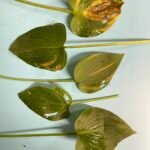 PestStrawberry foliar nematodeAphelenchoides fragariae
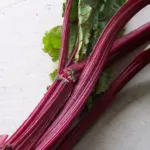 DiseaseBacterial soft rotPectobacterium carotovorum
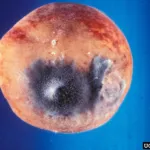 DiseaseRhizopus soft rotRhizopus stolonifer
 DiseaseAlternaria leaf spot and fruit rotAlternaria alternata
 DiseaseRhizoctonia DiseasesRhizoctonia solani Kühn
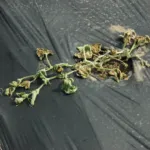 DiseaseBacterial WiltRalstonia solanacearum species complex
 DiseaseBacterial Fruit BlotchAcidovorax citrulli
Toxicity and pollen
Iris species are recognized as toxic if eaten, with the highest concentration of irritant compounds commonly associated with the rhizomes. Ingestion can cause gastrointestinal upset, drooling, vomiting, or diarrhea. Handle damaged rhizomes with care and seek medical or veterinary advice after suspected ingestion.
- Typical season
- Flowering period in late spring to early summer
- Pollination / pollen
- Mostly insect-carried pollen; limited airborne release expected
As an insect-pollinated garden iris, most pollen is placed within the flower rather than released freely into the air. However, individual sensitivity can vary, and cut flowers or close handling may still expose people to pollen or floral particles.
Native habitat
This named garden cultivar belongs to the tall bearded iris group, whose cultivated plants are adapted to sunny, open sites with sharply drained mineral soils. It is maintained by rhizome division rather than relying on a stable wild population.
Interesting fact
Introduced by Joseph Ghio and registered in 1996.
Frequently asked questions (FAQ)
The most relevant questions about this plant, with short and direct answers.
🌱Quick care
What type of iris is Iris 'Romantic Evening'?⌄
Iris 'Romantic Evening' is a tall bearded iris cultivar introduced by Joseph Ghio in 1996. It typically grows about 36 inches tall and produces lilac-blue standards, dark blackish red-purple falls, and deep brick-colored beards.
How much sun does Iris 'Romantic Evening' need?⌄
Plant Iris 'Romantic Evening' in full sun, ideally with at least 6 hours of direct sunlight daily. Some afternoon shade may be tolerated in very hot climates, but insufficient light can reduce flowering and weaken the stems.
Is Iris 'Romantic Evening' drought tolerant?⌄
Iris 'Romantic Evening' is relatively drought tolerant once established. Water during prolonged drought, but allow the soil to dry somewhat between waterings because persistently wet conditions can cause rhizome rot.
What USDA hardiness zones are suitable for Iris 'Romantic Evening'?⌄
Iris 'Romantic Evening' is generally grown outdoors in USDA Zones 4 through 8, with reported reblooming in Zones 4, 7, 8, and 9. Performance can vary with winter protection, summer heat, and local growing conditions.
🌤️Environment and placement
Where should I plant Iris 'Romantic Evening' in the garden?⌄
Plant Iris 'Romantic Evening' in a sunny, open location with excellent drainage and good air circulation. A raised bed or gentle slope is especially useful where heavy rain or clay soil could keep the rhizomes wet.
What soil is best for Iris 'Romantic Evening'?⌄
Use well-drained loam or sandy loam for Iris 'Romantic Evening', preferably near neutral to slightly alkaline. Improve heavy clay with organic matter and drainage amendments, but avoid creating a rich, water-retentive planting pocket around the rhizomes.
Can Iris 'Romantic Evening' grow in a container?⌄
Iris 'Romantic Evening' can be grown temporarily in a large container, but it performs best planted in the ground. Choose a heavy pot with drainage holes, use a fast-draining mix, and provide winter protection in colder areas because tall growth can make containers unstable.
💧Care and problems
How often should I water Iris 'Romantic Evening'?⌄
Water Iris 'Romantic Evening' deeply after planting and during its first growing season, then water only when the soil has dried several inches below the surface. Established plants usually need supplemental water mainly during extended drought or unusually hot weather.
Why is Iris 'Romantic Evening' not blooming?⌄
The most common causes of poor flowering are insufficient sunlight, overcrowded rhizomes, excessive nitrogen, or planting the rhizomes too deeply. Divide congested clumps and replant the rhizomes shallowly with their upper surfaces exposed to sunlight.
Why are the leaves of Iris 'Romantic Evening' turning yellow?⌄
Yellowing leaves on Iris 'Romantic Evening' can be natural after flowering, but widespread yellowing often indicates poor drainage, overwatering, rhizome rot, or pest damage. Check the rhizomes for softness or foul odor and correct wet soil promptly.
Does Iris 'Romantic Evening' need fertilizer?⌄
Iris 'Romantic Evening' usually needs only modest feeding in spring and after flowering. Use a low-nitrogen garden fertilizer according to the label, because excessive nitrogen can produce lush foliage while reducing flower production and increasing disease risk.
How tall does Iris 'Romantic Evening' grow?⌄
Iris 'Romantic Evening' typically reaches about 36 inches tall, or roughly 3 feet. Its flower stalks may need support in exposed locations, especially where strong wind or heavy rain is common.
🪴Planting and repotting
When should I plant Iris 'Romantic Evening' rhizomes?⌄
Plant Iris 'Romantic Evening' rhizomes in late summer through early fall, ideally at least 4 to 6 weeks before the ground freezes. Spring planting is possible, but flowering may be lighter during the first season.
How deeply should I plant Iris 'Romantic Evening'?⌄
Plant the rhizome of Iris 'Romantic Evening' very shallowly, with the top half exposed or just barely covered by soil. Spread the roots beneath the rhizome and firm the soil around them without burying the rhizome deeply.
How far apart should I plant Iris 'Romantic Evening'?⌄
Space Iris 'Romantic Evening' rhizomes about 12 to 24 inches apart, depending on how quickly you want the clump to fill. Wider spacing improves air circulation and makes future division easier.
✂️Propagation and pruning
How do I propagate Iris 'Romantic Evening'?⌄
Propagate Iris 'Romantic Evening' by dividing its rhizomes rather than by seed. Lift established clumps after flowering or in late summer, separate healthy rhizome sections with roots and a fan of leaves, and replant them immediately.
When should I divide Iris 'Romantic Evening'?⌄
Divide Iris 'Romantic Evening' about every 3 to 5 years, or sooner when the center of the clump stops flowering. Late summer is usually the best time because the plants can establish roots before winter.
Should I cut back Iris 'Romantic Evening' after flowering?⌄
Remove spent flower stalks from Iris 'Romantic Evening' after blooming, but keep healthy leaves until they naturally yellow. The foliage replenishes the rhizomes for the next season, while diseased leaves should be removed and discarded.
⚠️Toxicity and safety
Is Iris 'Romantic Evening' toxic to people or pets?⌄
Iris 'Romantic Evening' is moderately toxic if ingested, like many irises. Keep rhizomes and other plant parts away from children and pets, and contact a medical professional, poison center, or veterinarian if ingestion occurs.
🌸Flowering and special interest
When does Iris 'Romantic Evening' bloom?⌄
Iris 'Romantic Evening' generally blooms in mid to late spring, classified as a late-midseason tall bearded iris. Bloom timing varies with climate, winter conditions, and the local start of the iris flowering season.
Does Iris 'Romantic Evening' rebloom?⌄
Iris 'Romantic Evening' has documented rebloom reports in some locations, including parts of USDA Zones 4, 7, 8, and 9. Rebloom is not guaranteed and depends on adequate sunlight, a long growing season, moisture during summer, and favorable local conditions.
What color flowers does Iris 'Romantic Evening' produce?⌄
Iris 'Romantic Evening' has lilac-blue standards over smooth, very dark red-purple to blackish purple falls. Its beard is deep brick, creating a strong warm contrast against the darker lower petals.
Is Iris 'Romantic Evening' fragrant?⌄
Reliable cultivar descriptions do not consistently document a notable fragrance for Iris 'Romantic Evening'. Grow it primarily for its dramatic color combination, tall form, and late-midseason flowers rather than assuming it is strongly scented.