
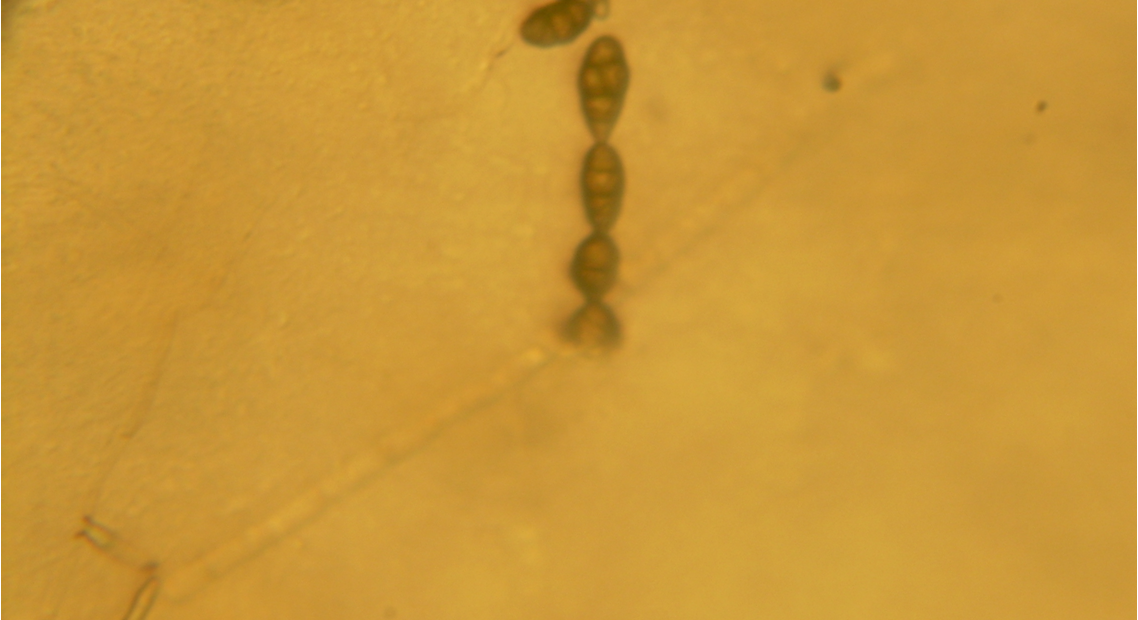
Alternaria leaf spot and fruit rot
Alternaria alternataAlternaria leaf spot and fruit rot overview
Alternaria alternata is a widespread, opportunistic fungal pathogen that causes leaf spots, blights, stem lesions and fruit rots on numerous crops and ornamentals. Symptoms vary by host, and the fungus may also colonize aging or damaged tissue without being the primary cause. Accurate diagnosis is important because several related Alternaria species produce similar symptoms.
Typical conditions
Overview
Alternaria alternata is a widespread, airborne fungal pathogen and saprobe. On susceptible plants it commonly produces brown, tan or black necrotic spots, often with concentric rings, darker margins or a yellow halo. Depending on the host, it may also cause fruit rot, boll rot, stem cankers or seedling blight.
The name should not be confused with early blight of tomato and potato, which is primarily associated with Alternaria solani. Related members of the Alternaria complex can look nearly identical, and symptoms alone do not always establish the species.
Symptoms and identification
Typical symptoms begin as small tan, brown or dark flecks that enlarge into circular or irregular dead spots. Mature lesions may show concentric banding, a yellow halo, cracking, or black to dark olive sporulation. Severe leaf infection can cause premature yellowing and defoliation.
On fruit, infections may begin as water-soaked or sunken areas and develop into soft brown or black rot, sometimes with visible dark fungal growth. Stems may develop elongated brown lesions or cankers; seedlings can suffer damping-off-like injury or blight. Symptoms vary substantially among hosts.
Causes and spread
The fungus survives and sporulates on infected leaves, stems, fruit, seed and crop debris. Conidia are dispersed by wind, rain splash, irrigation water, handling, tools, soil dust and contaminated containers. Infection is favored when spores remain wet on plant surfaces for extended periods.
Injury from insects, hail, pruning, sunscald, drought, nutrient imbalance, over-ripening or other diseases can increase susceptibility. Dense canopies and poorly ventilated greenhouse or garden conditions help disease spread.
Life cycle and persistence
Alternaria alternata commonly persists between seasons in crop residues, dead tissue, soil-associated debris and sometimes seed or planting material. Under suitable moisture and temperature, the fungus produces chains of dark, multicelled conidia.
Conidia germinate on wet plant surfaces, penetrate directly or through natural openings and colonize tissue with cell-killing enzymes and toxins. New lesions produce additional spores, allowing repeated cycles during warm, humid weather. The fungus may remain latent or behave as a secondary invader until host tissue is stressed or damaged.
Treatment and control
Remove and destroy heavily infected leaves, fruit and stems when practical, especially early in the outbreak. Improve airflow, correct irrigation problems and reduce plant stress. Harvest ripe fruit promptly and keep harvested produce cool, dry and clean.
For valuable crops, diagnosis by a land-grant university plant clinic or qualified diagnostic laboratory is useful because A. alternata, other Alternaria species and nonpathogenic saprobes can be difficult to separate visually. Fungicides, where justified, work best preventively or at the first signs of disease and generally cannot restore dead tissue.
Low-impact and biological control
Use sanitation, resistant or tolerant cultivars when available, drip or directed irrigation, canopy management and crop rotation as the primary controls. Remove infected tissue during dry weather and improve drainage and air circulation.
Commercial biological products containing registered microbial antagonists may provide supplemental protection in some crops, but performance is crop- and product-specific. Use only products registered for the intended crop and disease in the United States, and follow the current label. Home remedies such as household bleach, vinegar or baking soda mixtures can injure plants and are not reliable substitutes for labeled products.
Prevention
- Start with disease-free seed, transplants and cuttings, and avoid bringing visibly spotted plants into production areas.
- Remove infected leaves, fallen fruit and crop debris promptly; dispose of diseased material rather than leaving it beside host plants.
- Use adequate plant spacing, pruning and ventilation to shorten leaf-wetness periods.
- Water at the soil line, preferably early enough for foliage to dry, and avoid unnecessary overhead irrigation.
- Control weeds and volunteer plants that may maintain Alternaria populations, and rotate susceptible annual crops where practical.
- Handle fruit gently, sanitize harvest containers and harvest susceptible fruit before it becomes overripe.
- Clean pruning tools between plants and avoid working through wet foliage.
Interesting facts
- Alternaria alternata is both a plant pathogen and a common colonizer of dead or dying plant material.
- The species has been documented on more than 100 plant species across multiple plant families, but host susceptibility and disease importance differ greatly.
- Some host-specific toxin-producing forms have been described, including forms associated with cucurbit disease; taxonomic boundaries within the Alternaria alternata species complex remain difficult.
- Small dark spores and concentric lesions are suggestive, not definitive: laboratory identification may be needed for species-level confirmation.
Use only fungicides legally authorized by the U.S. Environmental Protection Agency and state authorities for the specific crop and disease. Follow the current product label for crop, pathogen, rate, timing, personal protective equipment, reentry interval, preharvest interval and resistance-management requirements. Product registrations and labels change; do not apply a product solely because it is labeled for another Alternaria disease or crop.
Affected plants
The plants below are linked to this problem by structured host-plant data. The list updates automatically as new plant profiles are added.
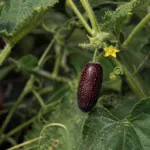 Maroon cucumbe (Cucumis anguria) care guideCucumis anguria
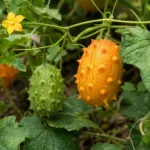 Horned Melon (Cucumis metuliferus) care guideCucumis metuliferus
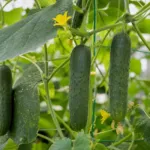 Cucumber (Cucumis sativus) care guideCucumis sativus
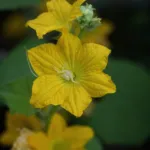 Melon or true melo (Cucumis melo) care guideCucumis melo
 Cantalupensis Group (Cucumis melo Cantalupensis Group)Cucumis melo Cantalupensis Group
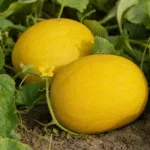 Mango melon (Cucumis melo Chito Group)Cucumis melo Chito Group
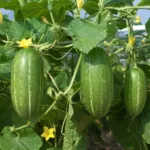 Oriental pickling melon (Cucumis melo Conomon Group)Cucumis melo Conomon Group
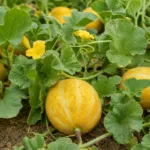 Dudaim melon (Cucumis melo Dudaim Group)Cucumis melo Dudaim Group
 Flexuosus Group (Cucumis melo Flexuosus Group)Cucumis melo Flexuosus Group
 Inodorus Group (Cucumis melo Inodorus Group)Cucumis melo Inodorus Group
 Makuwa Group (Cucumis melo Makuwa Group)Cucumis melo Makuwa Group
 Momordica Group (Cucumis melo Momordica Group)Cucumis melo Momordica Group