
Freeze injury
Freeze injury overview
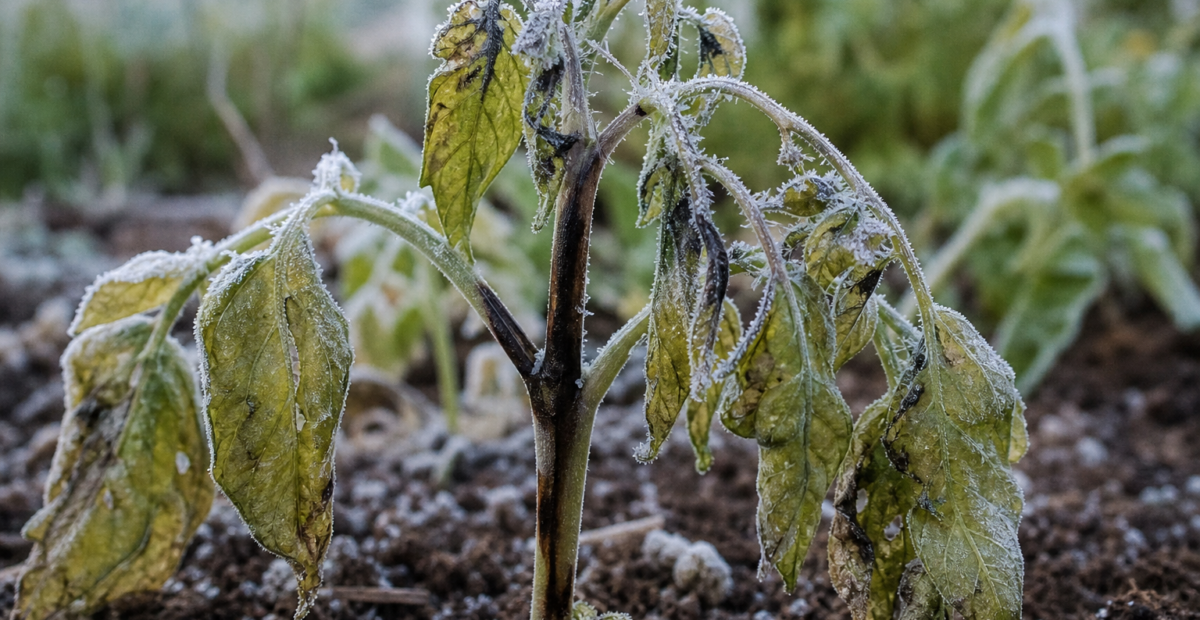
Freeze injury is noninfectious damage caused when freezing temperatures or frost disrupt plant cells, buds, flowers, stems, roots, or water-conducting tissues. Symptoms may include wilted, water-soaked, bleached, brown, or black tissue, bark splitting, poor spring growth, and delayed dieback. Damage varies greatly with plant hardiness, dormancy, tissue age, exposure, and freeze duration.
Typical conditions
Overview
Freeze injury occurs when plant tissues cool sufficiently for ice formation or severe freeze-induced dehydration. Ice commonly forms first outside cells, drawing water out of them; more rapid or severe freezing can cause intracellular ice and membrane rupture. Tender new growth, flowers, expanding buds, evergreen foliage, and actively growing tissues are usually more vulnerable than fully dormant, cold-acclimated tissues.
Diagnosis depends on the weather history, plant hardiness, growth stage, and symptom pattern. Freeze damage often appears in exposed portions or in plants growing outside their suitable USDA hardiness range. It can resemble fungal disease, herbicide injury, drought stress, or winter desiccation, so a plant diagnostic laboratory may be useful when symptoms are unusual or secondary infections are suspected.
Symptoms and identification
Common symptoms include:
- Wilted, limp, translucent, water-soaked, bleached, brown, or black leaves and shoots.
- Dead buds, flowers with darkened centers, failed fruit set, and injured developing fruit.
- Brown needle tips or current-season needle death on conifers.
- Marginal leaf scorch, curled leaves, twig dieback, delayed leaf-out, and poor spring growth.
- Bark splitting, cambium death, sunken lesions, or branch and leader dieback on woody plants.
- Root injury or whole-plant collapse in container plants, which cool more rapidly than plants rooted in the ground.
Symptoms may develop several days or weeks after the freeze. Green cambium beneath a small bark scrape indicates living tissue; brown or black cambium suggests dead tissue, although scraping should be limited and avoided on young or valuable plants.
Causes and spread
Freeze injury is caused by temperatures at or below the plant tissue’s freezing threshold, not by an infectious agent. Severity depends on minimum temperature, duration, rate of cooling, wind, humidity, tissue water status, plant species and cultivar, USDA hardiness, dormancy, and growth stage. Late spring freezes are especially damaging because newly expanding leaves, shoots, blossoms, and fruit are tender.
Radiational freezes occur on clear, calm nights when plant surfaces lose heat to the sky; advective freezes occur when a cold air mass moves into the area. Cold wind and frozen soil can intensify winter desiccation because evergreen foliage loses water while roots cannot replace it. Freeze injury does not spread biologically, but dead tissue can be colonized secondarily by decay organisms.
Life cycle and persistence
There is no pathogen or pest lifecycle. The disorder progresses as a weather event: cold exposure lowers tissue temperature, ice formation or dehydration injures cells, thawing reveals collapse, and symptoms may later expand as damaged cambium or xylem fails under renewed growth and water demand. Recovery depends on whether buds, cambium, roots, and vascular tissues remain alive. New shoots may emerge from surviving lower stems or roots after top growth is killed.
Treatment and control
After a freeze, avoid immediate heavy pruning. Leave damaged leaves and shoots in place until the danger of additional freezes has passed and living growth becomes evident; retained tissue can provide limited insulation. Keep plants evenly watered as needed, but do not overwater. Avoid high-nitrogen fertilizer while the plant is recovering.
Once new growth shows which tissues survived, prune dead branches back to firm, healthy wood using clean, sharp tools. Remove completely dead plants and severely damaged tissue where it presents a safety risk or is likely to decay. Protect recovering plants from additional heat, drought, wind, and sun stress. Inspect injured stems and bark for secondary pest or disease problems, and seek county Extension or plant-clinic assistance when dieback is extensive, delayed, or inconsistent with the weather history.
Low-impact and biological control
No pesticide or biological control cures freeze injury. The most useful nonchemical measures are frost cloth or other breathable covers, mulch for root-zone insulation, adequate pre-freeze watering, wind protection, moving containers indoors, and careful delayed pruning. Sanitize pruning tools between plants when removing damaged tissue, particularly if secondary disease is suspected. Support recovery with appropriate irrigation and site care rather than foliar “antistress” products of unverified benefit.
Prevention
Use plants and cultivars suited to the local USDA hardiness zone, and place marginally hardy plants in protected locations away from wind and frost pockets. Maintain adequate soil moisture during extended dry periods, especially before the ground freezes, but avoid waterlogged soil. Apply about 3–4 inches of mulch over the root zone while keeping mulch away from trunks and root flares.
Before a forecast freeze, move container plants into a house, garage, or shed when practical. Otherwise, group containers in a sheltered location and insulate the pots. Cover outdoor plants with frost cloth, blankets, or cardboard supported above the foliage, extending the cover to the ground so it traps soil heat. Remove plastic covers soon after sunrise to prevent overheating. For commercial fruit and vegetable crops, use only locally validated frost-protection methods and monitor crop-specific critical temperatures.
Avoid stimulating tender late-season growth with unnecessary nitrogen fertilizer. Do not rely on overhead irrigation unless the method, timing, water supply, and crop-specific guidance are appropriate; poorly timed irrigation can worsen damage or create other problems.
Interesting facts
Plants do not all freeze at exactly 32°F; freezing thresholds vary with species, tissue condition, acclimation, and ice-nucleation processes. A temperature of 28–30°F can severely damage tender new growth even during a short event.
Fully dormant perennial tissues can tolerate temperatures that would kill actively expanding shoots. Conversely, a plant may look healthy immediately after a freeze and later show dieback when damaged xylem cannot meet summer water demand. Snow can provide insulation, while wind and winter sunlight can increase desiccation injury in evergreen foliage.
Chemical treatments do not reverse freeze-killed tissue. Use pesticides only when a separately diagnosed secondary pest or disease warrants treatment, and only products legally authorized for that crop and problem in the United States. Follow the current EPA-approved label, including crop/site, rate, timing, personal protective equipment, reentry, and preharvest restrictions.
Affected plants
The plants below are linked to this problem by structured host-plant data. The list updates automatically as new plant profiles are added.
 Magnolia ‘Star Wars’Magnolia 'Star Wars'
 Magnolia ‘Susan’Magnolia 'Susan'
 Campbell’s Magnolia (Magnolia campbellii) care guideMagnolia campbellii
 Alba (Magnolia campbellii ‘Alba’)Magnolia campbellii 'Alba'
 Southern magnolia (Magnolia grandiflora) care guideMagnolia grandiflora
 Lily Magnolia (Magnolia liliiflora) care guideMagnolia liliiflora
 Japanese Big Leaf Magnolia (Magnolia obovata) care guideMagnolia obovata
 Magnolia sprengeri care guideMagnolia sprengeri
 Star magnolia (Magnolia stellata) care guideMagnolia stellata
 Sweetbay magnolia (Magnolia virginiana) care guideMagnolia virginiana
 Magnolia loebneri care guideMagnolia loebneri
 Magnolia × loebneri ‘Merrill’Magnolia × loebneri 'Merrill'