
 Source:
 Blue Mold of Citrus
Penicillium italicumBlue Mold of Citrus overview
Blue mold of citrus is a postharvest fruit-rot disease caused by the fungus Penicillium italicum. Infection usually begins in cuts, punctures, abrasions, or split areas of the rind, forming a soft, water-soaked lesion that becomes covered with white growth and blue to blue-green spores. The disease is especially important during cold storage, where it can spread from one damaged fruit to healthy fruit nearby.
Typical conditions
Overview
Penicillium italicum causes blue mold, also called blue mold rot, of citrus. It is most often a postharvest problem affecting oranges, mandarins, lemons, grapefruit, and other citrus fruit during handling, packing, shipping, and storage. The fungus generally cannot penetrate an intact rind efficiently; infection typically follows a cut, puncture, abrasion, stem-end injury, or fruit split.
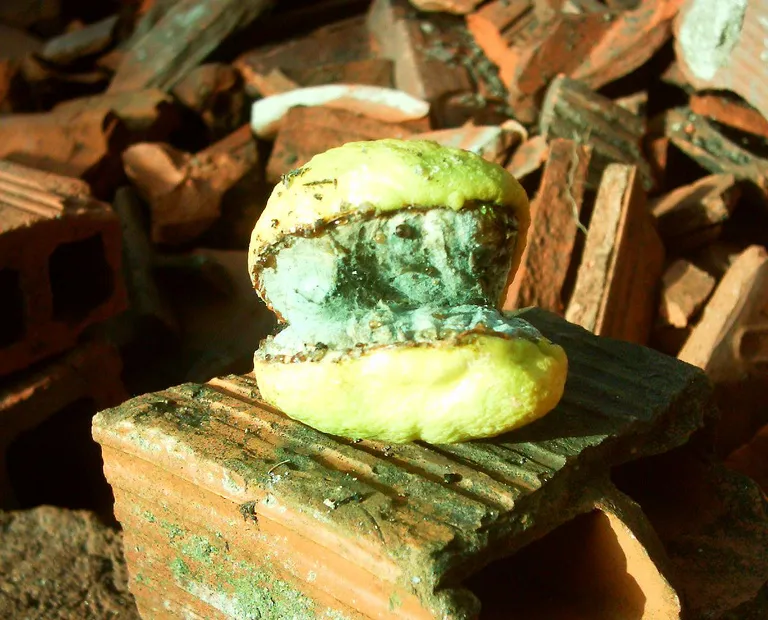
Early decay may look like a small, pale, soft, water-soaked spot. As the lesion expands, white fungal growth develops and produces blue to blue-green spores. Blue mold commonly occurs with green mold caused by Penicillium digitatum, so laboratory confirmation may be needed when spore color is unclear or multiple fungi are present.
Symptoms and identification
- Small circular, soft, water-soaked or slightly depressed lesion on the rind.
- Rapid enlargement of the decayed area, with a soft, wet, odorous rot beneath the rind.
- White fungal growth appears first, followed by a conspicuous blue to blue-green mass of spores.
- Advanced fruit may shrivel, leak, collapse, and contaminate nearby fruit.
- In storage containers, groups or “nests” of decayed citrus may develop as spores spread from fruit to fruit.
Blue mold is difficult to distinguish confidently from green mold, sour rot, and other postharvest decays from color alone. A blue spore mass together with a wound-centered lesion and development during cold storage is suggestive, not definitive.
Causes and spread
The causal fungus is Penicillium italicum, which produces abundant airborne conidia on decaying fruit and plant debris. Conidia land on citrus surfaces and germinate when moisture is available, but infection usually requires a wound or other break in the rind. Harvesting, clipping, dropping, rough dumping, thorn abrasion, insect injury, hail, and fruit splitting can create infection courts.
Spread is promoted by contact between infected and healthy fruit, contaminated bins, packing equipment, wash water, hands, and airborne spores. Leaving rotten fruit in orchards, cull piles, storage rooms, or packing areas increases inoculum. Tree stress that contributes to rind splitting—such as irregular irrigation, nutrient imbalance, heat, or extreme weather—can increase the chance of infection before harvest.
Life cycle and persistence
The fungus survives and sporulates on infected citrus, discarded fruit, decaying plant material, and contaminated surfaces. Its dry conidia are readily dispersed by air, handling, insects, and equipment. After landing on a wounded rind, a spore germinates, produces hyphae, and colonizes the rind and pulp.
White mycelium develops around the lesion and later produces blue conidia. The disease can progress at low temperatures and may become especially important in refrigerated citrus storage. Under favorable conditions, one infected fruit can initiate a localized storage “nest,” with spores and fruit-to-fruit contact extending the decay.
Treatment and control
There is no practical curative treatment for citrus fruit that is already soft-rotten. Discard moldy fruit rather than trimming and eating it, because decay can extend beyond the visible colony and quality and food-safety decisions belong to the grower, packer, or retailer under applicable handling rules.
For commercial citrus, management is an integrated postharvest program: careful harvest, rapid sorting, removal of infected fruit, sanitation of equipment and facilities, appropriate cooling and storage, and—where permitted and warranted—an authorized postharvest fungicide or other registered treatment. Treatment cannot reliably compensate for rough handling or poor sanitation.
Low-impact and biological control
Emphasize nonchemical control: prevent rind injuries, remove infected fruit immediately, sanitize bins and contact surfaces, keep cull fruit away from packing and storage areas, and maintain clean, dry, well-ventilated storage. For home-grown citrus, promptly discard decayed fruit and avoid placing sound fruit in the same closed container.
Commercial biological products or physical postharvest treatments should be used only when specifically registered or otherwise legally permitted for the crop and use in the United States, and only according to the current product label. Research on biological antagonists, heat treatments, light, and natural compounds is promising in some settings but does not make an unregistered home treatment reliable or lawful.
Prevention
- Harvest citrus carefully and use padded, clean equipment to reduce cuts, punctures, abrasions, and drops.
- Keep fingernails, clippers, bins, conveyors, dump tanks, and packing surfaces clean and in good repair.
- Remove visibly decayed fruit promptly from the tree, orchard floor, cull areas, storage rooms, and packing lines.
- Do not pack injured or moldy fruit with sound fruit, and avoid repacking decayed fruit.
- Pack and cool fruit promptly after harvest; maintain stable, appropriate storage conditions and avoid condensation.
- Manage irrigation and tree nutrition to reduce fruit splitting and other rind injuries.
- Inspect stored citrus regularly and isolate affected lots before decay spreads.
Interesting facts
- Penicillium italicum is commonly associated with citrus blue mold, while P. digitatum causes the visually similar green mold.
- Blue mold can be more important than green mold in cold-stored citrus because it tolerates low temperatures relatively well.
- Infections are usually wound-mediated, making harvest and packing injuries a central management target.
- One infected fruit can create a storage nest that affects neighboring fruit in the same box or bin.
- The organism has been reported from hosts beyond citrus, but host susceptibility varies by species, cultivar, isolate, wound condition, and storage environment.
Use only products legally authorized for postharvest citrus and this disease in the United States, and follow the current label exactly, including crop, application site, rate, worker-protection, residue, disposal, and reentry requirements. Product registrations, permitted uses, and resistance-management guidance can change; consult the current EPA label, state requirements, and applicable citrus extension recommendations. Do not apply household disinfectants, food preservatives, or off-label fungicides to edible fruit.