
Stemphylium Leaf Blight
Stemphylium vesicarium (Wallr.) E.G. SimmonsStemphylium Leaf Blight overview
Stemphylium vesicarium is a fungal pathogen best known in U.S. production for Stemphylium leaf blight of onion and other Allium crops. Small tan, water-soaked lesions enlarge into olive-brown or black spots, often after dew, rain, other diseases, insect injury, or heat stress. Severe blighting reduces photosynthetic leaf area, bulb size, quality, and storage potential, while symptoms can resemble purple blotch.
Typical conditions
Overview
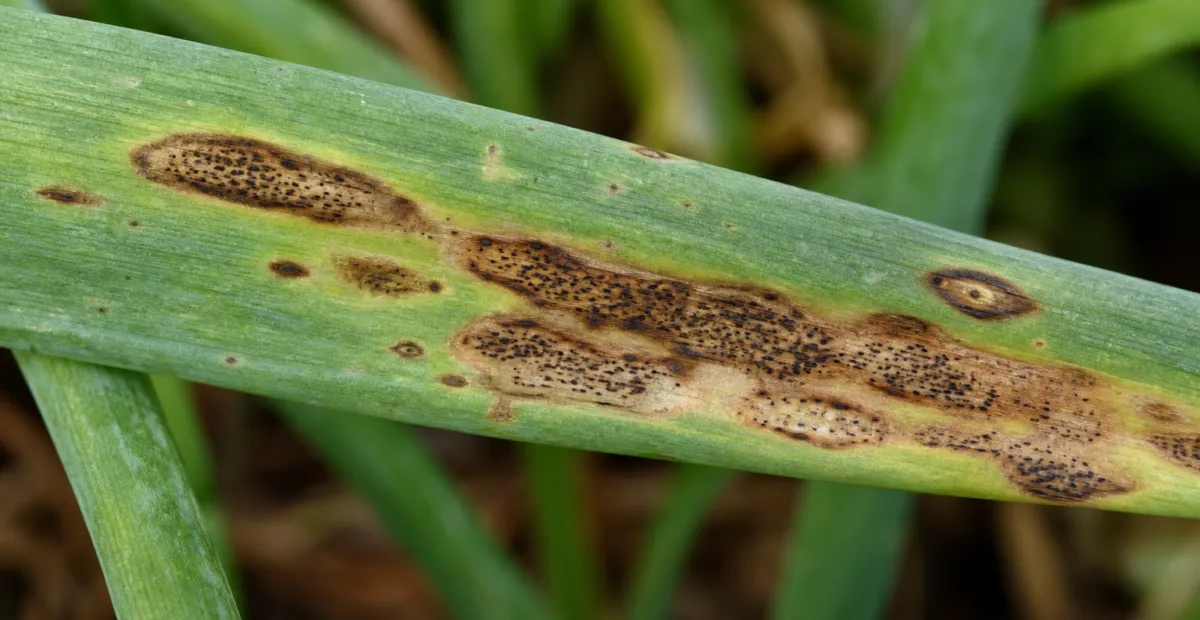
Stemphylium leaf blight is a fungal foliar disease of onion, garlic, leek, shallot, and other susceptible hosts. On onion, initial lesions are usually small, tan to brown, and sometimes water-soaked. They enlarge into spindle-shaped, oval, or elongated lesions whose centers become olive-brown to black as the fungus sporulates. Lesions can merge, girdle leaves, and cause extensive blighting or tip dieback.
In the United States, the disease is particularly important in onion production regions where prolonged leaf wetness, high humidity, moderate temperatures, and wounded or stressed foliage occur. Diagnosis should be cautious because purple blotch, downy mildew, iris yellow spot, thrips injury, herbicide injury, and abiotic tip dieback can produce similar symptoms. Laboratory confirmation may be needed when management or crop value justifies it.
Symptoms and identification
Symptoms commonly begin as scattered, small yellow, tan, or brown spots on onion leaves. Lesions may be water-soaked at first, then become elongated, oval, or spindle-shaped. Mature centers turn olive-brown, dark brown, or black as conidia form, sometimes with a faint pale halo. Lesions enlarge and coalesce, producing streaks, girdling, necrotic leaf tips, and complete leaf blight.
Blackish sporulation on the lesion surface is a useful diagnostic sign, but it should not be interpreted alone. The disease can resemble purple blotch caused by Alternaria porri; purple blotch more often develops purplish coloration and conspicuous target-like banding. Stemphylium may also colonize existing downy mildew lesions or dead tissue caused by heat and drought.
Causes and spread
The principal sources are infected crop residue, cull onions, volunteer plants, weeds, and other susceptible hosts. Spores spread through the crop by wind and rain splash; prolonged dew, fog, rainfall, or overhead irrigation increases the number of infection opportunities.
Spread and severity are often increased when onion foliage is already damaged by downy mildew, iris yellow spot, thrips, hail, heat, drought, herbicides, or mechanical operations. Dense canopies, excessive nitrogen that promotes lush foliage, poor air movement, and delayed drying also favor disease progress. Contaminated seed or transplants may be additional sources in some production systems, but their importance can vary by region.
Life cycle and persistence
Stemphylium vesicarium survives between crops in infected onion and other host residue, cull piles, volunteer plants, and possibly seed, transplants, weeds, or alternative crop hosts. Under suitable spring and summer conditions, sexual spores from overwintered structures and asexual conidia can initiate infections.
Conidia are produced abundantly on mature lesions and are dispersed mainly by wind and rain splash over short distances. Ascospores can contribute to longer-distance movement. Infection occurs through stomata or directly through the epidermis, often more readily where leaves have been wounded or weakened. Repeated cycles of sporulation and infection can rapidly increase disease during prolonged wetness.
Treatment and control
Remove severely blighted leaves or plants from small garden plantings when doing so will not spread spores or cause additional injury. Dispose of infected material rather than placing it beside the crop. Correct overhead-irrigation, crowding, drainage, nutrient, or pest problems that prolong leaf wetness or create wounds.
For commercial crops or valuable plantings, confirm the diagnosis when possible and use a current, locally applicable extension disease-management program. Fungicides can protect healthy tissue but generally do not restore dead leaf areas. Because reduced sensitivity and resistance to several single-site fungicides have been reported in U.S. populations, rotate and combine modes of action only as permitted by the label and current resistance-management guidance. Never use a product on a crop or for a disease unless its current U.S. label specifically allows that use.
Low-impact and biological control
No universally reliable organic treatment eradicates established Stemphylium leaf blight. Organic management should focus on reducing inoculum and keeping foliage dry and vigorous:
- Use pathogen-free or certified seed and clean, disease-free transplants when available.
- Remove culls, volunteer onions, and heavily infected plant debris; do not leave piles of diseased Allium residue beside production beds.
- Rotate out of onion, garlic, leek, and shallot for at least one year; a longer rotation with nonhost crops may be more useful where residue is abundant or disease pressure is persistent.
- Control susceptible weeds and volunteer Allium plants that can maintain inoculum.
- Prefer drip or furrow irrigation over overhead irrigation, irrigate early enough for foliage to dry, and improve spacing and airflow where practical.
- Scout and manage thrips and other causes of leaf injury using integrated pest management, because wounds can increase colonization.
- Prevent or promptly manage downy mildew and other foliar diseases that create infection courts.
Only biological or copper-based products specifically authorized for the crop and disease in the United States should be considered, and their effectiveness may be limited. Follow the current organic certification and product-label requirements.
Prevention
Start with clean seed or transplants and plant in well-drained soil with adequate spacing. Rotate away from onion and related Allium crops, remove or bury infected residue where appropriate, and eliminate cull piles and volunteers. Keep surrounding weeds under control and avoid unnecessary overhead irrigation. If overhead irrigation is unavoidable, water early in the day so leaves dry rapidly.
Scout weekly, especially during bulb formation and during periods of humid, wet weather. Inspect lower and older leaves, leaf tips, and areas facing prevailing winds. Record disease distribution and check for downy mildew, thrips, or other injuries. Avoid excessive nitrogen and manage plant stress through balanced fertility, reliable irrigation, drainage, and appropriate canopy density.
Interesting facts
- The same species is associated with both onion Stemphylium leaf blight and brown spot of European pear, but disease expression and host specialization can differ among pathogen populations.
- On onion, S. vesicarium is often described as a weak or secondary pathogen and may become established after downy mildew or physical and environmental injury.
- Loss of healthy onion foliage can reduce bulb size and interfere with normal maturation and storage quality even when the bulb scales are not visibly infected.
- Stemphylium leaf blight has re-emerged as an important onion disease in parts of the northeastern United States and Ontario.
- Field symptoms alone are not always sufficient to separate Stemphylium leaf blight from purple blotch or mixed infections.
Use fungicides only when the product is legally authorized for Stemphylium leaf blight or the specific crop in the United States and your state. Follow the current EPA-approved label for crop, rate, timing, preharvest interval, worker-protection requirements, and resistance-management instructions. Do not rely on a single fungicide mode of action; local labels and current extension recommendations take precedence.
Affected plants
The plants below are linked to this problem by structured host-plant data. The list updates automatically as new plant profiles are added.
 Onion (Allium cepa) care guideAllium cepa
 Allium christophii care guideAllium christophii
 Bunching onion (Allium fistulosum) care guideAllium fistulosum
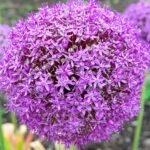 Giant Allium (Allium giganteum) care guideAllium giganteum
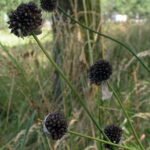 Ornamental onion (Allium) care guideAllium
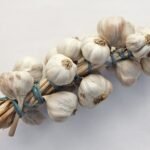 Garlic (Allium sativum) care guideAllium sativum
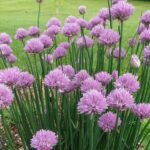 Chives (Allium schoenoprasum) care guideAllium schoenoprasum
 Ransoms (Allium ursinum) care guideAllium ursinum
 Wild leek or broadleaf wild leek (Allium ampeloprasum) care guideAllium ampeloprasum
 Shallot (Allium cepa Aggregatum Group)Allium cepa Aggregatum Group
 Cepa Group (Allium cepa Group)Allium cepa Cepa Group
 Rakkyo (Allium chinense) care guideAllium chinense