
 Source:
 Allium christophii short overview
Allium christophii is a bulbous perennial prized for its enormous, airy spheres of star-shaped, silvery violet flowers. Native to dry regions of Iran, Turkey, and Turkmenistan, it grows best in full sun and sharply drained soil. The strap-shaped leaves fade as the flower stems emerge in late spring, leaving the architectural umbels prominent in the garden. Established bulbs are drought tolerant and useful in borders, gravel gardens, containers, and dried-flower arrangements.
Taxonomic classification
Allium christophii care guide
Light and placement
Plant in an open position receiving at least 6 hours of direct sun, ideally with a south- or west-facing exposure. Bright light supports sturdy stems and fuller umbels. Too little light can produce weaker, leaning stems and reduced flowering. Excessive shade, especially from dense summer vegetation, may leave the foliage sparse and delay bulb maturation.
Watering and humidity
Water after planting and during the first growing season whenever the upper few inches of soil become dry. Once established, irrigate during active spring growth in prolonged drought, then reduce watering as the foliage fades. Avoid frequent shallow watering and standing moisture around the bulbs. Humidity is not a significant requirement and dry summer conditions are beneficial.
Soil and growing medium
Use loose, sharply drained soil that does not remain wet around the bulb during summer dormancy. Sandy, gritty, or moderately loamy soil is suitable; improve heavy clay with mineral grit and organic matter without creating a water-holding pocket. A neutral to slightly alkaline reaction is generally tolerated. Drainage is more important than fertility.
Feeding
Work a modest amount of compost into poor soil before planting, or apply a balanced bulb fertilizer as shoots emerge in spring. Avoid heavy nitrogen feeding, which can encourage soft foliage at the expense of flowering and bulb longevity. Do not feed heavily after the foliage has naturally yellowed or while the bulbs are dormant.
Growth and habit
The plant forms a seasonal clump from a tunicate bulb. Basal leaves develop first and commonly decline as the flowering stem rises. After flowering, the dry spherical seedhead can remain decorative for weeks. Allow foliage to yellow naturally so the bulb can replenish reserves, and place shorter plants nearby to mask the summer-dormant base.
Planting and repotting
Plant firm bulbs in fall in a sunny, well-drained bed. Set them pointed end up at about 4–6 inches deep, adjusting slightly for bulb size and soil type. Space clumps 8–12 inches apart for a strong display while allowing air movement. Water once after planting and maintain only enough moisture to prevent prolonged drought during establishment.
Container-grown bulbs rarely need annual repotting. Repot or divide when the container becomes crowded or drainage declines, preferably during summer dormancy or before fall growth begins. Use a gritty, free-draining bulb mix and a pot with drainage holes. Protect containers from prolonged winter saturation and severe temperature swings.
Propagation and pruning
Propagation
Propagate from offsets or daughter bulbs when the clump is dormant, usually after the foliage has died back. Replant offsets immediately at the same depth as mature bulbs. Seed propagation is possible but slow, and seedlings may require several years to reach flowering size; sow fresh seed outdoors or in a cold frame when practical.
Pruning
Do not cut the foliage while it is still green. Remove yellowing leaves at ground level after they have naturally died back. Flower stems may be cut for arrangements when the umbels are partly open, or left in place for persistent seedhead display. Remove spent heads only if self-seeding or visual cleanup is desired.
Overwintering
Leave bulbs outdoors in the ground in USDA Zones 5–8 when drainage is good. A light mulch can moderate freeze-thaw cycles, but avoid thick, wet mulch directly over the bulb. In colder or poorly drained sites, grow in raised beds or containers and protect containers from repeated deep freezing and winter saturation.
Uses
Use in perennial borders, gravel gardens, dry gardens, raised beds, containers, and pollinator-oriented plantings. The tall flower stems work well among lower-growing perennials, while the dried umbels can be left standing for winter structure or cut for arrangements. Because Allium species can be poisonous to pets, avoid planting where dogs or cats routinely chew vegetation.
Appearance
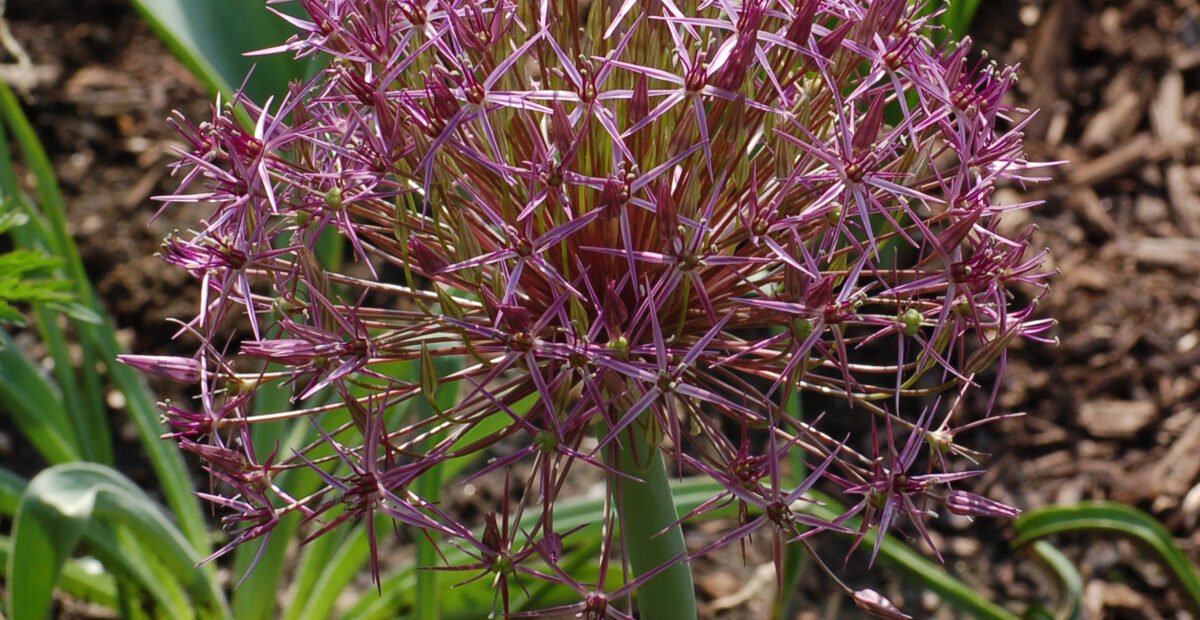
Leaves are narrow, strap-shaped, blue-green to gray-green, and concentrated near the base. The upright, leafless stems carry unusually large open umbels made of many individual six-pointed flowers. The metallic silvery violet coloration and loose globe-shaped head are distinctive identification features, especially when the foliage is already fading.
Flowering
Flowering stems appear as the basal foliage begins to decline, usually in May and June in much of the United States. Each broad spherical umbel contains numerous small, star-shaped flowers on individual stalks. The flowerheads are often followed by attractive, long-lasting dry seedheads that retain the plant’s structural silhouette.
Pollination and visitors
The many exposed flowers provide accessible nectar and pollen for visiting bees, bumblebees, hoverflies, and some small wasps. The broad umbels can support repeated insect visits during the flowering period. Specific visitor abundance varies with region, weather, surrounding floral resources, and local insect communities.
Allium christophii photos
Click any photo for a larger view. Source, author and license are shown separately.
Diseases and pests
Diseases
The main prevention is excellent drainage, correct planting depth, and avoiding overwatering. Bulb rots and fungal problems are more likely in cold, wet soils or damaged bulbs. Plant firm, healthy bulbs, remove diseased material, improve drainage, and avoid replanting susceptible bulbs in persistently wet locations.
Pests
Onion-family pests such as thrips, onion flies, and bulb-feeding organisms may occasionally occur, although established ornamental bulbs are generally resilient. Inspect emerging foliage for silvery scarring, distortion, or wilting. Use sanitation, good air circulation, physical removal, and targeted treatment only when damage is persistent or severe.
Related diseases and pests
Only Plant Doctor profiles whose host data indicate this plant may be affected are shown here.
 PestOnion thripsThrips tabaci Lindeman
 PestMelon thripsThrips palmi Karny
 PestChilli thripsScirtothrips dorsalis Hood
 PestSilver Y mothAutographa gamma
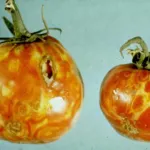 DiseaseTomato spotted wilt virusOrthotospovirus tomatomaculae (tomato spotted wilt virus; TSWV)
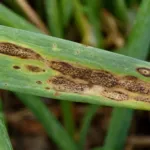 DiseaseStemphylium Leaf BlightStemphylium vesicarium (Wallr.) E.G. Simmons
 DiseaseRhizopus soft rotRhizopus stolonifer
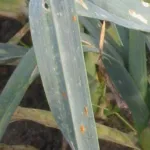 DiseaseAllium rustPuccinia allii
Toxicity and pollen
Allium species, including ornamental onions, contain sulfur compounds that can cause gastrointestinal irritation and, in susceptible pets, potentially more serious red-blood-cell damage after ingestion. Risk depends on the amount eaten and the animal’s sensitivity. Wear gloves if handling irritating plant sap, prevent chewing, and contact a veterinarian or poison service after suspected pet ingestion.
- Typical season
- Typically May–June in much of the United States
- Pollination / pollen
- Insect-dispersed pollen; not typically released in large airborne clouds
The flowers produce pollen for insect visitors, and the pollen is not generally described as a major windborne seasonal allergen. However, species-specific allergy data for Allium christophii are limited, so a zero-risk claim is not justified. People with strong pollen sensitivity should avoid deliberate handling of abundant floral material and monitor individual reactions.
Native habitat
The species is associated with dry, open habitats in western and Central Asia, including rocky or stony ground and seasonally dry slopes. Its bulbous growth cycle fits climates with a moist spring growing period followed by a warm, relatively dry summer dormancy. Garden performance declines in persistently wet soils.
Interesting fact
Its huge flowerhead is an umbel made from many separate flowers, not one single bloom. The foliage often fades before the flower stem reaches full display. Dry seedheads can remain ornamental after the flowers have finished. It is frequently encountered in horticulture under alternate spellings or historical names, but the requested accepted taxon is Allium christophii.
Frequently asked questions (FAQ)
The most relevant questions about this plant, with short and direct answers.
🌱Quick care
What are the basic care requirements for Allium christophii?⌄
Grow Allium christophii in full sun, well-drained sandy or gritty soil, and provide low to moderate water. It is a cold-hardy bulbous perennial that prefers drier conditions during summer dormancy.
How tall does Allium christophii grow?⌄
Allium christophii usually grows about 12 to 24 inches tall. Its flowerheads can reach approximately 8 to 12 inches across, making them unusually large relative to the plant.
🌤️Environment and placement
How much sun does Allium christophii need?⌄
Allium christophii needs full sun, ideally at least 6 hours of direct sunlight daily. Insufficient light can reduce flowering and make the stems weaker.
What USDA zones can grow Allium christophii?⌄
Allium christophii is generally hardy in USDA Zones 4 through 8. Exact performance can vary with drainage, winter moisture, and local climate.
What type of soil is best for Allium christophii?⌄
Plant Allium christophii in loose, well-drained sandy, gritty, or loamy soil. Avoid heavy or poorly drained ground because excess moisture can cause bulb rot.
💧Care and problems
Why are the leaves of Allium christophii dying before it flowers?⌄
The leaves naturally yellow and wither before or during flowering as the bulb shifts energy into the flower stalk. This is normal and is not usually a sign of disease.
How often should Allium christophii be watered?⌄
Water Allium christophii when it is actively growing if the soil becomes dry, but allow the soil to drain between waterings. Reduce watering after flowering and keep dormant bulbs relatively dry during summer.
Is Allium christophii drought tolerant?⌄
Established Allium christophii is drought tolerant, particularly after flowering and during summer dormancy. It still benefits from moisture during spring growth and should not be allowed to dry out immediately after planting.
What problems commonly affect Allium christophii?⌄
Allium christophii has few serious pest or disease problems, but overly wet soil can cause bulb rot. Mildew, rust, leaf spots, or thrips may occasionally occur under stressful conditions.
🪴Planting and repotting
Can Allium christophii grow in containers?⌄
Yes, Allium christophii can grow in containers with drainage holes and a gritty, freely draining potting mix. Keep the container from staying consistently wet, especially after the foliage dies back.
When should Allium christophii bulbs be planted?⌄
Plant Allium christophii bulbs in fall, after summer heat has passed and before the ground freezes. Fall planting allows roots to develop before spring growth.
How deep should Allium christophii bulbs be planted?⌄
Plant Allium christophii bulbs about 3 to 6 inches deep, with the pointed end facing upward. Use the larger depth in lighter soils or colder areas, provided the soil drains well.
How far apart should Allium christophii bulbs be planted?⌄
Space Allium christophii bulbs about 10 to 12 inches apart. Planting in groups creates a stronger visual display while leaving enough room for clumps to expand.
Can Allium christophii bulbs be planted in spring?⌄
Spring planting is possible if healthy bulbs or actively growing plants are available, but fall is the preferred planting season. Spring-planted bulbs may flower poorly or wait until a later season to establish.
✂️Propagation and pruning
Does Allium christophii spread in the garden?⌄
Allium christophii slowly forms larger clumps and may self-seed if mature flowerheads are left in place. It is generally not considered invasive, but deadheading can limit unwanted seedlings.
Should Allium christophii be deadheaded?⌄
Deadhead Allium christophii after flowering if you want to reduce self-seeding and keep the bed tidier. Alternatively, leave the dried flowerheads standing for attractive late-season and winter interest.
How do you propagate Allium christophii?⌄
Propagate Allium christophii by dividing established bulbs or by sowing seed. Division is usually the faster way to produce flowering-size plants, while seedlings may require several years to mature.
When should Allium christophii be divided?⌄
Divide established Allium christophii clumps in fall, after the foliage has died back. Replant the offsets promptly at the same general depth as mature bulbs.
Does Allium christophii need pruning?⌄
Allium christophii does not need routine pruning. Remove only spent flowerheads or damaged foliage, and allow healthy leaves to die back naturally so they can replenish the bulb.
⚠️Toxicity and safety
Do deer and rabbits eat Allium christophii?⌄
Allium christophii is generally resistant to deer and rabbits because of its onion-like odor and compounds. No plant is completely browse-proof, particularly where food is scarce.
Is Allium christophii toxic to dogs and cats?⌄
Yes, Allium christophii should be treated as toxic to dogs and cats if eaten. Keep bulbs, leaves, flowers, and seeds away from pets because ingestion can cause gastrointestinal illness and potentially more serious allium-related effects.
Is Allium christophii toxic to people?⌄
Yes, Allium christophii has poisonous characteristics if eaten, despite being related to edible onions and garlic. Ingestion may cause nausea, vomiting, or diarrhea, so do not use it as a food plant.
Which parts of Allium christophii are toxic?⌄
Potentially toxic parts include the bulbs, roots, leaves, stems, flowers, fruits, and seeds. Keep the entire plant away from children and animals, and seek professional advice after suspected ingestion.
🌸Flowering and special interest
When does Allium christophii bloom?⌄
Allium christophii usually blooms in late spring to early summer, often around May in temperate parts of the United States. Bloom timing varies by USDA zone and seasonal weather.
What color are Allium christophii flowers?⌄
The flowers are pale lavender to silvery purple, often with a metallic appearance. Many small, star-shaped flowers form a large spherical cluster.
Why is my Allium christophii not flowering?⌄
Allium christophii may fail to flower because of insufficient sunlight, poor drainage, immature bulbs, overcrowding, or excessive moisture. Newly divided offsets can also need more than one growing season to reach flowering size.
Can Allium christophii flowerheads be dried?⌄
Yes, Allium christophii flowerheads dry well and can remain decorative for many weeks after blooming. Cut them when the heads are fully formed and beginning to dry, then hang or place them in a dry location.
Does Allium christophii attract pollinators?⌄
Yes, the large flower clusters of Allium christophii attract pollinators such as bees and butterflies. The plant can also provide visual interest for songbirds after flowering when seed capsules develop.
Can Allium christophii be used as a cut flower?⌄
Yes, Allium christophii makes a long-lasting cut flower with sturdy stems and large spherical heads. The dried heads are also useful in arrangements after the fresh color fades.
Similar plants
 Azure Monkshood (Aconitum carmichaelii) care guideAconitum carmichaelii
 Monkshood (Aconitum ‘Stainless Steel’)Aconitum 'Stainless Steel'
 Monkshood (Aconitum ‘Bressingham Spire’)Aconitum 'Bressingham Spire'
 Golden full moon maple (Acer shirasawanum ‘Aureum’)Acer shirasawanum 'Aureum'
 Globosum (Acer platanoides ‘Globosum’)Acer platanoides 'Globosum'
 Striped maple (Acer pensylvanicum) care guideAcer pensylvanicum