
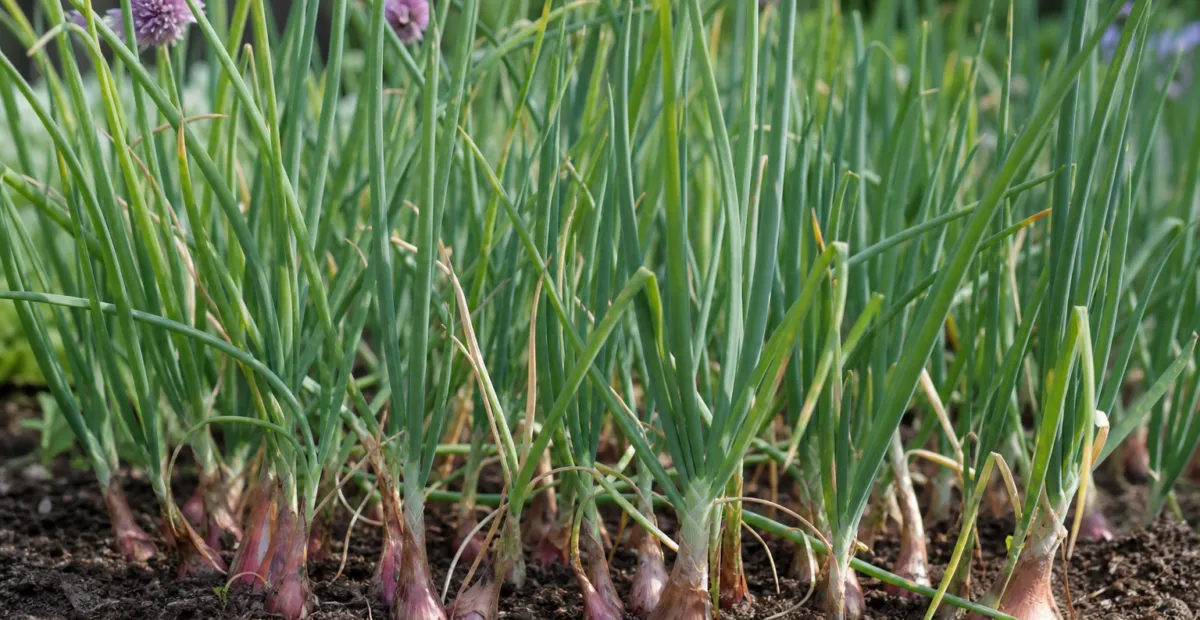
 AI-generated illustration
Shallot (Allium cepa Aggregatum Group) short overview
Allium cepa Aggregatum Group is the cultivated shallot group, grown in U.S. gardens as a cool-season bulb vegetable. It forms clusters of mild, aromatic bulbs beneath slender blue-green leaves and performs best in full sun, fertile well-drained soil, and steady moisture. Plant sets shallowly in spring or fall where hardy, harvest when the tops yellow and fall, then cure the bulbs before storage. A cool-season shallot group producing clustered edible bulbs and slender aromatic leaves. It grows best in full sun, loose fertile soil, and moderate even moisture.
Taxonomic classification
Shallot (Allium cepa Aggregatum Group) care guide
Light and placement
Give full sun, ideally at least 6 hours of direct light, in an open bed or south- to west-facing container. Strong light supports leaf growth and bulb formation. Excess shade produces weak, floppy foliage and smaller bulbs; severe heat combined with drought can cause premature yellowing, so maintain even moisture during bulb enlargement.
Watering and humidity
Water deeply when the upper inch of soil begins to dry, keeping moisture steady during leaf and bulb development. Reduce watering as the tops yellow and fall, then stop shortly before lifting the bulbs. Avoid frequent shallow watering, overhead irrigation, and saturated soil, all of which increase disease and rot risk.
Soil and growing medium
Use loose, fertile soil that drains freely while holding moderate moisture. Sandy loam or loam enriched with finished compost is suitable; heavy clay should be amended or grown in raised beds. A near-neutral to slightly alkaline reaction is generally suitable. Avoid saturated ground, which encourages bulb and root rots.
Feeding
Incorporate finished compost before planting and, if soil tests indicate a need, apply a balanced vegetable fertilizer at planting. A light nitrogen feed early in growth may help poor soils, but stop heavy nitrogen applications once bulbs begin swelling. Do not fertilize drought-stressed plants or continue feeding after tops start yellowing.
Growth and habit
Plants begin as a single set or seedling and enlarge into a compact cluster of bulbs below ground. Leaves gradually yellow and topple as the bulbs reach maturity. Harvesting at that stage, followed by curing in a dry, airy place, improves storage and reduces neck-rot risk.
Planting and repotting
Plant shallot sets in early spring as soon as the soil can be worked, or in fall in regions where the bulbs can overwinter reliably. Set bulbs with the pointed tip upward and cover with about 1 inch of soil, leaving the neck close to the surface. Space sets about 6 inches apart for mature clusters.
Repotting is generally unnecessary. In containers, replace the spent growing medium annually or transplant clustered bulbs into fresh, fertile mix before active growth resumes. Choose a container at least 8 inches deep with generous drainage holes.
Propagation and pruning
Propagation
Propagate by planting dormant bulbs or shallot sets, which divide into a cluster during the growing season. Seed propagation is possible but slower and less uniform for maintaining culinary bulb traits. Plant sets in spring or fall according to local climate and cultivar.
Pruning
No routine pruning is needed. Remove only damaged or diseased leaves. For bulb production, harvest when most foliage has naturally yellowed and fallen rather than cutting healthy tops prematurely.
Overwintering
In mild regions, fall-planted sets can overwinter outdoors under a light mulch. In colder areas, use a well-drained site and protective mulch after the ground cools, or plant in spring. Container-grown bulbs are more exposed to freezing and should be protected from prolonged deep frost.
Uses
Grow primarily for mild, sweet, aromatic bulbs and edible green leaves used fresh or cooked in sauces, salads, soups, roasting, and storage dishes. It is a practical kitchen-garden crop and can be grown in raised beds or containers. Flowering plants can also provide nectar and pollen for visiting insects, although allowing bloom may reduce bulb production.
Appearance
The plant forms a low clump of narrow, hollow, blue-green leaves arising from a bulb cluster. Mature shallot bulbs are commonly elongated or rounded and enclosed in papery tunics that may be yellow, copper, rose, or reddish-brown depending on cultivar. The onion-like aroma is a useful identification feature when foliage is bruised.
Flowering
If bulbs are left to mature, they can send up a leafless flowering stalk bearing a rounded umbel of many small, six-tepaled flowers. Flowering is less desirable when the crop is being grown for bulbs because bolting diverts stored resources. Individual umbels open progressively over roughly two weeks.
Pollination and visitors
Flowering onion-family umbels provide nectar and pollen for a range of insects. Bees are important visitors in onion seed production, and flies and other small insects may also visit. Pollination matters primarily when seed is being produced; plants harvested for bulbs are usually removed before flowering.
Diseases and pests
Diseases
Use crop rotation, clean planting material, good air circulation, and well-drained soil. Watch for onion white rot, downy mildew, neck rot, rust, and bulb rots. Remove badly affected plants and avoid replanting Alliums in contaminated soil; do not overwater or wet foliage late in the day.
Pests
Common problems include onion fly or onion maggot, bulb mites, leek moth, and nematodes such as narcissus eelworm. Use floating row covers over young plants, rotate Allium crops, remove crop debris, and avoid planting damaged or questionable sets. Inspect leaves and bulbs regularly; use labeled controls only when necessary.
Related diseases and pests
Only Plant Doctor profiles whose host data indicate this plant may be affected are shown here.
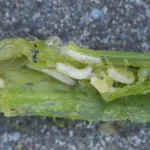 PestOnion MaggotDelia antiqua
 DiseaseOnion downy mildewPeronospora destructor
 DiseaseAllium rustPuccinia allii
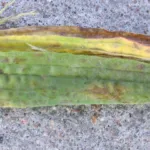 PestStem and Bulb NematodeDitylenchus dipsaci
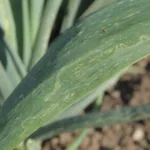 PestAllium leafminerPhytomyza gymnostoma Loew
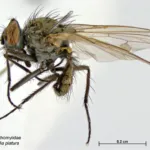 PestSeedcorn maggotDelia platura
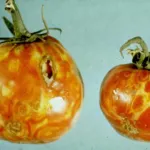 DiseaseTomato spotted wilt virusOrthotospovirus tomatomaculae (tomato spotted wilt virus; TSWV)
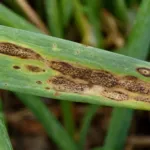 DiseaseStemphylium Leaf BlightStemphylium vesicarium (Wallr.) E.G. Simmons
Toxicity and pollen
The bulbs and green parts are edible to people when properly used as food. However, Allium compounds can damage red blood cells in dogs and cats, especially after substantial or concentrated ingestion. Keep harvested bulbs, scraps, powders, and cooked dishes away from pets and seek veterinary advice after ingestion.
- Typical season
- Late spring to summer when flowering is permitted
- Pollination / pollen
- Insect-dispersed pollen
This is an insect-pollinated crop, so its pollen is not typically released in large windborne clouds. Nevertheless, flowering plants can expose sensitive people to pollen during bloom, and individual allergy responses vary. The main practical allergy concern is usually direct contact with plant sap or handling rather than widespread airborne exposure.
Native habitat
The crop derives from the cultivated Allium cepa complex associated with temperate Central Asian origins. In cultivation it favors open, seasonally cool conditions, fertile mineral soils, and reliable drainage rather than wet habitats. Modern shallots are maintained through horticultural selection and are widely grown outside their historical origin.
Interesting fact
The Aggregatum Group is the horticultural shallot group within Allium cepa rather than a currently accepted separate species. Individual planted bulbs commonly divide into several bulbs. Shallots are perennial botanically but are usually cultivated as a one-season vegetable crop. Leaving plants to flower supports seed production and insect visitation but can reduce bulb yield.
Frequently asked questions (FAQ)
The most relevant questions about this plant, with short and direct answers.
🌱Quick care
What is the best light for Allium cepa Aggregatum Group, or shallots?⌄
Shallots grow best in full sun, ideally receiving at least 6 hours of direct light daily. Good light supports strong leaf growth and larger, better-cured bulbs.
How often should I water shallots?⌄
Water shallots regularly enough to keep the soil evenly moist but never waterlogged. Thoroughly moisten the soil to about 8–12 inches deep, then allow excess water to drain.
Are shallots annuals or perennials?⌄
Allium cepa Aggregatum Group is botanically a perennial but is usually grown as an annual vegetable. In favorable climates, bulbs can survive winter and regrow for a later harvest.
🌤️Environment and placement
What soil is best for growing shallots?⌄
Use fertile, loose, well-drained loam or sandy loam enriched with organic matter. Avoid heavy, compacted or poorly drained soil because excess moisture can cause bulb rot.
What soil pH do shallots prefer?⌄
Shallots generally perform well in soil with a pH of about 5.5–7.5. A soil test can help determine whether lime or fertilizer is needed before planting.
Can shallots grow in containers?⌄
Yes, shallots can grow in containers that are at least 8–12 inches deep and have excellent drainage. Use fertile potting mix and space bulbs according to whether you want larger clusters or smaller individual bulbs.
Are shallots cold hardy?⌄
Shallots tolerate cool weather and can overwinter in many parts of the United States. In USDA Zones 4–5 or areas with severe freezes, protect fall-planted bulbs with mulch or frost cloth.
💧Care and problems
Should I mulch around shallots?⌄
Yes, a light organic mulch can conserve moisture, suppress weeds and reduce winter injury. Keep mulch from pressing tightly against the bulb necks to improve airflow and reduce rot risk.
Do shallots need fertilizer?⌄
Shallots benefit from fertile soil and a soil-test-based fertilizer program. Avoid heavy nitrogen applications late in the season because they can encourage leaf growth, delay curing and reduce storage quality.
Why are my shallot leaves turning yellow or falling over?⌄
Yellowing and naturally falling or toppling leaves usually indicate that the bulbs are approaching maturity. Premature yellowing can also result from drought, overwatering, disease or insect damage.
Why are my shallot bulbs rotting?⌄
Shallot bulbs commonly rot when soil stays too wet, drainage is poor or infected plant material remains in the bed. Improve drainage, avoid overhead watering and remove diseased plants promptly.
What pests commonly affect shallots?⌄
Common pests include onion maggots, thrips, aphids and, in some regions, the allium leafminer. Crop rotation, weed control, good airflow and prompt removal of badly infested plants can reduce problems.
Why are my shallots bolting?⌄
Shallots may bolt when cold conditions are followed by warming or when plants experience stress. Bolted plants are still edible, but their bulbs may be smaller and store less reliably.
When are shallots ready to harvest?⌄
Harvest dry shallot bulbs when most of the tops have fallen over and begun to yellow or brown. Green shallots can be harvested earlier, often when the tops are about 6–8 inches tall.
How do I cure shallots after harvesting?⌄
Cure shallots for about 1–2 weeks in a dry, well-ventilated place until the skins are papery and the foliage is completely dry. Keep harvested bulbs out of rain and direct, intense sunlight during curing.
How should I store shallots?⌄
Store cured shallots in a cool, dry, dark location with good air circulation, such as a mesh bag or slatted crate. A temperature near 32–40°F with low humidity is suitable for long-term storage.
🪴Planting and repotting
When should I plant shallot bulbs in the United States?⌄
Plant shallot sets in early spring as soon as the ground can be worked, or plant them in fall where winters are suitable for overwintering. Local timing should follow your region’s soil conditions and expected freezes.
How deep should shallot bulbs be planted?⌄
Plant shallot bulbs about 1–2 inches deep with the pointed end upward. Leave the neck or tip near the soil surface rather than burying the bulb deeply.
How far apart should I space shallot bulbs?⌄
Space shallot sets about 3–6 inches apart in rows 12–18 inches apart. Closer spacing produces smaller bulbs, while wider spacing encourages larger clusters.
Can shallots be grown from seed?⌄
Yes, Allium cepa Aggregatum Group can be grown from seed as well as from bulb sets. Sow seeds about ¼–½ inch deep, then thin seedlings to roughly 2–4 inches apart.
Should I plant shallots from sets or seeds?⌄
Bulb sets are usually the simplest choice and typically produce a harvest more quickly. Seeds are useful when you want specific varieties or more uniform single bulbs, but they require a longer growing period.
✂️Propagation and pruning
How do I propagate shallots from bulbs?⌄
After harvest and curing, separate a healthy cluster into individual bulbs and replant the best outer bulbs during the next suitable planting season. Each planted bulb can produce a single bulb or a cluster, depending partly on spacing and variety.
Can shallot tops be harvested while the bulbs are growing?⌄
Yes, young shallot leaves can be harvested as green onions during the growing season. Take only a portion of the foliage if you want the plant to continue developing mature bulbs.
Can stored shallots be replanted?⌄
Yes, healthy, fully cured shallot bulbs can be saved for replanting. Select firm bulbs without mold, soft spots or insect damage and store them in dry conditions until planting time.
⚠️Toxicity and safety
Are shallots edible for people?⌄
Yes, shallot bulbs and young leaves are edible for people and are commonly used as culinary alliums. They have a milder, sweeter flavor than many common bulb onions.
Are shallots toxic to dogs and cats?⌄
Yes, shallots are toxic to dogs and cats because they are members of the Allium group. Raw, cooked, dried or powdered material can cause gastrointestinal illness and potentially red-blood-cell damage, so contact a veterinarian promptly after ingestion.
Can pets eat shallot leaves or garden scraps?⌄
No, pets should not eat shallot leaves, bulbs or scraps because all plant parts contain the same general Allium-related hazard. Keep harvested material and kitchen waste inaccessible to dogs and cats.
🌸Flowering and special interest
Do shallots produce flowers?⌄
Yes, shallots can produce pink or red flowers on leafless stalks, although they are primarily grown for their bulbs. Flowering is often called bolting and may reduce bulb size and storage quality.
Should I remove shallot flower stalks?⌄
Remove flower stalks if your priority is bulb production and the plant has begun bolting. Cutting the stalk may redirect some resources, but it cannot fully reverse the effects of bolting.
Similar plants
 Azure Monkshood (Aconitum carmichaelii) care guideAconitum carmichaelii
 Monkshood (Aconitum ‘Stainless Steel’)Aconitum 'Stainless Steel'
 Monkshood (Aconitum ‘Bressingham Spire’)Aconitum 'Bressingham Spire'
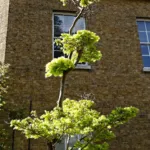 Golden full moon maple (Acer shirasawanum ‘Aureum’)Acer shirasawanum 'Aureum'
 Globosum (Acer platanoides ‘Globosum’)Acer platanoides 'Globosum'
 Striped maple (Acer pensylvanicum) care guideAcer pensylvanicum