
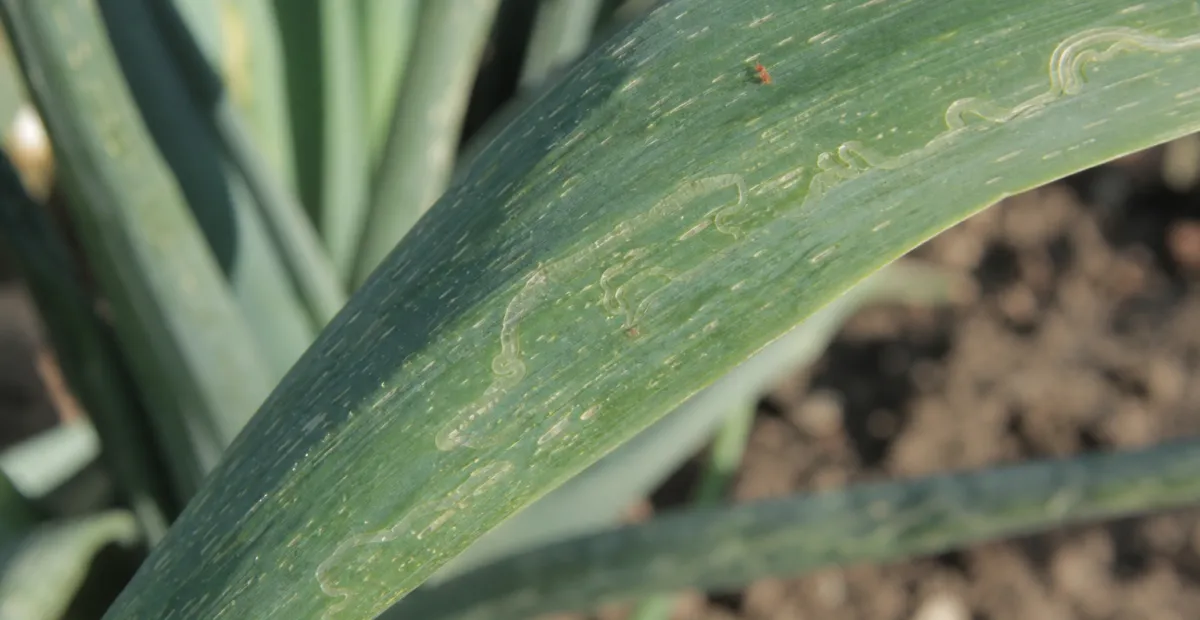
Allium leafminer
Phytomyza gymnostoma LoewAllium leafminer overview
Allium leafminer, Phytomyza gymnostoma, is an invasive fly that attacks onions, leeks, garlic, shallots, scallions and chives. Females puncture leaves for feeding and egg-laying, while larvae tunnel inside the foliage and into leaf bases. Early signs include rows of white feeding or oviposition marks, followed by winding mines, distorted leaves, wilting and soft rot. The fall generation is often especially damaging in northeastern U.S. production.
Typical conditions
Overview
Allium leafminer is the common U.S. name for Phytomyza gymnostoma, a fly in the family Agromyzidae. Adults make characteristic rows of pale punctures while feeding and laying eggs. The maggots then tunnel inside Allium foliage, where their feeding can weaken young plants, deform leaves, create entry points for decay and make marketable crops unfit for sale.
In the United States, it is an invasive pest of particular concern in the Northeast and Mid-Atlantic. Similar mines can be caused by other leafminers, so confirmation should consider the host, puncture pattern, larval mines and, when possible, a puparium or adult specimen.
Symptoms and identification
Inspect the middle and upper portions of leaves for multiple small, pale white spots arranged in a line. These are feeding and oviposition punctures made by adult females. Several days later, narrow serpentine mines may become visible inside the leaf.
- Leaves twist, curl, collapse or split, especially on young leeks, onions and scallions.
- Larval mines may extend toward the leaf sheath, bulb or pseudostem.
- Plants can become stunted, wilted or soft, and secondary bacterial or fungal rots may develop.
- Brown, elongated puparia may be found in leaf bases, damaged tissue or nearby soil.
- Heavy infestations can kill seedlings or severely reduce crop quality.
Causes and spread
Damage is caused by larvae feeding inside living Allium tissue. Adult flies spread locally by flying between susceptible plants. Long-distance movement is most plausibly associated with infested plant material, including leaves, stems, bulbs or transplants containing eggs, larvae or pupae.
Unharvested crops, volunteer onions or garlic, perennial chives, cull piles and infested residues can maintain the pest between plantings. Staggered plantings may provide continuous hosts for both seasonal flights.
Life cycle and persistence
Under temperate North American conditions, allium leafminer generally has two generations each year. Adults of the spring generation are commonly active from April through May in the northeastern United States. Females puncture leaves, feed and insert eggs. Larvae mine internally, then pupate near the leaf base or in surrounding soil.
The spring generation enters a summer resting period as pupae. Adults of the fall generation commonly emerge in September and remain active into November. Pupae then overwinter at the plant base or in nearby soil. Exact flight dates vary with latitude, elevation, weather and local crop conditions.
Treatment and control
Begin management when adult activity or fresh punctures are detected rather than waiting for extensive mines. Remove and destroy heavily infested leaves or plants where feasible, placing material in a sealed bag for disposal. Do not move infested plants, bulbs, soil or residue to another garden or field.
For commercial or larger plantings, integrate flight monitoring, crop covers, sanitation and carefully timed interventions. Protecting young plants before egg-laying can be more effective than treating larvae after they are enclosed inside leaves. If pesticide use is justified, follow the current crop-specific label and state requirements; local extension recommendations may differ by crop and region.
Low-impact and biological control
- Use fine-mesh insect exclusion fabric as the primary nonchemical tactic, installed before adults arrive and maintained without gaps.
- Scout both sides of leaves at least weekly during spring and fall risk periods; increase frequency when punctures appear.
- Hand-remove and destroy mined leaves or infested plants in small gardens.
- Eliminate volunteer Alliums, cull piles and unmanaged chive clumps that can support the pest.
- Use crop rotation and temporal separation from previously infested Allium beds.
- Research has identified chives as highly attractive to the pest, but trap cropping is not a stand-alone recommendation unless the trap crop can be intensively monitored and destroyed before it produces new adults.
- Do not rely on beneficial insects alone: commercially dependable biological-control programs for this pest are not established for home gardens.
Prevention
- Use certified, pest-free transplants and inspect incoming Allium plants for punctures, mines and pupae.
- Cover susceptible crops with fine insect netting before the expected spring or fall adult flight; seal edges completely and avoid trapping adults beneath the cover.
- Remove volunteer onions, garlic, scallions and chives near production beds when they are not needed.
- Harvest promptly when practical, and remove or destroy crop residues immediately after harvest.
- Do not compost infested Allium material unless the composting process reliably reaches temperatures sufficient to destroy pupae.
- Rotate Allium beds and avoid placing successive plantings beside infested fields or residue piles.
- Monitor regularly for the linear white puncture pattern, especially during cool spring and fall weather.
Interesting facts
- The species is native to Europe and was first detected in the United States in Pennsylvania in 2015.
- Unlike many leafminers, the adult female’s repeated punctures are often an important early diagnostic clue before mines become obvious.
- Leeks and chives can be particularly attractive or susceptible hosts, although preference and damage levels vary with plant age and crop conditions.
- The fall generation is frequently more damaging than the spring generation in northeastern U.S. Allium production.
- The pest is regulated through federally recognized state-managed phytosanitary programs in some U.S. states, so movement requirements can vary by location.
Use pesticides only when necessary and only products legally authorized for the specific Allium crop and allium leafminer problem in your country and state. Follow the current label exactly, including crop, rate, preharvest interval, worker-protection requirements and restrictions on covered crops. Because larvae are protected inside leaves and registrations change, obtain current guidance from your state extension service or pesticide regulatory agency rather than applying a generic program.
Affected plants
The plants below are linked to this problem by structured host-plant data. The list updates automatically as new plant profiles are added.
 Onion (Allium cepa) care guideAllium cepa
 Allium christophii care guideAllium christophii
 Bunching onion (Allium fistulosum) care guideAllium fistulosum
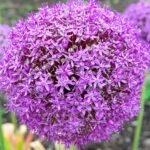 Giant Allium (Allium giganteum) care guideAllium giganteum
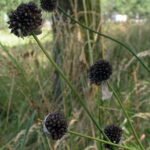 Ornamental onion (Allium) care guideAllium
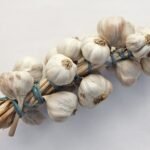 Garlic (Allium sativum) care guideAllium sativum
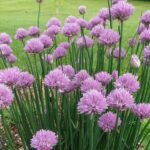 Chives (Allium schoenoprasum) care guideAllium schoenoprasum
 Ransoms (Allium ursinum) care guideAllium ursinum
 Wild leek or broadleaf wild leek (Allium ampeloprasum) care guideAllium ampeloprasum
 Shallot (Allium cepa Aggregatum Group)Allium cepa Aggregatum Group
 Cepa Group (Allium cepa Group)Allium cepa Cepa Group
 Rakkyo (Allium chinense) care guideAllium chinense