Bacterial Speck of Tomato
Pseudomonas syringae pv. tomatoBacterial Speck of Tomato overview
Bacterial speck is a bacterial disease of tomato caused by Pseudomonas syringae pv. tomato. It produces tiny black leaf and fruit lesions, often with yellow-green halos, and is favored by cool, wet weather. Infected seed, transplants, rain splash, irrigation water, handling and contaminated debris can spread the pathogen. Early sanitation and resistant varieties are central to management.
Typical conditions
Overview
Bacterial speck of tomato is caused by Pseudomonas syringae pv. tomato, a fluorescent, Gram-negative plant-pathogenic bacterium. It affects field-grown and greenhouse tomatoes and can reduce plant vigor, fruit appearance and marketability.
The disease is most damaging when susceptible tomato tissue remains wet during cool weather. It is often confused with bacterial spot, caused by Xanthomonas species, but bacterial speck typically produces smaller fruit lesions—about 1/16 inch or less—and is particularly associated with cool, wet conditions.
Symptoms and identification
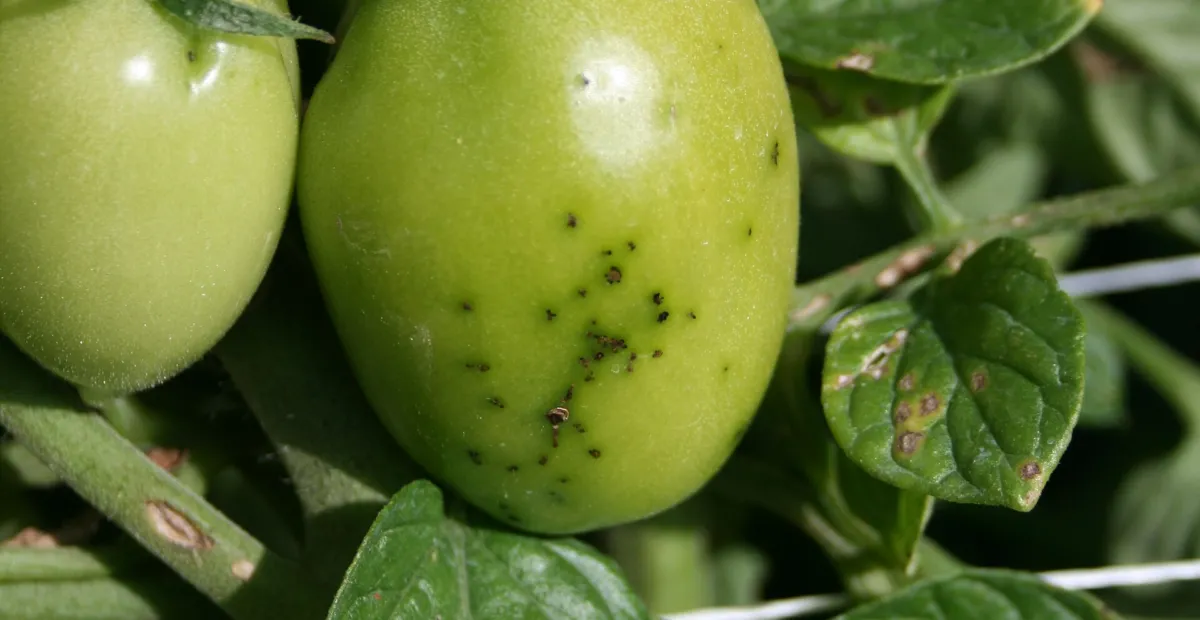
- Leaves develop tiny black to dark-brown, often slightly sunken or necrotic spots, commonly about 2 mm or smaller, with yellow or light-green halos.
- Lesions may occur on leaflets, petioles, stems and flower parts; numerous spots can merge and cause blighting or premature leaf loss.
- Green fruit may develop small black, slightly raised or superficial specks, sometimes surrounded by a darker green halo. Spots on ripe fruit are generally superficial and dark.
- Severe infections can reduce photosynthetic leaf area and fruit quality, although symptoms and severity vary with cultivar, pathogen strain and weather.
Visual diagnosis is not definitive. Bacterial speck lesions overlap with bacterial spot, early blight and other causes of tomato spotting; suspect samples can be submitted to a state plant diagnostic laboratory.
Causes and spread
The pathogen may arrive on infected or contaminated seed, nursery plants and transplants. It can survive on infected crop debris, on tomato surfaces without immediately visible symptoms, and on some surrounding vegetation or weeds. Rain, wind-driven droplets, overhead irrigation, wet tools, workers' hands and plant-to-plant contact move bacteria over foliage.
Infection is favored when free water is present on leaves. Bacteria can enter through natural openings such as stomata or through wounds caused by handling, pruning, insects, sand or weather. Once established on a wet canopy, populations can increase rapidly.
Life cycle and persistence
Pseudomonas syringae pv. tomato can persist on seed, transplants, plant debris and as an epiphytic population on plant surfaces. During cool, wet weather, cells multiply on moist tomato foliage and are transported by splashing water or handling.
After entering susceptible tissue, the bacterium colonizes the leaf and produces localized necrotic specks. New inoculum is released from infected tissue and can initiate additional infections. Warm, dry conditions generally suppress disease development, but surviving surface populations may persist and resume activity when foliage becomes wet again.
Treatment and control
There is no curative treatment that reliably restores tissue after bacterial speck lesions have formed. Remove and discard heavily infected leaves or plants when practical, especially early in the outbreak, and avoid spreading bacteria with wet hands, clothing or tools.
Reduce leaf wetness immediately by switching to ground-level irrigation, improving spacing and airflow, and avoiding unnecessary handling. If fruit are still marketable, harvest and handle them carefully; heavily spotted fruit should not be used for seed.
For valuable plantings or uncertain diagnoses, obtain a laboratory diagnosis before committing to repeated sprays. Copper products may provide protective suppression in some situations, but results are variable and established infections are difficult to reverse.
Low-impact and biological control
Use an integrated approach centered on clean seed and transplants, sanitation, dry foliage, crop rotation and resistant or tolerant cultivars. Products listed by the Organic Materials Review Institute (OMRI) or otherwise permitted for organic production may include fixed copper or other biological materials, but their usefulness depends on timing, disease pressure, coverage and the specific product label.
Some microbial antagonists have reduced bacterial speck in research trials, but biological performance is product- and environment-dependent. Apply only products registered or permitted for the crop and use pattern in the United States, and do not treat biologicals as a substitute for sanitation and moisture management.
Prevention
- Use certified or tested disease-free seed and purchase healthy, inspected transplants from reputable sources.
- Select tomato cultivars described as resistant or tolerant to bacterial speck where available; resistance performance can vary among pathogen races and regional strains.
- Provide good spacing, staking or trellising and airflow so foliage dries quickly.
- Use drip irrigation or a soaker hose rather than overhead watering. Water early enough for foliage and soil surfaces to dry before night.
- Do not work among tomato plants when foliage is wet. Sanitize stakes, trays, knives, pruners and other reusable equipment between plants or batches.
- Remove badly infected plants or leaves and dispose of them in accordance with local rules; do not place diseased tomato tissue in a home compost pile unless the composting system reliably reaches pathogen-reducing temperatures.
- After harvest, remove tomato debris and control volunteer tomatoes and solanaceous weeds that may help maintain inoculum.
- Maintain a multi-year rotation away from tomato and related solanaceous crops when practical, recognizing that seed and transplant introduction can still be important sources.
Interesting facts
- Bacterial speck and bacterial spot can look very similar on leaves, but bacterial speck usually produces much smaller spots on tomato fruit.
- Pathogen strains differ in virulence and in their ability to overcome resistance traits, so a cultivar reported as resistant may not perform identically in every region.
- Many modern tomato lines carry resistance derived from wild tomato relatives, including the historically important Pto/Prf resistance system; this protection is not equally effective against all pathogen races.
- The bacterium may survive on plant surfaces without obvious symptoms, which helps explain why apparently healthy transplants can sometimes introduce disease.
Use only pesticide products legally authorized for bacterial speck or the relevant use on tomato in your state and country. Follow the current EPA-approved label exactly, including crop, target disease, rate, preharvest interval, reentry interval, personal protective equipment and maximum seasonal applications. Copper resistance and reduced efficacy can occur; repeated applications without label and resistance-management guidance may injure plants and provide little benefit.
Affected plants
The plants below are linked to this problem by structured host-plant data. The list updates automatically as new plant profiles are added.