
 Source:
 Garden Huckleberry (Solanum scabrum) short overview
Garden Huckleberry, Solanum scabrum, is a tropical African nightshade grown for its broad edible leaves and glossy purple-black berries. It forms a vigorous annual or short-lived perennial herb with coarse green to purplish foliage, white star-shaped flowers, and upright fruit clusters. In the United States it is best treated as a warm-season crop, started after frost and grown in full sun with fertile, evenly moist soil.
Taxonomic classification
Garden Huckleberry (Solanum scabrum) care guide
Light and placement
Give the plant at least 6 hours of direct sun, ideally with morning and afternoon exposure. In very hot regions, light afternoon shade can reduce wilting and leaf scorch. Weak, stretched stems and small leaves usually indicate insufficient light; bleached patches, crispy margins, or sudden midday collapse suggest excessive heat, drought, or harsh reflected light rather than simple shade intolerance.
Watering and humidity
Water deeply when the top inch of soil begins to dry, then allow excess water to drain. Keep the root zone consistently moist during active leaf production and fruiting, using mulch to reduce rapid evaporation. Water more often during hot weather and less in cool periods. Avoid standing water, which encourages root problems and can reduce growth.
Soil and growing medium
Use fertile loam amended with compost, but keep the structure open enough for rapid drainage. A raised bed or large container is useful where native soil is heavy. The species tolerates a moderately broad soil reaction, although slightly acidic to neutral conditions are a practical target. Avoid compacted clay, fresh manure, and chronically saturated soil.
Feeding
Incorporate finished compost before planting, then apply a balanced vegetable fertilizer at label strength once plants are established. A second light feeding may be useful after repeated leaf harvests or when fruit production begins. Do not fertilize drought-stressed, waterlogged, or newly transplanted plants until they resume active growth.
Growth and habit
Plants are erect but can branch and spread laterally, with stems that may become purple and somewhat woody near the base. Cultivated forms vary substantially: leafy types emphasize large foliage, while fruiting selections may carry many conspicuous berries. Harvesting young shoots encourages branching, keeps the plant productive, and reduces excessive legginess.
Planting and repotting
Sow shallowly in warm, moist seed-starting mix and provide strong light after emergence. Harden seedlings gradually before planting outdoors. Set them into prepared soil only after frost danger has passed and the ground is warm. Water thoroughly at planting and maintain consistent moisture during establishment. Containers should be large enough to support vigorous branching.
For container culture, transplant seedlings into a pot at least 12 inches wide and deep, then move to a larger container if roots circle densely or the plant dries out rapidly. Repot during active warm-season growth, disturbing the root ball as little as practical. Refresh exhausted mix after a crop cycle rather than carrying depleted plants indefinitely.
Propagation and pruning
Propagation
Propagate mainly from seed. Sow in warm conditions because germination and early growth are slow in cool soil. Use fresh, clean seed and transplant seedlings after they develop several true leaves. Stem cuttings may also root, but seed is the more practical method for routine garden production.
Pruning
Harvest young shoot tips and outer leaves regularly to encourage branching. Remove damaged or diseased growth promptly. After heavy harvesting, cut back overly leggy stems to a healthy node. If grown as an annual, remove spent plants after frost or after seed production is complete.
Overwintering
This is not frost hardy in the United States. In most regions, grow it as a warm-season annual and protect plants before the first frost. Container plants can be moved indoors to a bright, warm location, but low winter light often causes weak growth. Reduce watering indoors while keeping the root ball from becoming completely dry.
Uses
Primarily grown as a leafy vegetable and, in selected forms, for fully ripe dark berries used in cooked preparations such as preserves or sauces. Young leaves are commonly cooked rather than eaten raw. Because Solanum species can contain variable glycoalkaloids, use only correctly identified, traditionally prepared plant material and never eat green or unripe berries.
Appearance
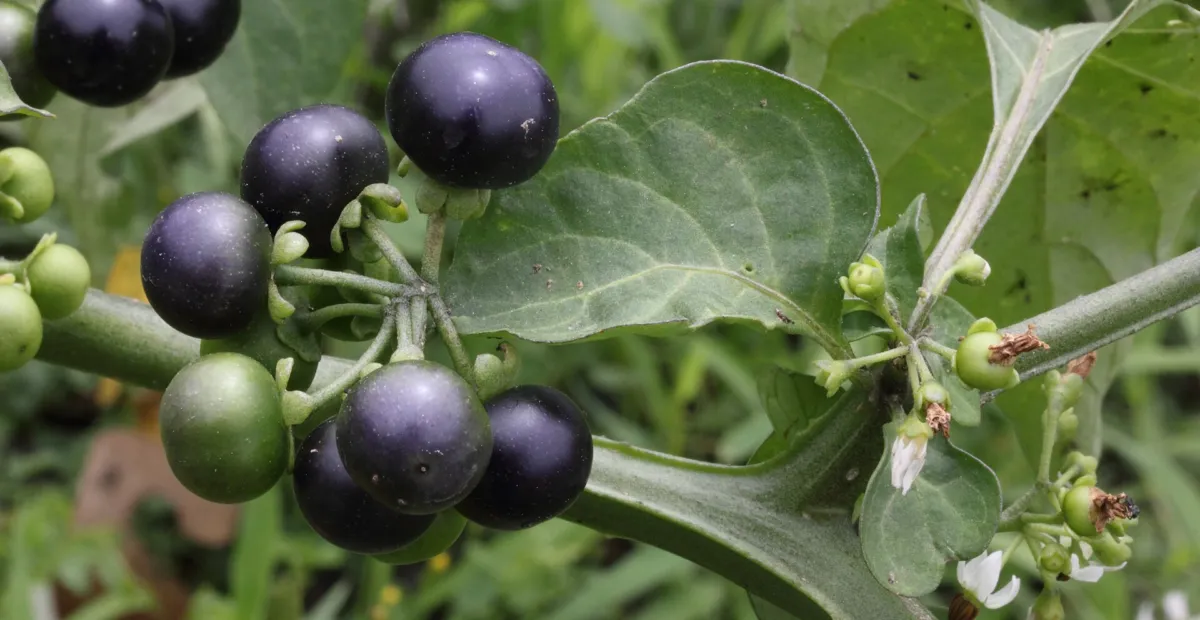
The leaves are broad, coarse, ovate to ovate-lanceolate, and often entire or slightly sinuate rather than deeply lobed. Stems may be prominently winged and green or purple, with sparse hairs. Small starry flowers are borne in loose, umbel-like clusters opposite or near the leaves. The glossy purple-black berries remain enclosed at the base by a persistent calyx.
Flowering
Flowers are bisexual and typically arranged in simple or forked clusters containing several to many blooms. The corolla is rotate and five-pointed, with prominent anthers surrounding the style. Flowering occurs during warm, actively growing weather, and berries develop progressively after anthesis. The species is reported to be mainly self-pollinating, with some outcrossing.
Pollination and visitors
The flowers provide pollen rather than a substantial nectar reward. Solanaceous poricidal anthers can require vibration by bees for efficient pollen removal, although this species is reported to rely mainly on self-pollination with limited outcrossing. Bees and bumblebees are the most relevant documented visitor groups.
Solanum scabrum photos
Click any photo for a larger view. Source, author and license are shown separately.
Diseases and pests
Diseases
Prevent problems by providing good air circulation, avoiding overhead irrigation, and rotating nightshade crops. Watch for damping-off in seedlings, root rot in saturated soil, and leaf-spot or blight-like symptoms during prolonged wet weather. Remove affected leaves, disinfect tools, and discard severely diseased plants rather than composting them.
Pests
Aphids, whiteflies, flea beetles, spider mites, and caterpillars may attack foliage. Inspect leaf undersides regularly, use a strong water spray for light infestations, and protect seedlings with row cover where appropriate. Encourage beneficial insects and reserve labeled insecticides for damaging populations, following all product directions.
Toxicity and pollen
Solanum scabrum is cultivated as food, but research on this exact species reports variable glycoalkaloid and saponin levels among genetic sources and maturity stages. As with related nightshades, green berries and other immature tissues warrant particular caution. Eat only correctly identified, fully ripe fruit or traditionally prepared leaves, and avoid raw or unripe material. Contact Poison Control after suspected ingestion.
- Typical season
- Usually summer in U.S. outdoor culture
- Pollination / pollen
- Dry pollen released from poricidal anthers; vibration-assisted release is possible
The flowers produce dry pollen from poricidal anthers, and bees may remove it through vibration. The plant is generally self-pollinating, but reliable U.S.-specific airborne-allergy data for this exact species are lacking. People with strong pollen sensitivity should avoid deliberately handling flowering plants closely and monitor individual reactions.
Native habitat
It is associated with warm, humid to seasonally dry tropical environments, cultivated fields, forest margins, savanna, shrubland, wetlands, and disturbed ground. In Africa it is especially important as a cultivated leafy vegetable in the humid forest belt of West and Central Africa. It grows at low to mid elevations in fertile soils with dependable seasonal moisture.
Interesting fact
The species is hexaploid and shows marked variation among cultivated forms. Some selections are grown mainly for leaves, while others produce larger, more numerous berries. Mature berries can have exceptionally tough skins and may split while still attached. Deep purple pigmentation has historically been used as a natural ink source in parts of Central Africa.
Frequently asked questions (FAQ)
The most relevant questions about this plant, with short and direct answers.
🌱Quick care
What is Garden Huckleberry (Solanum scabrum)?⌄
Garden Huckleberry is Solanum scabrum, a nightshade grown mainly for its edible leaves and dark berries. Despite its common name, it is not a true huckleberry in the genus Vaccinium.
Is Garden Huckleberry an annual or perennial?⌄
Garden Huckleberry is a short-lived tropical perennial but is commonly grown as an annual in the United States. Frost usually kills it, so plants often need to be restarted from seed each year in colder climates.
How tall does Garden Huckleberry grow?⌄
Garden Huckleberry is a fast-growing, branched herbaceous plant whose mature size varies with cultivar and growing conditions. Give it enough space to spread and support heavy stems if plants become tall or heavily fruited.
Is Garden Huckleberry the same as black nightshade?⌄
Garden Huckleberry is Solanum scabrum, a cultivated nightshade that can resemble other Solanum species. Common names and older seed labels are sometimes confused, so confirm the scientific name before eating any plant or fruit.
🌤️Environment and placement
How much sun does Garden Huckleberry need?⌄
Give Garden Huckleberry full sun for the strongest growth and fruiting, although it can tolerate partial shade. In very hot climates, light afternoon shade may reduce heat stress if the soil remains evenly moist.
Can Garden Huckleberry grow in partial shade?⌄
Yes, Garden Huckleberry can grow in partial shade, but it may become less vigorous and produce fewer flowers or berries. Choose a location with several hours of direct sunlight and good air circulation.
What temperature does Garden Huckleberry need to grow?⌄
Garden Huckleberry grows best in warm conditions, roughly 68–86°F. It is frost-tender, so protect it from freezing temperatures and wait until the danger of frost has passed before planting outdoors.
Can Garden Huckleberry survive winter outdoors in the United States?⌄
Garden Huckleberry usually cannot survive winter outdoors where temperatures reach freezing. In USDA Zones 9–11 it may persist briefly as a perennial, while colder regions generally grow it as a warm-season annual.
💧Care and problems
How often should I water Garden Huckleberry?⌄
Water Garden Huckleberry whenever the soil surface begins to dry, keeping the root zone evenly moist but not waterlogged. Plants need especially consistent moisture during establishment, flowering, and fruit development.
Should I mulch around Garden Huckleberry plants?⌄
Yes, a 2–3-inch layer of organic mulch helps conserve moisture, moderate soil temperature, and reduce weeds. Keep mulch a few inches away from the stems to discourage rot and pest problems.
Does Garden Huckleberry need fertilizer?⌄
Garden Huckleberry benefits from fertile soil and moderate feeding, especially when harvested repeatedly for greens. Apply compost or a balanced vegetable fertilizer according to the label, but avoid excessive nitrogen, which can produce lush foliage with less fruiting.
Why are the leaves of my Garden Huckleberry turning yellow?⌄
Yellow leaves can result from overwatering, poor drainage, nutrient deficiency, or normal aging of lower leaves. Check soil moisture and roots first, then improve drainage and provide moderate fertility if growth is otherwise weak.
What pests attack Garden Huckleberry?⌄
Common problems can include aphids, caterpillars, beetles, and snails or slugs. Inspect the undersides of leaves regularly, remove pests by hand when practical, and use only treatments labeled for edible garden crops.
What diseases affect Garden Huckleberry?⌄
Garden Huckleberry can develop leaf diseases such as late blight, downy mildew, and powdery mildew, particularly in wet or poorly ventilated conditions. Space plants adequately, water at the soil line, and remove badly diseased foliage.
How do I harvest Garden Huckleberry leaves?⌄
Harvest young, tender leaves and shoots regularly once the plant is established, using clean scissors or shears. Avoid removing too much foliage at once so the plant can continue growing and producing new shoots.
🪴Planting and repotting
What type of soil is best for Garden Huckleberry?⌄
Use fertile, well-drained loam with plenty of organic matter, ideally around slightly acidic to neutral pH. Avoid compacted or waterlogged soil because poor drainage can encourage root and leaf diseases.
When should I plant Garden Huckleberry outdoors?⌄
Plant Garden Huckleberry outdoors after the local spring frost danger has passed and nighttime temperatures are reliably mild. In much of the United States, starting seeds indoors several weeks earlier extends the growing season.
Should I transplant Garden Huckleberry seedlings?⌄
Yes, seedlings can be transplanted once they are sturdy and have several true leaves, provided the roots are disturbed as little as possible. Harden them off gradually before moving them into full outdoor conditions.
How far apart should Garden Huckleberry plants be spaced?⌄
Space Garden Huckleberry plants about 6–10 inches apart when growing them intensively for leafy harvests, or farther apart when selecting larger plants for fruit. Use the wider spacing where airflow and plant size are priorities.
Can Garden Huckleberry be grown in containers?⌄
Yes, Garden Huckleberry grows well in a large container filled with fertile, well-drained potting mix. Choose a pot with drainage holes, keep the mix evenly moist, and place the container in full sun to partial shade.
✂️Propagation and pruning
How do I start Garden Huckleberry from seed?⌄
Sow Garden Huckleberry seeds in moist seed-starting mix and keep them warm, generally around 60–86°F, with bright light after emergence. Germination can be unreliable if seeds retain fruit pulp or were poorly dried and stored.
Why are my Garden Huckleberry seeds not germinating?⌄
Poor germination may result from dormant seed, improper drying or storage, or fruit sugars and inhibitors left on the seed. Clean seeds thoroughly, dry them before storage, and use fresh seed kept cool and dry.
Can Garden Huckleberry be grown from cuttings?⌄
Yes, Garden Huckleberry can be propagated from cuttings, although seed is the usual method. Cuttings are less commonly used and should be taken from healthy, actively growing stems and kept evenly moist while rooting.
How do I prune Garden Huckleberry?⌄
Prune or cut back Garden Huckleberry stems after harvest to encourage branching and new side shoots. A hard cutback to roughly 6 inches can be used in intensive leafy-green production when the plant is healthy and actively growing.
⚠️Toxicity and safety
When are Garden Huckleberry berries ripe?⌄
Harvest the berries only when they are fully mature, dark purple to black, and softening rather than green or hard. Because color alone can be difficult to interpret among nightshades, do not eat berries from an uncertain identification.
Can you eat Garden Huckleberry berries raw?⌄
Garden Huckleberry berries are generally used cooked in preserves, jams, or pies rather than eaten raw. Only use fully ripe fruit from a positively identified plant, because unripe material may contain potentially harmful compounds.
Are unripe Garden Huckleberry berries poisonous?⌄
Unripe Garden Huckleberry berries may contain toxic glycoalkaloids and should not be eaten. Use caution with all green fruit, leaves, and plant parts, and do not rely on taste-testing to determine safety.
Are Garden Huckleberry leaves edible?⌄
Garden Huckleberry leaves are used as cooked greens in some food traditions, but they should not be eaten raw or in large amounts. Because nightshade species can vary in chemical composition, cook them thoroughly and use a correctly identified plant.
How should Garden Huckleberry berries be used in cooking?⌄
Fully ripe Garden Huckleberry berries are commonly cooked into jams, jellies, preserves, and pies. Their flavor may be mild or bland, so recipes often combine them with sugar or other fruit for better taste.
Is Garden Huckleberry toxic to dogs, cats, or livestock?⌄
Treat Garden Huckleberry as potentially harmful to pets and livestock, especially when berries or leaves are unripe. Prevent animals from eating the plant and contact a veterinarian or poison-control service if ingestion occurs.
🌸Flowering and special interest
When does Garden Huckleberry flower?⌄
Garden Huckleberry commonly begins flowering about 8–11 weeks after sowing, although timing varies with temperature, cultivar, and whether plants were transplanted. It can continue producing flowers for several months in warm conditions.
Does Garden Huckleberry need more than one plant for pollination?⌄
Usually no; Garden Huckleberry flowers are mainly self-pollinated. Bees and other insects may contribute to occasional cross-pollination, but a single healthy plant can generally flower and set fruit on its own.
Why is my Garden Huckleberry flowering but not producing berries?⌄
Poor fruit set may be caused by cool temperatures, heat stress, inadequate sunlight, drought, or excessive nitrogen. Keep the plant evenly watered, improve sun exposure and airflow, and avoid disturbing flowers during pollination.
Similar plants
 Fish mi (Houttuynia cordata) care guideHouttuynia cordata
  Cornsalad (Valerianella locusta) care guideValerianella locusta
  Redflower ragleaf (Crassocephalum crepidioides) care guideCrassocephalum crepidioides
  Water spinach (Ipomoea aquatica) care guideIpomoea aquatica
  Telfairia occidentalis care guideTelfairia occidentalis
  Neptunia prostrata care guideNeptunia prostrata