
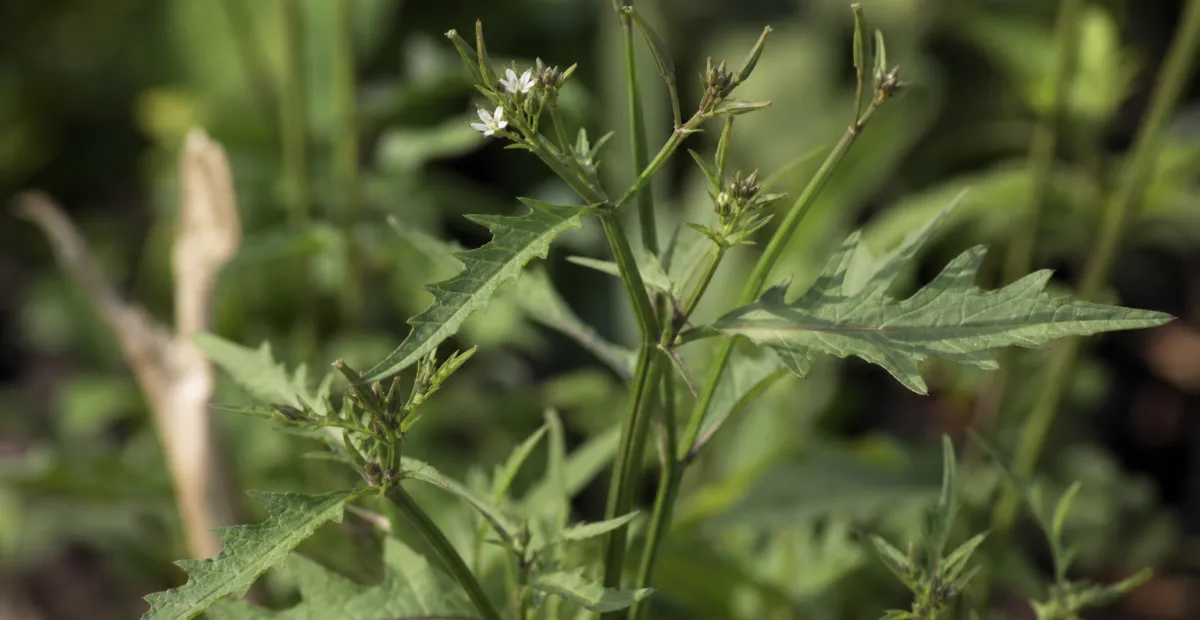
 AI-generated illustration
Spiderwisp (Gynandropsis gynandra) short overview
Spiderwisp is a warm-season annual leafy green and flowering plant with palmate leaves, slender stems, airy white flowers, and elongated seed capsules. It is native to tropical and subtropical regions of the Old World and is cultivated as a vegetable in parts of Africa and Asia. In the United States, it is best grown as a heat-loving annual in full sun, fertile well-drained soil, and a long frost-free season.
Taxonomic classification
Spiderwisp (Gynandropsis gynandra) care guide
Light and placement
Give Spiderwisp a bright, open position with at least 6 hours of direct sun, preferably with southern or western exposure. Full sun supports compact growth, stronger stems, and better flowering. In very hot, dry areas, light afternoon shade can reduce stress. Pale, stretched stems and sparse leaves indicate inadequate light; scorched margins or sudden midday wilt suggest heat or root-zone moisture stress rather than simple shade preference.
Watering and humidity
Water deeply when the upper inch of soil begins to dry, allowing excess water to drain away. Keep plants evenly supplied during germination, transplant establishment, and repeated leaf harvests; drought can toughen foliage and hasten flowering. Once rooted, plants tolerate brief dry periods, but containers may need water every day or two in hot weather. Avoid frequent shallow watering and saturated soil.
Soil and growing medium
Use fertile soil that drains freely yet holds moderate moisture. A loam or sandy loam amended with compost is suitable; compact clay should be loosened with organic matter and drainage improvements. A slightly acidic to neutral reaction is a practical target, although the species occurs across varied soils. Do not place it where winter or summer water remains around the roots.
Feeding
Incorporate finished compost before planting. If growth is pale or harvests are frequent, apply a balanced, water-soluble fertilizer at half strength every 3 to 4 weeks, or side-dress lightly with compost. Avoid heavy nitrogen applications, which can produce soft, overly lush growth and may delay useful seed production. Do not fertilize drought-stressed, newly transplanted, or dormant plants.
Growth and habit
Spiderwisp is a fast-growing, upright annual that branches as it matures and can become open or bare near the base after flowering progresses upward. Harvesting young shoots encourages a fuller edible crop, while allowing some stems to remain produces flowers and seed capsules. It may self-sow where seed capsules mature, especially in warm climates, although winter cold usually prevents persistence.
Planting and repotting
Sow directly outdoors after frost danger has passed, or transplant carefully once nights are reliably warm. Choose full sun and prepare a fine, weed-free seedbed. Press seeds lightly into the soil and keep the surface evenly moist until emergence. Thin promptly to prevent weak, crowded plants. A succession of sowings every few weeks can extend the leafy harvest in regions with long summers.
Container plants should be moved into a pot with drainage holes and a fertile, well-drained mix. Transplant seedlings before they become root-bound, handling the root ball gently. Repotting is generally unnecessary after establishment because the species is an annual; replace the growing medium for each new crop.
Propagation and pruning
Propagation
Propagate from seed. Sow shallowly in warm soil after the last frost, or start indoors several weeks earlier and transplant with minimal root disturbance. Keep the seedbed evenly moist until emergence. Collect mature dry capsules before they split if you want to save seed; store clean, fully dry seed in a cool, dry place.
Pruning
Harvest young shoot tips regularly to encourage branching and delay a sparse, top-heavy appearance. Remove damaged stems promptly. After flowering and seed collection, cut the annual plant to ground level and remove spent debris to reduce unwanted reseeding and overwintering pest habitat.
Overwintering
There is no reliable outdoor wintering method in frost-prone areas. Frost kills the plant, so finish seed collection before a freeze. In a container, it may be moved indoors only as a short-term experiment under strong light and warm conditions, but restarting from seed is usually more practical.
Uses
Young leaves and shoots are used as a cooked leafy vegetable in parts of Africa and Asia; bitterness and texture vary with plant age and preparation. In U.S. gardens it can also serve as a heat-tolerant edible annual, an unusual flower for mixed beds, and a nectar resource. Use only correctly identified, properly prepared plant material, and do not treat traditional use as proof of medicinal safety or efficacy.
Appearance
The plant has upright green stems and palmately divided leaves with several leaflets, giving the foliage a hand-shaped outline. Terminal racemes carry delicate flowers with conspicuously long stamens and a raised reproductive stalk. After flowering, narrow elongated capsules develop above the foliage and turn darker as they dry, providing a useful identification feature.
Flowering
Flowers are borne in terminal racemes and have four petals, a nectar-producing structure, elongated stamens, and an extended gynophore. Flower development can include staminate and hermaphroditic flowers, an andromonoecious sexual system. Flowering commonly begins in summer and continues as the stem extends, followed by narrow dehiscent capsules.
Pollination and visitors
Documented visitors include bees, butterflies, hawkmoths, hoverflies, ants, and other insects. Effective pollinator groups vary geographically: hawkmoths are important in some African populations, while bees and butterflies have been reported as effective pollinators in parts of Asia. Some flies and ants may take nectar or pollen without consistently effecting pollination.
Diseases and pests
Diseases
Good drainage, full sun, adequate spacing, and watering at the soil line help reduce damping-off, leaf spots, and root problems. Remove badly diseased plants, avoid working among wet foliage, and do not reuse contaminated potting mix. Persistent wilting in wet soil suggests root damage rather than underwatering.
Pests
Spiderwisp is generally uncomplicated in cultivation, but seedlings may suffer from cutworms, aphids, flea beetles, or chewing caterpillars. Inspect the undersides of leaves, use row cover over young plants where practical, remove larger pests by hand, and favor targeted, least-toxic controls only when damage threatens establishment or harvest.
Toxicity and pollen
The species is eaten as a leafy vegetable in some regions, but authoritative, species-specific human and companion-animal toxicity data are limited and traditional preparation varies. Do not assume that culinary use elsewhere proves universal safety. Use correctly identified young leaves from clean soil, cook them as customary for the food tradition, and seek professional advice before serving to children, pets, or anyone with a relevant medical condition.
- Typical season
- Summer to early fall in the United States
- Pollination / pollen
- Powdery pollen released from exposed anthers; mainly transferred by insects, with some self-pollination possible
The flowers produce exposed, powdery pollen, and the species is insect-pollinated with some capacity for self-pollination. Direct U.S. atmospheric pollen data are limited, so the practical allergy rating is uncertain rather than negligible. Sensitive people should avoid handling flowering plants in windy conditions and wash hands after contact.
Native habitat
The species is associated with seasonally dry tropical and subtropical environments, disturbed ground, cultivated areas, roadsides, and open habitats. It grows in warm climates with a pronounced growing season and can occupy soils ranging from lighter sandy ground to more fertile loams. In the United States it is mainly encountered as an introduced or cultivated warm-season annual in southern regions.
Interesting fact
The species is placed in Gynandropsis here, although Cleome gynandra is a widely used accepted name in major taxonomic resources. Its flowers have an unusually elongated reproductive stalk, and the plant combines edible leafy growth with distinctive spider-like flowers and narrow seed capsules. Floral scent and pollinator associations can differ between African and Asian populations.
Frequently asked questions (FAQ)
The most relevant questions about this plant, with short and direct answers.
🌱Quick care
What is Spiderwisp?⌄
Spiderwisp is the annual flowering plant Gynandropsis gynandra, a member of the Cleomaceae family. It is also grown as a leafy vegetable in some tropical regions.
Is Spiderwisp an annual or perennial?⌄
Spiderwisp is a frost-tender annual in the United States. It typically completes its life cycle in one growing season and may return only by self-sowing in warm locations.
How much sun does Spiderwisp need?⌄
Spiderwisp grows best in full sun, meaning at least 6 hours of direct light daily. It tolerates light shade but may become less vigorous or flower less heavily.
How often should I water Spiderwisp?⌄
Water Spiderwisp when the soil surface begins to dry, keeping the root zone moderately moist without leaving it waterlogged. Established plants tolerate short dry periods better than prolonged wet soil.
🌤️Environment and placement
Where should I plant Spiderwisp?⌄
Plant Spiderwisp in a sunny, open location with well-drained soil and good air circulation. A raised bed or container is useful where garden soil stays wet.
What USDA hardiness zones can grow Spiderwisp?⌄
Spiderwisp can be grown as a warm-season annual across much of the United States. It survives year-round only in frost-free areas, generally corresponding to the warmest USDA hardiness zones.
Can Spiderwisp tolerate drought?⌄
Spiderwisp is somewhat drought tolerant once established, but regular moisture supports better growth and leaf production. Do not allow young seedlings to dry out completely.
What temperature does Spiderwisp prefer?⌄
Spiderwisp prefers warm growing conditions and should be planted outdoors after the danger of frost has passed. Cold soil and temperatures near freezing can delay growth or kill the plant.
Can Spiderwisp grow in a container?⌄
Spiderwisp can grow in a container if it has drainage holes, a loose potting mix, and enough room for its roots. Use a sunny location and water whenever the mix begins to dry.
💧Care and problems
What soil is best for Spiderwisp?⌄
The best soil for Spiderwisp is well-drained loam or sandy loam enriched with organic matter. Avoid compacted clay and sites where water remains around the roots after rain.
Does Spiderwisp need fertilizer?⌄
Spiderwisp benefits from compost or a balanced fertilizer when grown in poor soil. Avoid excessive nitrogen, which can produce lush foliage with weaker stems and delayed or reduced flowering.
Why is my Spiderwisp turning yellow?⌄
Yellowing Spiderwisp leaves commonly result from overwatering, poor drainage, nutrient-poor soil, or root stress. Check soil moisture and drainage before adding fertilizer.
Why is my Spiderwisp wilting?⌄
Spiderwisp may wilt from dry soil, heat stress, transplant shock, or damaged roots caused by excess moisture. Water deeply if the soil is dry, but improve drainage if the soil remains wet.
Does Spiderwisp need staking?⌄
Spiderwisp usually does not need staking when grown in full sun and moderate soil. Plants grown in low light, crowded conditions, or very rich soil may become tall and benefit from light support.
🪴Planting and repotting
When should I plant Spiderwisp seeds in the United States?⌄
Sow Spiderwisp seeds outdoors after the local last frost date, when the soil has warmed. For an earlier start, sow indoors about 3 weeks before transplanting outdoors.
How do you sow Spiderwisp seeds?⌄
Sow Spiderwisp seeds on the soil surface or cover them only lightly, then keep the seedbed evenly moist. Warm conditions and good seed quality are important because germination may be uneven or delayed.
How far apart should Spiderwisp plants be?⌄
Space Spiderwisp plants about 8 inches apart for individual plants, allowing more room if you want larger specimens. Crowding can reduce airflow and encourage weak, elongated growth.
✂️Propagation and pruning
How do you propagate Spiderwisp?⌄
Spiderwisp is primarily propagated by seed. Collect mature, dry seed capsules or purchase seed, and sow the seeds lightly in warm, well-drained growing media.
Can Spiderwisp reseed itself?⌄
Spiderwisp can reseed itself when mature seed capsules split and release seed. Self-sowing is most likely in warm climates with open soil, but seedlings may not survive a hard freeze.
Should I prune Spiderwisp?⌄
Pruning Spiderwisp is optional and is mainly used to remove damaged growth, harvest leaves, or limit unwanted seed production. Cutting flower stems can also encourage a tidier appearance, but heavy pruning may reduce flowering.
⚠️Toxicity and safety
Is Spiderwisp toxic to people or pets?⌄
Reliable U.S. toxicity information for Spiderwisp is insufficient to assign a dependable safety classification for people or pets. Prevent ingestion by children and animals, and contact a poison-control or veterinary professional if plant material is eaten.
Can I use Spiderwisp as an herbal remedy?⌄
Do not use Spiderwisp medicinally without guidance from a qualified healthcare professional. Traditional use and laboratory studies do not establish a safe dose, effectiveness, or suitability for pregnancy, medications, or medical conditions.
🌸Flowering and special interest
When does Spiderwisp bloom?⌄
Spiderwisp can begin flowering roughly 6 to 8 weeks after sowing under warm, sunny conditions. Flowering may occur earlier when plants experience heat or when they are grown primarily for seed.
What color are Spiderwisp flowers?⌄
Spiderwisp flowers are commonly white or pale-colored, and they may develop pinkish tones as they age. The flowers are held in upright clusters above the foliage.
Why is my Spiderwisp flowering too early?⌄
Spiderwisp may flower early because of heat, drought, crowding, poor nutrition, or natural variation among plants. Early flowering is especially common when the plant is grown for leaves rather than delayed flowering.
Is Spiderwisp edible?⌄
Spiderwisp leaves and flowers are eaten in some regions, usually after cooking because the foliage can be bitter or acrid. Edibility does not establish a reliable U.S. safety classification, so consume only correctly identified, pesticide-free plant material from a trusted source.
Similar plants
 Azure Monkshood (Aconitum carmichaelii) care guideAconitum carmichaelii
 Monkshood (Aconitum ‘Stainless Steel’)Aconitum 'Stainless Steel'
 Monkshood (Aconitum ‘Bressingham Spire’)Aconitum 'Bressingham Spire'
 Golden full moon maple (Acer shirasawanum ‘Aureum’)Acer shirasawanum 'Aureum'
 Globosum (Acer platanoides ‘Globosum’)Acer platanoides 'Globosum'
 Striped maple (Acer pensylvanicum) care guideAcer pensylvanicum