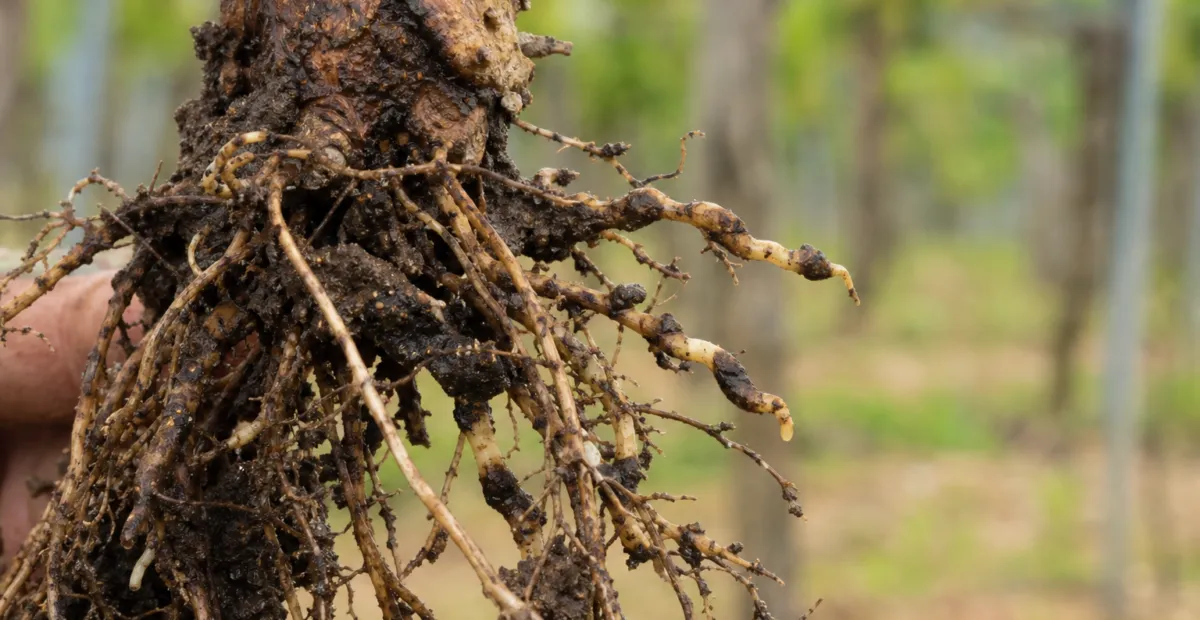
Szőlő-fonálféreg (Xiphinema index)
Xiphinema indexSzőlő-fonálféreg (Xiphinema index) overview
A Xiphinema index mikroszkopikus, talajban élő növényparazita fonálféreg, amely elsősorban a szőlő gyökércsúcsait szúrószervével károsítja. Jelentősége azonban főként abban áll, hogy a szőlő fanleaf vírusának vektora. A fertőzött ültetési anyaggal és talajmozgatással terjedő kártevő hosszú ideig fennmaradhat a korábbi szőlőterületeken.
Typical conditions
Overview
This microscopic roundworm lives in soil and feeds externally on roots by inserting a long stylet into root tissues. Grapevine is its principal economically important host in the United States and worldwide. Direct feeding may reduce root function, vine vigor and yield, but the greatest risk is transmission of Grapevine fanleaf virus (GFLV) from infected roots to healthy vines.
The nematode is difficult to diagnose from foliage alone because aboveground symptoms are nonspecific and may resemble water stress, nutrient deficiency, poor soil conditions or other grapevine disorders. Laboratory identification from properly collected soil and root-zone samples is recommended.
Symptoms and identification
Direct feeding commonly produces:
- swollen, bent or distorted grapevine root tips;
- loss of fine feeder roots;
- dark necrotic lesions on repeatedly attacked root tips;
- irregular patches of weak growth within a vineyard;
- reduced shoot growth, yield and tolerance of heat or drought stress.
When GFLV is also present, leaves may show fan-shaped distortion, asymmetric blades, mosaic, yellowing or yellow-to-whitish vein banding. Infected vines may be stunted, have irregular internode spacing, clustered shoots and poor fruit set. Symptoms can be less conspicuous in white-fruited cultivars and in hot conditions, so visual diagnosis is not reliable.
Causes and spread
Spread occurs primarily through movement of infested soil and planting material. Important pathways include contaminated nursery stock, rooted cuttings, tractors, tillage equipment, tools, irrigation water, drainage and soil adhering to footwear or vehicles. Virus spread requires viruliferous nematodes or infected propagation material; the nematode can acquire GFLV from infected grapevine roots and transmit it during feeding on healthy roots.
Old grapevine or orchard roots may remain capable of supporting the nematode and virus-vectoring population for many years. Weeds and non-grape plants may also maintain X. index populations, but host suitability varies among plant species, nematode populations and experimental conditions.
Life cycle and persistence
Xiphinema index completes its life cycle in soil and the rhizosphere. Eggs hatch into juveniles that pass through several molts before becoming adults; females are the dominant reproductive stage and reproduction is commonly reported as parthenogenetic, although rare sexual reproduction has been documented. All active stages feed from outside roots.
Development rate depends strongly on host, soil moisture and temperature. Under controlled conditions, reported life-cycle durations range from roughly 6 to 12 weeks, while field timing varies by climate and soil. Reproduction is favored by warm, moist root-zone conditions, with rapid population increase reported near 77–82°F. Populations may occur well below the surface wherever perennial roots and suitable moisture persist, and survival without a host can extend for many years.
Treatment and control
First confirm the problem with laboratory soil and root testing, and separately test suspect vines for Grapevine fanleaf virus. Removing symptomatic vines may reduce virus sources, but it will not by itself eliminate X. index from infested soil.
In an existing planting, management usually combines rogueing of severely affected vines, replacement with clean material, sanitation, irrigation and nutrition improvements, and use of a suitable resistant or tolerant rootstock when replanting. Where a block is being replanted, a long rotation or fallow period with strict weed control may reduce populations, but short fallows are unreliable because X. index and infected root residues can persist. Preplant soil treatment may be considered only after a site-specific professional assessment and confirmation of legal product availability.
Low-impact and biological control
No organic treatment reliably eradicates Xiphinema index or reverses GFLV infection. Practical nonchemical measures include:
- long-term planting of carefully selected nonhost or poor-host rotation crops before replanting;
- aggressive removal of volunteer grapevines, old roots and weeds;
- use of clean propagation material and strict equipment sanitation;
- cover crops and compost-based soil management chosen to improve soil structure and biological activity without introducing suitable hosts;
- mulching and efficient irrigation to reduce drought stress, which can intensify nematode damage.
Biofumigation and antagonistic biological products have shown variable results and should be treated as supplementary IPM tools, not guaranteed controls. Confirm local organic certification and product-use eligibility before application.
Prevention
Prevention is more effective than attempting to eradicate established populations.
- Plant certified, tested, virus-free and nematode-clean nursery material.
- Before establishing a vineyard, obtain a professional nematode assay from representative soil and root samples; in California vineyards, sampling windows vary by region, and X. index is often detected most readily from November through February.
- Sample to appropriate depth for the site, including soil from the active root zone and roots where present; a preplant survey should not rely on a few surface cores.
- Remove old vine roots as thoroughly as practical and avoid moving soil from infested blocks.
- Clean soil from tractors, tillage tools, augers, bins and footwear before entering clean blocks.
- Use rootstocks with documented X. index resistance or fanleaf tolerance when they fit the cultivar, site and production system. Resistance to the nematode does not automatically mean resistance to GFLV.
- Control weeds and select cover crops only after checking their host status for the local nematode population.
Interesting facts
- Xiphinema index is often called the fanleaf nematode because of its close association with Grapevine fanleaf virus.
- Its importance is disproportionate to its direct feeding damage because even low numbers of viruliferous nematodes can spread GFLV between vines.
- Rootstock O39-16 has been used as an important example of X. index resistance combined with tolerance to fanleaf disease, although performance must be matched to local vineyard conditions.
- Grapevine and common fig are among the best-documented hosts, while reported susceptibility of other plants varies by population and test conditions.
- Fanleaf-like foliage can occur without confirmed GFLV, so laboratory virus testing and nematode assays are important before making removal or replanting decisions.
Use only nematicides or soil treatments legally authorized for Xiphinema index, grape, and the intended application site in the United States. Product registrations, state restrictions, replant intervals, buffer requirements and worker-protection rules can change. Follow the current EPA-approved and state-approved label exactly; do not use a product based only on efficacy reports from another country, crop or historical registration.
Affected plants
The plants below are linked to this problem by structured host-plant data. The list updates automatically as new plant profiles are added.