
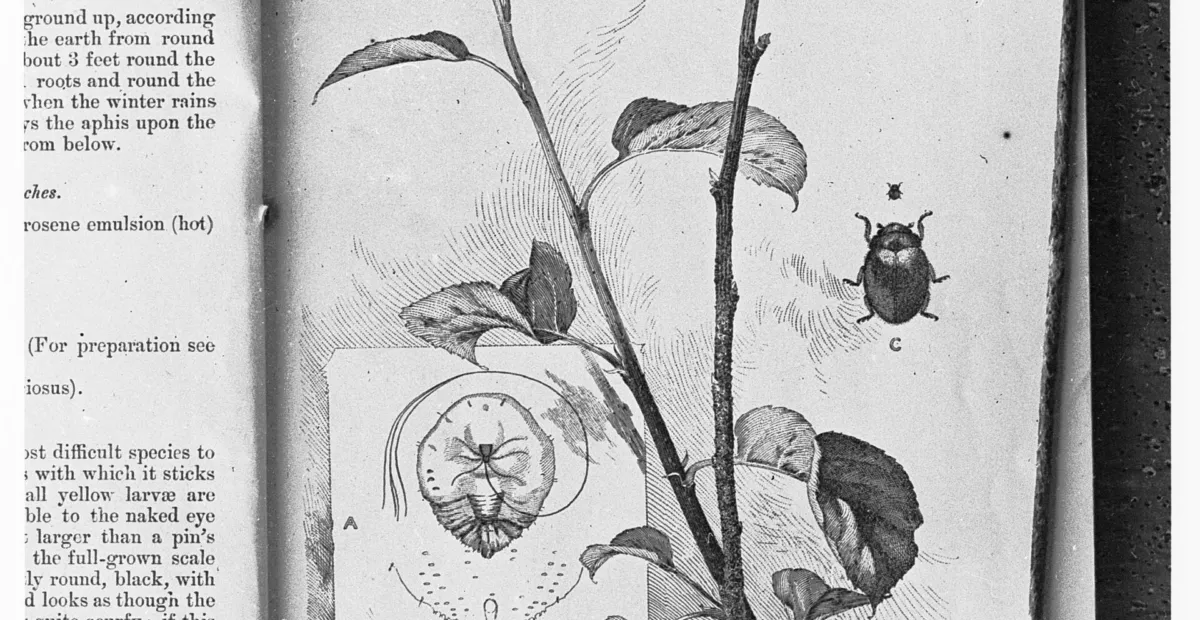
 Source:
 San Jose scale
Diaspidiotus perniciosusSan Jose scale overview
San Jose scale is a small armored scale insect that infests fruit, nut, ornamental and other woody plants in the United States. Crawlers and settled females suck plant juices beneath protective covers, causing red halos on young wood or fruit, weakened shoots, branch dieback and, during severe infestations, loss of scaffold limbs or tree death. Accurate identification and crawler-timed IPM are essential because several armored scales look similar.
Typical conditions
Overview
San Jose scale is a highly polyphagous armored scale insect, also reported in older literature as Quadraspidiotus perniciosus or Comstockaspis perniciosus. It is most damaging in U.S. orchards and landscapes when populations build on fruiting wood, branches or scaffold limbs.
Adult females and nymphs remain attached to the plant beneath circular gray or brown covers. The tiny yellow crawler is mobile for a short period before settling, inserting its mouthparts and producing a white cover that later darkens. Because cover shape can resemble other armored scales, confirmation may require examining the insect body beneath the cover or obtaining expert identification.
Symptoms and identification
Look for small gray, brown-gray or blackish scale covers on twigs, branches, leaves or fruit. A characteristic red or reddish-purple halo may surround feeding sites on young green wood or fruit. Heavy infestations can cause:
- yellowing, premature leaf decline and reduced shoot growth;
- rough, cracked or dying bark, gumming and twig dieback;
- fruit spotting or conspicuous scale marks that make fruit unmarketable;
- death of fruit spurs, scaffold limbs and, after prolonged severe infestation, the entire tree.
In winter, dead leaves may remain attached to branches killed by the pest. Scale covers can be mistaken for other armored scales, so do not rely on color alone.
Causes and spread
Infestations begin when crawlers move from an infested plant to nearby shoots, leaves or fruit. Short-distance spread occurs by wind, birds, clothing, pruning tools, nursery stock, grafting material and contact between branches. Adult males can fly, but females and most immature stages are essentially sedentary.
Populations commonly increase where infested orchard remnants, neglected backyard trees or nearby ornamental hosts are left untreated. Repeated use of persistent broad-spectrum insecticides may destroy parasitoids and predators, allowing San Jose scale to rebound. Ant activity and dusty foliage can also interfere with natural-enemy effectiveness.
Life cycle and persistence
San Jose scale generally overwinters on woody tissue as partially grown nymphs, usually in the black-cap stage; some mated females may survive in mild climates. In spring, overwintered nymphs resume development and produce winged males and sessile females. Females give birth to live young rather than laying externally visible egg masses.
Newborn crawlers are bright yellow and move briefly before settling. They feed beneath a white waxy cover, which becomes darker as they mature. Females remain under round covers; immature male covers become more elongated, and adult males emerge as tiny winged insects to mate. The number of generations varies with climate: roughly two in cooler U.S. fruit-growing areas and up to three or four in warmer regions, with overlapping summer generations possible.
Treatment and control
Begin by confirming the pest and assessing live scale, recent damage and natural-enemy activity. Scraping a few covers from the bark can reveal whether yellow or orange bodies are alive; empty covers alone do not prove an active infestation.
For small trees, prune and discard badly infested wood and use a soft brush or gentle water stream to remove accessible scales without injuring bark. In orchards and larger plantings, time intervention to the crawler period rather than applying routine calendar sprays. Dormant or delayed-dormant oil treatments can reduce overwintering populations on suitable hosts, while growing-season treatments must be timed and applied for thorough coverage of the susceptible crawler stage.
Monitor after treatment because more than one generation may occur. If parasitized scales, predator activity or low live populations are present, conservation of biological control may be preferable to an immediate disruptive spray.
Low-impact and biological control
Integrated organic management relies on sanitation, monitoring, pruning, biological control and carefully selected horticultural or narrow-range oil products that are permitted for the crop and production system.
- Conserve parasitoids such as Encarsia perniciosi and Aphytis species, and predators including twicestabbed lady beetles and other scale-feeding beetles.
- Avoid persistent broad-spectrum insecticides that can eliminate natural enemies and trigger scale outbreaks.
- Use horticultural oil only when the product label permits the crop, timing and weather conditions; achieve thorough coverage while avoiding plant stress.
- Remove heavily infested material and manage ants that protect scale colonies from natural enemies.
Biological control may suppress light or moderate populations, but severe infestations can damage branches before natural enemies respond.
Prevention
Inspect nursery stock, grafting material and newly purchased trees before planting. Examine one-year-old wood, branch crotches and fruit spurs during dormancy for black caps and old scale bodies, and inspect fruit and leaves during the growing season.
- Prune out and destroy heavily infested twigs or branches where practical; do not compost infested material.
- Remove neglected, severely infested trees that cannot be managed safely, especially when they threaten nearby orchard trees.
- Maintain open canopies and adequate tree vigor so branches can be inspected and coverage can be achieved.
- Control ants when they interfere with parasitoids and predators, using methods appropriate for the site and crop.
- Avoid unnecessary broad-spectrum insecticides and reduce dust on foliage to conserve natural enemies.
- Use double-sided sticky tape on selected branches to detect the first yellow crawlers; record host, location and date.
Interesting facts
- The species has been recorded from a very broad host range, but regional host importance varies; fruiting Malus, Prunus, Pyrus and related woody plants are the most consistently important U.S. hosts.
- A feeding site on young wood may produce a distinctive red halo because of toxic saliva injected during feeding.
- The protective cover is not the insect body itself and can often be lifted to inspect the yellow female underneath.
- Scale crawlers are tiny—about the size of a pin point—so infestations may remain unnoticed until branch or fruit damage is visible.
- Parasitoids can leave a small emergence hole in a scale cover; such evidence indicates biological control rather than a live, untreated scale.
Use only pesticide products legally authorized and currently labeled for San Jose scale, the specific crop and the application site in your country. Follow the current U.S. label exactly, including rate, timing, personal protective equipment, reentry interval, preharvest interval, spray-oil cautions and restrictions protecting pollinators and aquatic resources. Product registrations and labels change; contact your state Extension service or licensed applicator for crop-specific guidance. Do not apply dormant oil to a host or under conditions prohibited by the label, and avoid treatments that unnecessarily disrupt natural enemies.
Affected plants
The plants below are linked to this problem by structured host-plant data. The list updates automatically as new plant profiles are added.
 Field maple (Acer campestre) care guideAcer campestre
 Paperbark Maple (Acer griseum) care guideAcer griseum
 Downy Japanese Maple (Acer japonicum) care guideAcer japonicum
 Boxelder (Acer negundo) care guideAcer negundo
 Acer palmatum care guideAcer palmatum
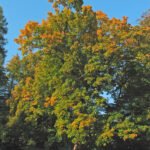 He Norway maple (Acer platanoides) care guideAcer platanoides
 Sycamore maple (Acer pseudoplatanus) care guideAcer pseudoplatanus
 Red maple (Acer rubrum) care guideAcer rubrum
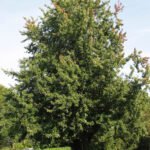 Silver maple (Acer saccharinum) care guideAcer saccharinum
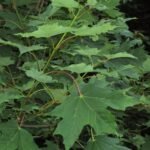 Sugar maple (Acer saccharum) care guideAcer saccharum
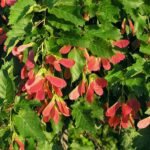 Tatar Maple (Acer tataricum) care guideAcer tataricum
 Amur Maple (Acer tataricum ginnala) care guideAcer tataricum ginnala