
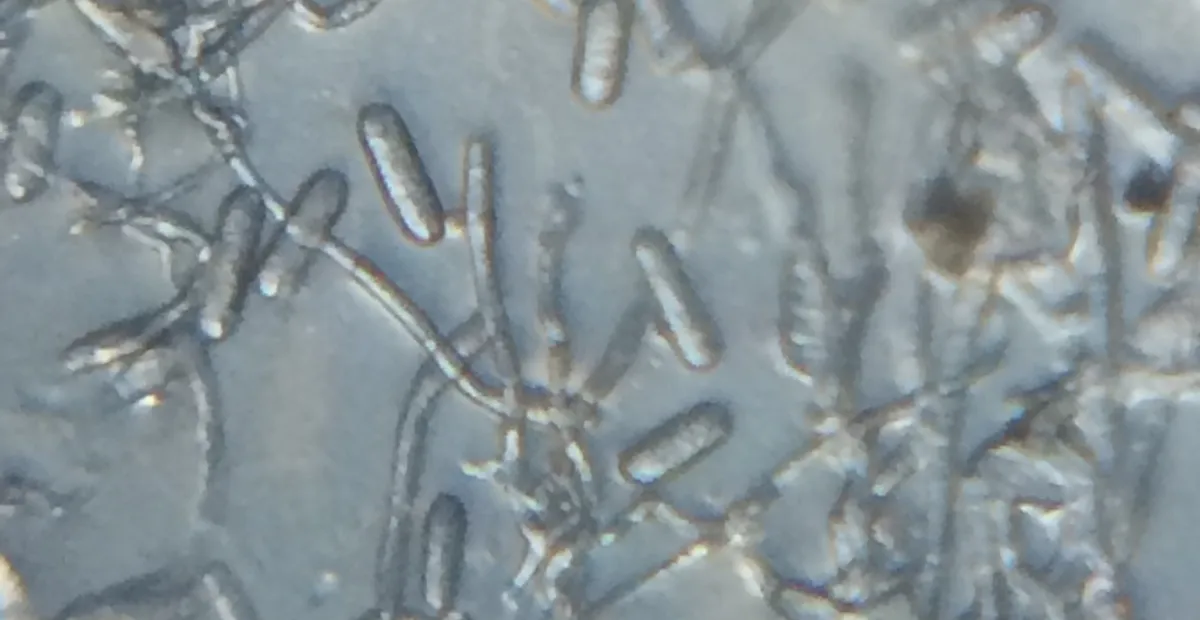
Leveillula taurica powdery mildew
Leveillula tauricaLeveillula taurica powdery mildew overview
Leveillula taurica causes an unusual powdery mildew of peppers, tomatoes and other warm-season crops. Unlike many powdery mildews, the fungus grows mainly inside the leaf and often produces white sporulation on the underside. Upper leaf surfaces develop diffuse yellow or brown spots, followed by tissue death, premature leaf loss and possible fruit sunscald when foliage is heavily damaged.
Typical conditions
Overview
Leveillula taurica causes a distinctive, often difficult-to-diagnose powdery mildew. The fungus grows largely within leaf tissue rather than forming a conspicuous surface mat. On peppers, white powdery sporulation is commonly concentrated on the lower leaf surface, while the upper surface develops pale yellow or brown patches. Tomatoes and other hosts may show somewhat different symptom patterns.
The disease is most significant when progressive leaf loss reduces photosynthesis, exposes fruit to sunburn, or shortens the productive period. A laboratory or specialist diagnosis may be needed when symptoms are atypical or when another powdery mildew, bacterial leaf spot, nutrient problem or foliar disease is possible.
Symptoms and identification
- Irregular, diffuse pale-green to bright-yellow blotches, usually beginning on older leaves.
- Brown centers, dead tissue or yellow-to-necrotic lesions as spots enlarge.
- Fine white to gray powdery growth, often most visible on the underside of pepper leaves and sometimes emerging through stomata.
- Upward curling or rolling leaf margins that expose underside sporulation.
- Premature leaf yellowing, drying and defoliation; fruit may become sunburned after protective foliage is lost.
- Fruit and stems are usually not the principal symptom sites, although host and regional reports vary and severe tomato infections can produce fruit lesions.
Do not diagnose the disease from white powder alone: powdery mildew species differ by host and region.
Causes and spread
Wind-dispersed conidia are the principal means of short-distance and crop-to-crop spread. Spores from infected peppers, tomatoes, onions, cotton, volunteer plants and susceptible weeds may contribute inoculum where these hosts occur together. The pathogen requires living plant tissue and does not normally persist as a soil-borne disease in dead crop residue.
Dense canopies, shaded foliage, poor air movement, plant stress and protected-culture conditions can favor disease development. Unlike many leaf-spot pathogens, infection does not require free water on the leaf surface. Tools and clothing can assist movement of contaminated plant material, although wind is the major dispersal route.
Life cycle and persistence
Leveillula taurica is an obligate biotroph: it grows and reproduces on living host tissue. After a conidium lands on a susceptible leaf, it germinates and the fungus colonizes internal leaf tissue. Conidiophores then emerge primarily through stomata, producing new conidia that are carried by air currents.
Under favorable conditions, secondary infection cycles may occur about every 7–10 days. Infection can occur across a broad temperature range, approximately 64–91°F, while very high temperatures above about 95°F may temporarily suppress development in some production regions. Sexual structures are uncommon or rarely observed in California, so local epidemiology is generally dominated by asexual spread.
Treatment and control
Act early, because established infections are harder to suppress and new spores can be produced rapidly. Remove the most heavily infected leaves when practical and improve light, spacing, ventilation and irrigation management. Protect healthy foliage and newly expanding leaves rather than relying only on attempts to eradicate badly diseased tissue.
For commercial or serious home-garden outbreaks, select a fungicide or biological product whose current US label specifically permits use on the affected crop and powdery mildew. Rotate products among different FRAC groups when repeated applications are permitted, and follow the label for rate, interval, re-entry, preharvest interval and spray coverage. Confirm the diagnosis before treatment, particularly on tomato, because the responsible powdery mildew species may be different.
Low-impact and biological control
Integrated organic options may include removal of infected foliage, resistant or less susceptible varieties, canopy ventilation, weed and volunteer-host control, and careful irrigation and nitrogen management. Products based on potassium bicarbonate, sulfur, mineral or botanical oils, or microbial biological-control agents may provide suppression when they are legally labeled for the crop and disease.
Apply protectants early and achieve thorough coverage of both leaf surfaces where the label permits. Never combine sulfur and oil products or apply them close together unless the current label specifically allows it, because foliage injury can result. Test any permitted product on a small group of plants first, especially in hot weather or on tender greenhouse foliage.
Prevention
- Start with inspected, disease-free transplants and avoid bringing symptomatic pepper, tomato or other host plants into a greenhouse.
- Choose cultivars with documented resistance or lower susceptibility for the specific crop, region and production system when available.
- Space and prune plants to improve air movement and light penetration without creating unnecessary wounds.
- Scout at least weekly during warm weather, examining both leaf surfaces—especially the lower surface of pepper leaves.
- Remove heavily infected leaves or plants, bagging material before carrying it through the crop; do not compost diseased tissue unless the composting system reliably reaches pathogen-killing temperatures.
- Control volunteer tomatoes, peppers and documented susceptible weeds near production areas.
- Reduce water stress and avoid excessive nitrogen, which can promote dense, highly susceptible foliage.
- Disinfect tools between plant blocks and manage greenhouse humidity and ventilation to reduce prolonged humid, stagnant air.
Interesting facts
- Leveillula taurica is unusual among powdery mildews because much of its growth occurs inside the leaf.
- On pepper, the most diagnostic white sporulation may be hidden on the underside while the upper surface only shows yellow spotting.
- The name Oidiopsis taurica is commonly encountered for the asexual stage or form of this pathogen.
- Reports describe a very broad host range spanning numerous plant families, but the practical host range and disease importance differ by region and pathogen population.
- Heavy pepper defoliation can cause indirect fruit injury by exposing peppers to intense sunlight.
Use only pesticide products legally authorized in the United States for the specific crop and powdery mildew problem. Follow the current product label exactly, including crop, rate, spray interval, re-entry interval, preharvest interval, worker-protection requirements and restrictions involving heat, sulfur or oils. Label status and permitted uses can change; do not rely on an old recommendation or an off-label application.
Affected plants
The plants below are linked to this problem by structured host-plant data. The list updates automatically as new plant profiles are added.
 Onion (Allium cepa) care guideAllium cepa
 Allium christophii care guideAllium christophii
 Bunching onion (Allium fistulosum) care guideAllium fistulosum
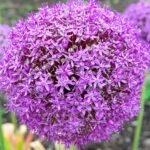 Giant Allium (Allium giganteum) care guideAllium giganteum
 Ornamental onion (Allium) care guideAllium
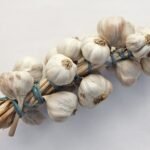 Garlic (Allium sativum) care guideAllium sativum
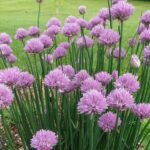 Chives (Allium schoenoprasum) care guideAllium schoenoprasum
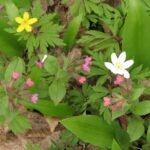 Ransoms (Allium ursinum) care guideAllium ursinum
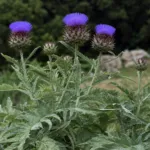 Cardoon (Cynara cardunculus) care guideCynara cardunculus
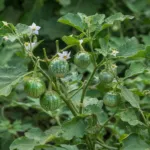 Solanum aethiopicum care guideSolanum aethiopicum
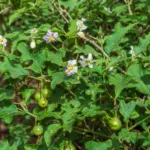 Solanum macrocarpon care guideSolanum macrocarpon
 Eggplant (Solanum melongena) care guideSolanum melongena