
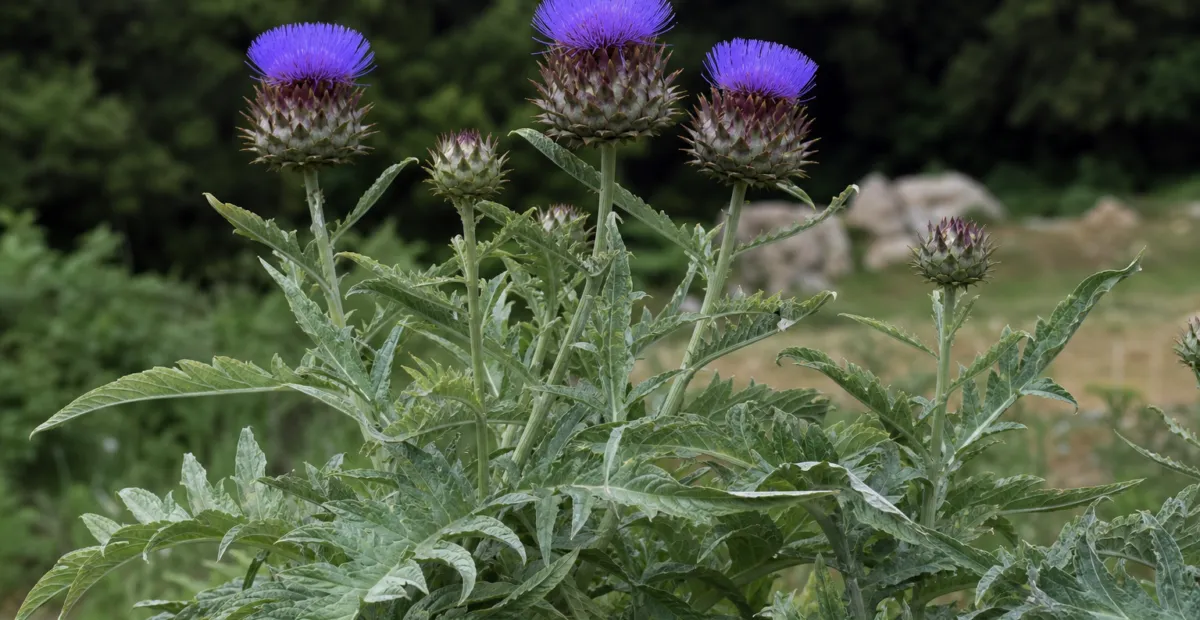
Cardoon (Cynara cardunculus) short overview
Cardoon (Cynara cardunculus) is a bold Mediterranean perennial grown for its large, silvery, deeply divided leaves and edible leaf stalks, which are often blanched before cooking. In summer, mature plants send up tall stems topped with violet-blue thistle heads that attract insect visitors. Give it full sun, fertile well-drained soil, regular moisture during establishment, and winter protection where temperatures fall below its hardiness range.
Taxonomic classification
Cardoon (Cynara cardunculus) care guide
Light and placement
Place cardoon in unobstructed full sun, ideally with southern or western exposure and at least 6 hours of direct light. Strong light supports sturdy stems, dense silver foliage, and flowering. Too little light produces stretched growth and weaker stems; severe heat combined with dry soil can scorch leaf margins, so provide consistent moisture rather than shade.
Watering and humidity
Water deeply when the top inch of soil begins to dry, aiming for steady moisture through the active growing season. Newly planted cardoons need more frequent irrigation; established plants can be watered less often once roots are deep. Reduce watering in cool weather, but do not allow container plants or overwintering crowns to remain saturated.
Soil and growing medium
Use deep, fertile soil that holds steady moisture without becoming waterlogged. A loam amended with compost is suitable, provided drainage is good. Cardoon tolerates mildly alkaline conditions and generally performs best around neutral to slightly alkaline pH. Avoid shallow, compacted, or chronically wet ground.
Feeding
Mix compost into the planting area before growth begins. Feed in spring with a balanced vegetable fertilizer according to the product label, then provide a light follow-up feeding during vigorous vegetative growth if leaves are pale or growth is weak. Stop heavy nitrogen feeding as flowering approaches, since it can produce excessive soft foliage.
Growth and habit
This vigorous perennial forms a large crown and a broad basal rosette before producing flowering stems. It needs room to expand and can become visually dominant in a small bed. In short-season climates, grow it as an annual or start plants early so the foliage has time to mature before cold weather.
Planting and repotting
Plant after the danger of hard frost has passed and the soil has warmed. Set transplants at the same depth they occupied in their containers. Space plants about 3 to 5 feet apart so mature leaves can expand freely. Water deeply after planting and keep the root zone evenly moist while the crown establishes.
Choose a large, deep container because cardoon develops a substantial crown and broad foliage. Repot or transplant in spring before rapid growth begins, disturbing the roots as little as possible. Refresh the upper layer of mix annually for established container plants; move to a larger container when growth becomes cramped.
Propagation and pruning
Propagation
Sow seeds indoors 6 to 8 weeks before the last spring frost, or direct-sow after the soil warms. Germination is usually most reliable with fresh seed and warm conditions. Established crowns can sometimes be divided in spring, but division is more disruptive and less commonly used than seed propagation.
Pruning
Cut flowering stems to the base after display or seed set, unless you want to collect seed. Remove damaged outer leaves throughout the season. After frost blackens the top growth, cut it back and clear debris while leaving the crown protected with mulch in colder areas.
Overwintering
In USDA Zones 7–9, mulch the crown with several inches of dry organic material after the first hard frost. In colder climates, cardoon is often grown as an annual, or lifted and overwintered in a cool, bright, frost-free place. Keep overwintered plants on the dry side while dormant and replant after spring conditions improve.
Uses
Grow cardoon as an edible vegetable, ornamental foliage plant, architectural border accent, pollinator planting, or cut-flower subject. Blanching the young leaf stalks reduces bitterness and improves tenderness; harvest only correctly identified plants and prepare edible parts using a reliable culinary method. The spiny foliage requires placement away from high-traffic areas.
Appearance
Cardoon forms a dramatic basal rosette of large, deeply divided leaves. The upper leaf surfaces are gray-green to silvery, while the undersides are covered with pale hairs that create a frosted appearance. Leaf margins and flower bracts may be sharply spined. Mature plants produce tall, branching stems topped with rounded violet-blue heads.
Flowering
Cardoon is a true flowering plant that commonly blooms in summer after forming a large basal rosette. Tall, branching flower stems carry rounded thistle-like heads with violet-blue florets. Flowering is strongest on mature plants that receive abundant sun and a long growing season; plants grown as annuals may remain vegetative.
Pollination and visitors
The open violet-blue flower heads are documented as attractive to bees and other insect visitors. Their abundance and accessibility make mature flowering plants useful in pollinator-oriented borders, although visitor numbers vary with weather, local insect populations, and competing bloom.
Cynara cardunculus photos
Click any photo for a larger view. Source, author and license are shown separately.
Diseases and pests
Diseases
Prevent problems by providing full sun, good spacing, and free-draining soil. Excess moisture can contribute to crown or root rots. Remove badly affected tissue and avoid overhead irrigation when foliage stays wet. In humid climates, improve air movement and do not let mulch remain against the crown.
Pests
Watch for aphids, slugs, snails, caterpillars, and artichoke plume moth where present. Inspect young growth regularly, remove pests by hand when practical, and encourage beneficial insects. Avoid routine broad-spectrum insecticides during bloom because the flower heads attract visiting insects.
Toxicity and pollen
Cardoon is a cultivated edible plant, with young leaf stalks traditionally prepared as a vegetable. However, authoritative pet-specific toxicity data for Cynara cardunculus were not sufficiently available to confirm that all plant parts are safe for dogs or cats. Handle spiny foliage carefully and do not allow pets or children to chew unidentified plant material.
- Typical season
- Late spring through summer when flowering
- Pollination / pollen
- Primarily insect-carried pollen
Cardoon is insect-pollinated and does not appear to be a major wind-dispersed pollen source in typical gardens. Nonetheless, species-specific airborne-allergy evidence is limited, so sensitive people should avoid assuming zero risk during bloom and should limit direct contact if symptoms occur.
Native habitat
The species is native to the Mediterranean region and Macaronesia, where it occurs in warm temperate settings including open, disturbed ground, grassland, scrub, and other sunny habitats. It favors climates with hot summers, mild winters, and soils that drain well but do not dry excessively during active growth.
Interesting fact
Cardoon and globe artichoke are cultivated forms within the Cynara cardunculus complex. Cardoon is primarily selected for its fleshy leaf stalks, while globe artichoke is grown mainly for its immature flower heads. The species has also been investigated as a biomass and oil crop.
Frequently asked questions (FAQ)
The most relevant questions about this plant, with short and direct answers.
🌱Quick care
What is Cardoon (Cynara cardunculus)?⌄
Cardoon is a large, thistle-like perennial in the Asteraceae family, grown for its silvery foliage, purple flowers, and edible leaf stalks. It is closely related to the globe artichoke but is usually grown as an ornamental in U.S. gardens.
How much sun does Cardoon need?⌄
Cardoon needs full sun, meaning at least 6 hours of direct sunlight daily. Strong light supports sturdy growth, better foliage color, and flowering.
How often should you water Cardoon?⌄
Water Cardoon regularly to maintain moderate, even moisture, especially during establishment and hot, dry weather. Avoid constantly soggy soil because poor drainage can contribute to root rot.
How big does Cardoon get?⌄
Cardoon commonly grows about 3 to 6 feet tall and 2 to 3 feet wide, although vigorous plants may spread farther. Give it plenty of room so its prickly leaves do not crowd paths or neighboring plants.
🌤️Environment and placement
What USDA hardiness zones can grow Cardoon?⌄
Cardoon is generally grown as a perennial in USDA Zones 7 through 9, with protection in colder areas. In colder regions, it can be grown as an annual, although annual plants may not flower reliably.
Can Cardoon survive winter?⌄
Cardoon can survive winter in mild climates when protected from severe cold and wet conditions. Apply a dry winter mulch around the crown in borderline areas, and grow it as an annual where winters are too cold.
What is the best soil for Cardoon?⌄
The best soil for Cardoon is fertile, well-drained loam that stays evenly moist. Improve poor soil with organic matter, but avoid sites where water collects after rain.
Can Cardoon grow in containers?⌄
Cardoon can grow in a large, sturdy container, but its deep root system and broad mature size make in-ground planting preferable. Choose a container with excellent drainage and enough volume to support a large perennial.
Where should Cardoon be planted in the garden?⌄
Plant Cardoon in a sunny, sheltered location with fertile soil and enough space for its broad, prickly foliage. It works well as a dramatic backdrop, focal point, vegetable-garden accent, or cut-flower plant.
💧Care and problems
Is Cardoon easy to care for?⌄
Cardoon is generally low-maintenance once established if it receives full sun, fertile soil, and consistent moisture. The main routine concerns are watering, protecting it from harsh winter weather, and managing pests.
Why are my Cardoon leaves turning brown?⌄
Brown Cardoon leaves can result from drought, winter injury, excessive moisture, or damaged foliage. Check soil moisture and drainage, then remove leaves that are completely dead while correcting the underlying condition.
What pests attack Cardoon?⌄
Common Cardoon pests include aphids, blackfly, slugs, and snails. Inspect young growth regularly and use hand removal, barriers, or other control methods appropriate for edible plants.
What diseases affect Cardoon?⌄
Cardoon may develop gray mold, powdery mildew, or root rot, particularly when foliage stays wet or soil drains poorly. Improve air circulation, water at the soil surface, and avoid planting in waterlogged ground.
Does Cardoon need fertilizer?⌄
Cardoon benefits from fertile soil and may need supplemental feeding when growth is weak or the soil is poor. Incorporating compost before planting is a practical starting point; avoid excessive nitrogen if you want strong flowering.
How do you blanch Cardoon stalks?⌄
To blanch Cardoon stalks, tie the leaves upright and wrap the stalks with paper, cardboard, burlap, or another light-excluding material. Leave them covered for about 4 to 6 weeks before harvesting to make the stalks more tender and flavorful.
When should Cardoon stalks be harvested?⌄
Harvest Cardoon stalks after they have been blanched for roughly 4 to 6 weeks, usually by cutting the stalks at ground level. Remove the tough outer fibers before cooking.
🪴Planting and repotting
When should I plant Cardoon seeds?⌄
Start Cardoon seeds indoors several weeks before the last spring frost, or sow them outdoors after the danger of hard frost has passed. In cold climates, early indoor sowing helps the plant develop a large growing season.
How do you grow Cardoon from seed?⌄
Sow Cardoon seeds in moist seed-starting mix, keep them warm and bright, and transplant sturdy seedlings after outdoor conditions are suitable. Harden seedlings gradually before planting them in full sun.
How far apart should Cardoon plants be spaced?⌄
Space Cardoon plants about 3 to 4 feet apart, allowing additional room where conditions are especially favorable. Adequate spacing reduces crowding and gives the large leaves room to develop.
Can Cardoon be grown as an annual?⌄
Cardoon can be grown as an annual in regions where winter temperatures prevent perennial survival. Annual plants usually produce attractive foliage, but they may not have enough time to flower or develop maximum size.
✂️Propagation and pruning
How do you propagate Cardoon?⌄
Cardoon can be propagated by seed, division, root cuttings, or suckers. Division and vegetative methods are useful when you want plants that retain the characteristics of the parent.
Can Cardoon be divided?⌄
Yes, Cardoon can be divided in spring when new growth begins. Dig carefully around the deep root system, separate healthy sections with roots attached, and replant them promptly in prepared soil.
When should Cardoon be divided?⌄
Divide Cardoon in spring as growth resumes and the soil is workable. Spring division gives new sections time to establish roots before the hottest part of summer.
Should Cardoon be pruned?⌄
Cardoon mainly needs cleanup pruning rather than regular shaping. Remove damaged leaves and cut old flower stems after flowering, or cut flower stems as they emerge if you want to maintain a foliage-focused display.
How do you collect Cardoon seeds?⌄
Allow Cardoon flower heads to mature and dry on the plant, then collect the seeds before they disperse. Store fully dry seeds in a cool, dry place and label them with the collection date.
⚠️Toxicity and safety
Is Cardoon poisonous to dogs or cats?⌄
Pet toxicity for Cardoon has not been firmly established, so it should not be treated as proven safe for pets. Keep pets from chewing the plant, especially because the leaves and stalks are large and prickly, and contact a veterinarian if ingestion causes symptoms.
Is Cardoon safe to eat?⌄
Cardoon leaf stalks and young unopened flower heads are traditionally edible when properly prepared and cooked. Do not eat unidentified plants, and handle the sharp leaves carefully during harvesting and preparation.
Is Cardoon invasive in the United States?⌄
Cardoon can escape cultivation and become invasive in some parts of the United States, including areas of California. Prevent unwanted spread by removing developing seed heads where necessary and checking local invasive-plant guidance.
Does Cardoon have thorns?⌄
Yes, Cardoon has sharp prickles along its deeply lobed leaves and can be hazardous beside walkways or in areas used by children and pets. Wear gloves and protective clothing when handling mature plants.
🌸Flowering and special interest
When does Cardoon bloom?⌄
Cardoon typically blooms in summer or fall, producing large purple, thistle-like flower heads on tall stalks. Bloom timing depends on climate, planting date, and whether the plant is grown as an annual or perennial.
Why is my Cardoon not flowering?⌄
Cardoon may fail to flower because it is too young, was started late, lacks sufficient sun, or is being grown as a short-season annual. Perennial plants and those given a long, warm growing season are more likely to bloom.
Are Cardoon flowers edible?⌄
Young, unopened Cardoon flower heads are edible after cooking, but they are generally considered smaller and less desirable than globe artichokes. The edible portions include the fleshy bases of the bracts and the flower receptacle.
Are Cardoon flowers good for pollinators?⌄
Yes, Cardoon flowers attract pollinators and can also provide food or habitat value for birds. The large purple flower heads are useful in wildlife gardens and ornamental plantings.
Can Cardoon flowers be used as cut flowers?⌄
Cardoon flowers can be used fresh or dried in arrangements. Cut the flower stalks when the heads are developed but before they become overly weathered for the best decorative appearance.