Few houseplants make an entrance like Monstera deliciosa. One minute, you have a modest green plant in a nursery pot; a few growing seasons later, you may have a broad-leaved, tropical-looking centerpiece that seems to bring an entire jungle indoors. Its famous splits and holes catch the eye, while its relatively forgiving nature keeps beginners from giving up too soon.
In the United States, monstera has moved from specialty greenhouse plant to garden-center regular, home décor symbol, and social-media star. Its popularity is not the result of one clever marketing campaign. Instead, it reflects a perfect combination of biology, design appeal, easy propagation, improved availability, and a renewed American interest in indoor gardening.
A rainforest plant with an unmistakable silhouette
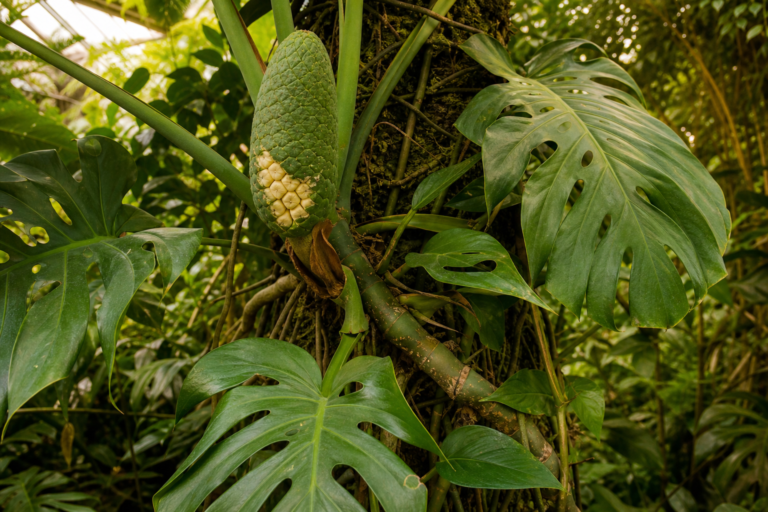
Monstera deliciosa is native to humid tropical forests from southeastern Mexico into Guatemala. In the wild, it begins life near the forest floor and climbs trees with the help of aerial roots. Mature plants can become enormous, but indoors they remain manageable when you provide support and prune thoughtfully.
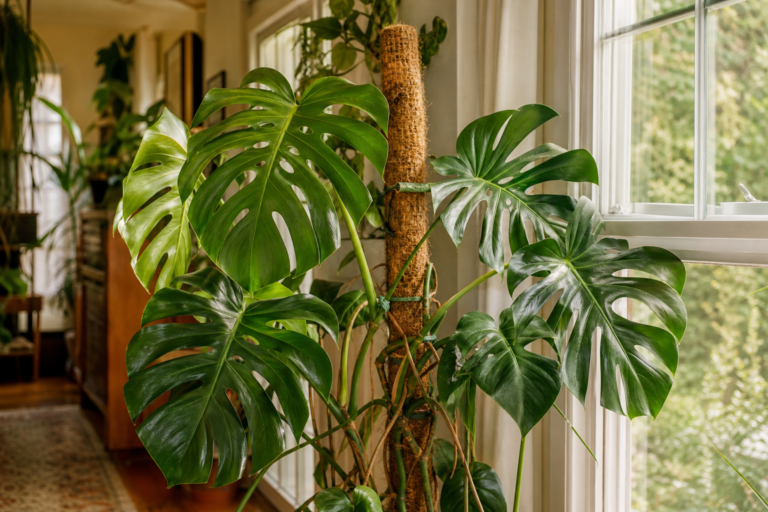
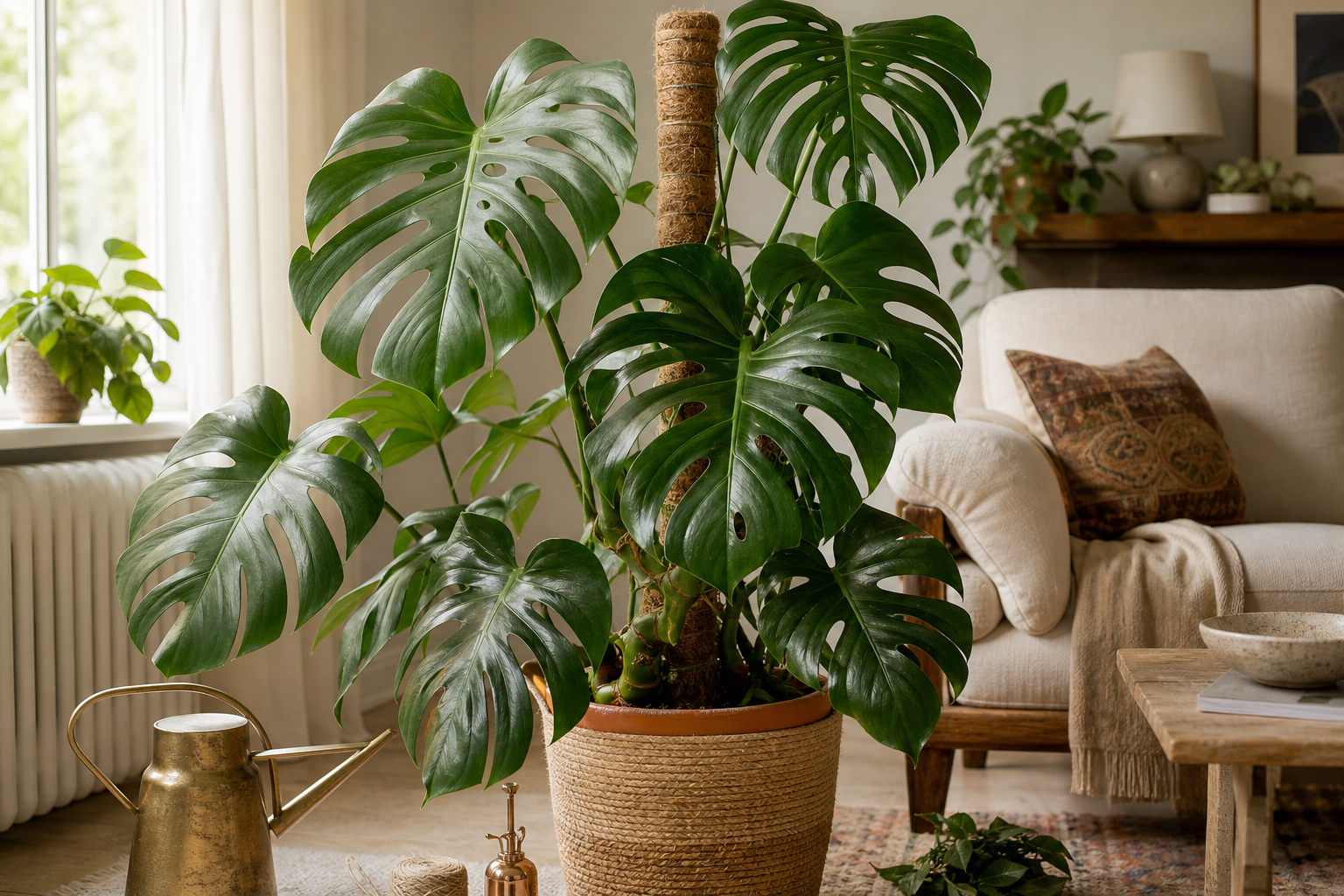
The plant’s common name, Swiss cheese plant, comes from the holes and deep cuts that develop in mature leaves. Young leaves are usually smaller and less divided, so a new plant may not look like the classic monstera immediately. Given enough light and good growing conditions, later leaves develop the architectural shape that made the species famous.
Those openings are more than decoration. In the rainforest, large leaves must cope with heavy rain, wind, and changing light. The perforations and splits may help water pass through the leaf and reduce resistance to wind. You do not need to reproduce a rainforest indoors, but understanding the plant’s background explains why it prefers bright, filtered light and room to climb.
From botanical curiosity to household plant
Monstera deliciosa entered European horticulture in the eighteenth century and received its current scientific name in the nineteenth century. Early growers valued it as an exotic foliage plant, especially because its large leaves offered something different from the flowering plants and small-leaved greenery commonly grown indoors.
For much of its history, monstera was associated with conservatories, tropical gardens, and warm climates. In the United States, it was especially suited to Florida, Hawaii, and other frost-free regions, where it could grow outdoors as a landscape plant. Elsewhere, gardeners treated it as a container plant that could spend summer outdoors and winter inside.
That flexibility helped expand its audience. You did not need a heated greenhouse to enjoy one. A bright living room, sunroom, or sheltered patio could provide enough warmth for a healthy specimen, while modern nurseries made young plants increasingly accessible across the country.
Why American homes embraced the monstera
It looks expensive without demanding museum-level care
Many dramatic houseplants come with reputations for being difficult. Monstera deliciosa offers a more welcoming balance. It appreciates bright, indirect light, but it can adapt to somewhat lower light than many tropical plants. It enjoys consistent moisture, but it usually communicates its needs clearly through drooping leaves or dry potting mix.
That does not make it indestructible. A dark corner, constantly wet soil, or repeated cold drafts can cause problems. Still, compared with more temperamental tropical specimens, monstera gives beginners a reasonable margin for error.
Its leaves work with modern interiors
The plant’s form is unusually versatile. A young monstera suits a bookshelf or desk, while a mature plant can anchor a large living room. Its glossy green leaves complement wood, white walls, woven baskets, metal furniture, and colorful textiles.
Unlike a flowering plant, monstera also provides a strong visual presence for much of the year. It does not depend on a short bloom period to make an impression. The foliage itself becomes the decoration, which fits the American preference for low-maintenance style and long-lasting indoor greenery.
It photographs beautifully
Monstera leaves are instantly recognizable, even in a small photograph. The strong outline, graphic holes, and tropical associations translate easily to social media, advertising, textiles, wallpaper, and home accessories.
This created a feedback loop. People saw monsteras in homes, cafés, offices, magazines, and online plant collections. Retailers noticed the demand and stocked more plants. More plants became available, which gave still more people the chance to try one.
It is easy to share
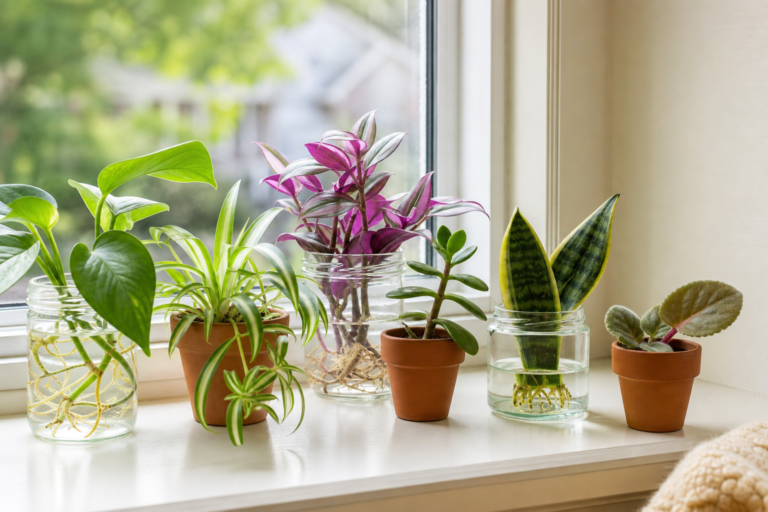
Monstera grows from a stem with distinct nodes, the small points where leaves and roots emerge. A cutting that includes a node can often produce a new plant under suitable conditions. This made monstera especially well suited to plant swaps, online communities, and the informal culture of “chop and prop”—pruning an overgrown plant and rooting the pieces.
Propagation also gives owners a reason to keep a mature plant for years. Instead of replacing an old specimen, you can train it, prune it, or create a second plant for another room.
The pandemic-era houseplant boom gave it extra momentum
American interest in houseplants was already growing before 2020, but the pandemic pushed indoor gardening into the spotlight. People spent more time at home and looked for hobbies, comfort, and ways to make indoor spaces feel more alive. Nurseries, online plant shops, and local plant groups saw a surge of attention.
Monstera was perfectly positioned for that moment. It offered a visible sense of progress: a new leaf unfurling, a fresh split appearing, or a cutting developing roots. Its size also made it feel like a meaningful purchase rather than a temporary decoration.
Variegated forms intensified the craze. Plants such as ‘Thai Constellation’ and white-variegated selections became collector favorites because of their marbled or sectoral patterns. These plants can be slower growing and more expensive than standard green monstera, so it is wise to treat dramatic price differences as a reflection of scarcity and production difficulty—not proof that a particular plant is healthier.
Green monstera versus variegated forms
The classic green form remains the best starting point for most beginners. It generally grows faster, tolerates a wider range of indoor conditions, and is easier to find at garden centers and major retailers.
- Standard green Monstera deliciosa: vigorous, widely available, and usually the most affordable choice.
- ‘Thai Constellation’: cream and yellow marbling, often slower growing and more light-sensitive than the green form.
- White-variegated selections: striking white patches, but large areas without green tissue can reduce the plant’s ability to photosynthesize.
- Monstera adansonii: a different species with smaller leaves and more numerous holes; it is often easier to fit into a smaller home.
When shopping, look beyond the label. Check that the plant has firm stems, clean leaves, and no obvious pests clustered around leaf joints or undersides. A smaller, healthy green plant is often a better investment than a stressed collector plant with an impressive name.
A simple home-growing trial: measure before you water
One reason monstera struggles indoors is inconsistent watering. Instead of following a calendar, try a two-week measurement exercise. Choose one plant in a pot with drainage and record the pot’s weight immediately after thoroughly watering it and allowing excess water to drain.
Try this practical test
- Water slowly until a little water drains from the bottom of the pot.
- Let the pot drain for 10 to 15 minutes, then record its weight with a luggage scale or bathroom scale.
- Check the pot every two or three days and record the weight again.
- Push a finger about 2 inches into the potting mix. If the top layer feels dry and the pot is noticeably lighter, it may be time to water.
- Water thoroughly again, then compare the new measurement with the original.
For example, a medium monstera in a 10-inch nursery pot might weigh about 18 pounds just after watering and fall to 14 or 15 pounds as the mix dries, depending on the pot, soil, and plant. Those numbers are not universal targets. They simply help you recognize the pattern in your own home, where temperature, humidity, light, and pot size control drying speed.
In a bright room during the growing season, you might water every 7 to 12 days. In a cooler, dimmer room during winter, the same plant may need water only every 14 to 21 days. Always check the mix and pot weight rather than relying on the date alone.
How to grow the plant that made history
Give it bright, filtered light
Place your monstera near an east- or west-facing window, or a few feet back from a bright south-facing window. Gentle direct morning sun can be useful, but intense afternoon sun through glass may scorch the leaves.
Low light often produces slower growth and smaller leaves with fewer splits. If your plant keeps producing plain, juvenile-looking leaves, light is one of the first conditions worth checking.
Use a chunky, well-drained mix
A standard indoor potting mix can work when combined with materials that improve drainage and air space, such as orchid bark or perlite. The goal is a mix that holds some moisture but does not stay heavy and saturated for long periods.
Choose a container with drainage holes. Decorative cachepots are attractive, but do not allow the inner pot to sit in standing water after you finish watering.
Support the climb
Monstera deliciosa is a climber, not a naturally compact tabletop plant. A moss pole, coir pole, or sturdy stake can help it grow upright and encourage larger leaves. Loosely secure the stem with soft ties, and guide aerial roots toward the support rather than forcing them into place.
Keep the temperature steady
Normal household temperatures suit monstera well. Protect it from cold windows, exterior doors, heating vents, and sudden temperature changes. If you move the plant outdoors for summer, bring it back inside before chilly nights arrive.
Clean and inspect the leaves
Large leaves collect dust, which can dull their appearance. Wipe them gently with a damp cloth and inspect the undersides and leaf joints while you work. Regular observation helps you notice pests or stress before they become a larger problem.
Why the trend is likely to last
Houseplant fashions change, but monstera has qualities that outlast a short-lived trend. It grows large enough to transform a room, offers a rewarding sequence of visible changes, and remains recognizable even to people who do not consider themselves plant experts.
It also fits the way many Americans garden today: in apartments, offices, balconies, sunrooms, and flexible indoor-outdoor spaces. You can buy a small plant for a modest amount, train it over time, and propagate it when it becomes too large. That combination of beauty, adaptability, and participation gives monstera more staying power than a purely decorative object.
The lasting appeal of a leafy classic
Monstera deliciosa became a favorite because it offers an unusually satisfying gardening story. It connects a home with the drama of a tropical forest, yet it can live comfortably in an ordinary American room. Its leaves are bold enough for design magazines, while its care routine remains approachable for a first-time plant owner.
Start with a healthy green plant, place it in bright filtered light, water only when the mix begins to dry, and give it something to climb. With those basics in place, you do not need a perfect indoor jungle. You only need to give this remarkable plant enough time and space to show you why it became an icon.