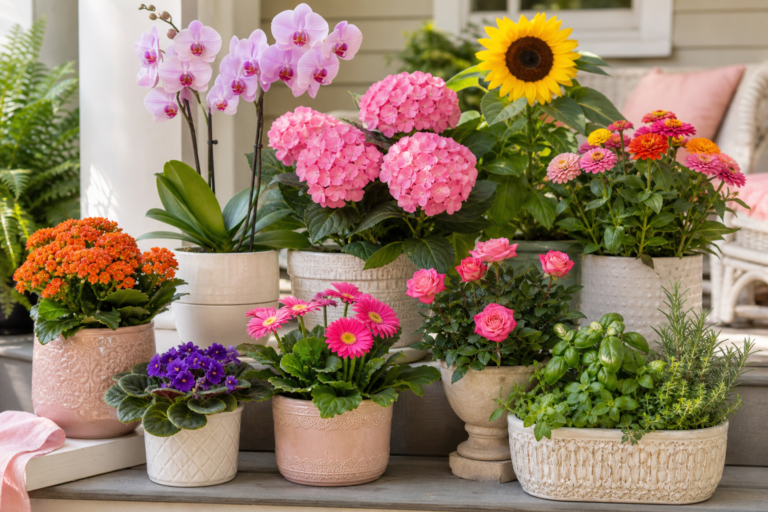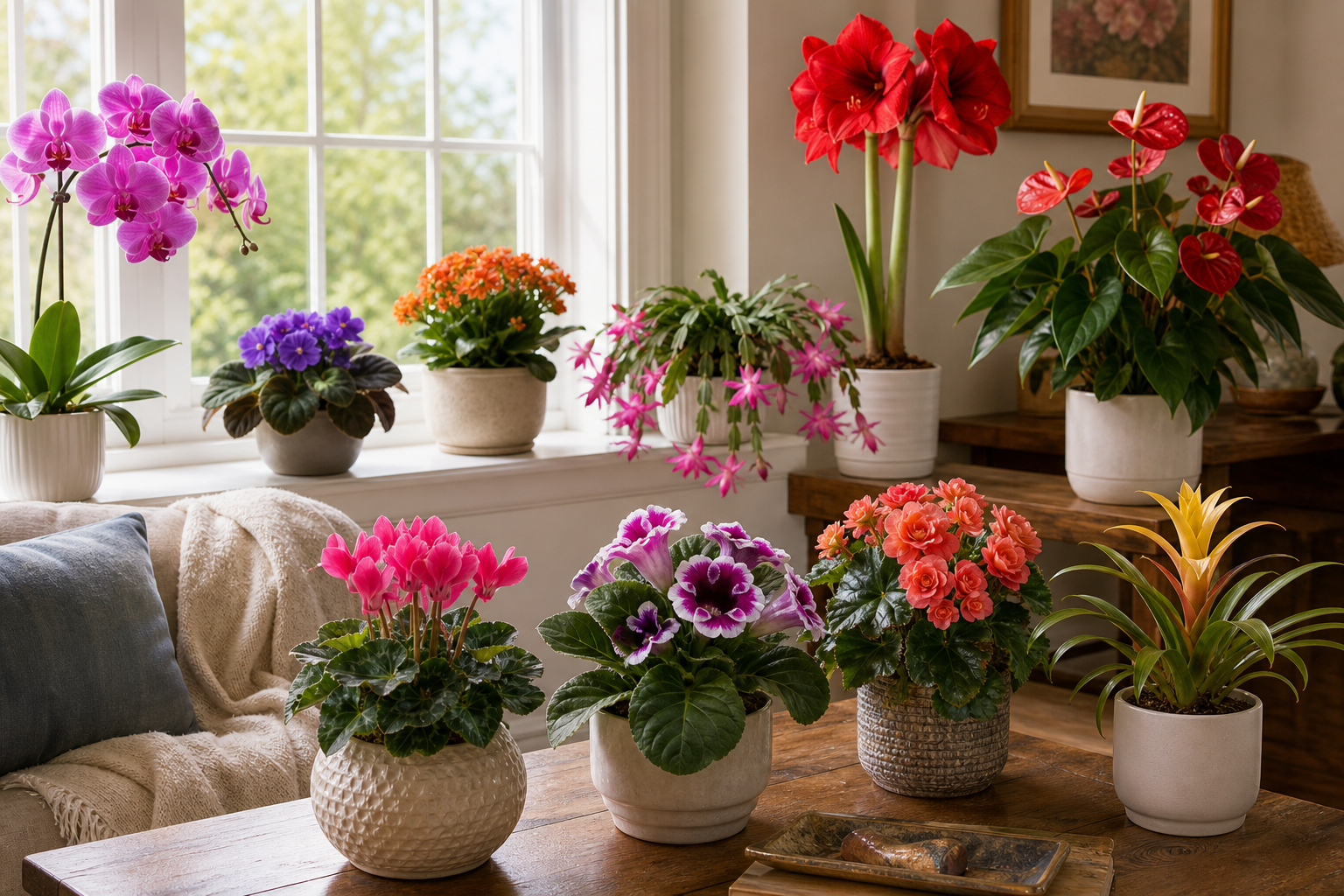
A room can feel completely different when a plant is in bloom. A spray of orchid flowers on the desk, a scarlet anthurium in the living room or a pot of African violets on the kitchen windowsill can add color without a major decorating project.
The good news is that you do not need a greenhouse to enjoy flowers indoors. Many popular houseplants perform well in ordinary American homes as long as you match each plant with the right light, use a container with drainage and avoid watering by the calendar alone. Start with one plant that fits your space, then build your collection as you learn what your home can provide.
Before you choose: match the plant to your window
Light is usually the deciding factor in indoor flowering. A bright south- or west-facing window may suit sun-loving amaryllis and kalanchoe, while an east-facing window often provides gentler light for orchids, African violets and begonias. In a dim room, a small LED grow light can make the difference between healthy foliage and reliable flowering.
Check the pot every few days, especially after turning on the heat or air conditioning. Instead of watering automatically, press a finger into the potting mix or lift the container to judge its weight. Water thoroughly when the plant’s preferred moisture level calls for it, then allow excess water to drain away.
1. Moth orchid (Phalaenopsis)
If you want an elegant display with a surprisingly long flowering period, choose a moth orchid. Its arching stems carry rounded flowers in white, pink, purple, yellow and patterned combinations, and healthy plants can bloom for months.
Give it the right conditions
- Place it in bright, indirect light; protect it from strong summer sun through glass.
- Water when the potting medium is approaching dryness, then let the container drain fully.
- Use an orchid mix based on bark or another airy medium rather than dense garden soil.
- Keep water out of the central crown, where it can encourage rot.
When the flowers fade, do not discard the plant. Keep the leaves growing in good light and watch the old flower stem for new growth. Some orchids flower again from a remaining node, while others produce a fresh stem later.
2. African violet (Streptocarpus, formerly Saintpaulia)
Few plants deliver so much color in such a small package. African violets form neat rosettes of soft, fuzzy leaves topped with clusters of purple, pink, red, blue or white flowers. Miniature varieties work beautifully on a bookshelf, desk or narrow kitchen ledge.
Choose a bright location away from harsh direct sun. They prefer steady warmth and moderate humidity, but the potting mix should never remain soggy. Water at room temperature and avoid splashing the leaves, which can leave marks or contribute to problems in cool, damp conditions.
For dependable flowering, aim for roughly 14 to 16 hours of light followed by a dark period. If winter daylight is weak, a timer-controlled grow light can help. Remove faded flowers and yellow leaves promptly so the plant can keep its tidy shape.
3. Kalanchoe (Kalanchoe blossfeldiana)
Kalanchoe is a cheerful succulent with thick leaves and dense clusters of small flowers. You will often find it in red, orange, yellow, pink or white at garden centers and grocery stores, especially during the cooler months.
This is one of the best choices for a sunny windowsill and an inconsistent watering routine. Let the top portion of the potting mix dry before watering, and never leave the pot standing in a saucer of water. A gritty, well-draining mix is helpful.
After flowering, trim away spent flower clusters and continue providing bright light. Kalanchoe is sensitive to day length, so renewed flowering may require several weeks of long, uninterrupted nights. You can enjoy the foliage even when it is between flower cycles.
4. Christmas or Thanksgiving cactus (Schlumbergera)
Holiday cacti bring jewel-toned flowers to the darker months, often in shades of magenta, red, pink, orange or white. Their flattened, jointed stems spill attractively from hanging baskets and raised pots.
Despite the name, these plants are rainforest cacti rather than desert cacti. They appreciate bright, filtered light, moderate humidity and a potting mix that drains freely but does not dry out as rapidly as a typical succulent mix. Water when the surface has dried and the plant is beginning to feel lighter, but do not keep the roots wet.
Flower buds can drop after sudden changes in temperature, light or humidity. Once buds appear, keep the plant in a stable location away from drafts, heating vents and frequently opened doors. With patient care, a holiday cactus can remain in the family for many years.
5. Amaryllis (Hippeastrum)
When you want a dramatic centerpiece, amaryllis is hard to beat. Large trumpet-shaped flowers rise on tall, sturdy stalks, often in red, salmon, pink, white or striped combinations. A single bulb can create a showy display in a small room.
Set the bulb in a pot only slightly wider than the bulb, using a well-draining mix and a container with a drainage hole. Leave the upper third of the bulb above the soil line. Begin in a warm, bright location, watering only when the top couple of inches of mix feel dry.
As the buds open, move the plant away from hot direct sun and, if possible, into a slightly cooler spot. This can help the flowers last longer. After blooming, remove faded flowers but leave the green leaves in place. They recharge the bulb for future growth.
With suitable after-bloom care, many amaryllis bulbs can flower again. In the United States, gardeners commonly give them an eight- to 12-week cool, dry rest before restarting growth, although reblooming is not guaranteed every year.
6. Anthurium (Anthurium andraeanum hybrids)
Anthuriums add a modern tropical note with glossy leaves and long-lasting, heart-shaped colorful spathes. The bright red form is classic, but pink, white, orange and even greenish varieties are also available.
Place anthurium in bright, indirect light. Too little light can reduce flowering, while strong direct sun may scorch the leaves. Keep the potting mix lightly and evenly moist, allowing the surface to dry somewhat between waterings. High humidity helps the foliage look its best, especially in homes with winter heating.
Wipe dust from the broad leaves with a damp cloth and cut off aging flower stalks at the base. Choose a spot where the plant will not be chilled by a draft or pressed against cold glass during winter.
7. Florist cyclamen (Cyclamen persicum)
Florist cyclamen makes a cool-season room feel instantly brighter. Its upswept flowers seem to hover above marbled, heart-shaped foliage, with colors ranging from white and pink to deep red and purple.
Unlike many tropical houseplants, cyclamen prefers cooler indoor conditions. Give it bright, indirect light and keep it away from radiators and heat vents. Water carefully around the edge of the pot or from below, allowing the excess to drain. Avoid keeping the crown and tuber constantly wet.
Cyclamen often performs best as a seasonal indoor display. When flowering slows and the foliage begins to yellow, the plant may be entering dormancy. Reduce watering gradually rather than assuming it needs more fertilizer or a larger pot.
8. Gloxinia (Sinningia speciosa)
Gloxinia is a standout for anyone who loves velvety, trumpet-shaped flowers. The blooms can be large and richly colored, while the leaves have a soft texture that adds interest even between flowering periods.
Give gloxinia bright, indirect light and a loose, well-draining potting mix. Keep the soil evenly moist during active growth, but water the soil rather than the foliage and flowers. Wet leaves that stay damp can develop spotting or disease problems.
When the plant finishes its show, do not panic if the foliage declines. Gloxinia grows from a tuber and may enter a rest period. Let the plant follow its natural cycle, then resume watering when fresh growth appears.
9. Flowering begonia
Flowering begonias offer a wide range of forms, from compact plants covered in small blooms to double-flowered hybrids that resemble miniature roses. They are useful for adding color to an east- or west-facing window without demanding intense sun.
Provide bright, filtered light and good air circulation. Water when the surface of the potting mix feels dry, but do not allow the container to sit in water. Begonias dislike both prolonged drought and heavy, waterlogged soil.
Compare varieties before buying. Rieger begonias often make a spectacular short-term display, while some wax begonias can continue flowering for a longer period under good indoor conditions. Remove faded blooms regularly and rotate the pot every week or two so growth stays balanced.
10. Bromeliad
A bromeliad can brighten a room even when its actual flowers are small. The colorful central bracts, often red, pink, orange or yellow, create the look of a long-lasting bloom and complement the plant’s architectural leaves.
Most commonly sold bromeliads prefer bright, indirect light and warm indoor conditions. Water the potting mix when it begins to dry, and use a container that drains freely. Depending on the type, the plant may hold water in its central cup; if so, refresh that water regularly and avoid allowing it to become stagnant.
After flowering, the mother plant gradually declines while producing offsets, or pups, around its base. Leave the pups attached until they are a useful size, then separate them carefully if you want to start new plants.
A simple watering experiment for your home
Care labels often say “water weekly,” but your home may be warmer, cooler, brighter or drier than the store’s display area. Try a small two-week experiment with one plant: record the pot’s weight immediately after watering, check it again every two days, and note when the top inch or two of mix feels dry.
- Use a kitchen scale for a small pot, or simply lift the container by hand.
- Record the room temperature and whether the plant sits near a window, fan or heat source.
- Water thoroughly only when the plant’s soil preference calls for it.
- Write down how much water you add and whether it drains freely.
This simple log can reveal more than a fixed schedule. For example, an African violet may need consistently light moisture, while a kalanchoe prefers a noticeably drier interval. Adjust the timing to the plant rather than forcing every pot into the same routine.
Make your home bloom with confidence
For the easiest starting point, try an African violet, moth orchid, kalanchoe or holiday cactus. If you want a bold focal point, choose amaryllis or anthurium. For a cooler, seasonal display, florist cyclamen is a lovely choice.
Whatever you select, begin with the basics: identify your brightest window, check the soil before watering and make sure the pot can drain. A little observation goes a long way, and once you learn how one flowering houseplant responds in your home, choosing the next one becomes much easier.