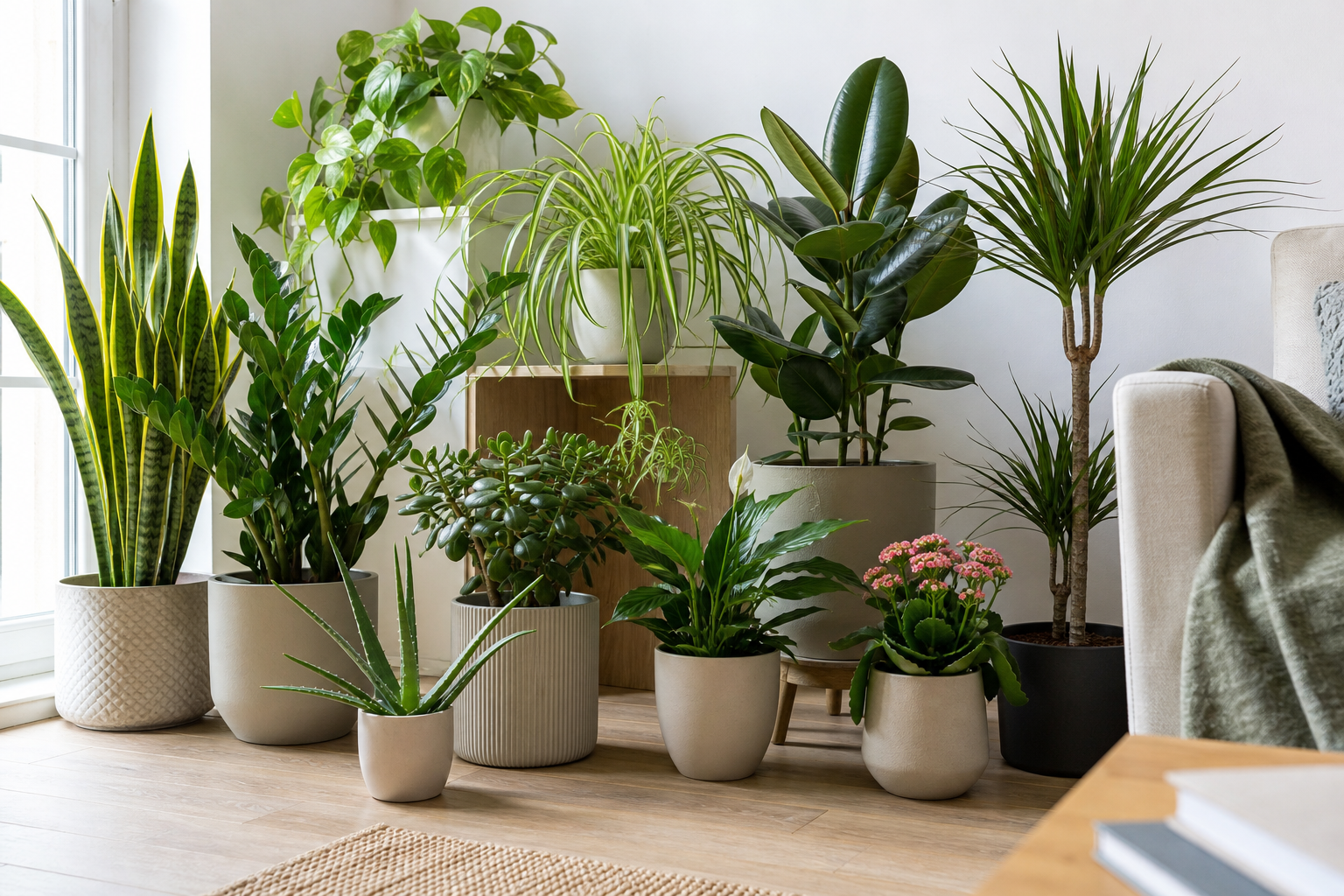
Houseplants can make a room feel warmer, brighter, and more lived-in—but you do not need a greenhouse, a plant cabinet, or a perfect watering routine to grow them successfully. The best beginner plants are forgiving: they tolerate ordinary indoor conditions, recover from small mistakes, and give you clear signals when something needs to change.
Before you buy, take a quick look at your home. A north-facing window may offer gentle, lower light, while an east-facing window usually provides softer morning sun. South- and west-facing windows can be much brighter, especially in summer. Remember that daylight changes with the seasons: a spot that seems bright in July may be considerably dimmer in December.
What makes a houseplant beginner-friendly?
Low-maintenance does not mean “water once and forget it.” Every plant needs appropriate light, drainage, and occasional attention. Beginner-friendly plants simply give you more room for error than delicate ferns, flowering plants, or tropical species that demand consistently humid conditions.
- Choose the light before the plant. A healthy plant in the right location is easier to care for than a fashionable plant in the wrong one.
- Use a container with drainage. Excess water needs somewhere to go.
- Check the soil before watering. A calendar reminder is useful, but the potting mix is a better guide.
- Change conditions gradually. Move plants toward brighter light over several days or weeks to reduce the chance of leaf scorch.
1. Snake plant
Dracaena trifasciata, formerly widely sold under the name Sansevieria trifasciata, is one of the most forgiving houseplants available. Its upright, sword-shaped leaves suit narrow shelves, desks, and apartment corners, while compact and tall forms give you plenty of choice.
Snake plants tolerate low light, although brighter indirect light generally supports stronger growth. Let the potting mix dry thoroughly between waterings. Thick leaves and underground rhizomes help the plant cope with dry spells, but constantly wet soil can cause serious problems.
Best beginner tip
Use a heavy container for tall varieties, especially if the leaves make the plant top-heavy. ‘Laurentii’ has yellow leaf margins, while ‘Moonshine’ has silvery foliage; darker green forms are usually the safer choice for dimmer rooms.
2. Pothos
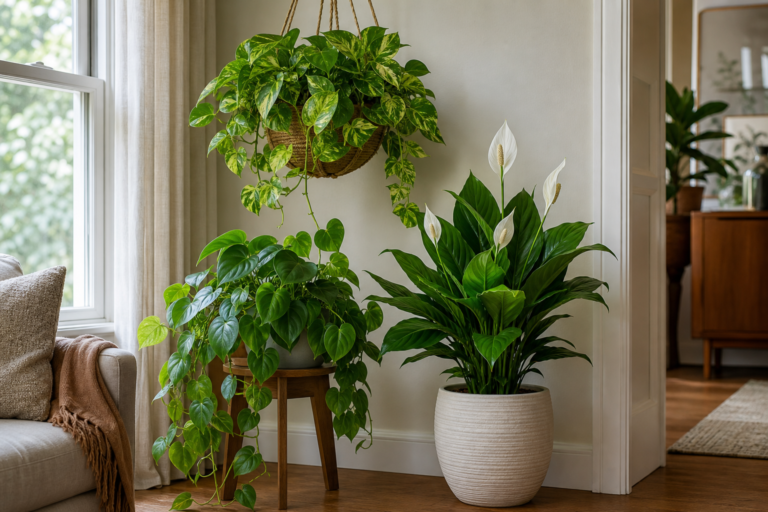
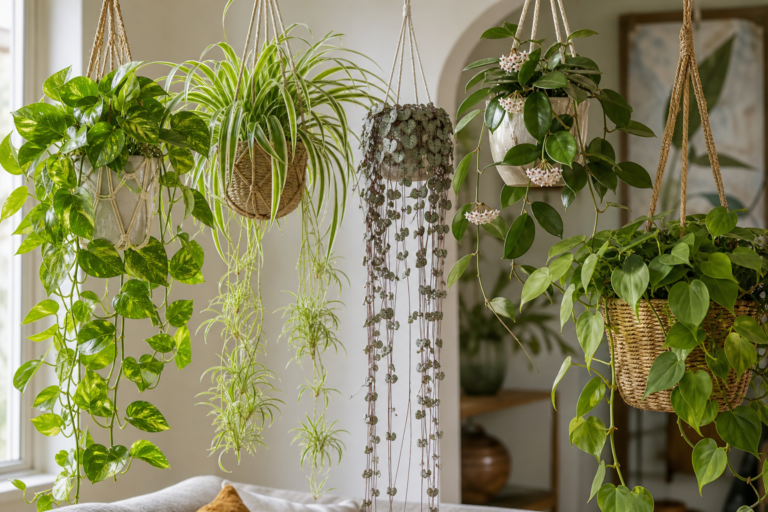
Golden pothos, Epipremnum aureum, is a classic trailing plant for a hanging basket, bookcase, or high shelf. It grows quickly in good indoor light and can tolerate medium or lower light, though variegated varieties may lose some of their pattern when conditions are too dim.
Water when the top 1 to 2 inches of potting mix feels dry. If the vines become long and sparse, move the plant closer to bright, indirect light and trim the stems just above a leaf node—the small joint where a leaf meets the vine.
Compare the varieties
- ‘Golden’: green leaves marked with yellow, a familiar and widely available choice.
- ‘Jade’: solid dark green foliage that often handles lower light better than highly variegated forms.
- ‘Neon’: bright chartreuse leaves that show best in medium to bright indirect light.
- ‘Marble Queen’: attractive white-and-green variegation, but slower-looking growth in dim rooms.
3. ZZ plant
The ZZ plant, Zamioculcas zamiifolia, has glossy leaflets arranged along sturdy stems. It is an excellent option for offices, entryways, and homes where watering is easily forgotten. It tolerates low light, although it may grow slowly there.
Allow the potting mix to dry well before watering again. Its thick underground rhizomes store water, so frequent small drinks are usually less helpful than a thorough watering followed by a proper dry period. Wipe dust from the leaves occasionally so the foliage stays glossy and can make the most of available light.
4. Heartleaf philodendron
Heartleaf philodendron, Philodendron hederaceum, offers soft, heart-shaped leaves and flexible trailing growth. It performs well in medium to bright indirect light and can adapt to lower light, although the stems may become more widely spaced.
Check the top inch of soil before watering. This plant appreciates a little more moisture than a snake plant or ZZ plant, but it still should not sit in a saucer of water. Pinching or trimming the growing tips encourages a fuller plant instead of a single long vine.
Where it works best
Place it a few feet from an east- or north-facing window, or use a filtered spot near a brighter window. If new leaves emerge smaller and the vine stretches toward the glass, increase light gradually rather than immediately placing it in strong afternoon sun.
5. Spider plant
Spider plant, Chlorophytum comosum, is especially satisfying for beginners because mature plants often produce long stems carrying small plantlets. Its arching leaves look attractive in hanging baskets, and it adapts well to bright indirect or medium light.
Let the soil dry between waterings, then water thoroughly until a little drains from the bottom. Plants in small, crowded containers may need water more often than large specimens, especially during active spring and summer growth.
Watch for brown tips
Brown leaf tips can result from several stresses, including inconsistent watering, dry indoor air, or mineral buildup. Trim damaged tips with clean scissors, but do not assume that every brown tip means the plant needs more water. Check the soil first.
6. Chinese evergreen
Chinese evergreen, Aglaonema, brings broad, patterned foliage to rooms with low to medium light. Green-leaved forms are generally the most tolerant of dim conditions, while silver, pink, or strongly variegated cultivars usually look their best with brighter indirect light.
Water when the upper portion of the potting mix has dried, then empty excess water from the saucer. Keep the plant away from cold drafts and sudden temperature changes. In a darker room, growth may be slow; that is normal and does not automatically mean something is wrong.
7. Cast iron plant
Cast iron plant, Aspidistra elatior, has earned its common name by coping with lower light and periods of neglect better than many leafy houseplants. Its long, dark green leaves create a calm, architectural look in living rooms, hallways, and offices.
Use a well-draining potting mix and water when the surface begins to dry. Cast iron plants are naturally slow-growing, so resist the urge to repot or fertilize frequently. A stable location is often more valuable than constant tinkering.
A good choice for cooler rooms
Compared with many tropical houseplants, cast iron plant is less demanding about ordinary indoor conditions. It still needs protection from freezing temperatures, but it can be a useful option for a room that is not consistently warm or humid.
8. Peperomia
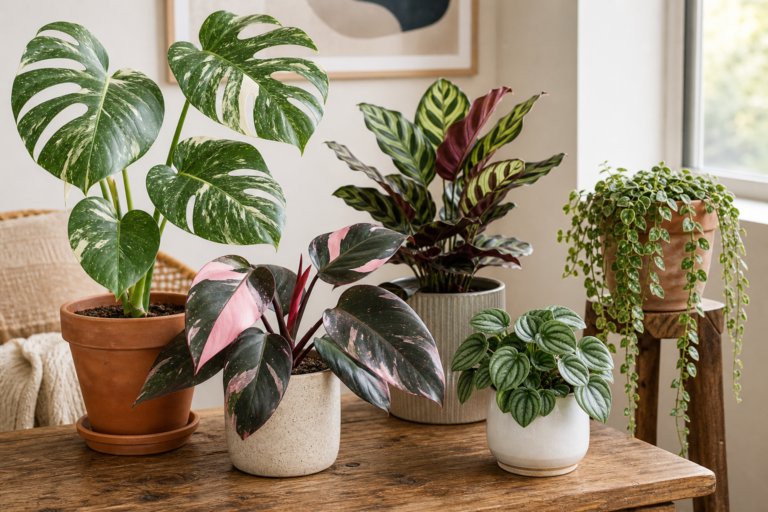
Peperomias offer remarkable variety in a small package. Depending on the species or cultivar, you may find rounded, rippled, striped, red-edged, or succulent-like leaves. They suit desks and windowsills because most remain relatively compact.
Give peperomia bright, indirect light and allow the potting mix to dry partly between waterings. The fleshy leaves hold some moisture, so overwatering is a more common beginner mistake than underwatering. A small pot with a drainage hole is usually easier to manage than an oversized container.
Try a small variety comparison
- Baby rubber plant: thick, rounded leaves and an upright-to-mounding habit.
- Ripple peperomia: deeply textured leaves and a compact silhouette.
- Watermelon peperomia: striped foliage that needs brighter indirect light to maintain strong color.
9. Ponytail palm
Despite its common name, ponytail palm, Beaucarnea recurvata, is not a true palm. Its swollen trunk stores water, while its long, narrow leaves form a playful fountain of foliage. It is particularly well suited to a bright window and a gardener who prefers infrequent watering.
Let the potting mix dry thoroughly between waterings, and use a sharply draining mix. A south- or west-facing window can work well, but introduce the plant to stronger sun gradually if it has been growing in a dim store or home environment.
10. Rubber plant
Rubber plant, Ficus elastica, makes a bold statement with large, leathery leaves. It prefers bright, indirect light and can become a long-lived floor plant when given enough space. It is less tolerant of very dark corners than a snake plant or ZZ plant, so placement matters.
Water when the top 1 to 2 inches of mix have dried. Rotate the pot every week or two so growth stays more balanced, and wipe broad leaves gently with a damp cloth. Move it gradually if you change its light level; sudden shifts can lead to leaf drop or scorched foliage.
A simple watering experiment you can measure
Instead of guessing how often to water, try a four-week observation test with one plant. Choose a pot with drainage, weigh it after a thorough watering, and write the number down. A kitchen scale works for a small plant; for a larger container, you can record the pot’s weight by lifting it or use a moisture meter as a secondary reference.
- Water slowly until a small amount drains from the bottom.
- Wait 10 minutes, then empty the saucer.
- Record the watered weight, such as 4.8 pounds.
- Check the pot every two or three days.
- When the mix reaches the dryness level appropriate for that plant, weigh it again and record the result.
For example, a small pothos might weigh 4.8 pounds after watering and 4.1 pounds when the top 1 to 2 inches feel dry. That difference—about 0.7 pounds, or roughly 11 ounces—gives you a useful personal reference for that pot, soil mix, season, and room. It is not a universal rule: a terracotta pot, a larger plant, winter heating, or a sunnier window will change the result.
How to troubleshoot without panic
Yellow leaves, drooping, and brown edges can have more than one cause. Before changing everything at once, check the light, soil moisture, drainage, and recent changes in temperature or location.
- Long, stretched stems: the plant may need more light.
- Soft stems or persistently wet soil: pause watering and inspect drainage.
- Crispy edges: check for dry soil, hot direct sun, or a draft.
- One-sided growth: rotate the pot gradually toward the light.
- Slow winter growth: often normal when indoor light levels and temperatures drop.
Start small and learn your home
You do not need all 10 plants at once. Begin with one snake plant, pothos, ZZ plant, or spider plant and spend a month observing it. Notice how quickly the soil dries, where the leaves face, and how the plant responds when the seasons change.
Once you understand one plant’s rhythm, adding another becomes much easier. Choose the plant that matches the light you already have, water according to the soil rather than the calendar, and make changes gradually. With those simple habits, even a first-time indoor gardener can grow a healthy, attractive collection.