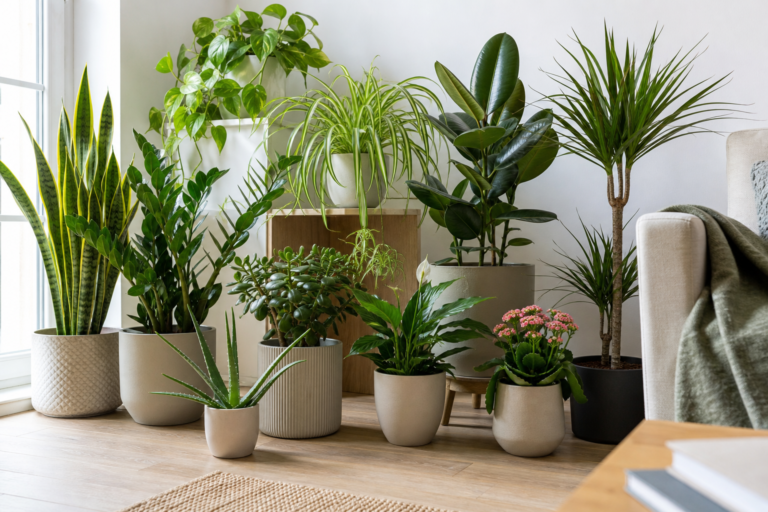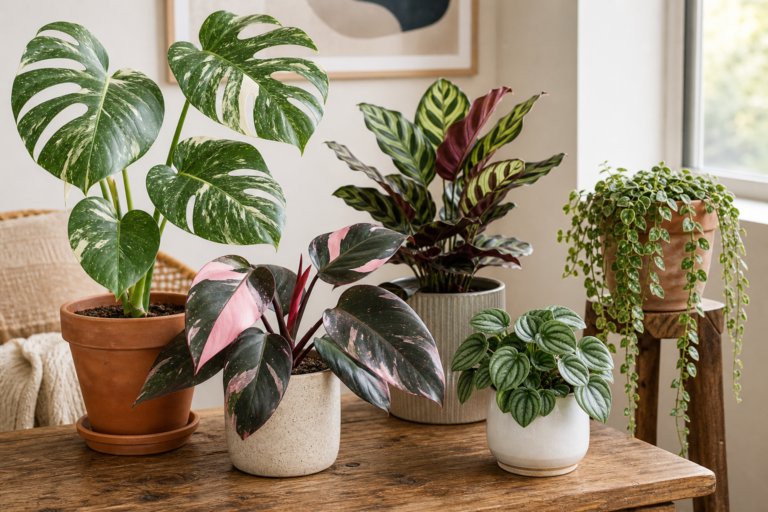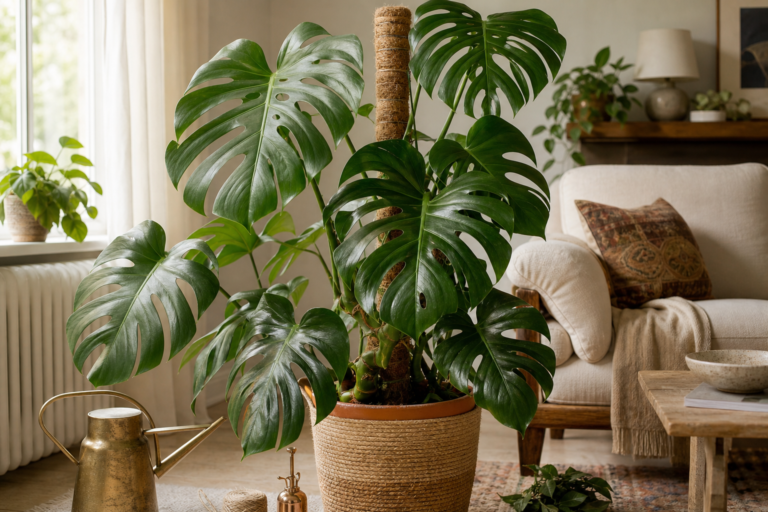
A room with a north-facing window, a shaded apartment, or a desk several feet from the glass does not have to be a plant-free zone. Many tropical rainforest plants spend their lives beneath a leafy canopy, where sunlight arrives softened, scattered, and limited. That natural adaptation makes them useful houseplants for the lower-light corners of an American home.
Low light does not mean no light. You should still be able to read comfortably in the area during the day without turning on a lamp. In a very dark room, even the most tolerant plant will eventually become thin, slow-growing, and pale. If a plant is more than about 6 to 8 feet from a window, consider moving it closer or adding a simple white full-spectrum grow light for 12 to 14 hours a day.
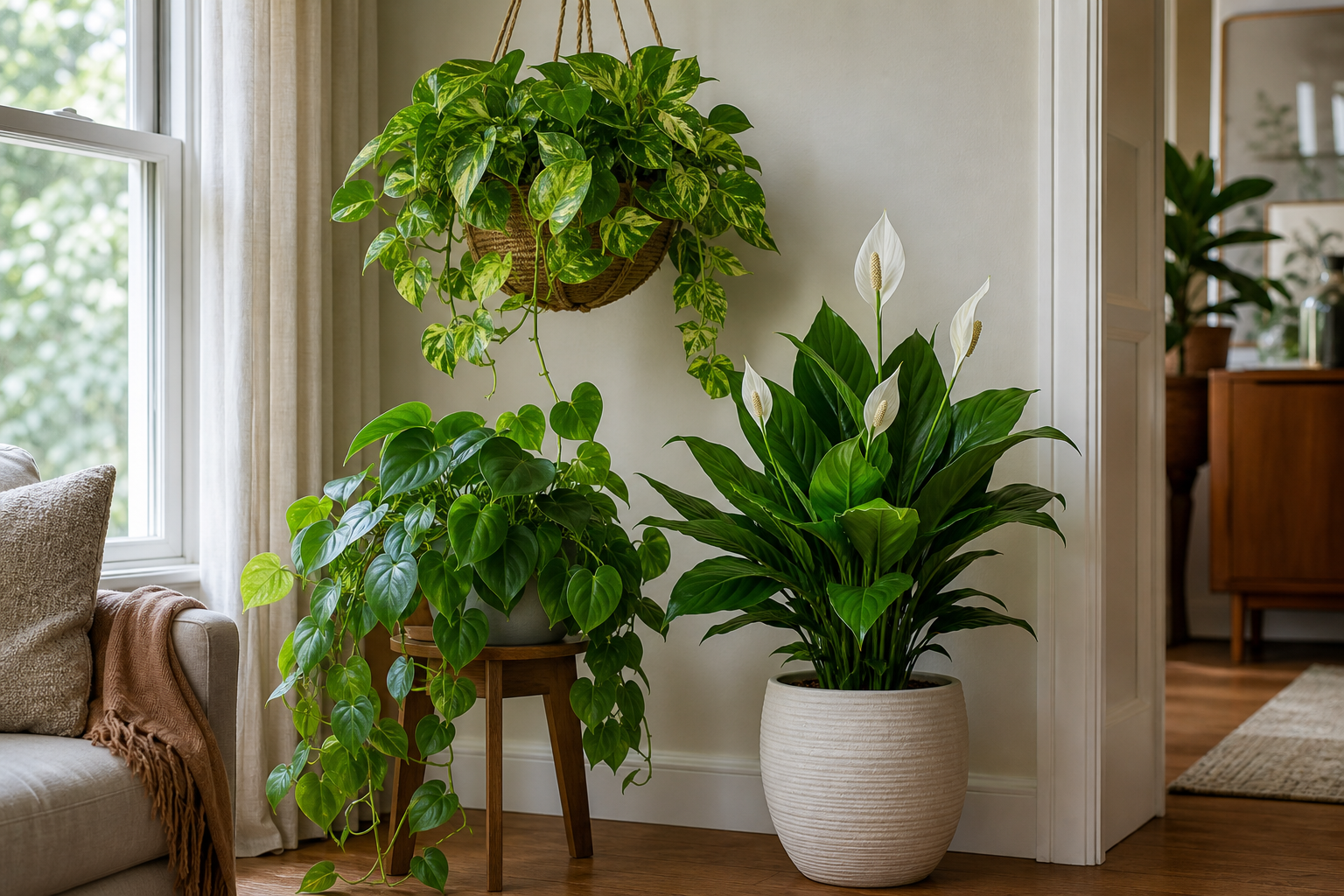
These three choices offer three different experiences: pothos for forgiving trailing growth, heartleaf philodendron for soft, elegant foliage, and peace lily for a leafy clump that can occasionally produce white blooms. Start with the one that best matches your habits and the conditions you already have.
Why rainforest plants can handle a dimmer home
The forest floor and lower understory receive far less direct sun than the treetops. Plants that grow there often rely on broad leaves, climbing or spreading stems, and efficient use of filtered light. Indoors, that translates into a preference for bright or moderate indirect light rather than hot afternoon sun.
There is one important catch: lower light also slows water use. A pot that dries in four days on a bright windowsill may stay damp for 10 days in a darker corner. If you keep the same watering routine all year, overwatering becomes more likely. Your best guide is the soil and the weight of the pot, not a fixed weekly schedule.
1. Golden pothos: the easiest rainforest vine
What makes it special
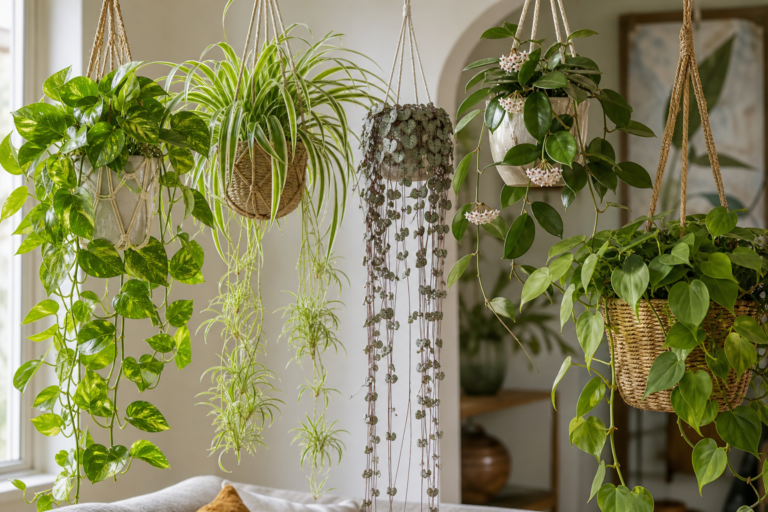
Golden pothos, Epipremnum aureum, is a climbing vine from the Solomon Islands. In warm tropical conditions, it can climb tree trunks with aerial roots or trail across the ground. In a home, its heart-shaped leaves and flexible stems make it equally useful in a hanging basket, on a shelf, or trained around a small trellis.
Its tolerance is one reason pothos has become a classic starter houseplant. It can live in a relatively dim location, although growth will be slower and the yellow pattern on variegated leaves may become less pronounced. If you want the strongest variegation, give it brighter indirect light without exposing it to harsh, hot sun.
Choose the right look
- Golden pothos: green leaves marked with yellow; a cheerful choice for a plain room.
- Marble Queen: heavily marbled white and green leaves; attractive, but usually slower in lower light.
- Neon pothos: bright chartreuse foliage; color is clearest with more indirect light.
- Jade pothos: solid deep-green leaves; often the most dependable option for a dimmer corner.
If your room is genuinely dark, start with a solid-green selection. Highly variegated plants have less green leaf tissue available for photosynthesis, so they may stretch more quickly when light is limited.
Simple pothos care
- Place it in bright, indirect light or a lower-light spot with enough daylight to read by.
- Let the top 1 to 2 inches of potting mix dry before watering.
- Use a container with a drainage hole and empty the saucer after watering.
- Trim long, bare sections just above a leaf node to encourage a fuller appearance.
- Rotate the pot a quarter turn every week or two so growth does not lean strongly toward the window.
For a practical watering check, try this once rather than guessing. Water a 6-inch pothos pot slowly until a little drains from the bottom, then let it drain for 10 minutes. Weigh the pot with a kitchen scale and record the number. Check it again every two or three days. When the pot feels noticeably lighter and the top inch or two is dry, water thoroughly again. The exact amount may vary, but many plants in this size range use roughly 12 to 20 fluid ounces per watering indoors; soil, pot material, temperature, and light can change that figure considerably.
2. Heartleaf philodendron: soft foliage with a graceful habit
A quieter alternative to pothos
Heartleaf philodendron, Philodendron hederaceum, is another tropical climbing plant that performs well in indirect light. Its leaves are usually smaller, thinner, and more uniformly heart-shaped than those of many pothos varieties. The overall effect is softer and less flashy, making it a good choice for a bedroom, home office, or bookcase.
The plant can trail naturally or climb if you provide a moss pole, trellis, or another textured support. As it grows upward, its leaves may become larger. If you want a compact plant, pinch or prune the growing tips regularly instead of allowing long stems to develop all at once.
Compare it with pothos
- Leaf texture: philodendron leaves are often thinner and more supple; pothos leaves tend to feel thicker and waxier.
- Growth style: both trail or climb, but heartleaf philodendron often creates a more delicate curtain of foliage.
- Low-light behavior: both tolerate lower light, although either plant can become leggy if the location is too dim.
- Watering: philodendron generally prefers a partial dry-down rather than constantly wet soil.
Several cultivars bring extra personality. ‘Brasil’ has a lime-green stripe through the center of each leaf, while ‘Micans’ has velvety foliage with bronze or copper tones. Variegated forms are beautiful, but solid-green types are usually the safer choice for a dim room because they can maintain growth with less light.
Keep the routine simple
Allow the top portion of the potting mix to dry before watering, then soak the root ball completely. Avoid giving frequent sips that wet only the surface. Shallow watering can leave the center of the root ball dry while encouraging weak surface roots.
As a home growing experiment, compare two identical 6-inch pots for four weeks. Place one heartleaf philodendron 2 feet from a bright north- or east-facing window and the other 6 feet away. Every Sunday, measure the water used and count new leaves. You may find that the brighter plant needs water sooner and produces more growth, while the dimmer plant remains healthy but uses less water. That difference is a useful reminder that “low light” changes the plant’s entire care rhythm.
3. Peace lily: a leafy rainforest plant with flowers
Best for a lush, upright display
Peace lilies, members of the genus Spathiphyllum, are tropical plants native to parts of Mexico, tropical America, Malesia, and the western Pacific. Their glossy leaves rise in a full clump, and mature plants may produce white, sail-like flower structures called spathes.
Among low-light houseplants, the peace lily is the most likely of these three to reward you with flowers. However, flowering usually improves when the plant receives brighter indirect light. In a dark corner, expect attractive foliage first and blooms only occasionally.
Know the difference between varieties
- Dwarf peace lilies: compact and useful on a desk, counter, or small plant stand.
- Medium cultivars: a good balance of manageable size and strong visual impact.
- Large cultivars: better for a floor pot, where broad leaves have room to spread.
Unlike pothos and heartleaf philodendron, peace lilies grow as clumps rather than trailing vines. That makes them a better match if you want a substantial, upright plant without a long cascade of stems.
Water carefully, but do not panic over a wilt
Peace lilies prefer evenly moist potting mix, but “moist” does not mean waterlogged. Wait until the surface has begun to dry, then water thoroughly. A wilted peace lily often perks up after a timely drink, but repeated severe wilting can lead to yellow leaves, damaged roots, and a less attractive plant over time.
Try measuring the pot rather than watering by instinct. For a typical 8-inch peace lily in a plastic nursery pot, begin with about 24 to 36 fluid ounces of water, pouring slowly in two or three stages. Stop when a small amount drains out, let the pot sit for 10 minutes, and empty the saucer. In a cool, dim room, the next watering may not be needed for 10 to 14 days; in a warm room with brighter indirect light, it may need attention sooner. Use the soil as the final decision-maker.
Keep peace lilies away from cold drafts and heating vents. Average indoor temperatures around 68 to 85 degrees Fahrenheit during the day suit them well, while prolonged cold can slow growth and damage foliage. Wipe the large leaves occasionally with a damp cloth to remove dust and help the plant look fresh.
Set up a low-light rainforest corner
You do not need a greenhouse to create a convincing tropical display. Grouping plants can raise the humidity immediately around their foliage, while varied heights make a small collection look more abundant.
- Place a peace lily in the back or center for height.
- Set a heartleaf philodendron on a stand so its stems can trail.
- Hang pothos slightly above eye level or guide it around a support.
- Leave space between pots so air can move around the leaves.
- Use saucers under every container, but do not let pots sit in standing water.
In winter, move plants a little closer to the window if the room becomes noticeably dimmer. In summer, protect them from intense afternoon sun through south- or west-facing glass. A sheer curtain can soften the light, but watch for signs of stress: bleached patches and crispy brown areas suggest too much sun, while long gaps between leaves and small new growth suggest too little.
Which one should you choose?
- Choose pothos if you want the most forgiving trailing plant and enjoy choosing among many leaf patterns.
- Choose heartleaf philodendron if you prefer a softer, more understated vine for a shelf or office.
- Choose peace lily if you want an upright clump with the possibility of white blooms and do not mind checking moisture more often.
A brighter home for rainforest plants
Low-light houseplants are not maintenance-free, but they are wonderfully adaptable. Give them usable daylight, a draining pot, and a watering routine based on actual soil moisture, and they can turn a quiet corner into a living green focal point.
Start with one plant, observe it for a month, and write down where it sits, when you water, and how much new growth appears. Once you understand that plant’s rhythm, adding a second or third becomes much easier. The rainforest look begins with a single leaf—and a little thoughtful attention.