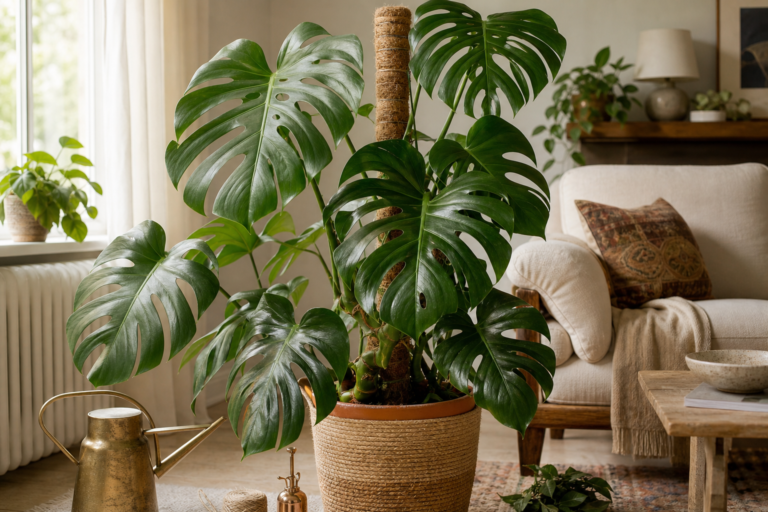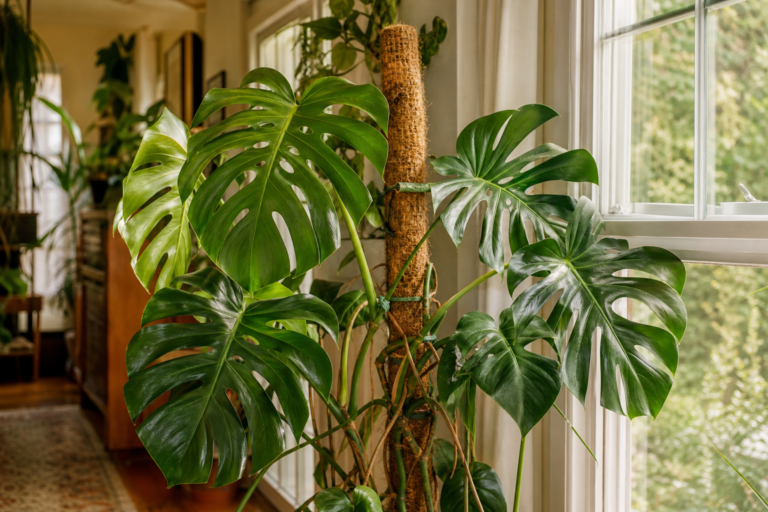
Most gardeners know Monstera deliciosa as the Swiss cheese plant, famous for its enormous, hole-punched leaves. Fewer realize that the same climbing plant can produce an edible fruit—one that has inspired names such as ceriman, Mexican breadfruit and fruit salad plant.
The catch is patience. A monstera grown indoors may take many years to reach flowering size, and many plants never fruit in a typical living room. But in a warm greenhouse, sunroom or frost-free garden, a mature plant can reward you with a curious green “cob” packed with creamy, fragrant pulp.
If you are lucky enough to see one forming, treat it as both a gardening achievement and a food-safety project. The fruit ripens from the base upward, and only the soft, fully mature sections should be eaten.
What does monstera fruit look like?
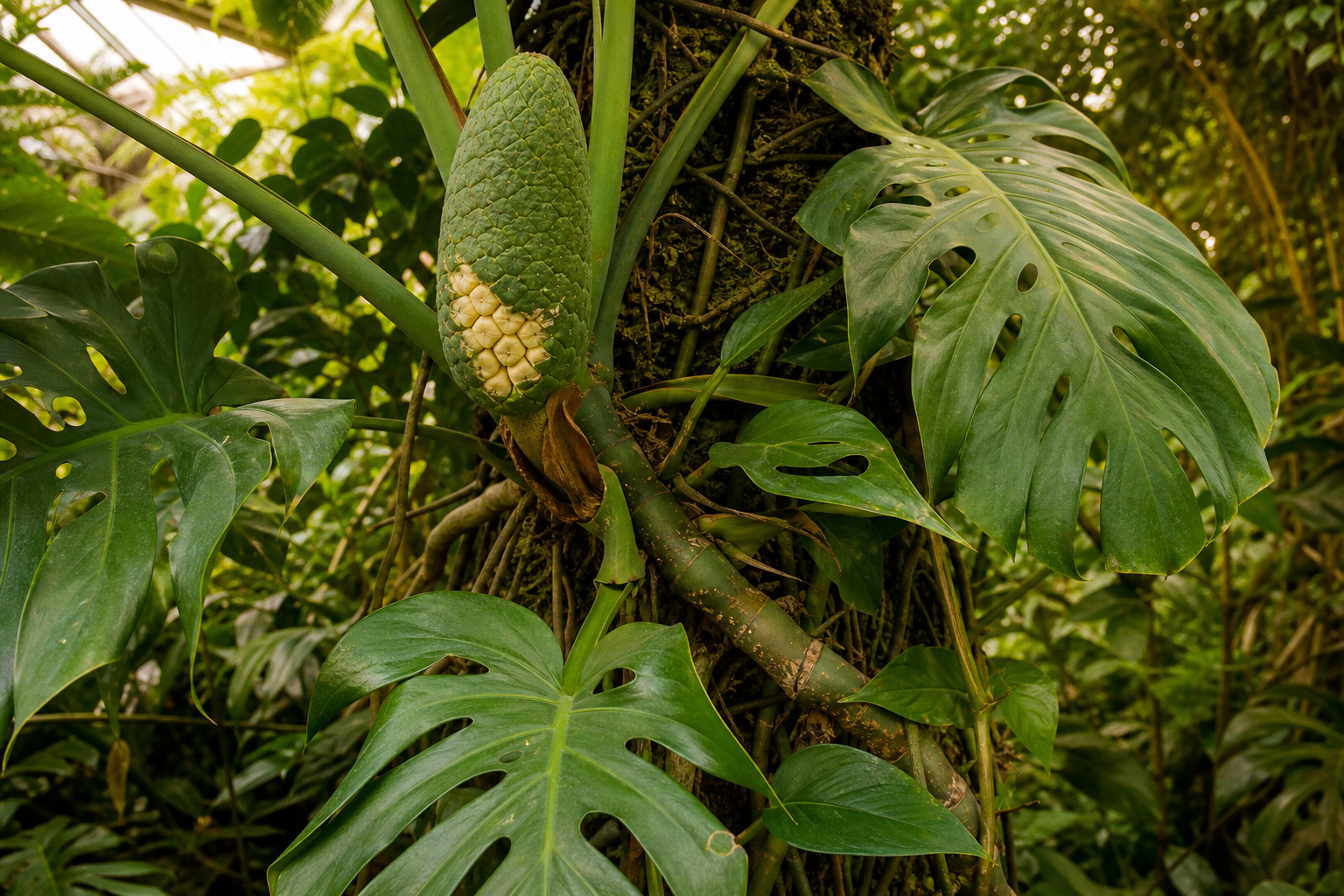
Monstera fruit develops from the plant’s unusual flower structure, called a spadix. The flower itself is not a showy petaled bloom; instead, many tiny flowers cover a thick central spike protected by a pale, hood-like covering. After pollination, the spadix swells into a cone-shaped fruit.
A mature fruit commonly reaches about 9 to 12 inches long, although size varies with the plant and growing conditions. It resembles a green ear of corn or a scaly club. Each small, tile-like section covers a portion of the edible flesh beneath.
- Immature fruit: firm, dark green and tightly covered with scales.
- Developing fruit: lighter green, swollen and beginning to loosen at the base.
- Ripe sections: creamy or pale yellow, soft and fragrant, with scales that separate or fall away easily.
- Core: a firm central structure that should not be eaten.
The fruit is technically an aggregate of many small berry-like sections. Some fruits contain pale, firm seeds, but seed production is not especially dependable, which is one reason gardeners generally propagate monstera from stem cuttings instead.
What does it taste like?
Descriptions vary, but the flavor is often compared with a blend of pineapple, banana, mango, jackfruit or other tropical fruits. The texture can be creamy and custard-like, with a pleasant fragrance when the fruit is ready.
Do not expect every fruit to taste exactly the same. Ripeness, plant health, growing temperature and the section you sample can all affect flavor. The portion closest to the base usually ripens first, so one fruit may contain both delicious soft flesh and completely immature sections at the same time.
The simplest way to enjoy it is fresh. You can also fold ripe pulp into a fruit salad, spoon it over yogurt or use a small amount in a chilled dessert. Because the fruit is unusual and not widely stocked in ordinary U.S. grocery stores, a homegrown specimen is more likely to be a special tasting experience than a dependable kitchen staple.
Is monstera fruit safe to eat?
Only fully ripe fruit should be eaten. Unripe sections contain irritating calcium oxalate crystals. These can cause intense burning, prickling or discomfort in the mouth and throat. The same general caution applies to the rest of the plant: leaves, stems, roots and immature fruit are not food.
Do not assume that a fruit is ready simply because it has reached full size. Monstera fruit may be botanically mature while still containing irritating, unripe sections. The safest approach is to eat only the flesh that has softened and separated naturally from the core.
- Never taste a firm, tightly sealed green section.
- Do not scrape immature flesh from beneath scales that are still firmly attached.
- Eat only portions that are soft, creamy and easy to remove.
- Stop if the fruit causes burning, tingling or unusual irritation.
- Keep fruit and plant pieces away from children and pets.
If someone eats an unripe portion and develops significant mouth or throat pain, trouble swallowing, swelling or persistent symptoms, contact a medical professional or poison-control service promptly.
How long does monstera fruit take to mature?
The plant itself needs to become large and mature before it can flower. A young potted monstera usually spends its energy producing leaves and climbing stems rather than reproductive structures. In northern parts of the United States, indoor plants commonly remain ornamental because they lack the space, light intensity and long growing season needed to flower.
Once a flower has formed and pollination has occurred, the developing fruit can take roughly a year to reach harvest maturity. This long timeline makes patience essential. A fruit that appears unchanged for months may still be progressing normally.
Signs the fruit is ready to harvest
Watch the lower end of the fruit first. A harvest-ready fruit generally becomes lighter green, and the small plates near the base begin to loosen or separate slightly. At this stage, you can cut it from the plant with a clean knife or pruner, leaving at least 1 inch of stem attached.
Some gardeners allow the fruit to begin ripening on the plant, while others harvest it once it has reached mature size and shows the first signs of loosening. Either way, do not eat it immediately unless individual sections are clearly soft and ripe.
How to ripen monstera fruit at home
Place the harvested fruit at room temperature, ideally in a warm area around 78 to 82°F. Ripening commonly takes about 5 to 6 days after harvest, although the exact timing can vary.
- Set the fruit upright or place it on its side in a clean bowl or tray.
- Keep it at room temperature away from direct sun and cold drafts.
- Check the base daily for scales that have loosened or fallen away.
- Remove only the soft, creamy sections.
- Continue checking higher up the fruit as ripening moves toward the tip.
For more even ripening, some growers loosely cover the fruit with paper, plastic or foil. If you try this, check it daily and remove excess moisture if condensation builds up. Once ripe, the separated pulp can be refrigerated for several days, but it is best enjoyed soon after it softens.
Never rush the process by heating the fruit aggressively or eating every section at once. Monstera fruit does not ripen uniformly, and the safest indicator is the condition of each individual section.
Can you grow a fruiting monstera in the United States?
Yes, but your growing setup matters. In the United States, outdoor cultivation is most realistic in warm, frost-free regions roughly corresponding to USDA Zones 10 through 12. Gardeners elsewhere will usually need a heated greenhouse, conservatory or exceptionally large indoor growing space.
Even in a suitable climate, a fruiting monstera needs room to climb. Mature plants can become substantial vines with large leaves, thick stems and aerial roots. A sturdy tree, trellis or moss pole gives the plant the support it needs to reach adult growth.
Conditions that encourage maturity
- Light: Provide bright, filtered light or gentle morning sun. Avoid sudden exposure to intense afternoon sun, which can scorch leaves.
- Warmth: Protect the plant from frost and prolonged cold. Consistent warmth supports active growth.
- Humidity: Moderate to high humidity is helpful, especially in dry indoor heating seasons.
- Support: Train the vine upward on a strong structure rather than allowing it to sprawl unsupported.
- Soil: Use a rich, airy mix that drains freely but holds some moisture.
- Space: Give mature roots and stems room to expand. A cramped plant is unlikely to behave like a fruiting specimen.
Think of fruiting as a sign of overall maturity, not a result you can force with extra fertilizer. Excess fertilizer or constantly wet soil may damage roots instead of encouraging flowers.
A practical watering experiment for home growers
Because watering advice often becomes vague—“keep it evenly moist”—try measuring your routine for a month. This will not guarantee fruit, but it can help you avoid the two common extremes: drought stress and chronically soggy soil.
For a mature monstera in a well-draining 12-inch container, begin with a simple test. Water slowly until a small amount drains from the bottom, then measure how much water you used. Many plants of this size may take approximately 1 to 2 quarts per watering, but the amount depends on the pot, soil and root system. Do not copy the number blindly; use it as a starting point.
- Push a finger 2 to 3 inches into the mix, or use a wooden skewer.
- Water when the upper portion feels partly dry rather than on a fixed calendar date.
- Record the date and volume of water used.
- Empty the saucer after 10 to 15 minutes.
- In a bright, warm room, check again after 5 to 7 days.
As a rough example, a plant using 1.5 quarts every 7 days is receiving about 6 quarts per month. If the same plant remains wet after 10 days, reduce the frequency rather than adding more water. If leaves droop while the mix is dry several inches down, increase the amount gradually and reassess drainage.
Outdoor plants in humid climates may need less frequent irrigation than plants in hot, dry conditions. Timed lawn sprinklers can be risky near established vines because repeated shallow watering may keep the root zone too wet. Mulch can help conserve moisture, but keep it a few inches away from the main stem.
Monstera varieties: which one is best for fruit?
Not every plant sold with “monstera” in its name should be treated as a fruiting plant. Monstera deliciosa is the species associated with the edible fruit described here, while other species and ornamental forms may differ significantly.
Green Monstera deliciosa
This is the classic fruiting type and the most sensible choice if your goal is eventually to see flowers and fruit. It tends to grow vigorously when warm, supported and well established. Even so, a healthy green plant may remain vegetative for years, particularly indoors.
Variegated Monstera deliciosa
Forms such as ‘Thai Constellation’ are prized for cream or yellow patterning, but their lighter leaves contain less green tissue for photosynthesis. They often grow more slowly than solid-green plants and may take longer to reach flowering size.
Variegation does not automatically mean a plant cannot fruit, but it makes the journey less predictable. If fruit is your priority, a vigorous green specimen is usually the practical starting point.
Monstera deliciosa ‘Albo’ and similar collector forms
These plants are popular for their dramatic white sectors, but they are generally purchased as foliage plants rather than reliable fruit producers. Their growth can be slower, and highly variegated stems may be more demanding to maintain.
Before buying a plant advertised as “fruiting monstera,” confirm its botanical identity. Common names are sometimes applied loosely, and a beautiful plant labeled simply “monstera” may be another species or a cultivar not selected for fruit production.
Why your houseplant probably will not fruit
There is nothing wrong with a monstera that never flowers indoors. Most homes do not provide the combination of height, strong filtered light, stable warmth, humidity and root space that a mature vine experiences in a tropical landscape.
To improve your odds, grow the plant upward, provide bright light, refresh the potting mix when needed and avoid repeated cycles of severe drying followed by flooding. A plant with large mature leaves and a strong climbing stem is a better candidate than a small tabletop specimen.
Harvesting and eating: a simple routine
When the fruit begins to loosen at the base, place a clean tray beneath it and work slowly. Remove the scales only where they have released naturally. Separate the creamy flesh from the firm core with a spoon or clean fingers, and discard any portion that remains hard or tightly attached.
Serve the ripe pulp chilled, or combine it with pineapple, banana, citrus or plain yogurt. Start with a small serving, especially if you have never tasted the fruit before. The flavor is rich and unusual, and individual sensitivity can vary.
The final word on this tropical surprise
Monstera deliciosa fruit is real, edible and worth the wait—but it is not a shortcut crop for the average indoor gardener. The plant must reach maturity, the fruit may take about a year to develop, and ripening happens section by section.
Grow your monstera for its magnificent foliage first. If a flower and fruit eventually appear, celebrate the achievement, measure your watering, keep the plant warm and let ripeness—not impatience—tell you when to taste. With careful handling, the “delicious monster” can become one of the most memorable harvests in a home garden.