
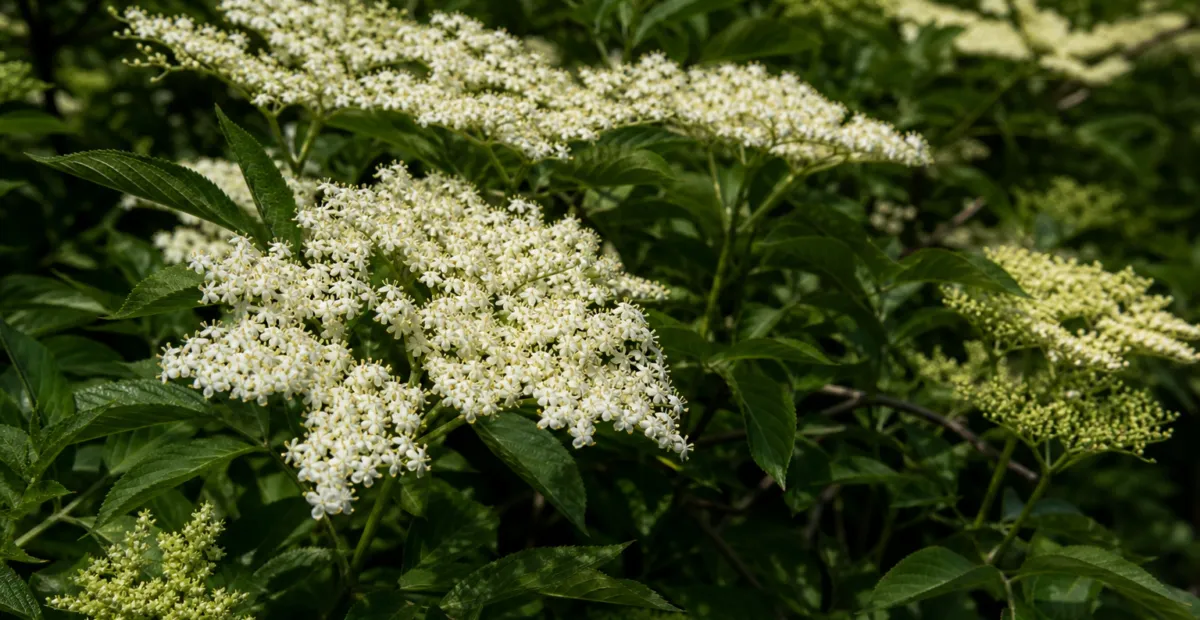
 AI-generated illustration
Black Elder (Sambucus nigra) short overview
Black Elder (Sambucus nigra) is a vigorous deciduous shrub or small tree valued for fragrant cream-white flower clusters, glossy black berries, and finely divided pinnate foliage. It grows in sun or partial shade and prefers moist, well-drained soil, but adapts to clay, chalk, and many garden conditions. Plant it where suckering and self-seeding are acceptable. Ripe berries are useful when thoroughly cooked, while unripe fruit, stems, leaves, bark, and roots should not be eaten.
Taxonomic classification
Black Elder (Sambucus nigra) care guide
Light and placement
Grow in full sun for the strongest flowering, fruiting, and more compact growth; partial shade is tolerated, especially in hot climates. An east-, south-, or west-facing position with good air movement is suitable. Too much shade produces lankier growth and fewer flowers, while intense heat combined with dry soil can scorch foliage.
Watering and humidity
Water deeply and regularly during the first growing season, allowing the surface to begin drying between applications. Established plants usually manage ordinary summer conditions but benefit from supplemental water during prolonged drought. Mulch the root zone to moderate soil moisture, keeping mulch away from stems. Average outdoor humidity is adequate.
Soil and growing medium
Use fertile, humus-rich soil that retains moisture without staying waterlogged. Loam is ideal, but the species tolerates clay, sand, chalk, and both acidic and alkaline conditions. Improve compacted soil with organic matter and provide reliable drainage around the root crown.
Feeding
Black Elder generally performs well without routine feeding in fertile ground. In spring, apply a thin layer of compost or a balanced, general-purpose fertilizer if growth is weak or the plant was hard-pruned. Water after feeding. Avoid heavy nitrogen applications, which can produce lush, soft growth and worsen pest or disease pressure.
Growth and habit
This is a vigorous, multi-stemmed shrub that may develop a small-tree form. It spreads by basal shoots and can self-seed in favorable conditions, so maintenance is easier when suckers are removed promptly. Hard pruning is tolerated and can rejuvenate old plants, but it may reduce flowering and fruiting for that season.
Planting and repotting
Plant container-grown specimens in fall or early spring. Set the root ball at the same depth as in its nursery pot, water deeply, and mulch without touching the stems. Allow ample room for a broad, suckering shrub; spacing of about 8–12 feet is practical for informal screens, with closer planting only when regular pruning is planned.
Container-grown plants can be moved in fall or early spring while dormant. Use a large, sturdy container with drainage holes and refresh the upper soil or shift up one pot size when roots fill the container. Long-term container culture restricts the plant’s natural vigor.
Propagation and pruning
Propagation
Softwood cuttings taken in late spring or early summer root readily under humid conditions. Hardwood cuttings can be taken from dormant, healthy one-year shoots from mid-fall through late winter. Seed propagation is possible but slower and may require stratification; seedlings may vary from selected plants.
Pruning
Prune in late winter or early spring. Remove dead, weak, crossing, or damaged stems and thin older canes to the base. Shorten vigorous shoots to control size, or cut established plants back hard for rejuvenation. Remove root suckers as they appear unless a colony is wanted. Avoid pruning immediately before flowering if flowers and fruit are priorities.
Overwintering
Plants established in USDA Zones 5–8 generally overwinter outdoors without special protection. Mulch young plants after the ground cools, especially in exposed sites. Tie or selectively shorten long stems where heavy snow or ice could cause breakage. Container plants are more vulnerable to root freeze and should be sheltered in an unheated protected location.
Uses
Valuable as an informal screen, wildlife shrub, naturalized planting, and pollinator-garden component. Flowers are used for cordials and desserts, while ripe berries are used for cooked jams, sauces, and beverages. Cook thoroughly and remove stems and unripe fruit; do not treat the plant as a medicinal remedy without expert advice.
Appearance
Black Elder has opposite pinnate leaves with typically 3–7 ovate, serrated leaflets. The dark green foliage turns pale yellow in fall, and crushed leaves may have an unpleasant odor. Young stems are green to gray-brown, while older bark becomes rougher. The broad, flat flower clusters and later glossy black berry clusters are key seasonal identification features.
Flowering
Small, five-lobed flowers are arranged in broad, flattened, showy clusters. Bloom usually occurs from late spring into early summer, followed by berry clusters that ripen from green through red-purple to glossy black. Plants are self-fertile, although cross-pollination can improve fruit production.
Pollination and visitors
Broad flower clusters provide pollen and nectar resources for bees, hoverflies, beetles, and other flower-visiting insects. The dark berries are important food for birds and other wildlife, which also help disperse seeds.
Sambucus nigra photos
Click any photo for a larger view. Source, author and license are shown separately.
Diseases and pests
Diseases
Watch for powdery mildew, leaf spot, canker, verticillium wilt, and occasional honey fungus. Improve air circulation, avoid persistently waterlogged soil, remove diseased wood, and sanitize pruning tools. Do not overreact to minor spotting on an otherwise vigorous plant.
Pests
Aphids, spider mites, borers, and occasional blackfly may affect shoots and foliage. Encourage beneficial insects, avoid excessive nitrogen, spray strong water jets on soft infestations, and use targeted horticultural soap only when necessary. Prune badly infested shoots and dispose of heavily damaged material.
Related diseases and pests
Only Plant Doctor profiles whose host data indicate this plant may be affected are shown here.
 PestSmaller green leafhopperEmpoasca vitis
 DiseasePhytophthora plurivora Root and Collar RotPhytophthora plurivora
 PestEuropean Fruit Lecanium ScaleParthenolecanium corni
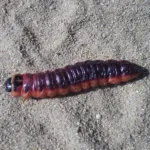 PestGoat MothCossus cossus
 DiseaseMaple powdery mildewSawadaea bicornis
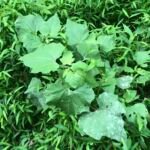 DiseaseCucurbit Powdery MildewPodosphaera xanthii (Castagne) U. Braun & Shishkoff
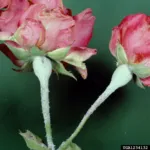 DiseaseRose powdery mildewPodosphaera pannosa
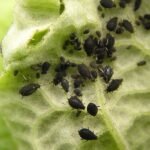 PestBlack Bean AphidAphis fabae
Toxicity and pollen
Sambucus nigra contains cyanogenic compounds, especially in leaves, stems, bark, roots, unripe berries, and possibly seeds. Ripe berries are generally used only after thorough cooking and removal of stems and unripe fruit. Raw or improperly prepared material can cause nausea, vomiting, diarrhea, or more serious poisoning. Keep harvested material away from children and pets and do not use it medicinally without qualified guidance.
- Pollination / pollen
- Insect-carried, low airborne dispersal
Black Elder is insect-pollinated, so pollen is not typically released in large windborne clouds. Flowers can still bother highly sensitive individuals through direct contact or close-range exposure, especially during heavy bloom. People with known plant allergies should avoid handling flowers and monitor symptoms.
Native habitat
In its native range, Black Elder occurs in temperate woodland margins, hedgerows, scrub, open forests, disturbed ground, and moist streamside sites. It favors fertile soils with dependable moisture but tolerates a broad range of textures and pH levels. In the United States it is cultivated and locally naturalized rather than broadly native as this exact taxon.
Interesting fact
The species epithet nigra refers to the dark color of its ripe berries. Large flower clusters can reach roughly 10 inches across. Leaves contain several serrated leaflets and may smell unpleasant when crushed. Plants can be cut back hard and regrow vigorously from the base. Birds and small mammals disperse the berries.
Frequently asked questions (FAQ)
The most relevant questions about this plant, with short and direct answers.
🌱Quick care
How much sun does Black Elder need?⌄
Black Elder grows in full sun to partial shade, but full sun usually produces the best flowering and fruiting. Provide at least 6 hours of direct sunlight where possible.
How often should I water Black Elder?⌄
Water Black Elder regularly so the soil stays evenly moist, especially during its first growing season. Established plants tolerate short dry periods but perform best with consistent moisture.
🌤️Environment and placement
Is Black Elder hardy in cold climates?⌄
Established Black Elder is hardy to about -20°F, although young plants may need protection during severe winter weather. Cold tolerance can vary by cultivar and local exposure.
Where should I plant Black Elder in the landscape?⌄
Plant Black Elder in a sunny, spacious location such as a background border, informal hedge, wildlife garden, or naturalized area. Allow room for its broad, multi-stemmed habit and spreading suckers.
Can Black Elder grow in partial shade?⌄
Yes, Black Elder tolerates partial shade, but it generally flowers and fruits less heavily than plants grown in full sun. Morning sun or bright afternoon light is preferable to deep shade.
What type of soil does Black Elder prefer?⌄
Black Elder prefers moist, fertile, well-drained loam with plenty of organic matter. It adapts to clay, sand, chalk, and a range of soil pH as long as drainage and moisture are adequate.
Can Black Elder grow in clay soil?⌄
Black Elder can grow in clay soil, particularly when it is improved with organic matter and does not remain permanently waterlogged. Avoid compacted sites where water cannot drain.
Can Black Elder grow in wet areas?⌄
Black Elder tolerates consistently moist soil better than many ornamental shrubs, but it should not be planted in stagnant, permanently saturated ground. A moist site with reasonable drainage is best.
How large does Black Elder get?⌄
Black Elder can reach roughly 8 to 20 feet tall and wide, depending on cultivar and growing conditions. Its rapid growth and suckering habit can make it appear shrub-like or form a small tree.
💧Care and problems
Does Black Elder spread aggressively?⌄
Black Elder can spread by root suckers and self-seeding, sometimes forming dense colonies. Remove unwanted suckers promptly or grow the plant where natural spreading is acceptable.
Why are the leaves on my Black Elder turning yellow?⌄
Yellow leaves may result from drought stress, poor drainage, nutrient deficiency, or normal seasonal decline. Check soil moisture and drainage first, and inspect the plant for pests or disease symptoms.
What pests commonly affect Black Elder?⌄
Aphids and spider mites are occasional pests of Black Elder. Monitor new growth, improve watering during hot weather, and use a targeted treatment only when pest levels are causing significant damage.
What diseases affect Black Elder?⌄
Black Elder can develop cankers, leaf spot, and powdery mildew. Improve air circulation, avoid prolonged wetting of the foliage, and prune out badly affected wood with clean tools.
Why is my Black Elder breaking in wind or snow?⌄
Black Elder has relatively brittle branches that may break under strong wind or heavy snow. Remove weak or damaged wood and place the shrub where it is sheltered from prevailing winds.
🪴Planting and repotting
When is the best time to plant Black Elder?⌄
Plant Black Elder in spring after the ground can be worked or in fall several weeks before the soil freezes. Water thoroughly after planting and maintain consistent moisture while roots establish.
How far apart should Black Elder plants be spaced?⌄
Space Black Elder about 5 to 7 feet apart for a planted group, allowing additional room if a large, spreading shrub is desired. Increase spacing for airflow and easier maintenance.
How do I plant Black Elder from a nursery container?⌄
Dig a hole about twice as wide as the root ball and no deeper than its existing soil level. Set the shrub with the root flare level with the surrounding soil, backfill, water deeply, and mulch without touching the stems.
Can Black Elder be grown in a container?⌄
Black Elder can be grown temporarily in a large container, but its vigorous growth and suckering roots make long-term container culture difficult. Use a very large pot, keep it evenly watered, and expect to prune regularly.
✂️Propagation and pruning
How do I propagate Black Elder from cuttings?⌄
Black Elder is commonly propagated from stem cuttings taken from healthy, nonflowering shoots. Root them in a sterile, consistently moist medium under bright, indirect light, although success varies with cutting type and timing.
Can Black Elder be propagated from seed?⌄
Yes, Black Elder can be grown from seed, but germination may be slow or irregular because the seeds often require a period of cold, moist treatment. Seed-grown plants may not reproduce named-cultivar traits exactly.
When should I prune Black Elder?⌄
Prune Black Elder during dormancy in late winter or early spring, removing dead, damaged, crossing, or overcrowded stems. Light summer trimming can control suckers and unwanted growth.
How do I keep Black Elder from becoming too large?⌄
Thin out older stems at ground level and remove unwanted suckers to control Black Elder’s size and spread. Avoid excessive shearing, which can reduce the plant’s natural form and flowering potential.
⚠️Toxicity and safety
Are Black Elder berries edible?⌄
Fully ripe Black Elder berries can be eaten only after proper cooking and careful removal of leaves, stems, and unripe fruit. Raw or improperly prepared berries may cause nausea, vomiting, or diarrhea.
Are the leaves and stems of Black Elder poisonous?⌄
Yes, the leaves, stems, roots, and unripe fruit contain toxic compounds and should not be eaten. Handle garden trimmings carefully, keep them away from children and pets, and never use raw plant parts as food.
Can you eat Black Elder berries raw?⌄
No, Black Elder berries should not be eaten raw. Use only fully ripe berries, remove as much plant material as possible, and cook them thoroughly before eating.
How should Black Elder berries be prepared safely?⌄
Remove leaves, stems, and unripe berries, then cook the ripe berries thoroughly before consumption. For canning or bottling, use a tested recipe because elderberries are treated as a low-acid food for preservation purposes.
Is Black Elder safe for dogs and cats?⌄
Black Elder plant material should be treated as potentially toxic to dogs and cats, especially leaves, stems, roots, unripe berries, and raw fruit. Contact a veterinarian or pet poison service if an animal has eaten any part of the plant.
🌸Flowering and special interest
Should I remove flowers from a young Black Elder plant?⌄
Removing flowers during the first year or two can help a young Black Elder direct energy toward root and branch establishment. Once the plant is well rooted and vigorous, allow it to flower and fruit normally.
When does Black Elder bloom?⌄
Black Elder typically produces clusters of small white flowers in early to midsummer, though bloom timing varies with climate, cultivar, and site conditions. Flowers are followed by dark fruits later in the season.
Why is my Black Elder not flowering?⌄
Insufficient sunlight, young age, excessive nitrogen, drought stress, or heavy pruning can reduce flowering. Move or thin surrounding growth if possible, maintain even moisture, and avoid pruning away flowering wood.
Does Black Elder need another plant for fruit?⌄
A second compatible Black Elder plant is not always essential, but planting more than one can improve pollination and fruit production. Choose plants that flower at similar times and grow them within practical pollinating distance.
Does Black Elder attract pollinators?⌄
Yes, the white flower clusters of Black Elder attract pollinating insects, while the later fruit provides food for birds and other wildlife. Its dense growth can also offer shelter in wildlife-friendly landscapes.
Why does my Black Elder have flowers but no berries?⌄
Poor pollination, late frost, insufficient sunlight, drought, or a plant that is still immature can limit berry production. A second compatible plant and consistent moisture may improve fruit set.
Similar plants
 Azure Monkshood (Aconitum carmichaelii) care guideAconitum carmichaelii
 Monkshood (Aconitum ‘Stainless Steel’)Aconitum 'Stainless Steel'
 Monkshood (Aconitum ‘Bressingham Spire’)Aconitum 'Bressingham Spire'
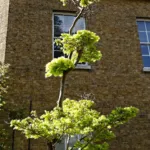 Golden full moon maple (Acer shirasawanum ‘Aureum’)Acer shirasawanum 'Aureum'
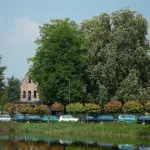 Globosum (Acer platanoides ‘Globosum’)Acer platanoides 'Globosum'
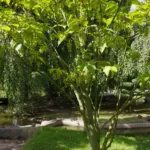 Striped maple (Acer pensylvanicum) care guideAcer pensylvanicum