
 Source:
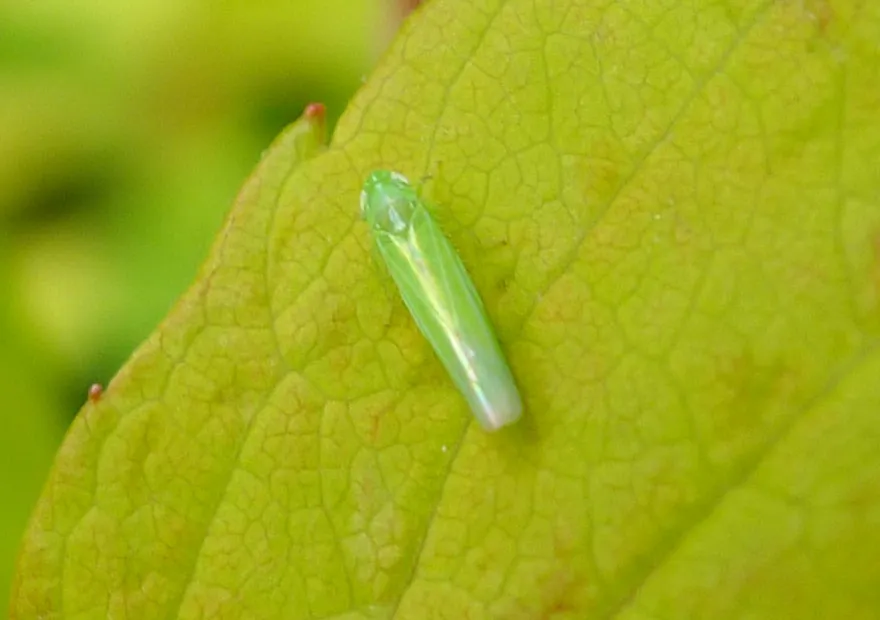
 Smaller green leafhopper
Empoasca vitisSmaller green leafhopper overview
The smaller green leafhopper, Empoasca vitis, is a sap-feeding leafhopper associated especially with grapevines in European vineyards. Nymphs and adults feed on the undersides of leaves and may cause yellowing or reddening that progresses inward from the margins, followed by browning and premature drying. In the United States, similar injury is more often caused by other leafhopper species, so species confirmation is important.
Typical conditions
Overview
The smaller green leafhopper is a member of the family Cicadellidae. It is most consistently associated with grapevine, particularly Vitis vinifera, although adults may use additional woody plants for shelter or seasonal movement. Both nymphs and adults feed by inserting piercing-sucking mouthparts into leaf tissues, especially veins.
In the United States, the name should be used cautiously. Grapevines commonly suffer from other leafhoppers, including potato leafhopper (Empoasca fabae) and native grape leafhoppers in the genus Erythroneura. Definitive separation of closely related green leafhoppers may require an entomological examination.
Symptoms and identification
- Yellowing or red discoloration begins along grape-leaf margins and may extend inward.
- Leaf margins can become brown, necrotic, curled or prematurely dry under heavier feeding.
- Vines may show reduced photosynthetic area, weakened shoot growth, lower yield or reduced fruit sugar when infestations are substantial.
- Small, mobile, pale green nymphs and adults occur mainly on the underside of leaves.
- White cast skins or exuviae on the lower leaf surface are useful diagnostic clues.
Symptoms can resemble potassium deficiency, drought stress, virus symptoms or other leafhopper injury. Finding the insect or its cast skins on the affected leaves is important before assigning a diagnosis.
Causes and spread
Damage results from repeated sap feeding by nymphs and adults on grapevine leaf veins and adjacent tissues. Adults are highly mobile and can move into vineyards from surrounding vegetation. Seasonal movement may occur between grapevines and nearby deciduous trees or other overwintering hosts.
Infestations are favored by susceptible cultivars, dense unmanaged vegetation near vines, warm growing-season conditions and insufficient scouting. The exact host range is not fully reliable across older literature because Empoasca species have often been confused with one another.
Life cycle and persistence
Adults overwinter on non-grape hosts or protected vegetation, depending on regional conditions. In spring, adults move to grapevines and insert eggs into leaf tissues. Nymphs hatch and feed on the undersides of leaves, passing through several wingless stages before becoming mobile adults.
There may be approximately three or four generations in a favorable season, although the number varies with climate and host availability. Egg parasitoids in the genus Anagrus can attack leafhopper eggs and contribute to natural population suppression.
Treatment and control
Base treatment on confirmed identification, the number of nymphs per leaf, visible injury, vine age, cultivar sensitivity and the crop’s production goals. Spot treatment or treatment of only affected blocks is preferable to routine whole-plant spraying when populations are low.
- Remove severely damaged leaves only when practical and when doing so will not excessively reduce the vine’s photosynthetic canopy.
- Use monitoring records to determine whether populations are increasing or naturally declining.
- In commercial vineyards, coordinate management with local Extension recommendations and current grape IPM guidelines.
- When a pesticide is justified, select a product specifically labeled for the crop and target pest, rotate effective modes of action, protect pollinators and natural enemies, and observe all preharvest and reentry requirements.
Low-impact and biological control
Conserve naturally occurring egg parasitoids such as Anagrus species and generalist predators by maintaining suitable non-crop habitat, avoiding unnecessary insecticide use and minimizing disruptive sprays during periods of beneficial activity. Remove dust and excessive weed competition that interfere with vine health and scouting.
In small plantings, strong water sprays directed at leaf undersides may dislodge some exposed nymphs, although this is temporary and must be repeated cautiously to avoid encouraging foliar disease. Organic production should rely on monitoring, canopy management, sanitation and only substances permitted under the applicable organic standard and legally labeled for the crop and pest.
Prevention
- Scout grapevines regularly from early summer through harvest, examining the undersides of representative leaves.
- Use a hand lens or tap foliage over a white sheet to detect small nymphs and adults.
- Maintain balanced pruning and shoot positioning so foliage dries quickly and leaf undersides can be inspected.
- Avoid excessive nitrogen fertilization, which can promote lush, highly susceptible growth.
- Manage weeds and volunteer vegetation when they interfere with scouting or provide alternate shelter, but avoid unnecessary vegetation removal that destroys beneficial insects.
- Protect parasitoids, spiders, predatory bugs and other natural enemies by avoiding broad-spectrum insecticide applications when injury is minor.
- Photograph and submit specimens to a county Extension office or diagnostic laboratory when species identity affects management.
Interesting facts
- Empoasca vitis is also called the smaller green leafhopper and has been an important grapevine pest in several European wine-growing regions.
- Marginal yellowing or reddening that advances inward is characteristic of its feeding injury, but it is not species-specific.
- White cast skins on the underside of grape leaves can be more useful diagnostically than the tiny adult insect.
- Closely related green leafhoppers can be extremely difficult to distinguish without specialist examination, and older host records may include misidentified species.
- The commonly encountered US potato leafhopper, Empoasca fabae, can produce similar hopperburn-like symptoms on grapevines but is a different species.
Do not use a pesticide solely because a product controls leafhoppers on another crop. In the United States, use only products legally registered and currently labeled for the specific grape crop, site and target pest in your state; follow the current label exactly, including rate, timing, personal protective equipment, reentry interval, preharvest interval and pollinator precautions. Confirm registration with your state pesticide regulatory agency or Extension service before application.