

Green jewel beetle (Agrilus viridis)
Agrilus viridis (Linnaeus, 1758)Green jewel beetle (Agrilus viridis) overview
Agrilus viridis is a metallic green, wood-boring jewel beetle found primarily in Europe and associated with beech, willow, birch, hazelnut and other broadleaf trees. Its larvae tunnel beneath the bark and through the cambial region, disrupting water and nutrient movement. In the United States, a suspected detection should be confirmed by a state plant-health authority or USDA APHIS because similar Agrilus species are difficult to distinguish visually.
Typical conditions
Overview
Adults are small, narrow, metallic green jewel beetles. They may feed briefly on foliage, but the damaging stage is the larva. Larvae tunnel in the inner bark and cambial tissues of trunks and branches, where galleries can interrupt phloem transport and damage the tree’s conductive growth tissues.
Reported hosts include beech, willow, birch, hazelnut and several other deciduous tree genera. Damage is often most significant on drought-stressed, sun-exposed, wounded or otherwise weakened trees. In the United States, confirmed records and regulatory significance should be checked with the relevant state department of agriculture and USDA APHIS; this species should not be confused with native Agrilus beetles or emerald ash borer.
Symptoms and identification
- Thin, winding or zigzag galleries beneath the bark, often packed with compressed frass.
- Small bark lesions, cracks, localized necrosis and occasional sap or resin seepage around feeding sites.
- Branch dieback, sparse foliage, premature yellowing or decline above heavily damaged galleries.
- Adult emergence holes may be small and difficult to distinguish from those of other buprestid beetles; apparent D-shaped holes are not diagnostic by themselves.
- Eggs may be laid in clusters on the trunk or branches, particularly near existing wounds, cankers or sun-heated bark.
Symptoms can resemble other wood borers, canker diseases, sunscald and drought injury. Confirmation normally requires an adult, larva, gallery characteristics and—when needed—expert or molecular identification.
Causes and spread
The larvae cause the direct injury by feeding under the bark and through the cambial region. Adults can move locally between suitable trees, while long-distance spread is most plausibly associated with infested nursery stock, logs, branches, firewood or other woody material containing larvae or pupae.
Attack risk is increased when trees are weakened by drought, repeated defoliation, transplant stress, mechanical injury, cankers, sunscald or poor root conditions. A stressed host may provide more favorable tissues for larval establishment, but the presence of stress alone does not prove Agrilus viridis infestation.
Life cycle and persistence
Adults generally appear from late spring into summer, with reported flight activity commonly extending from approximately late May through July in European observations; timing varies with latitude, elevation and weather. Adults mature-feed on foliage and females place eggs on bark, often near damaged areas.
After hatching, larvae enter the bark and construct subcortical galleries. Development may last about one year and can extend longer under unfavorable conditions. Pupation occurs within the host material, and adults emerge through exit holes. Exact generation time and host association vary among populations, and some records may reflect cryptic or closely related Agrilus lineages.
Treatment and control
Management is most effective when infestation is localized and the tree still has a viable crown. An ISA-certified arborist or qualified diagnostician should inspect the trunk and branches, remove structurally unsafe or heavily infested material, and determine whether the tree can recover.
- Remove and destroy or properly dispose of infested branches and logs before adult emergence, where permitted.
- Do not leave cut wood, bark or brush beside healthy host trees.
- Correct drought, root-zone, compaction and planting problems to improve host defenses; irrigation supports recovery but does not kill larvae already under the bark.
- For valuable trees, consult a licensed arborist about whether a locally legal, timing-sensitive trunk or systemic treatment is justified. Efficacy depends on pest identity, infestation depth, tree size and product label.
- Report a suspected new U.S. detection to the state plant regulatory agency or USDA APHIS rather than moving the insect or infested material.
Low-impact and biological control
There is no reliably validated home-garden organic treatment that eradicates larvae protected beneath the bark. The most practical lower-risk approach is integrated prevention and sanitation: maintain tree vigor, remove and contain infested wood, avoid transporting firewood, and preserve natural enemies such as woodpeckers and parasitoids.
Do not drill, inject, burn or strip living tree bark without professional guidance. Biological control products marketed for unrelated borers should not be assumed effective against Agrilus viridis. Any biological or organically certified product must be specifically permitted for the crop, site and target pest, and used according to its current label.
Prevention
- Maintain tree vigor with deep watering during prolonged drought, especially for newly planted or high-value trees; avoid frequent shallow irrigation.
- Protect trunks and roots from mower, trimmer, construction and pruning injuries.
- Prune dead, broken or clearly infested branches using sound arboricultural practice, disinfecting tools between symptomatic trees when disease or mixed pest problems are possible.
- Do not retain or transport suspect infested firewood, logs, bark or large prunings. Follow state and local firewood-movement rules and use locally sourced firewood.
- Inspect incoming nursery trees and woody materials for galleries, exit holes, bark lesions and unexplained dieback.
- Reduce repeated stressors such as compacted soil, root disturbance, severe crown loss and poor planting depth.
- Record the host, location, date, photographs and any collected insect, then seek professional confirmation before taking regulatory or chemical action.
Interesting facts
- Agrilus viridis is commonly associated with the beech splendour beetle or green jewel beetle group, but common names vary by country and source.
- Host records are broad compared with many Agrilus species and include Betula, Fagus, Salix, Corylus, Populus, Quercus, Alnus and Tilia in published accounts.
- Different host-associated populations may show genetic structure, so host records should not automatically be treated as evidence that every population can develop equally well on every listed genus.
- Healthy trees can sometimes kill larvae through sap flow, wound closure and callus formation, whereas weakened trees are more vulnerable to successful gallery development.
- The species is not synonymous with Agrilus planipennis, the emerald ash borer, which is a different pest with a different primary host association.
Use only pesticide products legally authorized for the identified crop, site and pest in the United States and in the applicable state. Follow the current product label exactly, including application timing, tree-use restrictions, personal protective equipment, pollinator precautions, re-entry intervals and disposal requirements. Do not apply an emerald ash borer program or another Agrilus treatment by analogy without confirmed identification and professional or extension guidance.
Affected plants
The plants below are linked to this problem by structured host-plant data. The list updates automatically as new plant profiles are added.
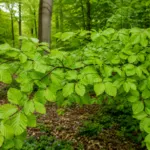 Fagus sylvatica care guideFagus sylvatica
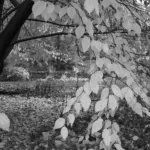 Sweet birch (Betula lenta) care guideBetula lenta
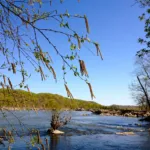 Black Birch (Betula nigra) care guideBetula nigra
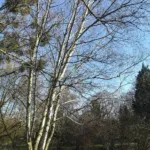 Paper birch (Betula papyrifera) care guideBetula papyrifera
 Silver birch (Betula pendula) care guideBetula pendula
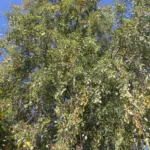 Cutleaf European White Birch (Betula pendula ‘Laciniata’)Betula pendula 'Laciniata'
 Tristis (Betula pendula ‘Tristis’)Betula pendula 'Tristis'
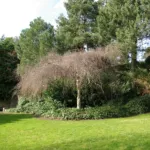 Youngii (Betula pendula ‘Youngii’)Betula pendula 'Youngii'
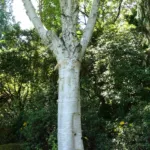 Jacquemontii (Betula utilis ‘Jacquemontii’)Betula utilis 'Jacquemontii'