
 Source:
 Paper birch (Betula papyrifera) short overview
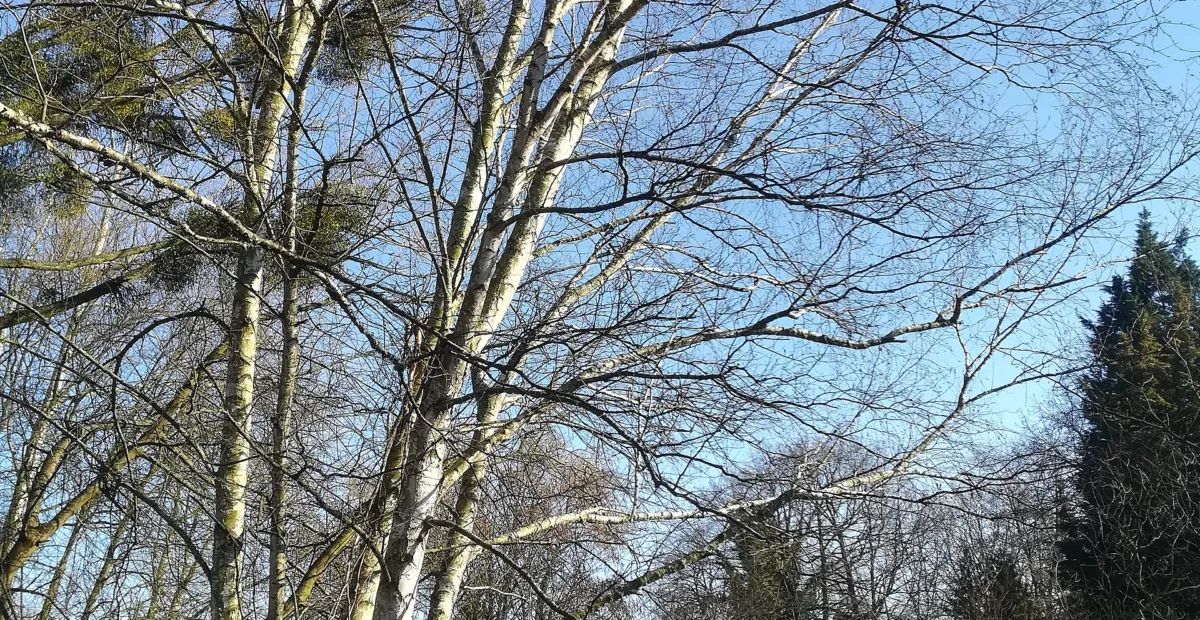
Paper birch (Betula papyrifera) is a deciduous North American tree recognized by its smooth white bark, papery peeling layers, oval toothed leaves, and graceful catkins. It is best suited to cool northern gardens, where deep, consistently moist soil and protection from reflected heat help it stay vigorous. This short-lived pioneer tree provides food and cover for wildlife while offering strong winter interest and a long history of Indigenous and commercial uses.
Taxonomic classification
Paper birch (Betula papyrifera) care guide
Light and placement
Grow in full sun to light shade. In warm regions, place the tree where it receives morning or filtered light and afternoon protection, preferably on a north or east exposure. Full sun encourages strong growth and displays the bark well in cool climates. Too much heat, reflected light, or drought may cause sparse foliage, premature yellowing, canopy dieback, and greater borer risk; heavy shade produces weaker, less vigorous growth.
Watering and humidity
Water deeply and slowly whenever the upper few inches of soil begin to dry, keeping the full root zone consistently moist during establishment and summer drought. Mulch broadly to moderate soil temperature, but keep mulch off the trunk. Reduce supplemental watering after leaf fall, while continuing during dry autumns when the ground is not frozen. Avoid both prolonged drought and stagnant water.
Soil and growing medium
Use a deep, moisture-retentive but well-drained soil, ideally a sandy, loamy, or rocky loam with organic matter. Paper birch tolerates a range of soils but grows best where drainage is reliable and roots remain cool. Slightly acidic to neutral conditions are suitable. Avoid compacted, chronically waterlogged ground and hot, dry paving-side locations.
Feeding
Paper birch usually needs little fertilizer when planted in fertile soil. Top-dress the root zone with compost or a thin organic mulch layer in spring, keeping material away from the trunk. If a soil test shows a nutrient deficiency, use a slow-release, balanced fertilizer at the recommended rate. Do not push lush growth with heavy nitrogen, especially during drought or heat stress.
Growth and habit
A fast-growing, early-successional tree that may be single- or multi-trunked. It establishes readily after disturbance but is relatively shade-intolerant and often short-lived compared with many mature forest trees. In gardens, maintaining cool, moist roots is more important than frequent pruning; heat, drought, soil compaction, and trunk injury shorten performance.
Planting and repotting
Plant in spring or fall while the tree is dormant. Set the root flare level with or slightly above the surrounding soil, water deeply, and apply a broad organic mulch layer without touching the trunk. Allow ample room for the mature canopy and keep the root zone evenly moist during establishment.
Not generally suitable for long-term container culture because it develops into a large tree and dislikes root restriction. If a young tree is temporarily container-grown, transplant it while dormant, before roots circle densely, and move it into the landscape promptly.
Propagation and pruning
Propagation
Propagate primarily from seed. Collect mature winged nutlets in late summer or early fall, clean them, and provide cold-moist stratification before spring sowing. Viability varies among seed lots, so sow more than the final number of plants required. Seedlings establish best in a prepared mineral or humus-rich seedbed with reliable moisture.
Pruning
Prune only when necessary, preferably during dormancy after the strongest sap flow has passed. Remove dead, damaged, crossing, or poorly attached branches with clean cuts. Avoid spring pruning because birches may bleed sap heavily. Do not remove large live limbs simply to expose more bark, and protect the trunk from mechanical injury.
Overwintering
Fully hardy across much of USDA Zones 2–6. Young trees benefit from a wide mulch ring and protection from deer, rodents, and mechanical damage. In exposed sites, guard the trunk against winter injury and sunscald, but do not wrap tightly with non-breathable material. Container-grown specimens are more vulnerable to root freezing and should be planted out rather than overwintered long term.
Uses
Use paper birch as a specimen, seasonal-interest, native woodland-edge, or wildlife-supporting tree in cool climates. Its white bark provides winter interest, and its seeds, buds, catkins, and foliage support birds and browsing mammals. Bark and wood have important Indigenous cultural and practical uses. Do not present historical bark or sap uses as medical advice, and avoid harvesting ornamental trees without permission.
Appearance
Young stems are reddish-brown to brown, while mature trunks develop smooth white bark that peels in thin, papery sheets and may show dark markings with age. Leaves are ovate, pointed, green, and irregularly toothed, turning yellow in fall. The crown may be narrow and pyramidal when young, becoming oval or rounded; trees can be single- or multi-stemmed.
Flowering
Paper birch is monoecious, producing separate male and female catkins on the same tree. Male catkins hang and release pollen before or as leaves emerge; female catkins are smaller and develop into drooping, cone-like infructescences containing many winged nutlets. Flowering normally occurs in early to mid-spring, with timing varying across the United States.
Pollination and visitors
Pollination is by wind rather than animal visitors. The tree nevertheless supports a broad food web: seeds are eaten by redpolls, pine siskins, chickadees, and small mammals; buds and catkins are used by ruffed grouse; and foliage, twigs, or bark are browsed by deer, moose, hares, beaver, and porcupines. It also hosts larvae of the lunar moth and eastern tiger swallowtail.
Betula papyrifera photos
Click any photo for a larger view. Source, author and license are shown separately.
Diseases and pests
Diseases
Maintain vigor with adequate moisture, good drainage, mulch, and avoidance of trunk injury. Root rots, dieback, and cankers may affect stressed trees. Remove badly damaged branches during dormancy with clean cuts; seek local diagnosis when decline is progressive, since symptoms overlap among pathogens and environmental stress.
Pests
Common problems include bronze birch borer, aphids, leaf miners, birch skeletonizer, and browsing by deer, moose, hares, and porcupines. The borer is most serious on heat- or drought-stressed trees. Select a suitable cool site, mulch the root zone, irrigate during drought, avoid trunk wounds, and use local integrated pest management guidance rather than routine insecticide.
Related diseases and pests
Only Plant Doctor profiles whose host data indicate this plant may be affected are shown here.
 DiseaseCytospora CankerCytospora chrysosperma
 PestSpongy mothLymantria dispar dispar
 PestLeopard mothZeuzera pyrina
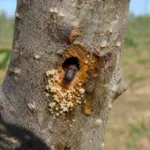 PestEuropean shot-hole borerXyleborus dispar (Fabricius)
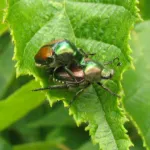 PestJapanese beetlePopillia japonica
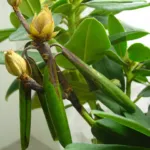 DiseasePhytophthora plurivora Root and Collar RotPhytophthora plurivora
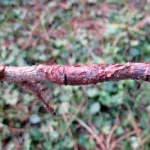 DiseaseEuropean Apple CankerNeonectria ditissima
 DiseaseCoral Spot CankerNectria cinnabarina
Toxicity and pollen
No specific toxic hazard is well established for ordinary landscape contact with Betula papyrifera, and major botanical references do not identify a recognized poisoning concern. Bark, sap, leaves, and plant material should nevertheless not be intentionally consumed, and children and pets should be discouraged from chewing plant parts. The principal documented human-health concern is airborne birch pollen allergy, not poisoning.
- Typical season
- March–May, varying by region and spring temperature
- Pollination / pollen
- Abundant, wind-dispersed airborne pollen
Paper birch releases abundant, airborne pollen from male catkins in spring, before or during leaf emergence. Birch pollen is a recognized cause of seasonal allergic rhinitis and can cross-react with other Betulaceae pollen and some foods in sensitized people. Keep allergy-sensitive planting areas away from frequently used outdoor seating where practical; local pollen counts are more useful than a fixed intensity rating.
Native habitat
Native across much of northern North America, from Alaska and Canada into the northern and northeastern United States and scattered mountain regions farther south. It occurs in mixed forests, rocky sites, ravines, shores, wooded wetlands, peatlands, and dry pine stands. It commonly colonizes mineral soil exposed by fire, logging, windthrow, or other disturbance.
Interesting fact
Its white bark is waterproof and has a long history in canoe and basket making.
Paper birch is a pioneer species after fire, logging, and other disturbance.
Mature bark commonly becomes white after the tree is roughly 10–12 years old.
A single tree bears both male and female catkins.
Winged seeds can travel long distances on wind and snow.
Frequently asked questions (FAQ)
The most relevant questions about this plant, with short and direct answers.
🌱Quick care
What is paper birch (Betula papyrifera)?⌄
Paper birch is a cold-hardy, deciduous North American tree prized for its peeling white bark, yellow fall color, and delicate foliage. It is also called white birch or canoe birch, but its accepted scientific name is Betula papyrifera.
How much sun does paper birch need?⌄
Paper birch grows best in full sun to light shade. Full sun supports a denser crown, while light shade can help reduce heat and drought stress in warmer parts of its range.
How often should I water a paper birch?⌄
Water paper birch regularly so the soil remains consistently moist but not waterlogged. Newly planted trees need the most attention, and established trees may require supplemental irrigation during drought or prolonged hot weather.
Is paper birch easy to grow?⌄
Paper birch is relatively easy to grow when planted in a cool location with reliable moisture and good drainage. It becomes more difficult in hot, dry, compacted, or drought-prone sites.
🌤️Environment and placement
Where should I plant a paper birch?⌄
Plant paper birch in a sunny to lightly shaded site with moist, well-drained soil and enough room for a medium-to-large tree. Avoid exposed hot locations, pavement heat, and sites where the root zone regularly dries out.
What type of soil is best for paper birch?⌄
Paper birch prefers moist, acidic, sandy or loamy, well-drained soil. It can tolerate a range of soils, but heavy compaction, poor drainage, and chronically dry soil can weaken the tree.
Can paper birch grow in clay soil?⌄
Paper birch can grow in clay soil if the site drains adequately and the soil is not heavily compacted. Improve planting conditions with organic matter and careful irrigation, but do not plant it where water stands for long periods.
Can paper birch tolerate heat and drought?⌄
Paper birch has limited tolerance for prolonged heat and drought compared with many landscape trees. Keeping the root zone evenly moist, mulched, and protected from reflected heat helps reduce stress.
What USDA hardiness zones are suitable for paper birch?⌄
Paper birch is generally suited to cold climates, commonly around USDA Zones 2 through 6 or 7 depending on the source, variety, and local conditions. Warm-zone performance is less reliable, especially where summers are hot and dry.
How large does paper birch get?⌄
Paper birch can reach roughly 50 to 70 feet tall and about 25 to 50 feet wide in favorable conditions, although mature size varies by region and growing conditions. Give it substantial clearance from buildings, utilities, and pavement.
💧Care and problems
How do I care for a newly planted paper birch?⌄
Keep a newly planted paper birch evenly watered, apply a 2- to 3-inch layer of mulch over the root zone, and keep mulch away from the trunk. Avoid fertilizer unless a soil test or professional recommendation indicates a deficiency.
Why are the leaves on my paper birch turning yellow or brown?⌄
Yellow or brown leaves can result from drought, heat stress, transplant shock, poor drainage, leafminer feeding, or natural autumn color change. Check soil moisture and inspect leaves and branches before assuming the problem is a nutrient deficiency.
What pests commonly attack paper birch?⌄
Common problems include bronze birch borer and birch leafminers, with stressed trees generally more vulnerable. Sparse foliage beginning near the top of the crown, branch dieback, D-shaped exit holes, or winding galleries warrant prompt inspection.
How can I prevent bronze birch borer on paper birch?⌄
The best prevention is to reduce stress with consistent watering, suitable siting, mulch, and protection from trunk injury. Paper birch has more resistance than many nonnative white-barked birches, but it can still be attacked when weakened.
Does paper birch need fertilizer?⌄
Paper birch usually does not need routine fertilizer when planted in suitable soil and kept adequately watered. Fertilize only after a soil test or clear evidence of a nutrient problem, because excess nitrogen can promote weak, overly vigorous growth.
🪴Planting and repotting
When is the best time to plant paper birch?⌄
Plant paper birch in spring or early fall when temperatures are moderate and soil moisture is dependable. Avoid planting during summer heat or when the ground is frozen, waterlogged, or excessively dry.
How should I plant a paper birch tree?⌄
Dig a planting hole two to three times wider than the root ball but no deeper, set the tree with the root flare at or slightly above grade, backfill with native soil, and water thoroughly. Mulch broadly without touching the trunk.
Can paper birch be grown in a container?⌄
Paper birch is not a good long-term container plant because it develops into a sizable tree with substantial root and moisture needs. A container can be used temporarily for a young tree, but it should be planted outdoors before becoming root-bound.
✂️Propagation and pruning
How do you propagate paper birch from seed?⌄
Paper birch is commonly propagated from seed, which is dispersed in small winged fruits and establishes best on exposed, moist, lightly disturbed soil. Collecting fresh seed and providing suitable moisture and light improves germination, but results can vary.
Can paper birch grow from cuttings?⌄
Paper birch can be propagated from cuttings, but cuttings from young seedlings generally root more readily than those from mature trees. Successful propagation often requires careful timing, rooting hormone, high humidity, and controlled conditions.
When should paper birch be pruned?⌄
Prune paper birch during late winter or another dormant period, removing dead, damaged, crossing, or poorly attached branches. Avoid unnecessary large cuts, and do not remove the tree’s characteristic peeling bark.
Can paper birch be coppiced or cut back to the ground?⌄
Young paper birch can produce sprouts after cutting, but coppicing is not usually appropriate for an ornamental landscape tree. Severe cutting can create weak multi-stem growth and may shorten the tree’s useful life.
⚠️Toxicity and safety
Is paper birch poisonous to people or pets?⌄
No specific poisoning concern is established for ordinary ornamental contact with paper birch. However, sap, bark, leaves, and plant debris should not be consumed, and people with birch pollen or tree allergies may experience reactions.
Can you drink paper birch sap?⌄
Paper birch sap has been traditionally collected and used for beverages and syrup, but household tapping should be done conservatively and hygienically. Sap use is not a substitute for medical treatment, and people with birch-related allergies should use caution.
Is paper birch good for wildlife?⌄
Paper birch provides habitat, cover, seeds, and browse for various birds, mammals, and insects. Its ecological value is greatest when grown as part of a regionally appropriate planting rather than as an isolated heavily managed specimen.
🌸Flowering and special interest
Does paper birch flower?⌄
Paper birch produces small, inconspicuous flowers in separate male and female catkins on the same tree. The catkins appear in early spring, often before or with the leaves, and are wind-pollinated rather than showy garden flowers.
Does paper birch produce seeds?⌄
Yes, paper birch produces many small winged seeds that are released from mature catkins and dispersed by wind. Seedlings commonly establish in open, moist, disturbed areas where competing vegetation is limited.
Why is paper birch bark not white when the tree is young?⌄
Young paper birch usually has brown, coppery, or golden-brown bark before developing its familiar white, peeling outer bark. The white coloration commonly becomes more pronounced as the tree matures, often over several years.
Similar plants
 Azure Monkshood (Aconitum carmichaelii) care guideAconitum carmichaelii
 Monkshood (Aconitum ‘Stainless Steel’)Aconitum 'Stainless Steel'
 Monkshood (Aconitum ‘Bressingham Spire’)Aconitum 'Bressingham Spire'
 Golden full moon maple (Acer shirasawanum ‘Aureum’)Acer shirasawanum 'Aureum'
 Globosum (Acer platanoides ‘Globosum’)Acer platanoides 'Globosum'
 Striped maple (Acer pensylvanicum) care guideAcer pensylvanicum