
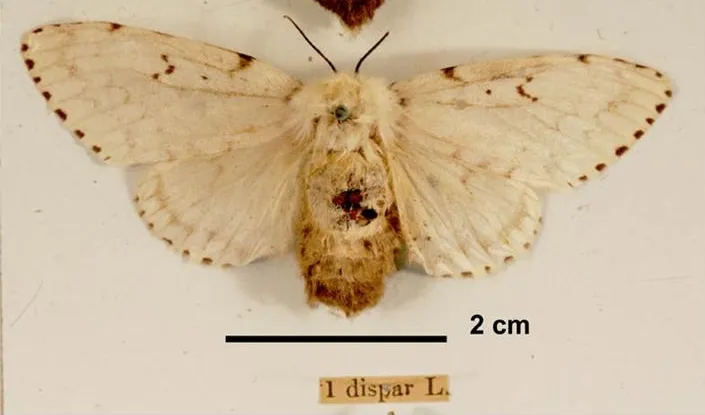
Spongy moth
Lymantria dispar disparSpongy moth overview
The spongy moth, Lymantria dispar, is an invasive leaf-feeding moth whose caterpillars can strip trees and shrubs during spring and early summer outbreaks. Oaks, apple, poplar, willow, alder, basswood and hawthorn are among its important U.S. hosts, but larvae may feed on more than 300 woody plant species. Fuzzy egg masses on bark, outdoor objects or firewood are a major source of spread.
Typical conditions
Overview
Spongy moth caterpillars are hairy, usually mottled gray to yellow, and develop five pairs of blue spots followed by six pairs of red spots along the back. They feed primarily in spring and early summer, often at night, and may hide in bark crevices or sheltered places during the day. Heavy infestations can leave trees nearly bare in midsummer. Mature, healthy deciduous trees often refoliate, but repeated or severe defoliation can cause branch dieback or tree mortality, especially when drought, poor soils or other stresses are present.
In the United States, L. dispar dispar is the established European subspecies. Other members of the flighted spongy moth complex are treated as distinct regulatory concerns and are not established in the United States.
Symptoms and identification
- Partial or complete defoliation, often beginning in late spring and progressing rapidly during outbreaks.
- Irregular chewing holes and skeletonized leaves caused by caterpillar feeding.
- Fuzzy buff, tan or yellowish egg masses on trunks, branches, rocks, firewood, trailers, grills, furniture and other outdoor objects.
- Hairy caterpillars approximately 1.5–2.5 inches long when mature, with five pairs of blue spots and six pairs of red spots.
- Silk-drifting young larvae may arrive from nearby trees or stands.
- Severe infestations may produce falling frass, caterpillar activity on trunks and a barren, midsummer appearance.
Do not diagnose solely from defoliation: native caterpillars, sawflies and other invasive moths can cause similar damage. Confirm the characteristic dorsal spot pattern and inspect nearby surfaces for egg masses.
Causes and spread
Damage is caused by larval chewing, not by a plant pathogen. Eggs overwinter in masses attached to protected surfaces. Newly hatched larvae can disperse short distances on silk threads and wind, while people commonly spread the pest by moving infested firewood, nursery stock, vehicles, trailers, patio furniture, grills, lawn equipment, toys and other outdoor household articles. Each egg mass may contain up to about 1,000 eggs.
Outbreaks are favored by abundant preferred hosts, warm spring conditions, low rainfall during larval development and reduced pressure from natural enemies. Population levels fluctuate considerably among years and locations.
Life cycle and persistence
- Egg: Eggs are laid in fuzzy masses from mid- to late summer and overwinter on bark, branches, rocks and human-made objects.
- Larva: Eggs commonly hatch from April into May, depending on local spring temperatures and host-plant development. Young larvae disperse on silk; older larvae feed heavily for roughly seven weeks.
- Pupa: Larvae pupate in protected sites, commonly in June or early July, for about one to two weeks.
- Adult: Adults emerge in summer. Brown, feathery-antennaed males fly; pale females of the established North American subspecies are flightless. Females mate and lay egg masses, completing one generation per year.
Treatment and control
For one or a few landscape trees, inspect the canopy and trunk in spring, remove accessible caterpillars by hand while wearing gloves and protective clothing, and destroy them. Burlap or other trap bands can concentrate hiding larvae on shade trees; inspect bands frequently and remove collected caterpillars. On young fruit trees, early detection is especially important because defoliation can reduce growth and, in severe cases, threaten survival.
For larger trees, woodlots or community landscapes, treatment decisions should be based on egg-mass counts, larval density, tree value, tree health and local program guidance. Biological insecticides such as products based on Bacillus thuringiensis var. kurstaki are most useful against young larvae and require thorough coverage and correct timing. Area-wide suppression, mating disruption, pheromone trapping and regulatory eradication are generally coordinated by state and federal agencies rather than performed independently by homeowners.
Low-impact and biological control
- Hand-pick caterpillars and scrape egg masses from accessible surfaces; place collected material in soapy water or a sealed bag.
- Use burlap bands as a monitoring and trapping aid on individual trees, checking them regularly.
- Apply a legally registered microbial product containing Bacillus thuringiensis var. kurstaki only when young larvae are present and the label permits the crop or site.
- Conserve birds, predatory insects and parasitoids by avoiding unnecessary broad-spectrum insecticide applications.
- Support natural suppression by maintaining tree vigor and avoiding repeated, non-target pesticide treatments. The fungal pathogen Entomophaga maimaiga can cause significant mortality during favorable moist conditions, but it is not a dependable homeowner treatment to introduce or apply.
Prevention
- Inspect tree trunks, lower branches, firewood, vehicles, trailers, grills, furniture, toys and lawn equipment for egg masses before moving them from regulated areas.
- Scrape egg masses into a container of soapy water or seal them in a bag for disposal; do not simply brush them onto the ground.
- Use locally appropriate monitoring, including winter egg-mass surveys and pheromone trapping where available.
- Keep trees vigorous with appropriate watering during drought, mulch kept away from trunks and avoidance of root or trunk injury.
- Do not transport firewood or regulated outdoor articles across quarantine boundaries unless they meet current USDA and state requirements.
- Report suspected finds outside known infested or quarantined areas to the state plant regulatory official or USDA APHIS.
Interesting facts
- The species was introduced near Boston, Massachusetts, in 1869.
- The name “spongy moth” refers to the sponge-like, hair-covered egg mass and replaced the former common name used in older U.S. literature.
- Established North American females cannot fly, so human movement of egg masses and other life stages is a major pathway for long-distance spread.
- Larvae may feed on more than 300 tree and shrub species, but host preference varies by region and population density.
- During outbreaks, a heavily infested forest can look as if it has been stripped by fire or winter even in early summer.
Use only pesticide products legally authorized for spongy moth on the specific crop, tree or site in your state and country. Follow the current label exactly, including application timing, protective equipment, pollinator precautions, re-entry interval and restrictions near water. Do not apply an insecticide solely because defoliation is visible if larvae are no longer present; consult a county Extension office or certified arborist for high trees, orchards, public landscapes or large infestations.
Affected plants
The plants below are linked to this problem by structured host-plant data. The list updates automatically as new plant profiles are added.
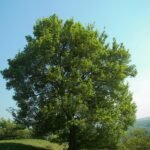 Field maple (Acer campestre) care guideAcer campestre
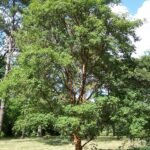 Paperbark Maple (Acer griseum) care guideAcer griseum
 Downy Japanese Maple (Acer japonicum) care guideAcer japonicum
 Boxelder (Acer negundo) care guideAcer negundo
 Acer palmatum care guideAcer palmatum
 He Norway maple (Acer platanoides) care guideAcer platanoides
 Sycamore maple (Acer pseudoplatanus) care guideAcer pseudoplatanus
 Red maple (Acer rubrum) care guideAcer rubrum
 Silver maple (Acer saccharinum) care guideAcer saccharinum
 Sugar maple (Acer saccharum) care guideAcer saccharum
 Tatar Maple (Acer tataricum) care guideAcer tataricum
 Amur Maple (Acer tataricum ginnala) care guideAcer tataricum ginnala