
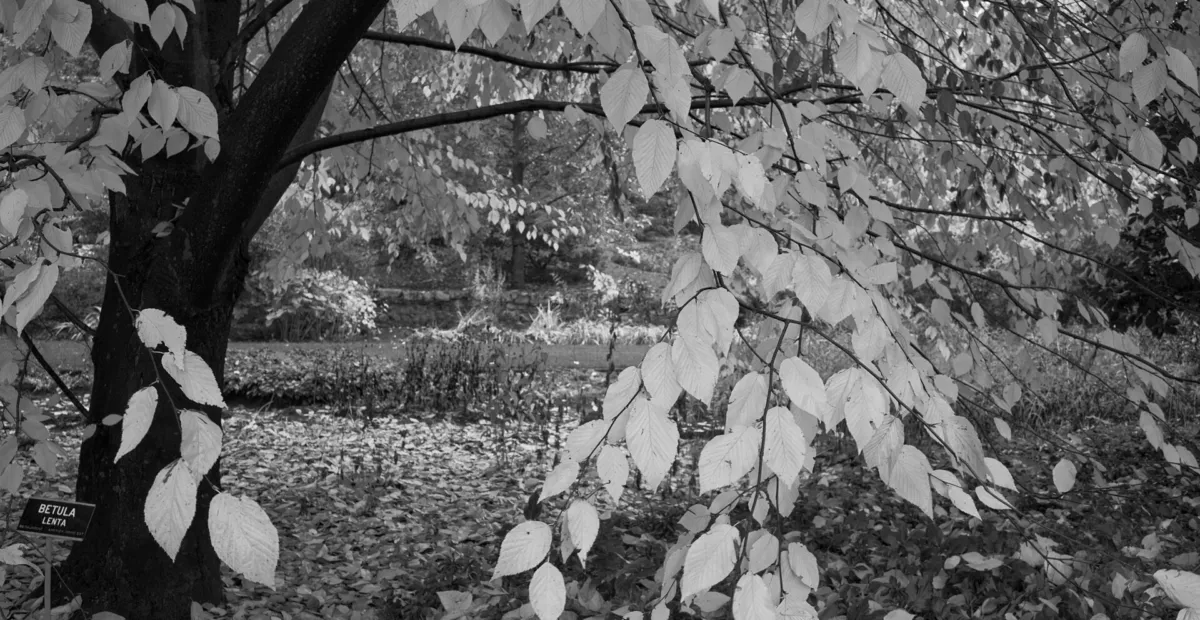
 Source:
 Sweet birch (Betula lenta) short overview
Sweet birch is a native eastern North American tree with glossy, aromatic leaves, dark cherry-like bark and striking yellow fall color. Its twigs contain wintergreen-scented compounds, while spring catkins release abundant wind-borne pollen. Plant it in cool, moist, acidic to neutral, well-drained soil with room for a large mature canopy. It is best suited to woodland edges, naturalistic landscapes and spacious gardens.
Taxonomic classification
Sweet birch (Betula lenta) care guide
Light and placement
Grow in full sun to partial shade. In cooler climates, an open eastern or northern exposure with several hours of sun supports a dense crown. In warmer areas, morning sun and afternoon protection help reduce heat and drought stress. Pale foliage, sparse growth and premature leaf drop may indicate excessive shade or dry roots; scorch and wilting suggest excessive heat, exposure or inadequate moisture.
Watering and humidity
Water deeply and slowly when the upper several inches of soil begin to dry, especially during the first two to three growing seasons. Maintain even moisture rather than alternating drought and flooding. Increase irrigation during hot, dry weather and reduce it during cool, rainy periods. A 2–3 inch mulch layer helps moderate root temperature, but keep it off the trunk.
Soil and growing medium
Use a deep, cool, organic soil that drains freely but does not dry rapidly. Loam enriched with leaf mold or compost is suitable. Slightly acidic to neutral conditions are preferred; avoid compacted fill, persistently waterlogged ground and strongly alkaline sites, which can reduce vigor and cause chlorosis.
Feeding
Usually needs little fertilizer once established in suitable soil. Apply compost or leaf mold as a surface amendment in spring if growth is weak or soil tests indicate a deficiency. Avoid routine high-nitrogen feeding, late-season fertilizer and fertilizing drought-stressed trees; excessive soft growth can increase pest pressure.
Growth and habit
This long-lived woodland tree develops a strong central trunk and a rounded to broadly pyramidal crown. It establishes slowly to moderately, performs best where roots remain cool, and may decline on hot, dry or compacted sites. Young trees benefit from consistent moisture while roots develop.
Planting and repotting
Plant in spring or fall when the soil is workable. Set the root flare at soil level rather than burying the trunk. Dig a broad planting hole, backfill with native soil, water deeply and apply a thin organic mulch layer without touching the bark. Allow generous room for the mature canopy and avoid highly exposed hot sites.
Not normally suitable for long-term container culture. If a young tree must be transplanted, move it while dormant, preserve the root ball and plant promptly. Establishing trees benefit more from careful site preparation and mulching than from repeated potting.
Propagation and pruning
Propagation
Propagate primarily from seed. Collect mature seed-bearing catkins in late summer or fall, separate the small seeds and provide the cold, moist stratification commonly required for germination. Seedlings establish best when transplanted young; rooting mature cuttings is generally difficult.
Pruning
Prune during dormancy to remove dead, crossing or weakly attached branches and to establish a clear structure in young trees. Avoid unnecessary large cuts and do not remove substantial live canopy during hot weather. Maintain the natural crown rather than shearing it.
Overwintering
Fully hardy across much of USDA Zones 3–8 and generally requires no special winter protection when planted in the ground. Protect young trunks from mechanical injury and rodent browsing, and water before the ground freezes if autumn has been unusually dry. Container-grown trees are more vulnerable because roots experience colder temperatures than roots in the soil.
Uses
Useful as a native specimen, woodland-edge tree, shade-tree component and naturalistic planting. Its aromatic twigs historically contributed to wintergreen flavoring, but modern use should not involve homemade ingestion because concentrated salicylate compounds can be hazardous. It also supports native forest food webs.
Appearance
The leaves are alternate, oval to ovate, sharply serrated and glossy, with a pointed tip. Young bark is smooth, dark reddish-brown to nearly black and marked by horizontal lenticels, becoming rougher with age. Crushed twigs and bark have a distinctive wintergreen aroma. The crown is upright to broadly pyramidal, with slender branches and fine-textured foliage.
Flowering
Separate male and female catkins appear in spring before or with the leaves. The slender male catkins are pendulous and pollen-bearing; smaller female catkins mature into upright fruiting structures. Flowers are inconspicuous and wind-pollinated rather than showy.
Pollination and visitors
The flowers are primarily wind-pollinated, so animal pollinator attraction is limited. Catkins may nevertheless be visited incidentally by small insects seeking pollen, but the species should not be marketed as a major nectar plant.
Betula lenta photos
Click any photo for a larger view. Source, author and license are shown separately.
Diseases and pests
Diseases
Maintain air circulation, avoid trunk injury and keep mulch away from the root flare. Watch for birch leaf miner, bronze birch borer stress, cankers and fungal leaf spots. Water during drought, especially on warm exposed sites; healthy trees are less vulnerable to borer damage.
Pests
Birch leaf miner, bronze birch borer in stressed trees, aphids and occasional scale. Prevent stress with deep watering during drought, mulch-managed roots and avoidance of trunk wounds. Prune out localized dead or infested wood when appropriate and follow local extension guidance for serious borer infestations.
Related diseases and pests
Only Plant Doctor profiles whose host data indicate this plant may be affected are shown here.
Toxicity and pollen
No strong evidence identifies Betula lenta as a highly poisonous landscape plant. Its bark and twigs contain methyl salicylate-related wintergreen compounds, and concentrated oils or large ingestions should not be consumed. Normal ornamental contact is generally low risk, but avoid homemade extracts and supervise children around plant material.
- Typical season
- April–May in much of the United States
- Pollination / pollen
- Abundant, wind-dispersed tree pollen
Sweet birch releases abundant, lightweight pollen from male catkins in spring. As a wind-pollinated birch, it can contribute to seasonal tree-pollen exposure, especially during April and May in much of the United States. Individual allergy response varies, and local pollen calendars may differ.
Native habitat
Native from eastern Canada through the northeastern and Appalachian regions of the United States, extending south into the higher portions of the Southeast. It is associated with cool forests, coves, slopes, ravines and gap habitats, usually on acidic, well-drained but moisture-retentive soils.
Interesting fact
The twigs and young bark are naturally wintergreen-scented because they contain methyl salicylate-related compounds. The species is also known as cherry birch because its dark bark resembles that of some cherries. Its small winged seeds are dispersed by wind and help it colonize forest gaps.
Frequently asked questions (FAQ)
The most relevant questions about this plant, with short and direct answers.
🌱Quick care
What is Betula lenta commonly called?⌄
Betula lenta is commonly called sweet birch in the United States. It is also known regionally as black birch or cherry birch.
How big does sweet birch get?⌄
Sweet birch typically grows about 40–75 feet tall and 35–40 feet wide. Because it becomes a large tree, give it substantial room away from buildings, overhead utilities, and small planting beds.
Is sweet birch evergreen or deciduous?⌄
Sweet birch is a deciduous tree that drops its leaves in fall. Its foliage usually turns an attractive golden yellow before leaf fall.
🌤️Environment and placement
Where should I plant sweet birch?⌄
Plant sweet birch in full sun to partial shade with moist, well-drained, organic-rich soil. A cool site such as a north- or east-facing slope is especially suitable.
Can sweet birch grow in full sun?⌄
Yes, sweet birch grows well in full sun, and full sun generally produces the best fall color. Keep the soil consistently moist, especially during hot or dry weather.
Can sweet birch grow in partial shade?⌄
Yes, sweet birch tolerates partial shade and naturally occurs in cool woodland settings. Avoid dense, dry shade because it can reduce vigor and foliage quality.
What soil does sweet birch need?⌄
Sweet birch performs best in moist, well-drained loam rich in organic matter, often with an acidic reaction. It can tolerate some clay or rocky soil but performs poorly in heavily compacted ground.
What USDA hardiness zones are suitable for sweet birch?⌄
Sweet birch is generally hardy in USDA Zones 3 through 8. Warm, humid sites can still stress the tree, so southern plantings should favor cool, moist locations.
💧Care and problems
How often should I water sweet birch?⌄
Water sweet birch whenever the upper few inches of soil begin to dry, providing a deep soaking rather than frequent light watering. Do not allow the root zone to remain waterlogged.
How do I keep sweet birch roots cool and moist?⌄
Apply a 2–3-inch layer of bark or leaf mulch over the root zone, keeping mulch several inches away from the trunk. Irrigate during drought, heat, and the first few growing seasons after planting.
Does sweet birch tolerate drought?⌄
Sweet birch has limited drought tolerance and may decline when exposed to prolonged dry soil or summer heat. Consistent moisture is particularly important for young trees and trees planted outside naturally cool, moist sites.
Why is my sweet birch losing leaves in summer?⌄
Premature summer leaf loss can result from drought stress, excessive heat, compacted soil, leaf spot, or insect damage. Check soil moisture and leaves first, then inspect for aphids, leaf miners, skeletonizers, and cankers.
What pests affect sweet birch?⌄
Sweet birch may be affected by aphids, leaf miners, birch skeletonizers, and occasional cankers. Healthy trees in suitable, moist sites usually tolerate minor insect damage better than drought-stressed trees.
Does sweet birch have invasive roots?⌄
Sweet birch is not generally considered invasive, but its broad, shallow-feeding root system can compete for moisture near lawns and other plants. Maintain even moisture and avoid planting it in confined spaces.
🪴Planting and repotting
When is the best time to plant sweet birch?⌄
Plant sweet birch in early spring or fall when temperatures are mild and soil moisture is reliable. Water thoroughly after planting and continue supplemental irrigation during dry periods.
How far apart should sweet birch trees be planted?⌄
Space sweet birch trees about 35–40 feet apart for mature canopy development. Allow additional clearance from structures and utility lines because the species can exceed 60 feet in height.
Can sweet birch be grown in a container?⌄
Sweet birch is not a practical long-term container plant because it becomes a large tree with a substantial root system. A container may be used temporarily for a young sapling, but it should be planted out promptly.
✂️Propagation and pruning
How do you propagate sweet birch from seed?⌄
Propagate sweet birch by sowing fresh seed in a moist, well-drained medium and covering it only lightly. Germination commonly occurs in spring over roughly four to six weeks, and young seedlings benefit from light shade initially.
Can sweet birch be propagated from cuttings?⌄
Sweet birch is usually propagated from seed rather than ordinary household cuttings. Hardwood or other cutting methods can be difficult and are more appropriate for specialized nursery propagation.
When should sweet birch be pruned?⌄
Prune sweet birch during the dormant season, preferably after the coldest weather has passed but before strong spring sap flow. Remove dead, damaged, crossing, or poorly attached branches and avoid unnecessary heavy pruning.
Why should sweet birch not be pruned in spring?⌄
Sweet birch can bleed substantial sap when pruned during spring sap flow. This is usually not a serious disease problem, but pruning during dormancy reduces the bleeding.
⚠️Toxicity and safety
Is sweet birch poisonous to people or pets?⌄
Sweet birch presents low concern in ordinary landscape use, but its tissues and oil contain methyl salicylate, which can be harmful if swallowed in sufficient amounts. Prevent children and pets from ingesting bark, twigs, leaves, or concentrated products.
Can you make wintergreen oil from sweet birch at home?⌄
Home extraction of sweet birch oil is not recommended because concentrated methyl salicylate can cause serious poisoning. Do not chew large amounts of bark or twigs, and seek poison-control or medical advice after ingestion.
Is sweet birch safe to plant in a yard?⌄
Sweet birch is generally suitable for residential landscapes when planted as a large tree with adequate space. Keep fallen branches, bark, and homemade extracts away from children and pets, and avoid using the plant medicinally without expert guidance.
Is sweet birch useful for wildlife?⌄
Yes, sweet birch provides habitat and food value for native wildlife, including birds and insect larvae. Its seeds, foliage, and structure contribute to woodland and native-plant landscapes.
🌸Flowering and special interest
When does sweet birch bloom?⌄
Sweet birch blooms in early to mid-spring, commonly from April through May in much of its U.S. range. Its flowers are small catkins, with male and female catkins occurring on the same tree.
Are sweet birch flowers showy?⌄
Sweet birch flowers are botanically interesting but not highly ornamental. The tree is usually valued more for its wintergreen-scented bark and twigs, form, and golden-yellow fall foliage.
Does sweet birch smell like wintergreen?⌄
Yes, crushed leaves, twigs, and inner bark of sweet birch commonly release a strong wintergreen scent. This odor is a useful identification clue but should not be treated as proof of species identity by itself.
Similar plants
 Azure Monkshood (Aconitum carmichaelii) care guideAconitum carmichaelii
 Monkshood (Aconitum ‘Stainless Steel’)Aconitum 'Stainless Steel'
 Monkshood (Aconitum ‘Bressingham Spire’)Aconitum 'Bressingham Spire'
 Golden full moon maple (Acer shirasawanum ‘Aureum’)Acer shirasawanum 'Aureum'
 Globosum (Acer platanoides ‘Globosum’)Acer platanoides 'Globosum'
 Striped maple (Acer pensylvanicum) care guideAcer pensylvanicum