
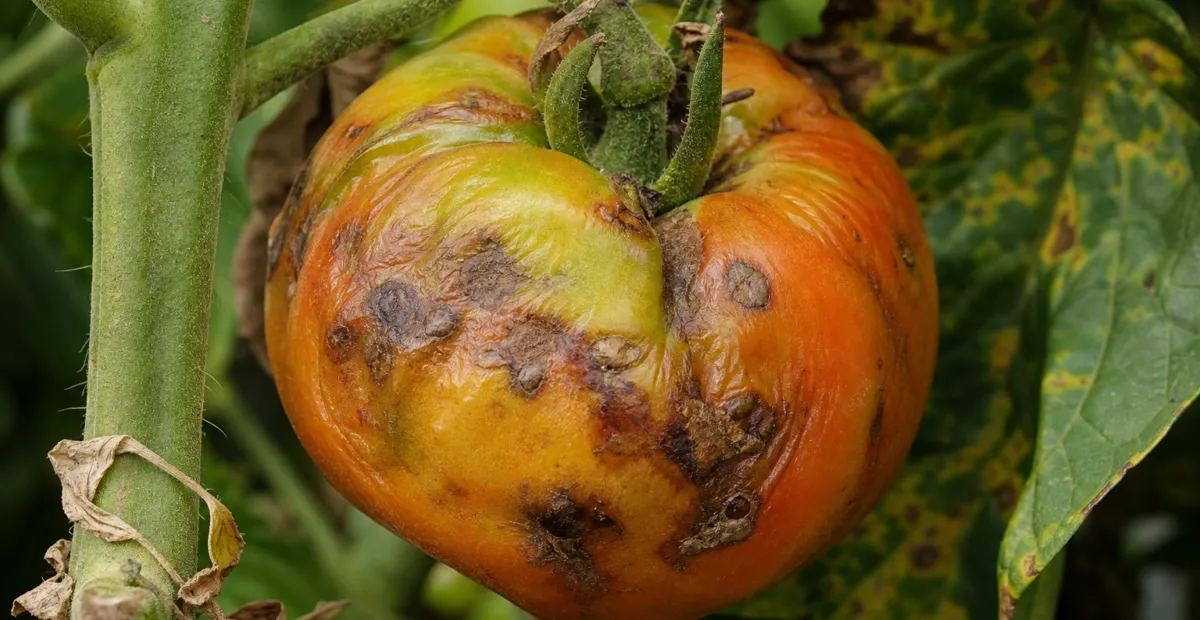
Tomato brown rugose fruit virus
Tobamovirus fructirugosum (Tomato brown rugose fruit virus; ToBRFV)Tomato brown rugose fruit virus overview
Tomato brown rugose fruit virus (ToBRFV) is a highly contagious viral disease of tomato and pepper. It can cause mottled or fern-like foliage, stunting, uneven ripening, brown necrotic patches, rough fruit surfaces and severe fruit deformation. Because symptoms overlap with other tobamoviruses and physiological disorders, confirmation requires laboratory testing. There is no curative treatment; prevention depends on strict sanitation and exclusion.
Typical conditions
Overview
ToBRFV is a systemic viral disease of tomato and pepper. In tomato, it may reduce marketable yield through severe fruit discoloration, roughness and deformation even when foliar symptoms are subtle. It can infect cultivars carrying resistance genes that protect against some other tobamoviruses, including Tm-1, Tm-2 and Tm-22.
Visual diagnosis is unreliable because symptoms can resemble tomato mosaic virus, tomato mosaic tobamovirus, bacterial diseases, herbicide injury, nutritional problems, or physiological fruit disorders. Suspect plants should be isolated and submitted for laboratory confirmation, typically by molecular testing such as RT-PCR.
Symptoms and identification
Tomato:
- Mosaic, mottling, chlorosis, leaf narrowing, distortion or fern-like foliage.
- Reduced vigor, stunting and uneven plant development.
- Fruit may be small, misshapen, rough or wrinkled, with brown necrotic patches, blotchy discoloration, yellow-green uneven ripening and internal browning.
- Fruit quality can decline sharply, making produce unmarketable.
Pepper:
- Mosaic, bubbling, distortion or mottling of leaves.
- Stunting or reduced vigor.
- Fruit may show discoloration, deformation, rough or dead patches, and necrosis.
Not every infected plant develops the full characteristic fruit syndrome, and symptom expression may differ among cultivars and virus isolates.
Causes and spread
ToBRFV spreads mainly by mechanical contact. Any activity that wounds or rubs plants can transfer infectious sap, including pruning, tying, grafting, harvesting, transplanting and handling. Important pathways include infected seed or transplants, grafts and cuttings; contaminated knives, pruners, stakes, trays, benches, clothing, gloves, hands and equipment; infected crop residues; and contaminated growing media or soil.
The virus can remain infectious for long periods in dried plant material and on contaminated surfaces. Seeds may carry the virus on the seed coat and, in some circumstances, infection may also occur within seed tissues. In greenhouse production, workers, tools, plant-to-plant contact and shared irrigation or drainage areas are especially important risk factors. Insects such as aphids and whiteflies are not considered the primary transmission route.
Life cycle and persistence
After entering through a wound, ToBRFV replicates in plant cells and moves locally through tissues and systemically through the plant’s vascular system. Infected plants can become sources of virus before obvious fruit symptoms appear. Virus concentration and symptom severity vary with host genotype, plant age, temperature, nutrition and isolate.
The virus does not have an insect-vector lifecycle like many plant viruses. Its epidemiology is dominated by repeated mechanical transfer and movement of infected propagative material. It can persist in crop debris, contaminated tools, structures, soil and seed-associated material between crops. Experimental studies have reported infection in additional Solanaceae and other species, but tomato and pepper are the principal confirmed natural crop hosts.
Treatment and control
There is no treatment that cures an infected plant or eliminates the virus from infected tissue. Do not move, propagate, graft or sell suspect plants. Isolate the affected area, stop routine handling, mark suspect plants, and arrange laboratory confirmation through a qualified plant diagnostic laboratory.
For confirmed infections, remove affected plants carefully to minimize contact and debris dispersal, place material directly into sealed bags or containers, and dispose of it rather than composting it. Clean soil, benches, tools, containers, clothing and irrigation components using validated sanitation procedures before replanting. In greenhouse or high-value production, a complete crop removal and facility decontamination may be necessary. Resistant or tolerant cultivars should not be assumed to be immune unless their performance against the relevant isolate has been documented.
Low-impact and biological control
No organic pesticide, biological control agent or soil amendment reliably cures ToBRFV. The most effective nonchemical approach is exclusion and sanitation: clean propagation material, quarantine, dedicated equipment, hand hygiene, prompt removal of suspect plants, sealed disposal, weed control and thorough cleaning of production areas.
In home gardens, avoid handling suspect tomato or pepper plants and then touching healthy plants. Disinfect pruners between plants, wash reusable stakes and containers, and do not place suspect fruit or plants in backyard compost. Crop rotation can reduce immediate carryover from crop debris, but it is not sufficient by itself because the virus is stable and may be reintroduced on seed, transplants, tools or volunteers.
Prevention
- Buy seed and transplants from reputable suppliers using documented testing and traceability; do not save seed from suspect plants.
- Inspect incoming plants and quarantine new tomato or pepper transplants before placing them with established crops.
- Use dedicated tools, gloves, clothing and footwear for separate greenhouse bays or crop blocks where practical.
- Wash hands before handling plants and disinfect tools between plants or rows with a product and contact time demonstrated to inactivate plant viruses.
- Remove volunteer tomato and pepper plants and control weeds that could act as experimental or local reservoirs.
- Do not compost suspect plants, fruit or seed. Seal them in bags and dispose of them according to local waste rules.
- Clean and disinfect benches, trays, stakes, trellis materials, irrigation components and other reusable equipment before reuse.
- Avoid working in wet foliage, because sap transfer and accidental plant contact are easier when plants are wet.
- If ToBRFV is suspected in a commercial or regulated setting, contact the state plant health authority or USDA APHIS and follow current reporting guidance.
Interesting facts
- ToBRFV is a tobamovirus related to tobacco mosaic virus and tomato mosaic virus, but it can overcome important tobamovirus resistance genes used in tomato breeding.
- Tomato and pepper are the principal confirmed natural crop hosts, while experimental host-range studies have found infection in additional Solanaceae and other plant species; experimental susceptibility does not always indicate an important field reservoir.
- Infected fruit is not considered a food-safety hazard to people or animals, but symptomatic fruit and plant material should not be placed in backyard compost because infected seeds or debris may spread the virus.
- Fruit symptoms may be more conspicuous and economically serious than leaf symptoms, so apparently mild plants can still require testing when fruit quality or epidemiological risk is suspicious.
- Because ToBRFV is mechanically transmitted and highly persistent, sanitation and traceability are generally more important than insect-control sprays.
No pesticide cures or eradicates ToBRFV inside an infected plant. Use disinfectants only when they are legally authorized for the intended use in your country and follow the current product label, including concentration, contact time, worker protection and disposal requirements. Do not apply an unverified pesticide program for this virus.
Affected plants
The plants below are linked to this problem by structured host-plant data. The list updates automatically as new plant profiles are added.
 Pepper (Capsicum annuum) care guideCapsicum annuum
 Bishop’s Crown (Capsicum annuum ‘Bishop’s Crown’)Capsicum annuum 'Bishop's Crown'
 Cherry Bomb (Capsicum annuum ‘Cherry Bomb’)Capsicum annuum 'Cherry Bomb'
 Explosive Ember Chili Pepper (Capsicum annuum ‘Explosive Ember’)Capsicum annuum 'Explosive Ember'
 Numex Twilight (Capsicum annuum ‘Numex Twilight’)Capsicum annuum 'Numex Twilight'
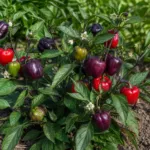 Purple Beauty (Capsicum annuum ‘Purple Beauty’)Capsicum annuum 'Purple Beauty'
 Serrano (Capsicum annuum ‘Serrano’)Capsicum annuum 'Serrano'
 Capsicum baccatum care guideCapsicum baccatum
 Yellow lantern chili (Capsicum chinense) care guideCapsicum chinense
 Solanum aethiopicum care guideSolanum aethiopicum
 Solanum macrocarpon care guideSolanum macrocarpon
 Eggplant (Solanum melongena) care guideSolanum melongena