
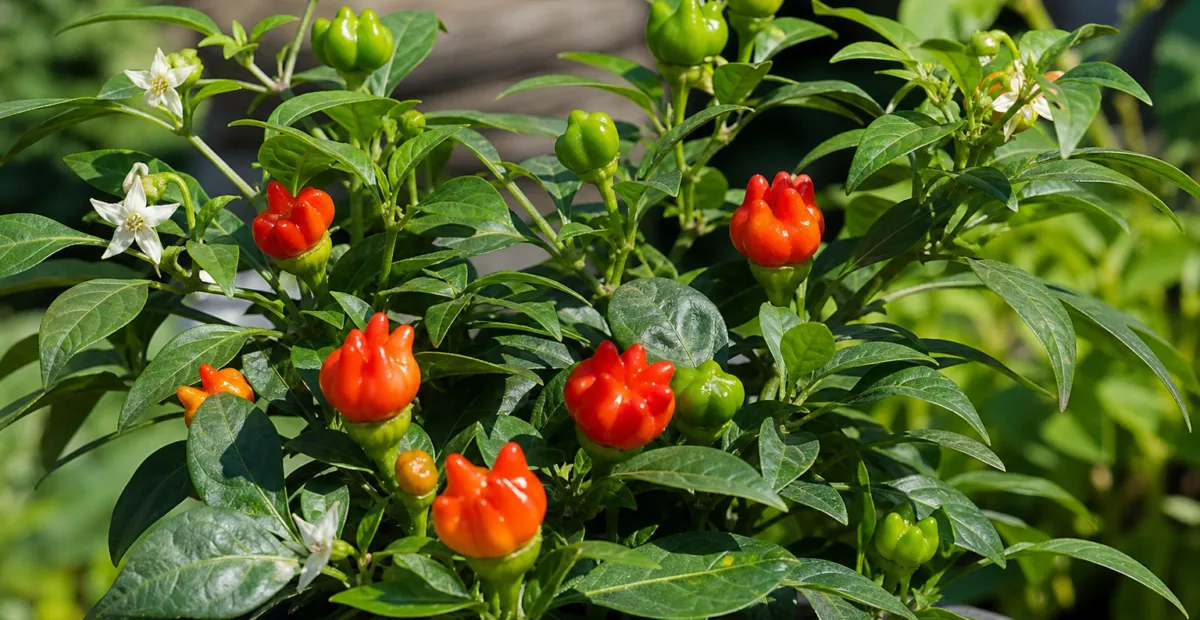
 AI-generated illustration
Bishop’s Crown (Capsicum annuum ‘Bishop’s Crown’) short overview
Capsicum annuum 'Bishop's Crown' is a distinctive warm-season pepper grown for its edible, crown-shaped fruits and attractive branching habit. Plants produce small pale flowers followed by unusual three-lobed peppers that mature from green toward orange-red. Give it full sun, fertile well-drained soil, regular watering, and a long frost-free season. Despite the supplied taxon, authoritative horticultural references commonly associate Bishop's Crown with Capsicum baccatum, so the cultivar identity should be treated with caution.
Taxonomic classification
Bishop’s Crown (Capsicum annuum ‘Bishop’s Crown’) care guide
Light and placement
Provide at least 6–8 hours of direct sun, ideally in a south-facing bed, warm raised bed, or reflective patio location. In very hot inland climates, light afternoon shade can reduce heat stress, but persistent shade causes weak growth, fewer flowers, and reduced fruiting. Rotate containers if growth leans toward the light.
Watering and humidity
Water deeply when the top inch of soil feels dry, then allow excess water to drain. Keep moisture consistent during flowering and fruit expansion; irregular drought followed by heavy watering can stress plants and contribute to blossom-end problems. Reduce watering slightly in cool weather, but do not let container plants wilt repeatedly.
Soil and growing medium
Use fertile, moisture-retentive but well-drained soil with plenty of organic matter. A loamy mix is suitable. Slightly acidic to neutral conditions are appropriate; avoid compacted soil and sites that remain saturated after watering.
Feeding
Incorporate compost before planting, then begin feeding after active growth is established. Use a balanced vegetable fertilizer at label strength every 3–4 weeks, or use a controlled-release product according to its label. Avoid heavy nitrogen feeding once flowering begins, since it can promote leaves at the expense of fruit.
Growth and habit
A warm-season, branching pepper that can become productive over a long season. Plants are commonly maintained as annuals in temperate US gardens, while frost-free climates may keep them longer. Container plants benefit from support if fruiting branches become crowded or heavy.
Planting and repotting
Set plants outdoors only after frost danger has passed and soil has warmed. Plant at the same depth as the original root ball, or slightly deeper if the stem is sturdy. Space about 18–24 inches apart in beds, with extra room for air circulation and staking if plants become heavily laden with fruit.
Move container-grown plants into a 3- to 5-gallon pot once roots fill the starter container. Transplant with minimal root disturbance after nights are reliably warm. Refresh the upper layer of mix or repot before active growth if the substrate has become compacted or poorly drained.
Propagation and pruning
Propagation
Sow seed indoors 8–10 weeks before the expected last spring frost. Maintain warm germination conditions and strong light after emergence. Harden seedlings gradually before transplanting. Seed-grown plants may vary if flowers cross with other peppers.
Pruning
Pruning is optional. Remove damaged or diseased growth promptly and thin crowded interior shoots if airflow is poor. Avoid severe pruning during peak flowering and fruiting, since this can delay harvest.
Overwintering
Protect from all frost. In Zones 9–11, plants may survive winter in a warm sheltered position if cut back lightly and kept on the dry side. Elsewhere, overwinter a healthy container plant indoors in bright light, checking carefully for pests before bringing it inside.
Uses
Grow as an edible garden pepper, patio container crop, or ornamental vegetable. The unusual fruit is useful fresh, cooked, pickled, stuffed, or in sauces, but heat can vary and should be tested carefully. Do not make medicinal claims from its capsaicin content.
Appearance
Plants have smooth green stems, simple alternate leaves, and axillary white flowers. The defining feature is the fruit: a flattened, three-lobed or winged shape resembling a bishop's crown or mitre. Fruit commonly develops from green toward orange-red, although exact color and form can vary among seed lines.
Flowering
Small, usually white, five-lobed flowers arise singly from leaf axils. Flowers are generally self-fertile, although gentle plant movement or insect activity can improve pollen transfer. In the United States, flowering normally begins after sustained warmth and continues through summer while plants remain actively growing.
Pollination and visitors
The small flowers are self-fertile and may receive incidental visits from bees, bumblebees, and other small insects. Animal visitation is not required for every fruit, and cultivar-specific visitor records are limited.
Diseases and pests
Diseases
Reduce risk by rotating away from other nightshades, using clean containers, watering at the soil line, and providing good air circulation. Watch for leaf spots, damping-off, Phytophthora root problems, and viral symptoms such as mottling or distorted new growth. Remove severely affected plants rather than composting diseased tissue.
Pests
Inspect young growth for aphids, whiteflies, thrips, spider mites, and flea beetles. Use insect netting, hand removal, or a targeted horticultural soap treatment when needed. Avoid broad-spectrum insecticides during flowering and follow all product directions.
Related diseases and pests
Only Plant Doctor profiles whose host data indicate this plant may be affected are shown here.
 PestBroad mitePolyphagotarsonemus latus (Banks)
 PestMelon thripsThrips palmi Karny
 PestChilli thripsScirtothrips dorsalis Hood
 DiseaseStolbur Phytoplasma Disease‘Candidatus Phytoplasma solani’
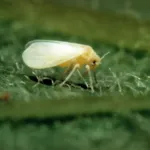 PestSweetpotato whiteflyBemisia tabaci species complex
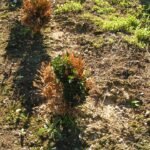 DiseasePhytophthora root and crown rotPhytophthora nicotianae
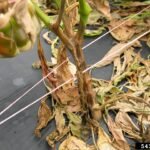 DiseasePhytophthora blightPhytophthora capsici
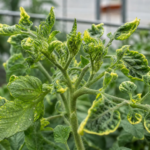 DiseaseTomato yellow leaf curl virusBegomovirus coheni
Toxicity and pollen
Capsicum fruits contain capsaicinoids that can irritate the mouth, eyes, skin, and digestive tract, especially when handled or eaten in quantity. Wash hands after handling fruit and avoid touching the eyes. The plant is edible, but spicy fruit should not be treated as harmless to children or pets.
- Typical season
- During flowering, usually June through September in much of the United States
- Pollination / pollen
- Mostly localized, flower-level pollen
Pepper pollen is relatively heavy and is primarily transferred within or between flowers rather than dispersed widely by wind. Airborne exposure is generally low, but sensitive individuals can still react to plant contact or pollen in enclosed growing areas.
Native habitat
The supplied species is a cultivated garden pepper rather than a wild habitat specialist. Capsicum peppers are associated with warm tropical and subtropical regions and perform best in fertile soils, strong light, and a long frost-free season.
Interesting fact
The cultivar name refers to the fruit's resemblance to a bishop's mitre or crown. Reliable horticultural sources commonly place Bishop's Crown in Capsicum baccatum rather than C. annuum. Pepper fruit is botanically a berry, despite its culinary classification as a vegetable.
Frequently asked questions (FAQ)
The most relevant questions about this plant, with short and direct answers.
🌱Quick care
What is Capsicum annuum 'Bishop's Crown'?⌄
Capsicum annuum 'Bishop's Crown' is an edible pepper cultivar grown for its distinctive crown-shaped fruits and ornamental appearance. It is frost tender and performs best during warm, sunny weather.
Is Capsicum annuum 'Bishop's Crown' a hot pepper?⌄
Yes, its fruits can range from mild to moderately hot, and heat may vary between fruits and growing conditions. The central seed-bearing portion is often hotter than the outer flesh.
How much sun does Capsicum annuum 'Bishop's Crown' need?⌄
Give it full sun, ideally at least 6–8 hours of direct light daily. Insufficient light can reduce flowering, fruit production, and ripening.
How often should I water Capsicum annuum 'Bishop's Crown'?⌄
Water when the surface of the soil begins to dry, keeping the root zone evenly moist but not waterlogged. Consistent moisture is especially important during flowering and fruit development.
Is Capsicum annuum 'Bishop's Crown' frost hardy?⌄
No, it is frost tender and can be damaged or killed by freezing temperatures. Move container plants indoors or protect plants before the first frost.
🌤️Environment and placement
What temperature is best for Capsicum annuum 'Bishop's Crown'?⌄
Warm conditions are best, with daytime temperatures around 70–85°F and nights preferably above 55°F. Cold soil or cool nights can slow growth, flowering, and fruit set.
Can I grow Capsicum annuum 'Bishop's Crown' in a container?⌄
Yes, it grows well in a large container with drainage holes and fertile, well-drained potting mix. Choose a container of about 5 gallons or larger to support its root system and mature growth.
Can Capsicum annuum 'Bishop's Crown' grow indoors?⌄
Yes, it can grow indoors near a very bright window or under a grow light. Indoor plants need good airflow, careful watering, and hand pollination if natural pollinators are absent.
What soil does Capsicum annuum 'Bishop's Crown' need?⌄
Use fertile, well-drained loam or a high-quality container mix that drains freely. Avoid heavy, compacted soil because wet roots can lead to poor growth and root diseases.
How much space does Capsicum annuum 'Bishop's Crown' need?⌄
Space plants about 18–24 inches apart in the garden, allowing additional room if the plant develops a broad, branching habit. Good spacing improves airflow and reduces disease pressure.
💧Care and problems
Why is my Capsicum annuum 'Bishop's Crown' growing leaves but few peppers?⌄
Excess nitrogen, inadequate light, temperature stress, or inconsistent watering can produce vigorous foliage with limited fruit. Provide full sun, avoid overfertilizing with nitrogen, and keep moisture steady.
Why are the flowers falling off my Capsicum annuum 'Bishop's Crown'?⌄
Blossom drop is commonly caused by cool nights, excessive heat, drought, waterlogged soil, or poor pollination. Keep the plant evenly watered and protect it from temperature extremes.
Does Capsicum annuum 'Bishop's Crown' need support?⌄
Support is useful when the plant becomes tall or carries many fruits. A small stake or tomato cage can prevent branches from bending or breaking.
What pests commonly affect Capsicum annuum 'Bishop's Crown'?⌄
Aphids, flea beetles, thrips, and other common pepper pests may attack it. Inspect new growth regularly and use a targeted, label-approved treatment only when necessary.
How can I prevent disease on Capsicum annuum 'Bishop's Crown'?⌄
Improve airflow, water at the soil line, avoid working among wet plants, and grow it in well-drained soil. Crop rotation and removing badly diseased foliage can further reduce disease problems.
How do I know when Capsicum annuum 'Bishop's Crown' peppers are ripe?⌄
Peppers are ripe when they reach their mature color, commonly red, and feel firm with a developed, glossy skin. Green fruits can also be harvested earlier, but they usually have less sweetness.
How should I harvest Capsicum annuum 'Bishop's Crown' peppers?⌄
Cut or snip the fruits from the plant rather than pulling them off. Harvesting regularly can encourage continued flowering and fruit production during the growing season.
🪴Planting and repotting
When should I start Capsicum annuum 'Bishop's Crown' seeds indoors?⌄
Start seeds indoors about 8–10 weeks before your area's expected last spring frost. Transplant outdoors only after frost danger has passed and the soil has warmed.
How deep should I plant Capsicum annuum 'Bishop's Crown' seeds?⌄
Sow the seeds about ¼ inch deep in a warm, moist seed-starting mix. Pepper seeds germinate more reliably when the medium is warm rather than cool.
How long do Capsicum annuum 'Bishop's Crown' seeds take to germinate?⌄
Germination commonly takes about 7–21 days under warm, evenly moist conditions. Cool temperatures, old seed, or drying out can delay or reduce emergence.
When can I transplant Capsicum annuum 'Bishop's Crown' outdoors?⌄
Transplant it after the last frost when daytime temperatures are warm, nights are mild, and the soil is no longer cold. Harden seedlings outdoors gradually for about a week before planting.
Can Capsicum annuum 'Bishop's Crown' be direct-sown outdoors?⌄
Direct sowing is possible only where the growing season is long and reliably warm. In most U.S. gardens, starting it indoors gives the plant more time to mature and produce ripe fruit.
✂️Propagation and pruning
Can I save seeds from Capsicum annuum 'Bishop's Crown' peppers?⌄
Yes, you can save seeds from fully ripe, healthy fruit and dry them thoroughly before storage. Because peppers can cross-pollinate, saved seed may not reproduce the exact parent if other pepper varieties flowered nearby.
Does Capsicum annuum 'Bishop's Crown' need to be pruned?⌄
No, routine pruning is not required for good production. Remove damaged growth and use light shaping only if the plant becomes crowded or difficult to support.
Can I overwinter Capsicum annuum 'Bishop's Crown' indoors?⌄
Yes, a healthy plant can be overwintered indoors in a bright, warm location. Before bringing it inside, inspect it for pests, reduce watering, and prune lightly if needed to fit the available space.
⚠️Toxicity and safety
Is Capsicum annuum 'Bishop's Crown' poisonous?⌄
The ripe peppers are edible, but their capsaicin can irritate the mouth, eyes, skin, and digestive tract. Wear gloves when handling large quantities and keep fresh peppers away from children and pets.
How should I handle Capsicum annuum 'Bishop's Crown' peppers safely?⌄
Wear gloves when cutting the peppers and avoid touching your eyes or face afterward. Wash hands, knives, and cutting surfaces thoroughly, especially when preparing hotter fruits.
🌸Flowering and special interest
When does Capsicum annuum 'Bishop's Crown' flower?⌄
It generally flowers after establishing substantial leafy growth in warm, bright conditions. Flowering may be delayed by cool nights, low light, drought, or excessive nitrogen.
Does Capsicum annuum 'Bishop's Crown' self-pollinate?⌄
Yes, pepper flowers can usually self-pollinate, but gentle shaking of the plant or using a small brush can improve fruit set indoors. Good airflow and warm, stable conditions also help.
Why does my Capsicum annuum 'Bishop's Crown' have flowers but no fruit?⌄
Poor fruit set is usually linked to temperature stress, inconsistent moisture, low light, or inadequate pollination. Stabilize growing conditions and gently shake the plant during flowering if it is indoors.
Similar plants
 Numex Twilight (Capsicum annuum ‘Numex Twilight’)Capsicum annuum 'Numex Twilight'
 Cherry Bomb (Capsicum annuum ‘Cherry Bomb’)Capsicum annuum 'Cherry Bomb'
 Serrano (Capsicum annuum ‘Serrano’)Capsicum annuum 'Serrano'
 Capsicum baccatum care guideCapsicum baccatum
 Explosive Ember Chili Pepper (Capsicum annuum ‘Explosive Ember’)Capsicum annuum 'Explosive Ember'
 Purple Beauty (Capsicum annuum ‘Purple Beauty’)Capsicum annuum 'Purple Beauty'