
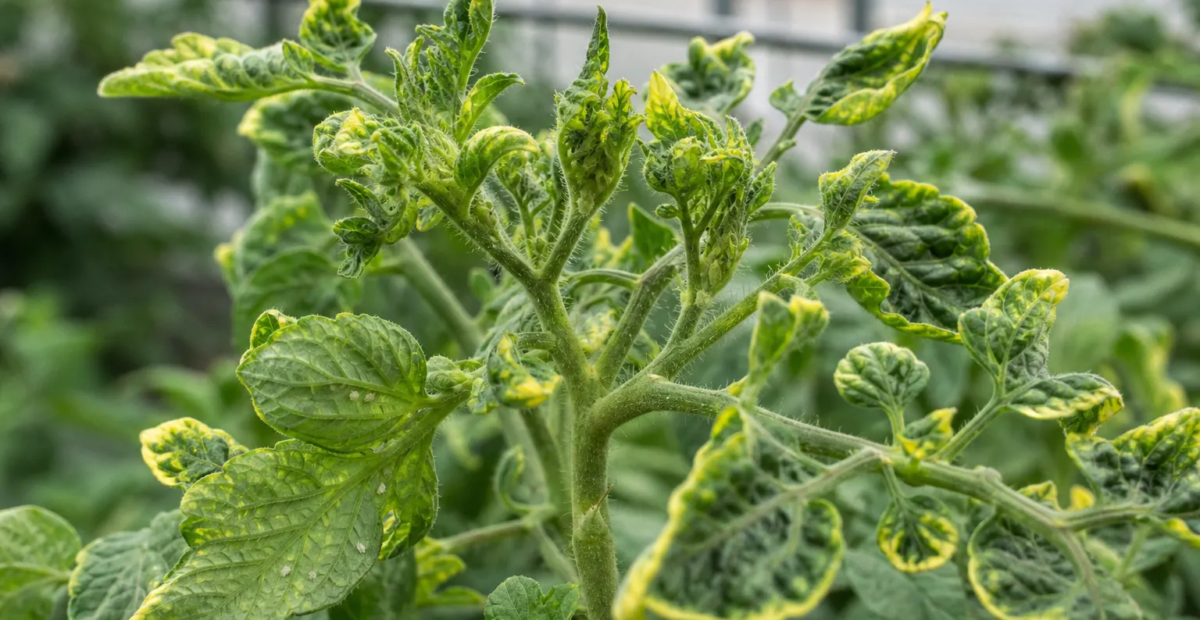
Tomato yellow leaf curl virus
Begomovirus coheniTomato yellow leaf curl virus overview
Tomato yellow leaf curl virus (TYLCV) is a serious, whitefly-transmitted viral disease of tomato. Infected plants become stunted, with small, upward-curling leaves, strong crumpling, yellow margins and yellowing between veins. Early infection can cause flower drop, little or no fruit set, and severe yield loss. Similar symptoms may result from other viruses, herbicide injury, mites, heat or irrigation stress, so laboratory confirmation may be needed.
Typical conditions
Overview
TYLCV is a systemic virus of tomato. It interferes with normal growth of young tissues, producing a characteristic combination of severe stunting, shortened internodes and distorted yellow foliage. Plants infected while young may become compact and nearly unproductive, whereas later infections can cause milder symptoms and allow some fruit production.
Symptoms overlap with other tomato viruses, herbicide drift, broad mites, heat, drought, root injury and nutritional problems. A visual diagnosis is therefore provisional; confirmation by a plant diagnostic laboratory or validated molecular test is appropriate when the identification affects crop removal, propagation or regulatory decisions.
Symptoms and identification
- Young leaves become small, thickened, strongly crumpled and curled upward.
- Leaf margins and tissue between veins turn pale yellow to yellow-green; plants may show mottling or cupping.
- Internodes shorten and the plant becomes erect, bushy, severely stunted or “bonsai-like.”
- Flowers may abort or drop, fruit set can stop, and early infections may result in little or no marketable yield.
- Whiteflies may be visible on leaf undersides, but their presence alone does not prove TYLCV infection.
Causes and spread
The causal agent is the begomovirus Begomovirus coheni, historically referred to as Tomato yellow leaf curl virus. Short-distance spread occurs primarily when infected Bemisia whiteflies feed on healthy tomato plants. Whiteflies acquire the virus while feeding and can transmit it during subsequent feeding; the virus is retained for much of the vector’s life.
Long-distance introduction commonly occurs through infected transplants or movement of infested host plants. Volunteer tomatoes, crop residues and susceptible weeds can help maintain both virus and whitefly populations. TYLCV is not normally spread through casual contact between people, and routine pruning tools are not considered the primary transmission route, although sanitation remains good practice.
Life cycle and persistence
TYLCV persists in infected living plants and circulates through populations of Bemisia whiteflies. A whitefly feeds on an infected plant, acquires virus, and later inoculates a healthy tomato while probing and feeding. Symptoms commonly develop about 2–3 weeks after infection, although timing varies with cultivar, plant age, virus isolate and temperature.
Whitefly populations can increase rapidly during warm weather. Eggs are laid on leaf undersides, followed by a mobile crawler and several mostly sedentary nymphal stages before adults emerge. Because young tomato plants are especially vulnerable, infections established soon after transplanting generally cause the greatest yield loss.
Treatment and control
There is no curative treatment that eliminates TYLCV from an infected tomato plant. Remove severely affected plants to reduce inoculum and protect nearby healthy plants. If only a few plants are affected late in the season and fruit is already developing, removal decisions can be based on crop value, disease pressure and the risk of spreading infection.
Manage the vector through an integrated program: inspect undersides of leaves, reduce weeds and volunteers, use reflective mulch or exclusion screening, conserve effective natural enemies, and avoid moving infested plants. Whitefly suppression is most valuable before infection; it cannot reliably restore growth or yield after a plant is systemically infected.
Low-impact and biological control
- Start with clean, resistant or tolerant transplants and use insect-exclusion covers during establishment.
- Use reflective silver mulch and yellow sticky cards as monitoring or deterrent tools; cards are not a complete control method.
- Remove heavily infested leaves or plants when practical, while avoiding unnecessary disturbance that disperses adults.
- Reduce volunteer tomatoes and weed hosts around the planting.
- Conserve predators and parasitoids by avoiding broad-spectrum sprays and by treating only when monitoring shows a need.
- For organically managed production, use only inputs permitted by the applicable organic certification program and legally labeled for tomatoes and whiteflies. Insecticidal soaps or horticultural oils may reduce exposed whiteflies but require thorough underside coverage and do not cure infected plants.
Prevention
- Purchase clean transplants from reputable sources and inspect leaf undersides for whiteflies, nymphs and eggs before planting.
- Choose tomato cultivars advertised as TYLCV-resistant or tolerant when suitable for the region; resistance is not always complete against every isolate.
- Use insect-exclusion fabric or screened propagation areas, especially during the vulnerable transplant stage.
- Scout regularly, concentrating on young leaves and plant edges, and use reflective mulch where practical to deter whitefly landing.
- Remove and destroy strongly symptomatic plants promptly, preferably by bagging and disposing of them with household or municipal waste rather than composting.
- Remove tomato crop residue and volunteers after harvest, control relevant weeds, and avoid maintaining overlapping tomato plantings.
- Do not move suspicious transplants or whitefly-infested plant material from an affected area into an area where TYLCV is absent.
Interesting facts
- Tomato is the host to which TYLCV is best adapted and the crop most important for building high disease incidence.
- Symptoms are often most severe when infection occurs early in plant development.
- Different TYLCV isolates and related tomato leaf-curl begomoviruses can differ in host range and symptom severity.
- Whiteflies may spread the virus before infected plants show visible symptoms.
- TYLCV is a plant disease and is not a foodborne disease of humans.
No pesticide cures TYLCV. If chemical whitefly management is necessary, use only products legally authorized and currently labeled for tomatoes and the target whitefly in the United States, follow the label exactly, observe preharvest intervals and reentry requirements, protect pollinators and beneficial organisms, and rotate insecticide modes of action according to current extension or resistance-management guidance. Product registrations and labels can change by state and over time.
Affected plants
The plants below are linked to this problem by structured host-plant data. The list updates automatically as new plant profiles are added.
 He tepary bea (Phaseolus acutifolius) care guidePhaseolus acutifolius
 Snap bean (Phaseolus coccineus) care guidePhaseolus coccineus
 Butter bea (Phaseolus lunatus) care guidePhaseolus lunatus
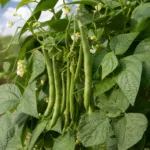 String Bean (Phaseolus vulgaris) care guidePhaseolus vulgaris
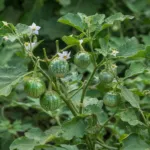 Solanum aethiopicum care guideSolanum aethiopicum
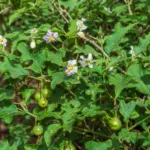 Solanum macrocarpon care guideSolanum macrocarpon
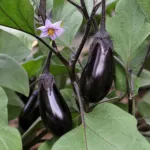 Eggplant (Solanum melongena) care guideSolanum melongena
 Garden Huckleberry (Solanum scabrum) care guideSolanum scabrum