
Raspberry Spur Blight
Didymella applanataRaspberry Spur Blight overview
Raspberry spur blight is a fungal disease caused by Didymella applanata, most damaging to red raspberries and also reported on other Rubus plants. Brown to purplish lesions develop around leaf nodes and V-shaped brown leaf spots appear on older foliage. Infected buds may die over winter, reducing fruiting laterals and yield. Wet weather, dense canopies, and infected cane debris favor disease development.
Typical conditions
Overview
Spur blight is primarily a disease of raspberry canes and leaves. It is usually most severe on red raspberry, although other Rubus species may be susceptible. The disease can weaken fruiting spurs, kill axillary buds, reduce flowering laterals, and contribute to smaller or poorly developed fruit.
Diagnosis is strengthened when brown or purplish lesions occur at cane nodes together with older leaves bearing brown, often V-shaped lesions and yellow margins. Similar cane symptoms can be caused by raspberry cane blight, anthracnose, insects, or winter injury, so laboratory confirmation may be useful when symptoms overlap.
Symptoms and identification
- Brown to purplish, oval or wedge-shaped lesions develop on young green canes near leaf attachments and axillary buds.
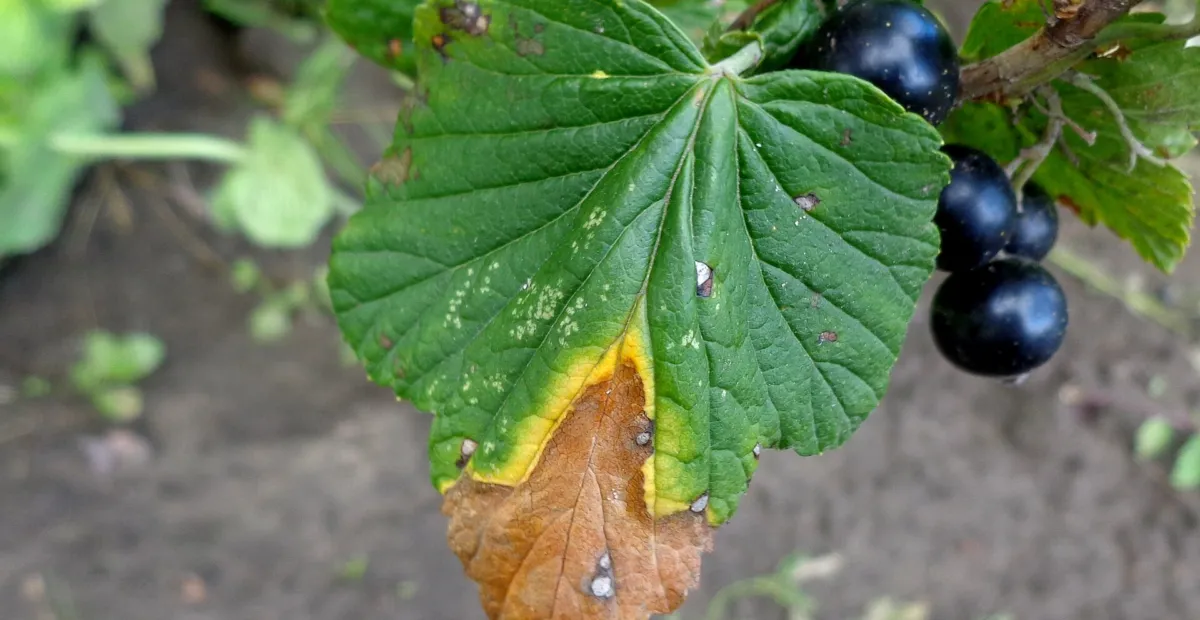
- Older leaves develop brown lesions, commonly V-shaped and bordered by yellow tissue, often beginning on the lower part of the cane.
- Infected leaves may shrivel and drop while the petiole remains attached to the cane.
- Leaf and flower buds may shrivel or die, and emerging fruiting laterals may be weak or absent the following season.
- As lesions age, the bark may become silvery gray, crack, and show tiny black fungal fruiting bodies.
- Severe infections can reduce fruit quantity and quality, with berries becoming small, dry, or poorly developed.
Causes and spread
The causal fungus survives in infected canes and crop debris. During wet periods, spores from small black fruiting bodies are dispersed by wind, rain splash, and overhead irrigation. Spores germinate on wet raspberry leaves, especially mature leaves, and the fungus grows through the petiole into the cane near the leaf node.
Dense rows, excessive suckers, weeds, prolonged leaf wetness, and rainy early-summer weather increase risk. Infected nursery stock or nearby unmanaged Rubus plants may introduce the disease. The pathogen is considered closely associated with Rubus, but host records and susceptibility vary among species and cultivars.
Life cycle and persistence
- The fungus overwinters in diseased raspberry canes and fallen or retained plant debris.
- In spring and early summer, sexual and asexual spores may be released from small black fruiting bodies during wet weather.
- Wind and water move spores to susceptible, wet raspberry leaves.
- The fungus colonizes the leaf, petiole, and adjacent cane tissue, forming node or spur lesions.
- Symptoms commonly become conspicuous in summer, while new fruiting bodies may develop in fall or during the following season.
- Infected buds may fail during winter, causing missing or weak fruiting laterals the next year.
Treatment and control
Remove infected canes during dry weather, cutting well below visible lesions and preferably removing the entire affected cane when practical. Dispose of removed material away from the planting. Do not remove the whole crown or healthy neighboring plants solely because one cane is infected.
Open the canopy by thinning crowded canes, removing weeds, and improving row airflow. Reduce overhead irrigation and correct practices that keep foliage wet. Fungicide applications, when justified by disease history and weather, work best as part of a preventive program and must be selected from the current product label and local raspberry recommendations. Severe or uncertain cases should be submitted to a state plant diagnostic laboratory.
Low-impact and biological control
- Use sanitation as the primary control: remove infected and spent canes and clear plant debris.
- Thin raspberry rows aggressively enough to promote rapid drying without excessively reducing crop density.
- Use drip irrigation, mulch that does not contact infected canes, and weed control to reduce humidity and splash dispersal.
- Plant resistant or less susceptible cultivars when reliable local trial information is available.
- Biological products may be marketed for suppression of fungal diseases, but performance against spur blight is product- and site-dependent; use only products specifically labeled for the crop and disease.
Prevention
- Start with vigorous, disease-free plants from reputable nurseries and inspect new stock before planting.
- Prune annually to remove spent floricanes and diseased primocanes; remove canes showing active lesions rather than leaving them in the row.
- Thin suckers and excess canes so the planting remains open and dries quickly after rain. For home plantings, avoid allowing the row to become crowded.
- Control weeds and vegetation within and between rows to improve air movement and reduce humidity.
- Use drip irrigation where practical and avoid wetting foliage with overhead irrigation.
- Remove pruned and fallen infected material from the planting; do not leave diseased canes in piles beside the raspberry row.
- Favor cultivars with documented tolerance where suitable for the local US climate, while recognizing that cultivar response can vary.
Interesting facts
- The disease is commonly called spur blight because lesions can kill the short fruiting spurs or lateral buds that bear raspberry fruit.
- Didymella applanata is widely used in extension literature, while Xenodidymella applanata appears in some modern fungal classifications.
- Mature raspberry leaves are generally more susceptible than young leaves, helping explain why symptoms often begin on older lower foliage.
- Spur blight differs from raspberry cane blight because spur blight commonly begins at leaf nodes and does not typically invade the vascular system.
- Blackberries and dewberries are reported as much less affected or highly resistant in some regional references, but susceptibility across Rubus is not uniform.
Use only fungicides legally authorized for raspberry spur blight or the applicable raspberry disease in the United States and in your state. Read and follow the current label, including crop, disease, rate, timing, reentry interval, preharvest interval, worker-protection, and resistance-management requirements. Product registrations and labels can change; consult current university Extension and state pesticide resources before application. Do not apply a product solely because it is labeled for a different crop or raspberry disease.