
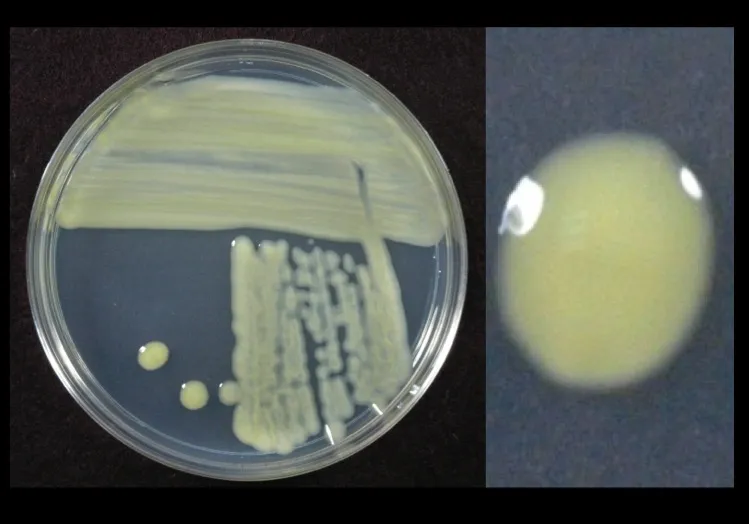
Bacterial Leaf Streak of Small-Grain Cereals
Xanthomonas translucensBacterial Leaf Streak of Small-Grain Cereals overview
Bacterial leaf streak, also called black chaff when it affects wheat or barley heads, is a seed-associated bacterial disease caused by members of the Xanthomonas translucens group. It produces translucent, water-soaked leaf streaks that later become yellow, brown, or necrotic, and may spread to glumes, awns, peduncles, and rachises. Accurate diagnosis may require laboratory testing because symptoms overlap with other diseases.
Typical conditions
Overview
The disease is most important in wheat and barley, particularly where warm, humid weather, frequent rainfall, heavy dew, or sprinkler irrigation keeps leaves wet. It may occur sporadically, but susceptible cultivars and contaminated seed can lead to damaging outbreaks.
On wheat and barley heads, the related symptom known as black chaff appears as dark streaking of glumes, awns, peduncles, or rachises. Because several bacterial and fungal diseases can produce similar streaks, confirmation should be based on a plant diagnostic laboratory when management or seed movement decisions depend on the result.
Symptoms and identification
- Early lesions are pale green, water-soaked, translucent streaks that usually extend lengthwise between or along leaf veins.
- With age, streaks become yellow, tan, brown, or gray-brown and may merge into broad necrotic areas.
- Under humid conditions, infected leaves may show yellow to honey-colored bacterial ooze. The ooze can dry into shiny flakes or resinous granules.
- Severe infections can kill portions of the flag leaf and reduce green leaf area during grain filling.
- Black chaff consists of purple, brown, or black longitudinal discoloration on glumes, awns, peduncles, or rachises; kernels may occasionally become discolored.
Symptoms can resemble fungal leaf streaks, bacterial blight, frost injury, herbicide injury, or other Xanthomonas species. A translucent appearance when the leaf is held toward light and visible bacterial streaming or ooze are useful clues, but they are not definitive by themselves.
Causes and spread
The bacterium is commonly introduced on contaminated seed, making clean planting material the most important first-line measure. It can also persist temporarily in crop residue, volunteer cereals, and some grass hosts.
Rain splash, sprinkler irrigation, wind-driven moisture, plant-to-plant contact, insects, and small injuries caused by wind or rain can move bacteria onto and into leaves. Bacteria enter mainly through stomata or wounds and multiply in internal leaf tissues. Spread is favored when foliage remains wet for extended periods.
Life cycle and persistence
Xanthomonas translucens survives primarily on or with infected seed and can be carried into the emerging seedling. Bacteria may move from contaminated seed to the coleoptile and young foliage, or survive on plant debris and volunteer cereals between crops.
During wet weather, bacteria multiply on infected tissue and ooze onto the leaf surface. Splashing water and contact distribute cells to nearby plants, where they enter through stomata or wounds. Lesions can develop within several days under favorable conditions, followed by chlorosis and necrosis. Head infection near heading or grain filling can produce black chaff and increase the possibility of seed contamination.
Treatment and control
There is no dependable curative treatment for plants already systemically or extensively infected in the field. Remove or isolate severely affected garden-grown cereal plants where practical, but do not handle wet foliage because this can spread bacteria.
For commercial production, prioritize resistant or tolerant varieties, clean seed, crop rotation, volunteer-cereal control, equipment sanitation, and irrigation management. Copper-based or other bactericidal products generally provide limited and inconsistent protection for field-grown small grains, particularly after infection is established. Any product decision must be based on the crop, local registration, disease label, application timing, resistance management requirements, and current university or extension guidance.
Low-impact and biological control
Organic and low-input management relies mainly on prevention rather than eradication. Use organically compliant certified seed with appropriate quality documentation, rotate away from small grains, remove volunteer cereals, reduce leaf wetness, avoid working fields when plants are wet, and sanitize tools and equipment.
Biological products may be marketed for bacterial disease suppression, but performance against Xanthomonas translucens can vary substantially by product, cultivar, weather, and disease pressure. Use only products permitted under the applicable organic certification program and registered for the crop and problem in the United States, following the current label.
Prevention
- Plant certified, high-quality seed from a reputable source; where available, choose lots tested or produced under standards that reduce bacterial contamination.
- Use cultivars with improved resistance or tolerance when reliable regional information is available.
- Rotate with nonhost crops and control volunteer wheat, barley, triticale, rye, and susceptible grasses.
- Avoid unnecessary overhead or sprinkler irrigation, especially during warm weather and near heading.
- Do not save seed from visibly affected fields when bacterial infection is suspected.
- Clean combines, drills, bins, and other equipment before moving from an affected field to clean fields.
- Manage crop residue appropriately and maintain balanced fertility; avoid dense, excessively lush stands that remain wet longer.
- Submit representative samples to a university or state plant diagnostic laboratory when symptoms are unusual or seed movement is planned.
Interesting facts
- The species name translucens refers to the translucent appearance of early leaf lesions.
- Older literature may use names such as Xanthomonas campestris pv. translucens or pv. undulosa; modern classifications place these lineages within Xanthomonas translucens.
- At least several genetically distinct lineages within the species can cause bacterial leaf streak on wheat or barley, and species-level laboratory detection may not identify the pathovar.
- Black chaff is not a separate organism; it is a head and upper-stem symptom associated with bacterial leaf streak infections.
- Seed contamination is especially important for long-distance movement and exchange of cereal germplasm.
- Recent U.S. reports, including a 2026 report from Arizona, show why local confirmation and continued surveillance remain important.
Do not begin a pesticide program from this entry alone. Use only products legally authorized by the U.S. Environmental Protection Agency and registered in the applicable state for the specific crop and disease; follow the current label exactly, including crop, rate, timing, protective equipment, re-entry, preharvest, and application restrictions. Chemical control is generally preventive and unreliable after severe infection, so cultural and integrated disease-management measures should remain the foundation.