
Pea Leafminer
Liriomyza huidobrensisPea Leafminer overview
The pea leafminer, Liriomyza huidobrensis, is a small agromyzid fly whose larvae tunnel between leaf surfaces, producing winding, pale mines often marked with dark frass. It attacks many vegetable, ornamental and cut-flower crops, but exact identification can be difficult because several Liriomyza species look alike. Management is most reliable when sanitation, exclusion, biological control and careful monitoring are combined.
Typical conditions
Overview
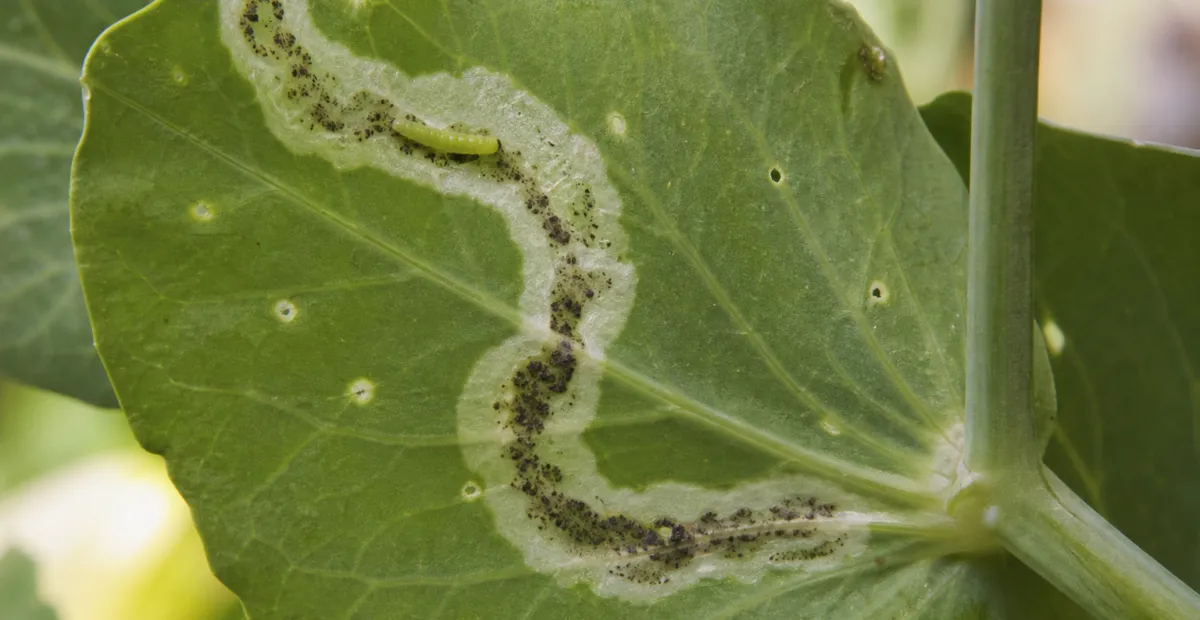
Pea leafminer is a small black-and-yellow fly. The damaging stage is the larva, which feeds between the upper and lower leaf surfaces and forms winding, pale or translucent mines. Adults make small punctures while feeding and ovipositing.
The pest has a broad documented host range, including vegetables, potatoes, beans and ornamental crops. Because several Liriomyza species produce similar mines and adults are difficult to identify reliably by appearance, species confirmation may require specialist examination or molecular testing.
Symptoms and identification
Typical symptoms are irregular, serpentine or branching mines within leaves. Mines are usually off-white to translucent and may contain a dark line of frass. Heavy infestation can merge mines, dry leaves, reduce photosynthesis and cause premature leaf drop.
- Small, uneven white speckles from adult feeding punctures.
- Smaller, rounded oviposition punctures.
- Winding mines that enlarge as larvae feed.
- Reduced market quality in leafy vegetables and ornamentals.
- Wilting or defoliation when young plants or much of the foliage is heavily mined.
Do not identify the species from mine shape alone. Liriomyza trifolii, Liriomyza sativae, Liriomyza langei and other leafminers can look similar.
Causes and spread
Females puncture leaves with the ovipositor and may feed from the resulting wounds. Eggs are inserted into or near the leaf tissue, and larvae begin mining after hatching. The pest spreads locally as adults fly between plants and over longer distances mainly through infested transplants, cut flowers, foliage and other plant material carrying eggs, larvae or pupae.
Weedy hosts and unmanaged crop residue can maintain populations between production cycles. Repeated use of broad-spectrum insecticides can also disrupt parasitoids and select for resistant leafminer populations, allowing outbreaks to increase.
Life cycle and persistence
Adults mate after emergence, and females puncture leaves for feeding and egg laying. Eggs are tiny, oval and pale. The larva passes through three stages while feeding inside the leaf. When mature, it commonly exits the mine and forms a yellowish-, reddish-brown or nearly black puparium, usually in soil or plant debris. Adults then emerge and repeat the cycle.
Development speed varies with temperature, host plant and local population. Warm conditions and continuous host availability can support overlapping generations, while freezing conditions limit outdoor survival in much of the continental United States.
Treatment and control
Begin with scouting and removal of heavily mined leaves. In greenhouse or high-value production, conserve naturally occurring parasitoids and consider a biological-control program before using disruptive insecticides. Treat only when infestation, crop value and expected damage justify intervention.
Contact insecticides often perform poorly against larvae protected inside mines. Where chemical control is necessary, products with activity against leafminers may need to reach larvae through the leaf, and resistance management is important. Always verify that the product is legally authorized for the specific crop and pest in your state, follow the current U.S. label, observe preharvest and reentry intervals, and protect pollinators and natural enemies.
Low-impact and biological control
- Remove and destroy mined leaves before larvae exit and pupate.
- Use insect-exclusion fabric or screened greenhouse production where feasible.
- Conserve parasitoid wasps by minimizing broad-spectrum insecticides and maintaining suitable refuge habitat nearby.
- In protected culture, commercially available parasitoids such as Diglyphus species may suppress Liriomyza larvae when released according to the supplier’s crop-specific guidance.
- Maintain sanitation, remove volunteer hosts and manage weeds that can sustain the pest.
Biological control is most effective when started early and integrated with monitoring; it may not provide adequate suppression during a severe outbreak without sanitation and exclusion.
Prevention
- Buy inspected, pest-free transplants and quarantine new plant material before placing it near established crops.
- Inspect leaves regularly for fresh mines, stippling and adult flies; use yellow sticky cards in greenhouses as a monitoring aid.
- Remove and destroy mined leaves when infestations are light, especially on seedlings and valuable ornamentals.
- Remove crop residue and control susceptible weeds after harvest, while avoiding unnecessary disturbance of beneficial insects.
- Use floating row covers over susceptible outdoor crops during establishment, ensuring that pests are not trapped underneath.
- Screen greenhouse openings and keep doors closed where practical.
- Rotate crops and avoid maintaining overlapping host crops when leafminer pressure is high.
Interesting facts
- The species is also called South American leaf miner, pea leaf miner, potato leaf miner and serpentine leaf miner.
- EPPO reviews have recorded hundreds of host plant species across numerous plant families.
- Liriomyza huidobrensis is difficult to distinguish morphologically from Liriomyza langei; reliable identification may require laboratory methods.
- More than 100 parasitoid species have been reported from this pest globally, making natural-enemy conservation an important IPM principle.
- The name “pea leafminer” does not mean that peas are its only or necessarily most vulnerable host.
Use only pesticide products legally authorized for Liriomyza huidobrensis or leafminers on the specific crop in the United States and your state. Follow the current label exactly, including crop, pest, rate, application interval, worker-protection, reentry and preharvest requirements. Rotate effective modes of action where permitted and avoid routine broad-spectrum applications that destroy parasitoids and promote resistance.
Affected plants
The plants below are linked to this problem by structured host-plant data. The list updates automatically as new plant profiles are added.
 Onion (Allium cepa) care guideAllium cepa
 Allium christophii care guideAllium christophii
 Bunching onion (Allium fistulosum) care guideAllium fistulosum
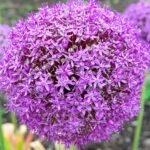 Giant Allium (Allium giganteum) care guideAllium giganteum
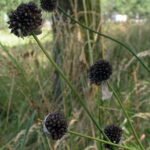 Ornamental onion (Allium) care guideAllium
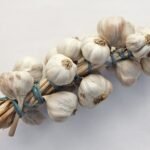 Garlic (Allium sativum) care guideAllium sativum
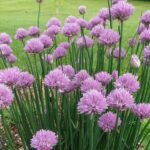 Chives (Allium schoenoprasum) care guideAllium schoenoprasum
 Ransoms (Allium ursinum) care guideAllium ursinum
 Wild leek or broadleaf wild leek (Allium ampeloprasum) care guideAllium ampeloprasum
 Shallot (Allium cepa Aggregatum Group)Allium cepa Aggregatum Group
 Cepa Group (Allium cepa Group)Allium cepa Cepa Group
 Rakkyo (Allium chinense) care guideAllium chinense