Ice damage
Ice damage overview
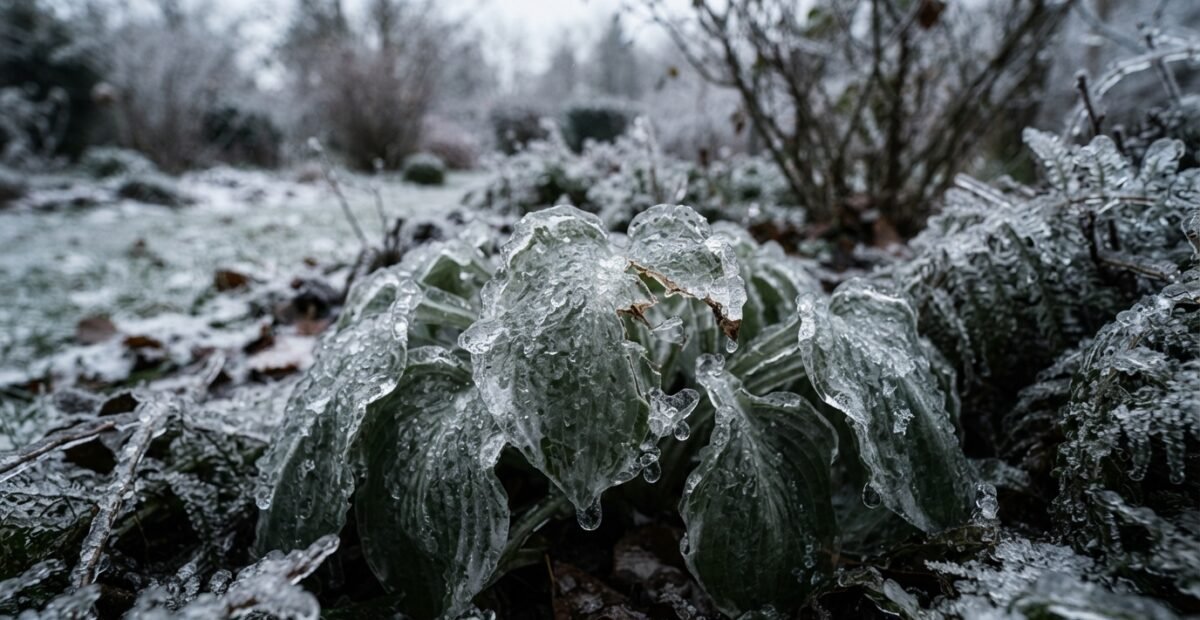
Ice damage is a noninfectious environmental disorder caused mainly by freezing rain that deposits heavy glaze on branches, stems and foliage. The added weight can bend or break limbs, split weak branch unions, tear bark and deform shrubs. Damage varies with species, plant structure, storm duration, wind, prior decay and plant health; exposed wounds may later be colonized by decay fungi or insects.
Typical conditions
Overview
Ice damage, also called ice-storm or glaze damage, occurs when freezing rain coats plant surfaces and adds substantial weight to branches and foliage. Evergreen shrubs and trees may carry more ice because foliage intercepts the glaze, while weakly attached, decayed, narrow-angled or overextended branches are especially vulnerable. The most serious cases involve broken leaders, split branch unions, torn bark, stem failure or uprooting.
Severity is influenced by ice thickness, storm duration, wind, tree architecture, species, canopy position, previous wounds, decay, drought stress and site exposure. Ice damage should be distinguished from winter desiccation, frost injury and deicer salt injury, which may occur at the same time but produce different symptoms.
Symptoms and identification
- Branches bent sharply downward, splayed outward or permanently deformed.
- Broken limbs, snapped leaders, split forks, hanging branches and torn or peeled bark.
- Jagged stubs, longitudinal cracks, exposed sapwood and reduced or asymmetrical crown size.
- Evergreen shrubs such as arborvitae, boxwood, cypress and young rhododendrons may collapse outward or lose their shape.
- Severe injuries may include uprooting, trunk splitting or complete crown loss.
- Delayed symptoms can include dieback, epicormic shoots, reduced vigor and secondary wood decay or insect attack around storm wounds.
Causes and spread
Ice damage is not contagious and does not spread from plant to plant. It is caused by the mechanical load of freezing rain or glaze, often intensified by wet snow, wind and repeated freeze-thaw cycles. The risk is greater on plants with dense evergreen foliage, weakly attached limbs, included bark, multiple leaders, structural defects, decay, previous wounds or drought-related stress. Secondary decay and insects may later colonize exposed wood, but they are consequences rather than the original cause.
Life cycle and persistence
This disorder has no biological lifecycle. It follows a weather event: freezing rain forms ice on branches and foliage; the accumulated load bends, cracks or breaks plant tissues; thawing may reveal hidden splits and torn bark; and surviving plants compartmentalize wounds and regrow lost crown tissue over subsequent seasons. Exposed wood can become an entry point for decay fungi or wood-boring insects, so secondary problems may develop months or years later.
Treatment and control
First assess safety rather than trying to restore the plant immediately. Stay clear of trees contacting power lines and arrange professional utility or arborist assistance. For small trees and shrubs, remove only clearly broken, dangling or crushed tissue with proper pruning cuts to sound wood. Do not seal wounds with paint, wrap split limbs tightly without professional guidance or attempt to straighten a frozen shrub by force.
Large limbs, split trunks, uprooted trees, hanging branches and damage near buildings require evaluation by a qualified arborist. After cleanup, water during prolonged drought when soil is unfrozen, maintain a 2–4 inch mulch layer away from the trunk, and monitor through the growing season for dieback, decay, boring insects or weak regrowth. Severely damaged evergreen shrubs may recover after spring renewal pruning, but replacement can be safer when the crown or root system is extensively destroyed.
Low-impact and biological control
There is no chemical or biological cure for ice injury. Use practical, low-impact care:
- Do not shake, strike or forcibly knock glaze ice from branches. Remove only loose snow when safe, using a broom to brush upward gently rather than pulling limbs downward.
- Keep people away from hanging limbs, split trunks, downed wires and unstable trees. Have hazardous or elevated work handled by a qualified arborist.
- On small accessible branches, use clean, sharp tools to remove ragged breaks back to a sound branch or the branch collar; do not leave long stubs or make flush cuts.
- Disinfect tools when moving between plants if wounds are contaminated with soil or diseased material, and remove severely broken debris from growing areas.
- Maintain mulch, irrigation during extended dry periods and protection from additional mechanical injury so surviving plants can recover.
Prevention
- Select species and cultivars suited to the site and USDA hardiness conditions; avoid highly ice-sensitive forms in exposed locations.
- Establish trees with adequate rooting space and water new plantings deeply during dry autumn periods before the ground freezes.
- Use formative and structural pruning when trees are young to develop strong branch attachments, reduce co-dominant leaders and remove dead or hazardous wood.
- Inspect mature trees periodically for decay, cracks, included bark, weak forks and overextended limbs, especially near homes, driveways and utility lines.
- Before winter storms, loosely tie narrow, flexible shrubs such as arborvitae upright with soft material; do not constrict stems.
- Keep roof-drip zones, plowed snow and compacted wet snow from loading vulnerable shrubs. Mulch the root zone without covering the trunk flare.
Interesting facts
- Ice can increase the effective weight carried by a branch many times, making even healthy-looking limbs fail.
- Snow is often less damaging than glaze ice and can insulate roots; shaking ice-covered plants commonly causes additional breakage.
- Species and individual tree structure strongly influence injury: branch-angle defects, co-dominant leaders and decay increase failure risk.
- Some surviving hardwoods produce epicormic shoots after crown loss, but recovery may be slow and structurally weak.
- Ice-storm wounds can reduce future wood quality and provide infection courts for decay organisms.
No pesticide treats the mechanical injury caused by ice. Use only products legally authorized for the specific crop and problem in the United States, and follow the current product label. Prioritize hazard removal, correct pruning, sanitation, plant health and monitoring for secondary pests or decay.
Affected plants
The plants below are linked to this problem by structured host-plant data. The list updates automatically as new plant profiles are added.