Ascochyta blight of chickpea
Didymella rabieiAscochyta blight of chickpea overview
Didymella rabiei is the sexual-stage name associated with Ascochyta blight of chickpea; the asexual stage is commonly called Ascochyta rabiei. This host-specific fungal disease attacks leaves, stems, petioles and pods, producing tan target-like lesions with black pycnidia. Cool, wet weather, infected seed and chickpea residue can drive rapid spread and serious crop loss.
Typical conditions
Overview
Didymella rabiei is the sexual-stage name for the chickpea Ascochyta blight pathogen; the asexual stage is commonly identified as Ascochyta rabiei. The disease affects all aboveground tissues, including leaves, petioles, stems, pods and developing seed. It can occur from seedling emergence through pod development and is especially damaging when infection reaches the main stem or pods. Because several chickpea diseases produce necrotic spots, confirmation may require close examination of pycnidia and, in difficult cases, laboratory testing.
Symptoms and identification
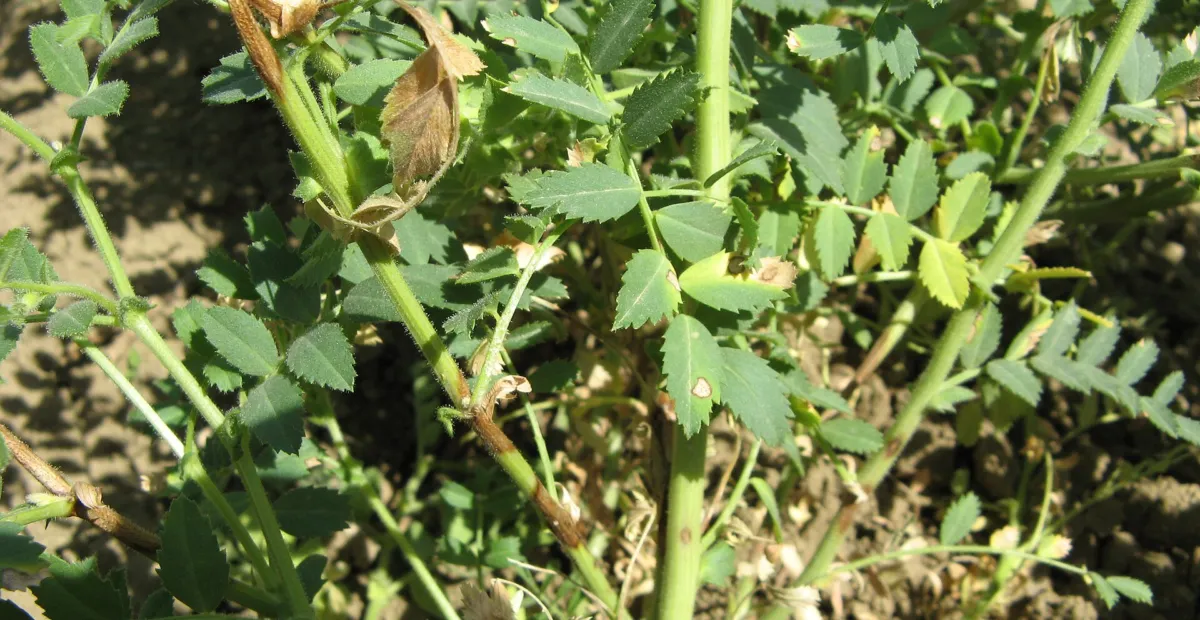
Early lesions may be water-soaked, pale brown flecks or circular to oval spots. As they enlarge, they become tan to brown and often develop a target-like pattern of concentric rings. Tiny, raised black pycnidia commonly form in the lesions, especially during moist weather.
Stem and petiole lesions are elongated or brown and may girdle the tissue, causing wilting, lodging, breakage and plant death. Pod lesions resemble the leaf lesions and may contain concentric pycnidia. Infected developing seed can be discolored, shriveled or reduced in quality and may carry the pathogen into the next planting.
Severe infections can produce rapidly expanding blighted patches, premature defoliation and major yield loss. A laboratory diagnosis is advisable when lesions lack clear pycnidia or when bacterial blight, Alternaria blight, Botrytis or abiotic injury is also present.
Causes and spread
Introduction commonly occurs through infected or contaminated chickpea seed and infested chickpea residue. Within fields, conidia are dispersed primarily by rain splash, irrigation water and movement of wet plant debris. Airborne ascospores produced in residue can contribute to longer-range spread, particularly when infested fields are nearby.
Short rotations, volunteer chickpeas, chickpea planted next to last year's chickpea field, dense canopies, frequent rainfall and prolonged leaf wetness increase epidemic risk. Field operations while foliage is wet can move contaminated debris and spores. The pathogen does not normally persist as a general soilborne inoculum in the same way as many root-rot pathogens.
Life cycle and persistence
The pathogen survives mainly in infected chickpea seed and crop residue rather than as a long-lived soil-resting structure. In residue, the fungus may produce pycnidia containing asexual spores and, when compatible mating types are present, pseudothecia containing airborne sexual spores.
Rain or overhead irrigation splashes conidia from pycnidia onto nearby chickpea tissue. Airborne ascospores from infested stubble can contribute to longer-distance introduction. After infection, new lesions and pycnidia develop rapidly under wet conditions; visible symptoms may appear within several days. The disease then moves outward from initial infections through repeated rain-splash cycles and can spread quickly within a dense canopy.
Treatment and control
Remove and destroy severely diseased plants in small garden plantings when practical, but avoid handling or transporting wet infected material. There is no reliable treatment that restores tissue already killed by the disease. Management aims to protect healthy tissue and prevent secondary spread.
- In commercial crops, consult current university extension recommendations for the region, cultivar susceptibility, crop stage, weather and disease incidence.
- Where permitted and justified, use a labeled seed treatment to suppress seedborne inoculum and protect emerging seedlings.
- Foliar fungicides are generally most useful preventively or at the first confirmed symptoms, with thorough coverage of lower stems and the canopy.
- Follow the current product label and rotate fungicide modes of action; do not rely repeatedly on QoI or strobilurin products because resistant pathogen populations have been reported.
- Do not irrigate overhead during disease-favorable weather, and avoid field work when foliage is wet.
Low-impact and biological control
No broadly established homeowner biological cure should be assumed for an infected crop. Organic and reduced-input management should focus on exclusion and cultural control:
- Plant tested, certified, disease-free seed from a reputable supplier.
- Use chickpea cultivars with the best locally documented resistance or tolerance.
- Rotate out of chickpea for at least three years where practical, using nonhost crops.
- Remove, bury or accelerate decomposition of infected residue according to local soil-conservation guidance; avoid moving contaminated residue between fields.
- Increase airflow with appropriate row spacing and avoid unnecessary overhead irrigation.
- Clean soil and plant debris from equipment before moving from infested fields to clean fields.
Experimental research has investigated antagonistic fungi such as Aureobasidium pullulans and Clonostachys rosea on chickpea residue, but availability, registration and field performance should not be assumed. Use only biological products legally registered for the intended crop and disease.
Prevention
- Start with certified, tested, disease-free seed; avoid saving seed from visibly diseased fields.
- Select moderately resistant or tolerant cultivars suited to the local U.S. production region.
- Maintain a minimum three-year rotation away from chickpea where disease pressure is significant.
- Separate new chickpea plantings from fields that carried chickpea the previous year when possible.
- Manage volunteer chickpeas and infected residue, and clean combines, planters, tillage tools and vehicles before entering clean fields.
- Use row spacing and planting density that support airflow without compromising agronomic performance.
- Scout from early vegetative growth through pod fill, concentrating on lower canopy, stems and field edges adjacent to previous chickpea residue.
- Use regional extension advisories and disease-risk information to time any permitted protective treatment.
Interesting facts
- Didymella rabiei and Ascochyta rabiei are names associated with the sexual and asexual stages of the same chickpea blight pathogen.
- The pathogen is considered host-specific to chickpea; Ascochyta diseases of pea and lentil are caused by different Didymella or related species.
- Pycnidia arranged in concentric rings are among the most useful field clues for recognizing chickpea Ascochyta blight.
- Resistance to QoI or strobilurin fungicides has been documented, making mode-of-action rotation and integrated management important.
Use fungicide seed treatments and foliar fungicides only when the product is legally authorized for chickpea and Ascochyta blight in the United States and in your state. Follow the current label exactly, including crop, disease, rate, timing, preharvest interval, reentry interval and resistance-management requirements. Do not repeat a single fungicide mode of action unnecessarily; QoI or strobilurin resistance has been documented.
Affected plants
The plants below are linked to this problem by structured host-plant data. The list updates automatically as new plant profiles are added.