

Red Stele of Strawberry
Phytophthora fragariaeRed Stele of Strawberry overview
Red stele is a persistent, soilborne root disease of strawberries caused by the oomycete Phytophthora fragariae. It is favored by cool, saturated soil and commonly appears in wet or compacted portions of a planting. Infected roots rot from the tips, develop a red inner core, and may take on a characteristic “rat-tail” appearance, reducing vigor, yield, and berry size.
Typical conditions
Overview
Red stele is primarily a root disease of strawberry. It is often first noticed as irregular patches in low, poorly drained, compacted, or heavy soils rather than as a uniform problem across an entire planting. Symptoms may be mild or absent early in the season, while plants with extensive root loss remain stunted and produce little fruit.
The diagnostic red core is useful but not completely definitive: reddish discoloration can vary with cultivar, root age, temperature, and disease severity, and other root disorders may look similar. Confirm suspicious cases with a plant diagnostic laboratory, especially when a planting is being renovated or replanted.
Symptoms and identification
Aboveground symptoms can include weak growth, short petioles, poor runner development, small berries, bluish-green young leaves, and older leaves that turn yellow, orange, or reddish. Plants may wilt during warm or dry weather even when surrounding soil is wet. Severely affected plants may collapse and die before or during fruiting.
- Young lateral roots are rotted or absent.
- Root tips decay first, producing a “rat-tail” appearance as the main root remains while fine side roots disappear.
- A lengthwise cut through a recently affected root may reveal a red to reddish-brown stele above the rotted tip.
- Symptoms commonly occur in patches or swaths associated with wettest portions of the bed.
- Crown discoloration may occur, but brown crown decay is not specific to P. fragariae and can also be caused by other Phytophthora species.
Causes and spread
Phytophthora fragariae survives in infested soil and produces motile zoospores when soil pores remain saturated. These spores move through water films toward developing strawberry rootlets, infect root tips, and produce additional inoculum in diseased tissue. Cool, wet conditions are especially favorable.
The pathogen can be introduced in infected or contaminated nursery stock, infested soil, mud on tools and equipment, and runoff or drainage water. Water moving downhill can spread inoculum from an infested area to lower parts of a bed. Once established, the pathogen may persist in soil for many years, so simply removing strawberries for one season is not a reliable eradication measure.
Life cycle and persistence
The disease cycle is closely tied to soil moisture and temperature. During cool periods with prolonged saturation, sporangia release zoospores that swim through water-filled soil pores to strawberry roots. Infection begins near root tips, followed by root-tip decay, loss of lateral roots, and progression toward older root tissue and sometimes the crown.
Infected roots and soil retain the pathogen after plants die or are removed. Disease is therefore often most active in late fall, winter, and early spring in temperate US production areas, although timing varies with climate, irrigation, drainage, and planting system. Resistant cultivars may still show limited infection under high disease pressure.
Treatment and control
There is no dependable curative treatment that restores strawberry roots after extensive red stele damage. First verify the diagnosis, because similar aboveground symptoms can result from black root rot, crown rot, nematodes, drought, or other stresses.
For an established planting, correct drainage and irrigation problems, reduce traffic and compaction, and remove plants that have collapsed. In commercial systems, preplant soil treatments may be considered as part of a broader rotation and sanitation plan. In warmer US regions, properly timed soil solarization can reduce soilborne inoculum before replanting, but its effectiveness depends on achieving sufficiently high soil temperatures for an adequate period.
Where suitable resistant cultivars, clean nursery stock, raised beds, and drainage management are combined, disease losses can be reduced substantially. Replanting susceptible strawberries immediately into the same infested soil is likely to result in recurrence.
Low-impact and biological control
Organic and low-input management should center on exclusion and water management: use clean planting material, raised beds, careful drip irrigation, clean tools, runoff control, and removal of badly diseased plants. Soil solarization with clear plastic may reduce inoculum in suitable warm locations before planting, provided the bed is prepared correctly and the soil reaches effective temperatures.
Biological products containing antagonistic microorganisms may be marketed for soilborne disease suppression, but performance against red stele can vary with strain, soil, crop, and application timing. Treat them as supplemental IPM tools rather than replacements for drainage, sanitation, resistant varieties, and clean transplants. Use only products approved for organic production under the applicable US certification program and permitted for the crop and disease.
Prevention
- Plant only inspected, certified, or otherwise reputable disease-free strawberry transplants, and reject plants with suspicious root discoloration or decay.
- Choose a site with good drainage; use raised beds where appropriate and avoid low spots that remain wet.
- Improve soil structure and avoid compaction, particularly when soil is wet.
- Manage irrigation to prevent prolonged saturation, while avoiding drought stress that worsens wilt symptoms.
- Use cultivars with resistance appropriate to the documented local strain or race when reliable recommendations are available. Resistance is not universal across all P. fragariae populations.
- Prevent movement of infested soil by cleaning tools, footwear, equipment, and containers before entering clean beds.
- Control runoff and do not move water from diseased areas through healthy strawberry rows.
- Remove severely affected plants and surrounding contaminated soil carefully; do not compost diseased roots unless the composting system is validated to destroy the pathogen.
Interesting facts
- The name “red stele” refers to the red inner core of an infected strawberry root, not to a red symptom on the leaf.
- “Rat-tail” roots result from the loss of fine lateral roots while portions of the main root remain.
- Symptoms are often patchy because water movement concentrates inoculum in poorly drained areas.
- P. fragariae is an oomycete, or water mold, rather than a true fungus, although older references often call it a fungus.
- Some sources document infection or experimental susceptibility in genera such as Rubus, Potentilla, Geum, and Dryas; these records should not be interpreted as a broad host list for routine garden diagnosis.
- A red root stele supports diagnosis but should be interpreted with root-rot pattern, field distribution, and laboratory confirmation when practical.
Do not apply a pesticide solely from this encyclopedia entry. In the United States, use only products legally registered and currently authorized for strawberries and the specific Phytophthora problem in your state, and follow the current label exactly, including crop, site, rate, timing, personal protective equipment, reentry interval, preharvest interval, resistance-management requirements, and any restrictions protecting water. Product registrations and labels can change; consult your state Extension recommendations and current label before use.
Affected plants
The plants below are linked to this problem by structured host-plant data. The list updates automatically as new plant profiles are added.
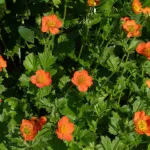 Geum ‘Coccineum’Geum 'Coccineum'
 Yellow Avens (Geum aleppicum) care guideGeum aleppicum
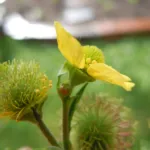 Large-leaf Avens (Geum macrophyllum) care guideGeum macrophyllum
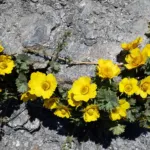 Creeping avens (Geum reptans) care guideGeum reptans
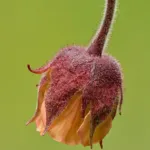 Water Avens (Geum rivale) care guideGeum rivale
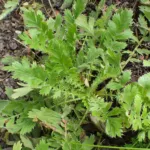 Prairie smoke (Geum triflorum) care guideGeum triflorum
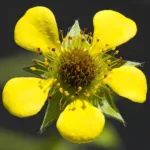 Wood Avens (Geum urbanum) care guideGeum urbanum
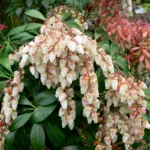 Pieris japonica care guidePieris japonica
 He saw banksia (Banksia serrata) care guideBanksia serrata
 He showy banksia (Banksia speciosa) care guideBanksia speciosa
 Garden Peony (Paeonia officinalis) care guidePaeonia officinalis
 Mezereon (Daphne mezereum) care guideDaphne mezereum