
Mezereon (Daphne mezereum) short overview
Mezereon (Daphne mezereum) is a compact deciduous shrub valued for intensely fragrant purplish-pink flowers that appear on bare stems in early spring, often before the leaves emerge. Rounded red berries follow the blooms, but every part of the plant is toxic if eaten and may irritate skin. Grow it in a sheltered site with sun or partial shade, cool fertile soil, reliable drainage, and minimal disturbance once established.
Taxonomic classification
Mezereon (Daphne mezereum) care guide
Light and placement
Grow in full sun or partial shade, ideally with morning or filtered light and shelter from drying winds. An east- or west-facing border, woodland edge, or lightly shaded path is suitable. Too much hot, reflected afternoon sun can stress the root zone; too little light may produce sparse growth and fewer flowers.
Watering and humidity
Water deeply when the upper few inches of soil begin to dry, keeping moisture reasonably even during establishment and spring growth. Reduce irrigation after autumn leaf fall, but do not allow prolonged drought. Avoid standing water, especially in winter. Mulch around, not against, the stems to keep roots cool.
Soil and growing medium
Use moderately fertile, humus-rich soil that retains even moisture without becoming soggy. Loam or sandy loam is suitable, and the species tolerates acid, neutral, and alkaline conditions, including calcareous soils. Prioritize excellent drainage and a cool root zone; mulch lightly rather than cultivating around the shallow, sensitive root system.
Feeding
Feed lightly in spring after flowering with a balanced, slow-release fertilizer, or top-dress with a thin layer of mature compost. Do not overfertilize: excessive nitrogen produces weak growth and can reduce resilience. Avoid feeding dry or heat-stressed plants until the root zone is evenly moist.
Growth and habit
This slow-growing shrub develops a rounded, bushy framework and may take several years to reach maturity. It is best treated as a permanent planting: repeated transplanting, hard cutting, root disturbance, drought, and waterlogging can all cause decline. Maintain a cool mulched root zone and avoid unnecessary cultivation.
Planting and repotting
Plant in spring while the soil is workable, setting the shrub at the same depth as in its nursery container. Allow about 3–4 feet between plants for air circulation and mature spread. Water thoroughly during establishment, mulch to moderate root temperatures, and choose the permanent site carefully because mature plants resent transplanting.
Avoid long-term container culture where possible. If container growing is necessary, use a deep, sharply draining, humus-rich mix and transplant only when essential, preferably in spring. Handle the root ball carefully because established plants resent disturbance and may decline after being moved.
Propagation and pruning
Propagation
Propagation is difficult. Sow fresh seed in containers in a cold frame as soon as ripe, or try softwood cuttings in early to midsummer and semi-ripe heel cuttings in mid to late summer. Layering may work on low branches but can take years. Commercial plants are often grafted.
Pruning
Prune as little as possible. Remove dead, damaged, or crossing wood after flowering, cutting back to a healthy branch or shoot. Avoid hard rejuvenation cuts because old wood may not reshoot reliably, and pruning can remove next season’s flowering wood.
Overwintering
Fully hardy in much of the northern United States when planted in the ground. Protect young plants from drying winter winds with a sheltered location and maintain a light mulch over the root zone. Do not bring established specimens indoors; they require a normal outdoor dormant period.
Uses
Used primarily as a specimen or border shrub for intensely fragrant early-season flowers and as an accent in woodland-style plantings. Its compact habit suits sheltered small gardens, but it is not appropriate for edible, medicinal, or child- and pet-accessible landscapes because berries and other tissues are poisonous.
Appearance
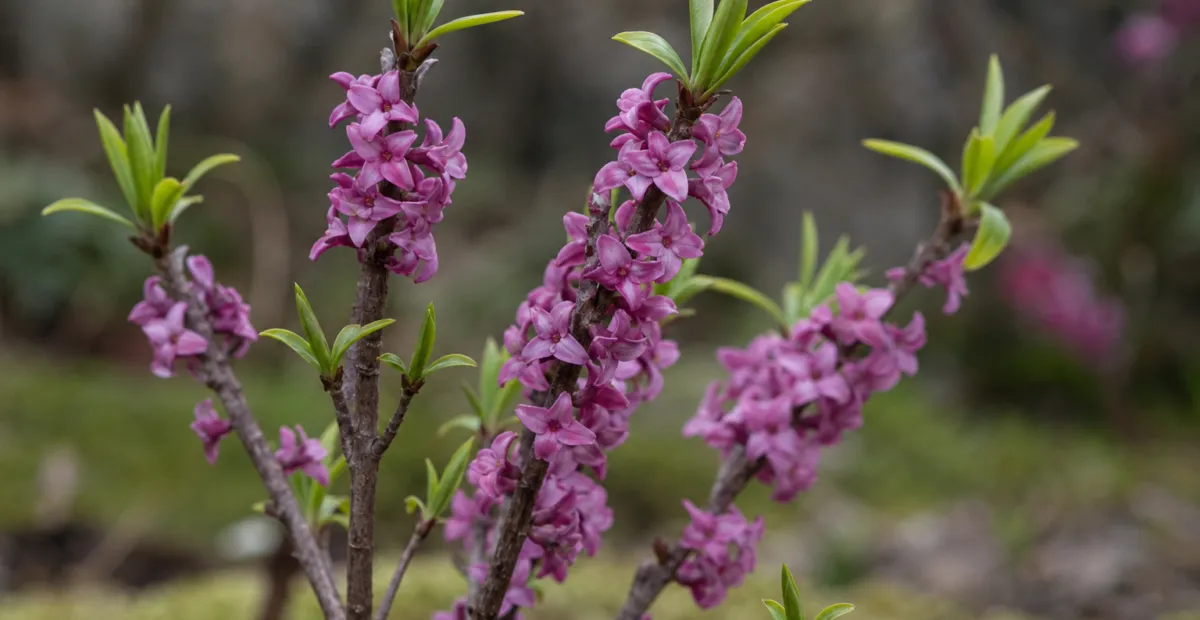
The shrub has slender gray-brown stems, a rounded bushy outline, and dull gray-green oblanceolate leaves up to about 3.5 inches long. Flowers are borne directly in close clusters along older stems, often before foliage appears. Later, conspicuous rounded red berries contrast with the sparse summer foliage.
Flowering
Clusters of four-lobed, petal-like sepals form closely along the previous season’s bare stems, commonly before or as the new leaves open. Blooms are strongly fragrant and are followed by rounded red berries. Flowering is typically concentrated in late winter and early spring, with timing varying by local climate and elevation.
Pollination and visitors
The flowers are insect-pollinated and have been documented receiving visits from bumblebees; insect-mediated pollination produces substantially greater fruit set than bagged spontaneous self-pollination in field research. Visitor activity is concentrated during the early flowering period.
Daphne mezereum photos
Click any photo for a larger view. Source, author and license are shown separately.
Diseases and pests
Diseases
Watch for phytophthora root rot, fungal leaf spot, honey fungus, and virus diseases. Prevent problems with well-drained soil, careful watering, clean tools, and good air circulation. Remove badly diseased material; avoid chronic saturation and unnecessary wounding.
Pests
Aphids may cluster on young shoots and foliage. Inspect new growth regularly and use a strong water spray or a labeled low-impact treatment if needed. Avoid excessive nitrogen, which encourages soft growth. Wear gloves during all handling because the plant is toxic and sap may irritate skin.
Toxicity and pollen
All parts are poisonous if eaten, with the fruits and bark especially hazardous. Sap may irritate skin, so wear gloves when pruning or handling damaged material. Do not use the berries or plant tissues medicinally. Remove fallen fruit where children or animals could access it and seek urgent medical or veterinary advice after ingestion.
- Typical season
- Late winter to early spring
- Pollination / pollen
- Insect-dispersed pollen
Daphne mezereum is insect-pollinated, so its pollen is generally not released in large quantities for wind transport. However, reliable species-specific clinical allergy data are scarce, so a zero-allergy claim is not justified. People with plant sensitivities should avoid direct contact with sap, flowers, and pollen.
Native habitat
Native across much of Europe and into western Asia, where it occurs in temperate woodland, woodland margins, scrub, and often calcareous soils. It favors climates with cold winters, cool roots, and dependable but well-drained moisture. In the United States it is grown as an ornamental rather than treated as a native species.
Interesting fact
Flowers emerge directly from older leafless stems, an unusual feature called cauliflory-like flowering on woody shoots. The showy flower parts are actually four petal-like sepals; true petals are absent. Rounded red berries develop after flowering, while the entire plant remains toxic. It is one of the earliest shrubs to bloom in many temperate regions.
Frequently asked questions (FAQ)
The most relevant questions about this plant, with short and direct answers.
🌱Quick care
What is Mezereon (Daphne mezereum)?⌄
Mezereon is a small deciduous shrub in the Daphne genus and Thymelaeaceae family. It is valued for intensely fragrant pink, purple, or white flowers that appear on bare stems in late winter or early spring.
How large does Mezereon get?⌄
Mezereon typically grows about 3 to 5 feet tall and wide. Its upright, bushy form makes it suitable for woodland borders, shrub beds, and sheltered garden locations.
🌤️Environment and placement
What USDA hardiness zones are suitable for Daphne mezereum?⌄
Daphne mezereum is generally hardy in USDA Zones 4 through 7, with some references reporting tolerance to about -5°F. Performance may decline in hot, humid summer climates, especially in the Deep South.
Does Mezereon grow in full sun or shade?⌄
Mezereon grows in full sun to partial shade, but light shade is often preferable in areas with hot summers. If grown in full sun, keep the soil evenly moist and protect the roots from overheating.
Is Mezereon invasive in the United States?⌄
Mezereon has naturalized in some parts of North America, including portions of the northeastern United States and other regions, but its status is not identical everywhere. Check your state’s invasive-plant or extension resources before planting near natural areas.
💧Care and problems
How often should I water Daphne mezereum?⌄
Water Mezereon regularly enough to maintain moderate, even moisture, particularly during establishment and summer drought. Do not leave it in saturated soil, because poor drainage can contribute to root and crown problems.
How do I keep Mezereon roots cool?⌄
Apply a layer of organic mulch around the root zone while keeping the mulch away from the stems. Mulching helps conserve moisture and moderate soil temperatures, which is especially useful in warm climates.
Is Mezereon difficult to grow?⌄
Mezereon is manageable when planted in the right location but can be unforgiving of poor drainage, root disturbance, drought, heat, and excessive pruning. Establishing it correctly is more important than intensive routine maintenance.
Why are the leaves of my Mezereon turning brown?⌄
Brown leaves may indicate drought, hot sun, salt stress, root damage, or root disease caused by excessive moisture. Check soil moisture and drainage first, then protect the plant from intense afternoon heat if summers are hot.
What pests and diseases affect Daphne mezereum?⌄
Mezereon may be affected by aphids, scale insects, fungal leaf spots, viruses, and Phytophthora root or crown rot. Good drainage, moderate watering, and avoiding unnecessary pruning help reduce stress-related problems.
🪴Planting and repotting
What soil does Mezereon need?⌄
Plant Mezereon in humus-rich, well-drained loam or sandy loam that stays moderately moist without becoming waterlogged. It can tolerate somewhat heavy or alkaline soil if drainage and organic matter are adequate.
When should I plant Mezereon?⌄
Spring is generally the safest time to plant Mezereon in the United States, allowing roots to establish before summer or winter stress. Choose the permanent site carefully because established plants strongly resent being moved.
Can Daphne mezereum be grown in a container?⌄
Mezereon is usually a poor long-term container plant because Daphne species develop deep, sensitive roots. A large, well-drained container may work temporarily, but in-ground planting is generally more reliable.
How should I plant Mezereon?⌄
Plant Mezereon at the same depth it was growing in its nursery container, using a wide planting hole and well-drained soil. Water it thoroughly after planting and avoid disturbing the root ball.
Can I transplant an established Mezereon?⌄
You should avoid transplanting established Mezereon whenever possible because root disturbance can cause severe decline or sudden death. If relocation is unavoidable, move a young plant during cool weather with the largest intact root ball possible.
✂️Propagation and pruning
Should I prune Daphne mezereum?⌄
Prune Mezereon as little as possible, removing only dead, damaged, diseased, or badly misplaced growth. Hard pruning can weaken the shrub and may reduce the following season’s flowers.
When is the best time to prune Mezereon?⌄
If pruning is necessary, do it soon after flowering so the plant has time to produce new growth before the next bloom season. Wear gloves and avoid unnecessary contact with the sap.
How can I propagate Mezereon from seed?⌄
Sow fresh Mezereon seed in containers as soon as the fruit is ripe, then provide a cold, protected period to help overcome dormancy. Germination can be slow and variable, so seed propagation requires patience.
Can Daphne mezereum be propagated from cuttings?⌄
Yes, Mezereon can be propagated from softwood cuttings in early to midsummer or semi-ripe heel cuttings in mid to late summer. Rooting may be inconsistent, so careful moisture control and a well-drained medium are important.
⚠️Toxicity and safety
Is Mezereon poisonous to humans?⌄
Yes, all parts of Mezereon are highly toxic if eaten, with the berries, bark, and sap posing particular risks. Keep children and pets away from the plant and seek immediate poison-control or medical advice after ingestion.
Can Mezereon sap irritate skin?⌄
Yes, Mezereon sap can irritate skin and may cause redness, swelling, blistering, or more severe reactions. Wear gloves and protective clothing when pruning, handling, or removing the plant, and wash exposed skin promptly.
Are Mezereon berries poisonous to dogs and cats?⌄
Mezereon berries and other plant parts should be treated as poisonous to dogs and cats. Prevent pets from chewing the shrub, and contact a veterinarian or an animal poison service immediately if ingestion is suspected.
Should I remove Mezereon berries from the plant?⌄
Removing the berries can reduce the chance of accidental ingestion, especially in gardens used by children or pets. Wear gloves, avoid touching your face, and dispose of the fruit securely rather than composting it where animals can access it.
Can birds eat Mezereon berries safely?⌄
Some wild birds may consume and disperse Mezereon berries, but this does not make the plant safe for people or pets. Avoid deliberately attracting wildlife to the shrub if children or animals could reach fallen fruit.
🌸Flowering and special interest
Why is my Mezereon not flowering?⌄
Poor flowering can result from excessive shade, drought, heat stress, transplant shock, or heavy pruning that removed flowering wood. Established plants usually flower best in a sheltered site with adequate light and consistent soil moisture.
When does Mezereon bloom?⌄
Mezereon commonly blooms from late winter through early spring, often from February into April depending on climate. The fragrant flowers usually open before or as the new leaves emerge.
Are Mezereon flowers fragrant?⌄
Yes, Mezereon flowers are strongly fragrant and can perfume the garden despite their small size. Their scent is most noticeable when the shrub is planted where air movement and foot traffic carry the fragrance.
What do Mezereon berries look like?⌄
Mezereon produces small, clustered drupes that commonly ripen red in early summer, although yellow-fruited forms also occur. The berries develop close to the stems after flowering and are especially hazardous because they are attractive and highly poisonous.