
Phytophthora Root and Stem Rot of Soybean
Phytophthora sojaePhytophthora Root and Stem Rot of Soybean overview
Phytophthora root and stem rot is a serious soybean disease caused by the soilborne oomycete Phytophthora sojae. It can destroy seedlings before emergence or cause yellowing, wilting, root decay, and dark-brown lower-stem lesions later in the season. Saturated, poorly drained soils drive infection. In U.S. production, the most dependable program combines field drainage, resistant or partially resistant cultivars, sanitation, and correctly labeled seed protection.
Typical conditions
Overview
Phytophthora root and stem rot is caused by Phytophthora sojae, a soilborne oomycete rather than a true fungus. The pathogen primarily attacks soybean and can infect seeds, seedlings, roots, and lower stems. It is especially damaging in low field areas, heavy clay soils, compacted zones, and fields that remain saturated after rain or irrigation.
Identification should consider the field pattern and the complete symptom set. Pythium, Fusarium, Rhizoctonia, stem canker, flooding injury, and herbicide injury can produce overlapping symptoms. Laboratory diagnosis and cultivar-resistance information are useful when management decisions are important.
Symptoms and identification
Before emergence, infected seeds may rot and seedlings may die underground, producing skips or thin stands. Post-emergence seedlings can show water-soaked or soft stem and root tissue, rapid yellowing, wilting, collapse, and death.
Older plants commonly develop dark-brown to chocolate-brown root rot and a dark lesion on the lower stem that begins at or below the soil line and may extend several inches upward. The taproot and lateral roots may be extensively decayed. Leaves can become pale or chlorotic, wilt, and remain attached after the plant dies. In partially resistant or tolerant cultivars, plants may be stunted and yield may be reduced even when obvious aboveground symptoms are limited.
Symptoms often occur in patches, low spots, compacted wheel tracks, or sections of rows following prolonged wet conditions.
Causes and spread
Infection is driven primarily by saturated soil. Heavy rainfall, irrigation, flooding, compacted headlands, clay texture, poor tile or surface drainage, and low-lying field positions create the water films needed for zoospore movement. Early planting into cold, wet soil can increase seedling risk.
Inoculum is moved with infested soil, crop debris, flowing or standing water, and dirty tillage, planting, or harvest equipment. Repeated soybean production can maintain high pathogen populations, although rotation alone may not eliminate long-lived oospores.
Life cycle and persistence
Phytophthora sojae survives for years in soil and infected residue as thick-walled oospores. When soil becomes sufficiently wet, oospores can germinate directly or produce sporangia. Under saturated conditions, sporangia release motile zoospores that move through soil water toward soybean roots, encyst, germinate, and penetrate root tissue.
The pathogen colonizes roots and may progress into the lower stem, restricting water movement and causing wilt. New oospores form in infected tissues as they deteriorate and return to the soil. Water movement, contaminated soil, crop residue, equipment, and field operations can redistribute inoculum within or between areas. Soybean is the only reliably documented crop host for P. sojae; other Phytophthora species found on soybean should not automatically be attributed to this pathogen.
Treatment and control
Plants with advanced root decay, severe lower-stem lesions, and wilt generally cannot be recovered. Mark affected field zones and diagnose representative plants, including roots and the lower stem, before changing the management program.
For future plantings, use a cultivar with effective major-gene resistance when confirmed to match the local pathogen population, or select strong partial resistance where races are diverse or Rps resistance has failed. A properly labeled seed treatment containing an active ingredient effective against P. sojae can reduce seedling infection and damping-off, particularly when wet conditions occur soon after planting, but protection is preventive and variable. Drainage and resistance should remain the foundation of control.
Low-impact and biological control
No universally reliable organic treatment eradicates established P. sojae from infested soil. Prioritize nonchemical disease suppression: improve surface and subsurface drainage, correct compaction where practical, avoid working wet soil, use locally adapted soybean cultivars with strong partial resistance, and prevent movement of contaminated soil on equipment.
Use clean, high-quality seed and remove or manage volunteer soybean plants. Biological seed treatments or microbial products may be considered only when they are legally registered for the intended use and supported by local university or extension evidence; performance can vary substantially with pathogen pressure, soil moisture, temperature, and formulation.
Prevention
- Select soybean varieties with an Rps gene suited to the documented local pathogen population, together with strong partial or field resistance where available.
- Improve surface drainage and maintain functional tile drainage; eliminate or reduce persistent ponding where feasible.
- Reduce compaction and avoid planting or tilling when soil is excessively wet.
- Use high-quality, treated seed when disease history and wet planting conditions justify it.
- Keep equipment reasonably free of wet soil before moving from infested low spots to clean fields.
- Scout after heavy rainfall and record patches, cultivar response, soil type, and drainage history for future variety selection.
- Use crop rotation as part of an integrated program, while recognizing that long-lived oospores mean rotation is not a stand-alone cure.
Interesting facts
- Phytophthora sojae is an oomycete, so calling it a soilborne fungus is common in older agricultural references but technically imprecise.
- The pathogen’s swimming zoospores require free water or saturated soil to move to soybean roots.
- Major resistance genes, called Rps genes, are race-specific; pathogen populations can overcome genes that were previously effective.
- Partial or field resistance can reduce disease severity but may not prevent early infection under severe wet conditions.
- Root damage can remain economically important even when plants survive and show few foliar symptoms.
Use only fungicide or oomycete-control products legally authorized in the United States for soybean and the stated disease or use pattern. Follow the current product label exactly, including crop, rate, timing, personal protective equipment, rotational restrictions, and application requirements. Seed treatments are preventive and do not restore plants already affected by advanced root and stem rot.
Affected plants
The plants below are linked to this problem by structured host-plant data. The list updates automatically as new plant profiles are added.
 Pieris japonica care guidePieris japonica
 He saw banksia (Banksia serrata) care guideBanksia serrata
 He showy banksia (Banksia speciosa) care guideBanksia speciosa
 Garden Peony (Paeonia officinalis) care guidePaeonia officinalis
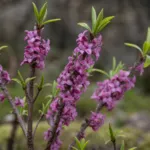 Mezereon (Daphne mezereum) care guideDaphne mezereum
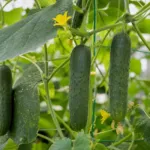 Cucumber (Cucumis sativus) care guideCucumis sativus
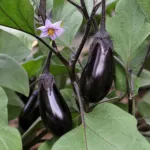 Eggplant (Solanum melongena) care guideSolanum melongena
 Dahlia ‘Thomas Edison’Dahlia 'Thomas Edison'
 Shasta Daisy (Leucanthemum superbum) care guideLeucanthemum superbum
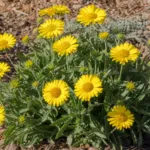 Mesa Yellow (Gaillardia aristata ‘Mesa Yellow’)Gaillardia aristata 'Mesa Yellow'