 Source:
 Dahlia ‘Thomas Edison’ short overview
Dahlia 'Thomas Edison' is a historic American dahlia introduced in 1929, valued for its enormous, richly colored purple flowers and upright, vigorous growth. The fully double blooms have an informal decorative form and make a dramatic late-summer display in beds and cutting gardens. Give it full sun, fertile soil, steady moisture, and support, then protect or lift the tender tubers where winter temperatures are severe.
Taxonomic classification
Dahlia ‘Thomas Edison’ care guide
Light and placement
Choose an open site with at least 6–8 hours of direct sun, preferably with morning and afternoon exposure and protection from strong prevailing winds. Insufficient light produces lankier stems and fewer flowers; intense reflected heat can scorch foliage or increase moisture stress. In hot climates, light afternoon shade may reduce heat stress, but too much shade weakens flowering.
Watering and humidity
Water deeply and consistently once growth is established, keeping the root zone evenly moist but never waterlogged. Check containers and sandy beds more often during hot weather. Water at the soil line in the morning when possible. Reduce watering after frost kills the foliage and while stored tubers are dormant.
Soil and growing medium
Use fertile, moisture-retentive but sharply draining soil amended with compost. A loam rich in organic matter is ideal. Avoid standing water, which encourages tuber rot. A slightly acidic to neutral reaction, approximately pH 6.1–7.5, is suitable; soil-test before making major pH changes.
Feeding
Work compost into the bed before planting, then feed after active growth begins with a balanced or relatively low-nitrogen fertilizer. Excess nitrogen can produce lush foliage with weaker flowering. Fertilize according to the product label and stop heavy feeding as the plant approaches dormancy or late-season frost.
Growth and habit
Plants form upright, branching clumps from swollen tuberous roots and grow rapidly once nights are warm. Their heavy flowerheads can catch wind and pull stems outward, so early staking or a support grid is useful. Regular cutting and deadheading help maintain a tidier, more productive plant.
Planting and repotting
Plant outdoors in spring after the danger of hard frost has passed and the soil has warmed. Set the tuberous root about 2–3 inches deep, with the growing eye just beneath or near the soil surface. Water once after planting, then increase watering as shoots and foliage develop. Install support early.
Container-grown plants can be shifted into a larger pot when roots fill the container or growth becomes crowded. Handle the tuberous root system carefully, use fresh well-drained mix, and keep the crown near the surface rather than burying the stem deeply.
Propagation and pruning
Propagation
Propagate named plants by dividing healthy tuberous roots so each division includes a viable eye. Basal or herbaceous cuttings can also be rooted from actively growing shoots. Seed does not reliably reproduce the named cultivar.
Pruning
Pinch the growing tip when plants are about 12 inches tall to encourage branching. Remove spent flowerheads promptly, and cut flowers regularly for display. At season's end, cut stems back after frost blackens the foliage before lifting or mulching the tubers.
Overwintering
Dahlias are frost tender. In zones colder than roughly 7, dig the tubers after frost blackens the foliage, let them cure briefly, and store them in a cool, dry, frost-free place around 35–45°F in a breathable medium. In milder zones, deep mulch may work, but wet winter soil can still cause rot.
Uses
Best used as a bold bedding, border, container, or cutting-garden plant. The large purple flowers are suitable for bouquets, though vase life depends on harvest stage and conditioning. It is ornamental rather than a recommended edible plant; keep foliage and tubers away from children and pets.
Appearance
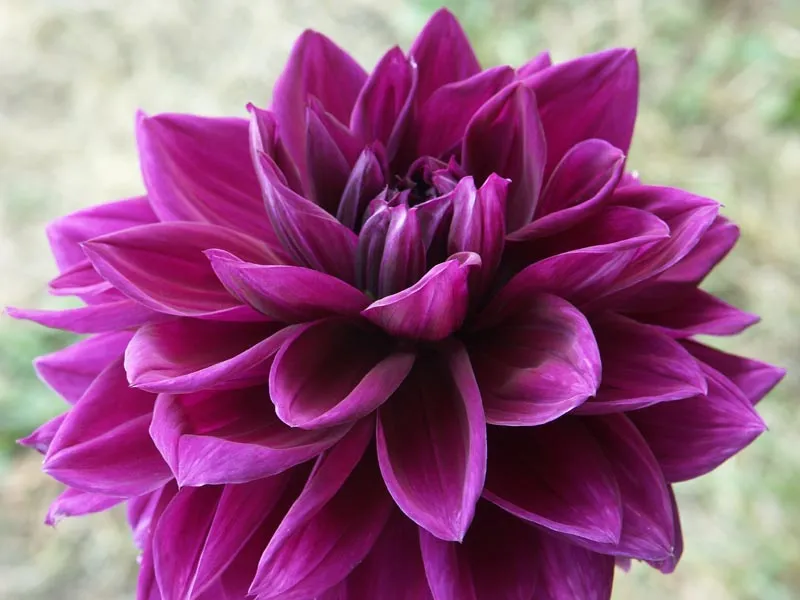
The plant has succulent, herbaceous stems, opposite divided leaves, and a dense upright form. Leaves range from simple near the upper growth to more compound lower leaves, with toothed or lobed margins. Dark stems may contrast with the green foliage. The defining feature is the huge, layered purple flowerhead.
Flowering
This cultivar produces very large, fully double flowerheads in an informal decorative form. In the United States, flowering generally begins in late July or August and can continue into October until stopped by a hard frost. Removing spent blooms and harvesting flowers encourages additional flowering.
Pollination and visitors
Flowers may be visited by bees, bumblebees, butterflies, and hoverflies. Because the cultivar is fully double, its reproductive structures are less exposed than in single dahlias, so visitor access and attraction may be reduced compared with simpler flower forms.
Diseases and pests
Diseases
Prevent problems by providing sun, good air circulation, and well-drained soil. Watch for powdery mildew, botrytis, wilt diseases, crown gall, viruses, phytophthora blight, and root rot. Remove diseased material, avoid overhead irrigation, disinfect cutting tools, and do not replant damaged tubers.
Pests
Inspect new growth for aphids, thrips, leafhoppers, caterpillars, and slugs. Use hand removal, targeted water sprays, barriers for slugs, and conservation-minded insect control. Remove heavily infested foliage and avoid broad-spectrum sprays when flowers are attracting visitors.
Toxicity and pollen
Dahlias are listed as low-severity poisonous plants for humans, with foliage associated with mild gastrointestinal symptoms if eaten in quantity and possible contact or phototoxic dermatitis. ASPCA lists dahlias as toxic to dogs and cats, generally causing mild gastrointestinal signs and mild dermatitis. Prevent ingestion and wear gloves if skin irritation occurs.
- Typical season
- Late summer through fall during flowering
- Pollination / pollen
- Insect-dispersed pollen, not typically windborne
Dahlia pollen is primarily presented within the flower and moved by visiting insects rather than released as a prominent airborne cloud. The fully double flower form may further limit exposure, but sensitive people should still avoid assuming zero allergy risk around cut or garden flowers.
Native habitat
The named cultivar does not occur naturally in the wild. It belongs to a cultivated hybrid group derived from dahlias native mainly to Mexico, Central America, and northern South America. Garden dahlias prefer warm, fertile, well-drained soils and a long frost-free growing season.
Interesting fact
Introduced in 1929, 'Thomas Edison' is a long-established heirloom cultivar. Its flowers are commonly described as 8–10 inches across. Historical descriptions emphasize very dark purple color, free flowering, and strong stems. The name is also encountered as 'Thomas A. Edison' in horticultural records.
Frequently asked questions (FAQ)
The most relevant questions about this plant, with short and direct answers.
🌱Quick care
What is Dahlia 'Thomas Edison'?⌄
Dahlia 'Thomas Edison' is a frost-tender, formal decorative dahlia known for large, fully double, deep purple flowers. It is commonly grown from tubers and can reach about 3½–4 feet tall in good conditions.
How much sun does Dahlia 'Thomas Edison' need?⌄
Give Dahlia 'Thomas Edison' full sun, ideally at least 6–8 hours of direct light daily. In very hot climates, some afternoon protection can help reduce heat stress, but too much shade usually weakens stems and flowering.
How often should I water Dahlia 'Thomas Edison'?⌄
Water Dahlia 'Thomas Edison' regularly to keep the soil evenly moist but never waterlogged. Water deeply when the surface begins to dry, increasing frequency during hot, dry weather and reducing it in cool or rainy conditions.
Is Dahlia 'Thomas Edison' an annual or perennial?⌄
Dahlia 'Thomas Edison' is a tender perennial in warm climates but is usually grown as an annual in areas with freezing winters. Its tubers can be lifted and stored indoors for replanting the following spring.
🌤️Environment and placement
What USDA hardiness zones can grow Dahlia 'Thomas Edison' outdoors?⌄
Dahlia 'Thomas Edison' can remain in the ground year-round only where winters are mild and frost-free. In most colder parts of the United States, gardeners lift the tubers after frost and store them indoors.
Can Dahlia 'Thomas Edison' grow in a container?⌄
Yes, Dahlia 'Thomas Edison' can grow in a large container with fertile, well-drained potting mix and drainage holes. Use a container that gives the tuberous roots room to develop and provide support as the plant grows tall.
Where should I plant Dahlia 'Thomas Edison' in my garden?⌄
Plant Dahlia 'Thomas Edison' in a sunny, sheltered location with fertile, well-drained soil. Avoid exposed, windy sites because its tall stems and large blooms may bend or break.
What soil is best for Dahlia 'Thomas Edison'?⌄
The best soil for Dahlia 'Thomas Edison' is fertile, well-drained loam enriched with organic matter. Heavy or poorly drained soil increases the risk of tuber rot, while very sandy soil may require more frequent watering and feeding.
💧Care and problems
Does Dahlia 'Thomas Edison' need staking?⌄
Yes, staking is recommended for Dahlia 'Thomas Edison' because the plant can grow about 3½–4 feet tall and carries large flowers. Install a stake or support system at planting time to avoid damaging the tubers later.
Should I pinch Dahlia 'Thomas Edison'?⌄
Pinch Dahlia 'Thomas Edison' when the plant is roughly 12–18 inches tall to encourage branching and more flower stems. Do not pinch plants that are still weak, recently transplanted, or suffering from cold or drought stress.
How do I deadhead Dahlia 'Thomas Edison'?⌄
Remove spent flowers from Dahlia 'Thomas Edison' by cutting the stem back to a pair of healthy leaves or a branching point. Regular deadheading directs energy into new buds and helps extend flowering.
Why is my Dahlia 'Thomas Edison' not blooming?⌄
Dahlia 'Thomas Edison' may fail to bloom because of insufficient sunlight, excessive nitrogen, drought, cold soil, or tubers planted too early. Provide full sun, even moisture, warm conditions, and balanced fertility rather than heavy nitrogen feeding.
How can I keep Dahlia 'Thomas Edison' stems from flopping?⌄
Keep Dahlia 'Thomas Edison' upright by staking early, pinching the growing tip, and avoiding excessive nitrogen. Wind, rain, heavy blooms, and low light can all contribute to weak or leaning stems.
What pests commonly affect Dahlia 'Thomas Edison'?⌄
Common dahlia pests that may affect Dahlia 'Thomas Edison' include aphids, thrips, earwigs, slugs, snails, and spider mites. Inspect new growth and flower buds regularly, and use the least-toxic control appropriate for the pest and situation.
How do I prevent tuber rot in Dahlia 'Thomas Edison'?⌄
Prevent tuber rot by planting Dahlia 'Thomas Edison' in well-drained soil and avoiding constant saturation. During winter storage, keep tubers cool and dry enough to prevent decay while maintaining slight humidity so they do not shrivel excessively.
🪴Planting and repotting
When should I plant Dahlia 'Thomas Edison' tubers?⌄
Plant Dahlia 'Thomas Edison' tubers in spring after the danger of hard frost has passed and the soil has warmed. In much of the United States, this is typically several weeks after the average last frost, depending on local conditions.
How deep should I plant Dahlia 'Thomas Edison' tubers?⌄
Plant Dahlia 'Thomas Edison' tubers about 4–6 inches deep, with the growing eye facing upward, then cover them with soil. In cool, wet conditions, begin with less soil and add more as shoots emerge to reduce the risk of rot.
How far apart should I plant Dahlia 'Thomas Edison'?⌄
Space Dahlia 'Thomas Edison' plants about 18–24 inches apart, allowing additional room if you want especially large plants or easier access for staking and cutting. Good spacing improves airflow and helps reduce disease pressure.
Can I plant Dahlia 'Thomas Edison' before the last frost?⌄
You can start Dahlia 'Thomas Edison' indoors before the last frost, but do not plant it outdoors while the soil is cold and frost remains likely. Move hardened plants outside only after freezing weather has passed.
✂️Propagation and pruning
How do I propagate Dahlia 'Thomas Edison'?⌄
Propagate Dahlia 'Thomas Edison' mainly by dividing mature tuber clumps so that each division has a viable eye. Stem cuttings can also produce clones, while seeds will not reliably reproduce the named cultivar.
When should I divide Dahlia 'Thomas Edison' tubers?⌄
Divide Dahlia 'Thomas Edison' tubers in late winter or early spring, just before planting, when the eyes are visible. Each division needs at least one healthy eye and a section of firm tuber attached.
When should I lift Dahlia 'Thomas Edison' tubers for winter?⌄
Lift Dahlia 'Thomas Edison' tubers after the first killing frost blackens the foliage, or before a forecast of hard freezing weather. Cut back the stems, dig carefully to avoid injury, and allow the clumps to dry before storage.
How should I store Dahlia 'Thomas Edison' tubers over winter?⌄
Store Dahlia 'Thomas Edison' tubers in a cool, dark, frost-free place, typically around 40–50°F, packed in a breathable medium such as vermiculite, peat, or wood shavings. Check them periodically and remove any soft, rotting sections.
⚠️Toxicity and safety
Is Dahlia 'Thomas Edison' toxic to dogs and cats?⌄
Dahlia 'Thomas Edison' should be treated as toxic to dogs and cats if eaten, although reactions are generally considered low severity. Keep tubers and plant material away from pets, and contact a veterinarian or pet poison service if ingestion causes symptoms.
Is Dahlia 'Thomas Edison' poisonous to people?⌄
Dahlia 'Thomas Edison' has low reported toxicity to humans, but eating the plant may still cause stomach upset or irritation. Keep tubers and foliage away from young children and do not use the plant as an edible garnish.
🌸Flowering and special interest
What color are Dahlia 'Thomas Edison' flowers?⌄
Dahlia 'Thomas Edison' produces large, deep purple to very dark purple flowers, with the color often appearing darker toward the center. Shade, temperature, and growing conditions can influence the exact intensity.
How large are Dahlia 'Thomas Edison' flowers?⌄
Dahlia 'Thomas Edison' is generally described as a large or dinner-plate-type dahlia, with flowers commonly about 8–10 inches across under favorable conditions. Individual blooms may be smaller when the plant is stressed or heavily flowered.
When does Dahlia 'Thomas Edison' bloom?⌄
Dahlia 'Thomas Edison' generally begins blooming in summer and continues into fall until stopped by frost. The exact start date depends on planting time, local climate, sunlight, and how quickly the tubers establish.
Is Dahlia 'Thomas Edison' good for cut flowers?⌄
Dahlia 'Thomas Edison' can be used for bouquets because of its large, fully double purple blooms and generally sturdy stems. Its vase performance may vary, so cut flowers when they are fully open but still fresh and hydrate them promptly.
Does cutting flowers encourage Dahlia 'Thomas Edison' to bloom more?⌄
Yes, cutting flowers regularly can encourage Dahlia 'Thomas Edison' to produce more blooms. Remove the entire usable stem rather than only the flower head, and continue deadheading flowers left on the plant.