 Source:
 Dahlia ‘Akita’ short overview
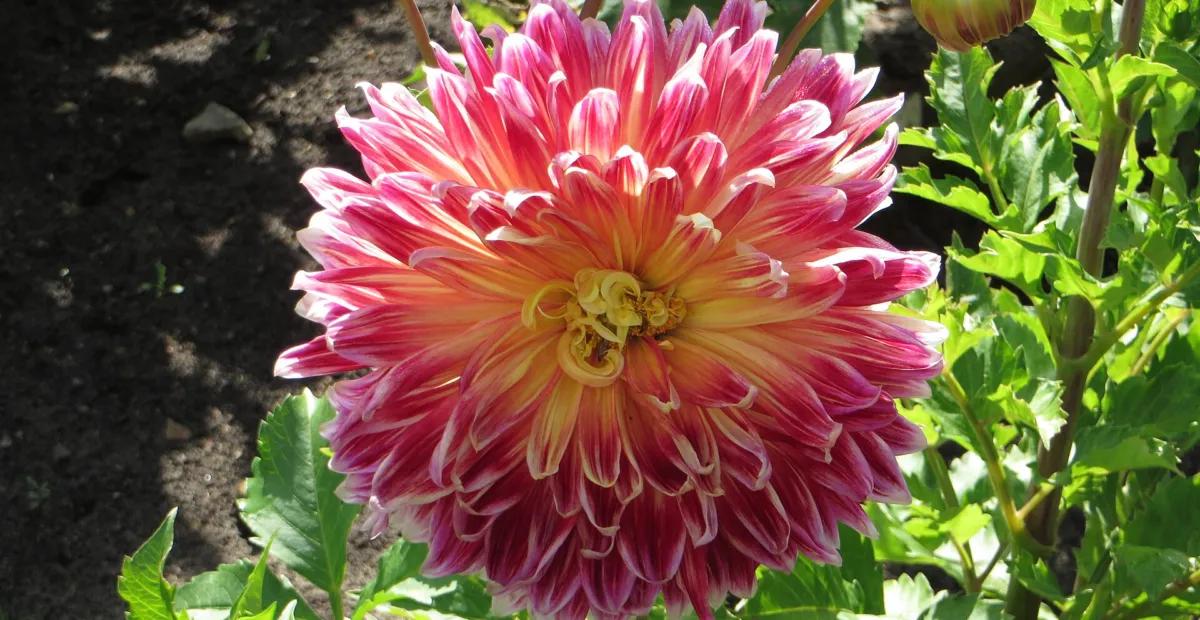
Dahlia 'Akita' is a dramatic, fully double dahlia with large chrysanthemum-like blooms whose narrow, incurved petals blend from yellow through red to deep crimson. The branching plants reach roughly 3 to 4 feet tall and flower from midsummer until frost when grown in full sun. Treat it as a tender perennial: plant tubers after the soil warms, provide fertile, well-drained soil, and lift them for winter storage where freezing weather is expected.
Taxonomic classification
Dahlia ‘Akita’ care guide
Light and placement
Give 'Akita' at least 6 hours of direct sun, ideally in an open south- or west-facing bed with shelter from strong wind. Morning sun helps dry foliage and improves airflow. Too little light produces lanky stems and fewer flowers; severe afternoon heat can shorten flower life, so light late-day shade may help in very hot climates without sacrificing most-day sun.
Watering and humidity
Water deeply when the upper inch of soil begins to dry, aiming for steady moisture rather than repeated shallow sprinkling. Increase frequency during hot, actively growing weather and reduce it in cool fall conditions. Direct water to the soil and keep foliage as dry as practical. Good drainage is essential because wet tubers and crowns can rot.
Soil and growing medium
Use fertile, moisture-retentive but sharply drained soil. Loam enriched with compost is ideal; sandy soil benefits from added organic matter, while heavy clay should be loosened and drained before planting. A slightly acidic to neutral soil is suitable, though dahlias tolerate a fairly broad pH range. Avoid standing water, especially around dormant tubers.
Feeding
Incorporate compost before planting, then feed after active growth begins with a balanced or relatively low-nitrogen fertilizer labeled for flowering plants. A second light application around midsummer can support continued blooming in poor soil. Do not overfeed nitrogen, and avoid fertilizing dry, heat-stressed, or dormant plants.
Growth and habit
A vigorous, branching seasonal plant develops from a tuberous root system and becomes increasingly top-heavy as large flowers form. Staking, timely pinching when young, and regular deadheading help maintain upright stems and extend the display. Growth slows in cool soil and stops after frost damages the foliage.
Planting and repotting
Plant tubers outdoors in spring after the danger of hard frost has passed and the soil has warmed. Set the tuber horizontally or with the crown and visible eye slightly below the soil surface, generally about 2 to 4 inches deep. Water lightly until shoots emerge, then increase irrigation as growth develops. Support plants early, especially where large blooms are exposed to wind.
For container-grown plants, repot or refresh the growing medium in spring before active growth. Use a container large enough for the mature plant and tuber clump, with generous drainage holes. Minimize disturbance once shoots are developing. At season's end, container tubers can be lifted, dried briefly, and stored rather than left exposed to freezing conditions.
Propagation and pruning
Propagation
Divide stored tubers in spring, ensuring every division includes a viable eye and a portion of crown. Softwood cuttings can be rooted from shoots produced by overwintered tubers. Division is the most practical method for preserving the cultivar faithfully; seed will not reliably reproduce 'Akita'.
Pruning
Pinch the growing tip when plants are roughly 12 to 18 inches tall to encourage branching if larger numbers of stems are preferred. Deadhead spent flowers throughout the season. After frost blackens the foliage, cut stems back near ground level before lifting tubers for storage.
Overwintering
After frost damages the foliage, cut stems back and lift the tuber clump in regions where the ground freezes or winter soil remains wet. Cure briefly in a shaded, dry, ventilated place, then store tubers in a cool, dark location around 40–50°F in a barely moist packing medium. Check periodically and remove rotting tissue. In mild climates, outdoor overwintering is possible only with deep mulch, excellent drainage, and local experience.
Uses
Best supported uses are flower borders, cottage-style gardens, patio containers, and cut-flower production. The long stems and large decorative blooms make it valuable for arrangements. Because the flowers are fully double, it is less useful for pollinator planting than single or open-centered dahlias. Do not use it as food or medicine, and keep plant material away from pets.
Appearance
The plant has mid-green, pinnately divided leaves on branching herbaceous stems. Its defining feature is the large, dense flowerhead made of many narrow, incurved petals rather than a visible open disk. Blooms often show warm yellow outer areas transitioning through red to dark crimson near the center, giving the cultivar a strongly blended appearance.
Flowering
This cultivar produces large, fully double flowerheads from mid-summer into fall, continuing until frost when regularly deadheaded. The dense flower structure is composed of many narrow, incurved ray florets and largely conceals the central disk. Flower color can vary with maturity and growing conditions, but yellow outer tones shading into red and crimson are characteristic descriptions.
Pollination and visitors
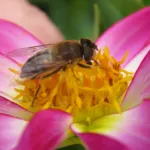
Dahlias with open centers are frequently visited by honey bees and bumble bees, but fully double forms such as 'Akita' offer less accessible pollen and nectar. Occasional visits may occur, yet this cultivar should not be treated as a high-value pollinator plant.
Dahlia 'Akita' photos
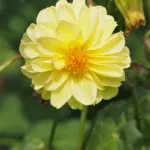
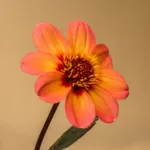
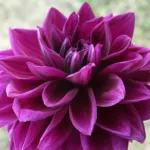
Click any photo for a larger view. Source, author and license are shown separately.
Diseases and pests
Diseases
Good air circulation, morning sun, careful watering, and removal of diseased foliage help reduce powdery mildew and gray mold. Tubers are vulnerable to rot when stored damp or damaged. Dahlia viruses may cause mottled leaves, distortion, or weak growth; remove suspect plants and disinfect cutting tools rather than propagating from them.
Pests
Watch for aphids, slugs, earwigs, caterpillars, capsid bugs, and spider mites. Inspect new growth and flower buds regularly, remove pests by hand or use targeted treatment only when needed, and keep weeds cleared for airflow. Avoid excessive nitrogen, which encourages soft growth attractive to pests.
Toxicity and pollen
ASPCA lists Dahlia species as toxic to dogs, cats, and horses, with possible mild gastrointestinal signs and mild dermatitis; the toxic principle is not identified. No cultivar-specific toxicity study for 'Akita' was located, so treat all plant parts as unsuitable for consumption and prevent pets from chewing the foliage, flowers, or tubers.
- Typical season
- Typically July through October in the United States
- Pollination / pollen
- Insect-associated pollen; limited airborne dispersal expected
Dahlia pollen is generally dispersed from insect-visited flower structures rather than released abundantly into the air. Cultivar-specific airborne pollen and allergy studies for 'Akita' were not found, so a low airborne-pollen relevance label is a cautious horticultural assessment, not evidence of zero allergy risk.
Native habitat
Dahlias originate from seasonally warm regions of Mexico and Central America, where related plants grow in sunny, well-drained settings with a pronounced seasonal rhythm. 'Akita' is a cultivated garden selection rather than a wild habitat plant, so its performance depends on warm soil, drainage, and protection from freezing temperatures.
Interesting fact
The RHS describes 'Akita' as producing flowers about 7 inches across, placing it among the large-flowered dahlias. The American Dahlia Society classification reported by the Cincinnati Dahlia Society places it in the novelty fully double class with a dark-blend color designation. Its dense double blooms are visually dramatic but less accessible to pollinators than open-centered dahlias.
Frequently asked questions (FAQ)
The most relevant questions about this plant, with short and direct answers.
🌱Quick care
What is Dahlia 'Akita'?⌄
Dahlia 'Akita' is a frost-tender dahlia cultivar known for fully double, fiery red-and-orange blooms with contrasting pale or yellow markings. It is commonly classified as a Novelty Fully Double dahlia, class 7613.
How much sun does Dahlia 'Akita' need?⌄
Dahlia 'Akita' needs full sun, ideally at least 6 hours of direct sunlight daily. More light generally supports sturdier growth and better flowering.
How often should I water Dahlia 'Akita'?⌄
Water Dahlia 'Akita' to keep the soil consistently and moderately moist, especially during hot or dry weather. Water deeply when the surface begins to dry, but avoid leaving the tuberous roots in soggy soil.
Is Dahlia 'Akita' an annual or perennial?⌄
Dahlia 'Akita' is a tender perennial grown from tubers, but it behaves like an annual where winter soil freezes. In colder areas, lift and store the tubers indoors for replanting the following spring.
🌤️Environment and placement
How tall does Dahlia 'Akita' grow?⌄
Dahlia 'Akita' commonly reaches about 3 to 4 feet tall, although final height varies with soil, climate, and growing conditions. Provide support if the stems become heavy with flowers.
How large are Dahlia 'Akita' flowers?⌄
Dahlia 'Akita' produces blooms commonly reported at about 6 to 7 inches across. Flower size can vary with plant vigor, weather, and whether side buds are removed.
What do Dahlia 'Akita' flowers look like?⌄
The flowers are fully double and chrysanthemum-like, with narrow, incurved petals in dark red, crimson, orange, and yellow tones. Individual blooms may show different balances of these colors.
Can Dahlia 'Akita' grow in containers?⌄
Dahlia 'Akita' can grow in a large container if it has fertile, well-drained soil, full sun, regular watering, and strong support. Choose a container with enough depth and width for a tall, heavy-flowering plant.
💧Care and problems
Does Dahlia 'Akita' need staking?⌄
Dahlia 'Akita' often benefits from staking because its tall stems and large flowers can become top-heavy. Install a stake or support at planting time so the tuber is not damaged later.
Should I deadhead Dahlia 'Akita'?⌄
Yes, remove spent Dahlia 'Akita' flowers regularly to encourage continued blooming. Cut back to a strong set of leaves or a developing side shoot rather than leaving mature seed heads.
Should Dahlia 'Akita' be pinched?⌄
Pinch Dahlia 'Akita' when the plant is about 10 to 12 inches tall to encourage branching and more flowering stems. Pinching may delay the first flowers slightly but usually produces a bushier plant.
What fertilizer is best for Dahlia 'Akita'?⌄
Use compost or a balanced, relatively low-nitrogen fertilizer for Dahlia 'Akita'. Excess nitrogen can produce lush foliage with fewer flowers, so follow the product label and avoid heavy feeding.
Why is my Dahlia 'Akita' not flowering?⌄
Dahlia 'Akita' may fail to flower because of insufficient sunlight, immature tubers, excessive nitrogen, drought, or cool conditions. Give it full sun, consistent moisture, good fertility, and time to establish after planting.
What pests and diseases affect Dahlia 'Akita'?⌄
Dahlia 'Akita' can be affected by common dahlia problems such as aphids, earwigs, slugs, snails, thrips, spider mites, powdery mildew, and botrytis. Good spacing, watering at the soil level, airflow, and regular inspection help reduce problems.
🪴Planting and repotting
When should I plant Dahlia 'Akita' tubers?⌄
Plant Dahlia 'Akita' tubers outdoors in spring after the danger of frost has passed and the soil has warmed. In much of the United States, this is often late spring, but the exact timing depends on local conditions.
How deep should Dahlia 'Akita' tubers be planted?⌄
Plant Dahlia 'Akita' tubers about 4 to 6 inches deep, with the eye or sprouting point facing upward. Cover the tuber with soil at planting, adding more only as the stem develops if needed.
What soil does Dahlia 'Akita' prefer?⌄
Dahlia 'Akita' prefers fertile, well-drained loam enriched with organic matter. Improve heavy clay or fast-draining soil with suitable organic amendments while maintaining reliable drainage.
How far apart should I plant Dahlia 'Akita'?⌄
Space Dahlia 'Akita' plants about 18 to 24 inches apart, allowing extra room where airflow is poor or the plants grow especially vigorous. Crowding can increase disease pressure and make staking and harvesting harder.
Can I start Dahlia 'Akita' indoors?⌄
Yes, you can start Dahlia 'Akita' tubers indoors several weeks before outdoor planting to gain an earlier start. Keep them in bright light, avoid overwatering, and transplant only after frost risk has passed.
How do I overwinter Dahlia 'Akita' in the United States?⌄
After frost blackens the foliage, cut the plant back, carefully lift the tubers, let them dry briefly, and store them in a cool, dark, frost-free place in a breathable medium. Gardeners in mild climates may leave tubers in the ground only where winter soil does not freeze and drainage is excellent.
✂️Propagation and pruning
How do I propagate Dahlia 'Akita'?⌄
Dahlia 'Akita' is usually propagated by dividing its tubers or by taking basal cuttings from actively growing shoots. Each tuber division must include a viable eye; a piece without an eye will not produce a new plant.
Can Dahlia 'Akita' be grown from seed?⌄
Dahlia 'Akita' can produce seed, but seedlings will not reliably reproduce the named cultivar’s flower color, form, or plant habit. Use tuber division or cuttings when you want plants true to 'Akita'.
When should I divide Dahlia 'Akita' tubers?⌄
Divide Dahlia 'Akita' tubers in late winter or early spring, shortly before planting, when the eyes are visible or beginning to swell. Make clean cuts and retain at least one healthy eye on each division.
⚠️Toxicity and safety
Is Dahlia 'Akita' toxic to dogs?⌄
Yes, Dahlia 'Akita' is considered toxic to dogs if ingested. Keep tubers and plant material away from dogs and contact a veterinarian if ingestion is suspected.
Is Dahlia 'Akita' toxic to cats?⌄
Yes, Dahlia 'Akita' is considered toxic to cats if ingested. Prevent access to the plant and seek veterinary advice if a cat chews or swallows any part of it.
Is Dahlia 'Akita' toxic to horses?⌄
Yes, Dahlia 'Akita' is considered toxic to horses if ingested. Do not plant it where horses can browse, and obtain veterinary guidance after suspected exposure.
Can people eat Dahlia 'Akita'?⌄
Dahlia 'Akita' should not be eaten because its ingestion safety is not established for people and the plant is treated as toxic to several animals. Keep tubers, leaves, and flowers away from children and pets.
🌸Flowering and special interest
When does Dahlia 'Akita' bloom?⌄
Dahlia 'Akita' generally blooms from mid-summer until the first frost when grown in suitable conditions. Regular deadheading and consistent moisture can help extend the flowering period.
Is Dahlia 'Akita' good for cut flowers?⌄
Dahlia 'Akita' can be used as a cut flower because its large, distinctive blooms are highly ornamental. Cut stems when the outer petals are beginning to open, and place them immediately in clean water.
How can I get larger Dahlia 'Akita' flowers?⌄
For larger Dahlia 'Akita' flowers, provide full sun, steady moisture, fertile soil, and strong support, then remove some side buds so the plant directs energy to fewer blooms. This reduces total flower count but can increase individual bloom size.
Does Dahlia 'Akita' bloom until frost?⌄
Dahlia 'Akita' can continue blooming until the first frost if it remains healthy and spent flowers are removed. Frost will damage the foliage and flowers, so protect or lift the tubers afterward.