
 Source:
 Leucanthemum adustum short overview
Leucanthemum adustum is a European mountain perennial in the daisy family, recognized by white ray florets, yellow disc florets, toothed firm leaves, and dark-edged involucral bracts. It suits sunny, sharply drained rock gardens, gravel beds, and alpine-style plantings, although reliable United States cultivation information and a documented US common name are limited. Leucanthemum adustum is an accepted European perennial daisy of mountain habitats. It is usually a small, upright, single-headed plant with firm toothed leaves and white rays around a yellow disc.
Taxonomic classification
Leucanthemum adustum care guide
Light and placement
Give full sun for the strongest, most compact growth, ideally in an open south- or east-facing site with at least 6 hours of direct light. Light afternoon shade can help in hot inland climates. Too little light may produce weak, leaning stems and fewer heads; excessive reflected heat combined with dry roots can scorch foliage.
Watering and humidity
Water deeply when the upper few inches of soil dry, then allow excess water to drain completely. Keep evenly supplied during establishment and active growth, but reduce watering in cool or wet weather. Do not keep the crown saturated through winter. Average outdoor humidity is adequate; airflow matters more than misting.
Soil and growing medium
Use a sharply drained, moderately fertile soil or gritty alpine-style mix. Rocky, loamy, and calcareous conditions are consistent with the species’ mountain habitats. Avoid stagnant winter moisture and heavy, compacted clay; drainage around the crown is more important than rich soil.
Feeding
Apply a thin compost mulch or a restrained balanced perennial fertilizer in spring if growth is weak. Avoid heavy nitrogen feeding, which can produce soft, leafy growth and reduce suitability for lean mountain-style conditions. Do not fertilize drought-stressed or waterlogged plants.
Growth and habit
This is a compact, upright, clump-forming hemicryptophyte of mountain grasslands, open scrub, and rocky habitats. Stems are commonly simple and single-headed, with the upper third nearly leafless. Maintain an open crown and divide congested clumps rather than encouraging lush growth with heavy feeding.
Planting and repotting
Plant in spring or early fall when the soil is workable. Set the crown level with the surrounding soil, firm gently, and water deeply once after planting. Allow enough room for a small clump and keep the crown free of mulch that stays wet.
Repot only when container roots are crowded, preferably in early spring. Use a gritty, well-drained perennial mix and a pot with a drainage hole. Replant at the same depth and water sparingly until new growth resumes.
Propagation and pruning
Propagation
Propagation is documented at genus level by seed and division, but exact species-specific protocols are limited. Sow fresh or stratified seed in a well-drained medium, or divide established clumps in early spring or after flowering. Avoid burying seed deeply.
Pruning
Deadhead after flowering if preventing self-seeding or improving appearance. Cut spent stems and dead foliage to the ground in late fall or early spring, leaving a small amount of winter cover where conditions are harsh.
Overwintering
Leave the crown outdoors in climates appropriate for cool-temperate perennials, but ensure winter drainage is excellent. In containers, protect the pot from repeated freeze-thaw exposure by placing it in a sheltered location. Do not overwinter as a warm indoor houseplant unless necessary; low light and excessive moisture can weaken it.
Uses
Best suited to ornamental alpine, rock, gravel, and cool perennial plantings. Its open daisy capitula can provide forage for generalist flower-visiting insects, but species-specific ecological records are limited. No culinary or medicinal use is recommended without authoritative identification and safety evidence.
Appearance
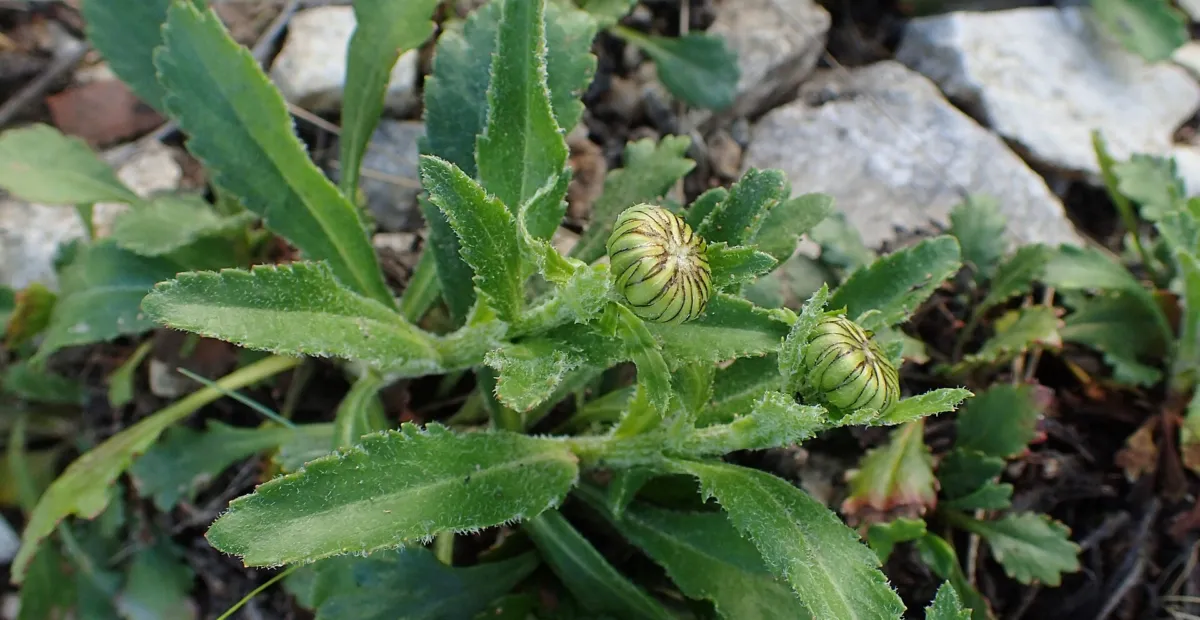
Leaves are firm and somewhat fleshy, with roughly 6–20 sharp teeth on each side. Middle and upper leaves are sessile and may have rounded or narrowed, toothed bases without clasping auricles. Stems are generally simple and single-headed, becoming nearly leafless in the upper third. Dark-edged involucral bracts distinguish the plant from many related daisies.
Flowering
The species produces daisy-like capitula, usually one head per stem. White ray florets surround a yellow disc, while the involucral bracts have distinctive dark brown to black margins. Flowering is documented from June through August in Italy; timing may shift with elevation and US climate.
Pollination and visitors
Open, pollen-bearing daisy capitula are visited by generalist insects. Available evidence supports use by bees, bumblebees, hoverflies, and small beetles at the visitor-group level, but a consistently documented primary species-specific pollinator was not found.
Leucanthemum adustum photos
Click any photo for a larger view. Source, author and license are shown separately.
Diseases and pests
Diseases
Exact species-specific disease data are limited. Reduce risk by providing strong air circulation, avoiding persistently wet foliage, and removing damaged leaves. Watch for leaf-spot symptoms such as expanding brown lesions; remove affected material and avoid overhead irrigation.
Pests
Exact species-specific pest records are limited. Inspect shoots and leaf undersides for aphids and monitor stressed plants for chewing damage. Encourage airflow, avoid excessive nitrogen, and use physical removal before considering a labeled control.
Toxicity and pollen
Independent species-specific toxicity evidence for Leucanthemum adustum was not located. Do not treat the plant as edible or medicinal. As with other Asteraceae, sap or plant material may irritate sensitive skin, and ingestion can cause nonspecific gastrointestinal upset; keep unfamiliar plant material away from children and pets.
- Typical season
- Typically June–August where flowering occurs; US exposure timing is uncertain.
- Pollination / pollen
- Insect-pollinated flower pollen; airborne relevance uncertain
Species-specific airborne-pollen and allergy data were not located. The flower releases pollen from an insect-pollinated composite head, so airborne exposure is likely lower than for strongly wind-pollinated plants but cannot be assumed to be zero. Sensitive gardeners should limit handling during bloom and monitor personal reactions.
Native habitat
Native to temperate Europe, especially mountain regions from the Alps and associated ranges into central and eastern Europe. It occurs in mountain and subalpine meadows, open woodland or scrub, and some rocky or calcareous sites. Natural populations experience cool climates, seasonal moisture, and excellent drainage.
Interesting fact
The epithet adustum means “burned” or “scorched,” referring to the dark margins of the involucral bracts. The species is accepted taxonomically and includes two accepted subspecies. Its native range spans temperate parts of Europe, including mountain regions.
Frequently asked questions (FAQ)
The most relevant questions about this plant, with short and direct answers.
🌱Quick care
What is Leucanthemum adustum?⌄
Leucanthemum adustum is a European perennial daisy in the Asteraceae family. It is a relatively small, usually single-flowered species associated with temperate and mountainous habitats.
How much sun does Leucanthemum adustum need?⌄
Grow Leucanthemum adustum in full sun to partial shade. More sun generally supports sturdier growth and better flowering, provided the soil does not become excessively dry.
How often should I water Leucanthemum adustum?⌄
Water Leucanthemum adustum moderately, allowing the soil to dry slightly between waterings. Reduce watering in cool or rainy periods and never leave the roots in standing water.
Is Leucanthemum adustum a perennial?⌄
Yes, Leucanthemum adustum is a hardy perennial. Its foliage may retreat or become less prominent during unfavorable weather, but the plant can regrow from its underground perennial parts.
🌤️Environment and placement
Where should I plant Leucanthemum adustum?⌄
Plant Leucanthemum adustum in a sunny or lightly shaded spot with excellent drainage. A rock garden, alpine bed, raised bed, or dry meadow-style planting can suit its naturally temperate, mountainous character.
What type of soil does Leucanthemum adustum prefer?⌄
Leucanthemum adustum prefers gritty, well-drained loam and can tolerate rocky or calcareous soils. Heavy clay should be amended or avoided because prolonged wetness can damage the roots.
Can Leucanthemum adustum grow in partial shade?⌄
Yes, Leucanthemum adustum can grow in partial shade, especially where summers are hot. Flowering may be reduced if the site is deeply shaded or receives little direct light.
Is Leucanthemum adustum suitable for a rock garden?⌄
Yes, Leucanthemum adustum is a reasonable candidate for a rock garden because it is associated with well-drained, rocky or calcareous conditions. Use a gritty planting mix and avoid low pockets where water collects.
Is Leucanthemum adustum suitable for U.S. gardens?⌄
It may be suitable for U.S. gardens with cool-to-moderate conditions and sharply drained soil, but species-specific U.S. hardiness information is limited. Treat it as a specialized perennial rather than assuming the hardiness of common cultivated oxeye daisies.
💧Care and problems
How do I care for Leucanthemum adustum in a container?⌄
Grow Leucanthemum adustum in a container with drainage holes and a gritty, fast-draining mix. Water when the upper layer begins to dry, and protect the container from prolonged saturation during winter.
Why is my Leucanthemum adustum turning yellow?⌄
Yellowing leaves on Leucanthemum adustum commonly indicate excess moisture, poor drainage, root stress, or insufficient light. Check the roots and soil before increasing fertilizer or water.
Why is Leucanthemum adustum wilting in wet soil?⌄
Wilting in wet soil usually points to root stress caused by poor drainage rather than thirst. Move or replant the specimen into gritty soil and remove persistently waterlogged conditions.
Does Leucanthemum adustum need fertilizer?⌄
Leucanthemum adustum generally needs little fertilizer when grown in reasonably fertile soil. Excess nitrogen can produce soft, leafy growth and may reduce the plant’s suitability for compact, rocky conditions.
What pests affect Leucanthemum adustum?⌄
Species-specific pest information for Leucanthemum adustum is limited. Monitor for the common daisy problems of aphids, slugs, snails, and leaf-chewing insects, while treating only when damage is significant.
What diseases affect Leucanthemum adustum?⌄
The main likely disease risk is fungal or bacterial damage encouraged by wet soil and poor air circulation. Good drainage, moderate watering, and removal of badly damaged foliage are the safest evidence-based precautions.
🪴Planting and repotting
When should I plant Leucanthemum adustum?⌄
Plant Leucanthemum adustum in spring or early fall when soil conditions are workable. In colder U.S. regions, spring planting gives the roots more time to establish before winter.
How do I plant Leucanthemum adustum?⌄
Set Leucanthemum adustum at the same depth it was growing in its container and backfill with gritty, well-drained soil. Water it in thoroughly, then allow the surface to dry slightly between subsequent waterings.
How far apart should I space Leucanthemum adustum?⌄
Use the plant’s mature width as the spacing guide because reliable commercial size information is limited. Leave enough room for airflow and avoid crowding plants in damp soil.
✂️Propagation and pruning
How can I propagate Leucanthemum adustum?⌄
Leucanthemum adustum can potentially be propagated by seed or division, but species-specific propagation guidance is scarce. Division is usually the more predictable method for an established perennial clump.
Can I grow Leucanthemum adustum from seed?⌄
Yes, seed propagation is possible, although germination requirements and commercially available seed sources are not well documented for this exact species. Sow fresh seed in a well-drained medium and avoid covering it deeply.
Should I divide Leucanthemum adustum?⌄
Divide an established Leucanthemum adustum clump in spring or early fall if it becomes crowded or weak. Replant divisions promptly in gritty soil and keep them moderately moist while they establish.
Should I deadhead Leucanthemum adustum?⌄
Deadhead Leucanthemum adustum after flowering to keep the plant tidy and potentially encourage additional blooms. Leave some seed heads if you want to observe natural reseeding or collect seed.
Should I cut back Leucanthemum adustum in fall?⌄
Cut back Leucanthemum adustum after the foliage has declined or in late winter before new growth begins. In areas with wet winters, removing collapsed foliage can improve airflow and reduce debris around the crown.
⚠️Toxicity and safety
Is Leucanthemum adustum toxic to dogs or cats?⌄
The toxicity of Leucanthemum adustum has not been specifically established in the available species-level information. Keep pets from chewing unfamiliar plant material and contact a veterinarian or poison-control service if ingestion causes symptoms.
Is Leucanthemum adustum safe for people to touch?⌄
No species-specific skin-safety classification is established for Leucanthemum adustum. People with sensitive skin or daisy-family allergies should use gloves when handling it and avoid rubbing their eyes afterward.
🌸Flowering and special interest
When does Leucanthemum adustum bloom?⌄
Leucanthemum adustum generally flowers during the growing season, but the exact bloom period depends on its population, elevation, and local climate. In U.S. gardens, timing may differ substantially from European reference records.
What do Leucanthemum adustum flowers look like?⌄
Leucanthemum adustum produces daisy-like flower heads, typically with white ray florets around a yellow center. The species is usually compact and often bears a single flower head on an otherwise sparsely branched stem.
How tall does Leucanthemum adustum get?⌄
Available botanical descriptions indicate that Leucanthemum adustum is usually no more than about 12 inches tall. Garden-grown plants may vary with climate, soil, and the particular subspecies or population.
How is Leucanthemum adustum different from common oxeye daisy?⌄
Leucanthemum adustum is a distinct species from the commonly grown oxeye daisy, Leucanthemum vulgare. It is generally more associated with mountainous European habitats and may differ in stature, leaf form, and involucre details.
Similar plants
 Creeping daisy or mini marguerite (Mauranthemum paludosum) care guideMauranthemum paludosum
 Grass-leaved Oxeye Daisy (Leucanthemum graminifolium) care guideLeucanthemum graminifolium
 Oxeye daisy (Leucanthemum vulgare) care guideLeucanthemum vulgare
 He oxeye daisy (Leucanthemum ircutianum) care guideLeucanthemum ircutianum
 Argyranthemum frutescens care guideArgyranthemum frutescens
 Max chrysanthemum (Leucanthemum maximum) care guideLeucanthemum maximum