
 Source:
 Hemerocallis ‘Bela Lugosi’ short overview
Hemerocallis 'Bela Lugosi' is a proven American garden daylily valued for its dramatic, saturated purple flowers and contrasting lime-green throats. Each bloom lasts about one day, but heavily budded, well-branched scapes produce a succession of flowers in midsummer. The clumping perennial reaches about 33 inches tall and spreads 18–24 inches, adapting to a wide range of soils when drainage is adequate. It performs best in full sun and is hardy across USDA Zones 3–9.
Taxonomic classification
Hemerocallis ‘Bela Lugosi’ care guide
Light and placement
Give the plant full sun, ideally with at least 6 hours of direct light, for the strongest flowering and best purple coloration. A site with morning and afternoon sun is preferable; light partial shade is tolerated, especially in hot climates. Too little light produces fewer scapes and weaker flowering, while intense reflected heat can increase foliage stress and shorten individual blooms.
Watering and humidity
Water deeply after planting and keep the soil evenly moist while the crown establishes. Once established, water when the upper soil begins to dry, increasing frequency during prolonged summer heat or drought. The cultivar tolerates low to average water conditions but should not remain in saturated soil. Drip irrigation or watering at the base helps limit foliar disease.
Soil and growing medium
Use fertile, well-drained soil that retains some moisture without becoming waterlogged. The cultivar is adaptable to poor, average, or fertile ground and tolerates slightly dry conditions once established. A mildly acidic to neutral soil is a practical target; the grower’s production guidance lists pH 6.0–6.5, while daylilies generally tolerate a somewhat broader range.
Feeding
Feed lightly in spring as new growth begins with a balanced slow-release fertilizer or a modest layer of compost. Daylilies are moderate feeders, but established plants usually need no heavy fertilization. Avoid pushing late-season growth with nitrogen, especially when planting in late summer or before winter.
Growth and habit
This is a strong-growing, clump-forming perennial with well-branched, heavily budded scapes. Established plants gradually produce additional leaf fans and can be divided every three to four years. The cultivar tolerates a broad range of conditions, including poor soil, slopes, dry areas, salty roadside conditions, and urban pollution, provided drainage is acceptable.
Planting and repotting
Plant in spring through late summer, or in early fall where there is enough time for rooting before hard freezes. Set the crown about 1 inch below the soil surface, with the foliage fan at ground level. Space plants about 18–24 inches apart. Water thoroughly after planting and keep evenly moist while roots establish.
For containers, repot or divide when the root mass becomes crowded, preferably in spring or early fall. Lift the clump, refresh the potting mix, and replant the crown with about 1 inch of medium over it. Choose a container with drainage and avoid burying the crown deeply.
Propagation and pruning
Propagation
Divide established clumps in spring or fall, lifting the entire plant and separating fans so each division retains at least three eyes when practical. Replant divisions promptly at the original crown depth and keep them evenly moist until re-established. Seed propagation is not a reliable way to reproduce this named cultivar true to type.
Pruning
Remove spent flowers and developing seed pods for a cleaner appearance. Cut back yellowing or frost-damaged foliage late in the season, generally after it has declined naturally. For container production or severe winter exposure, foliage may be trimmed to about 2 inches late in the season, but cutting too early can stimulate unwanted regrowth.
Overwintering
Outdoor plants are hardy through USDA Zone 3 and generally need no special winter cover when planted in the ground. Allow foliage to decline naturally, then cut it back late in the season. In containers, protect the root system from repeated freezing and thawing by sinking the pot, moving it to an unheated sheltered location, or insulating the container.
Uses
Use 'Bela Lugosi' in sunny borders, mass plantings, cottage-style beds, containers, and as a contrasting dark focal point among gold- or pale-flowered perennials. The flowers are ornamental but short-lived as cut flowers because individual blooms last about a day. Do not use the plant around cats because daylilies can cause severe toxicity.
Appearance
The plant forms a fountain-like clump of narrow, arching green leaves. Sturdy flowering scapes rise above the foliage and branch repeatedly, carrying numerous large, saturated purple blooms. Each flower has a contrasting lime-green throat, a defining identification feature. The foliage is described as semi-evergreen, so some green structure may persist in mild climates.
Flowering
A midseason cultivar that typically flowers in midsummer, with the main display occurring in July in the United States. Individual trumpet-shaped blooms open for roughly one day, but many buds on branched scapes create a long succession of flowers. Deadheading improves appearance but usually does not extend the flowering period substantially.
Pollination and visitors
The cultivar is marketed as attractive to butterflies, bees, and hummingbirds. These visitors may feed from the conspicuous, open-throated flowers, although a cultivar-specific pollinator study was not located. Visitor attraction should not be confused with pollen allergy risk.
Hemerocallis 'Bela Lugosi' photos
Click any photo for a larger view. Source, author and license are shown separately.
Diseases and pests
Diseases
Avoid planting crowns too deeply and prevent persistently wet conditions, which can encourage crown rot. In cool, wet weather, watch for Fusarium or Rhizoctonia problems, along with leaf spot and leaf streak. Daylily rust can occur in warmer regions. Remove badly affected foliage, improve air movement, and avoid overhead watering when disease is active.
Pests
Common pests include aphids, spider mites, and thrips. Inspect new growth and flower scapes regularly; use a strong water spray for light infestations and encourage beneficial insects. Escalate only when damage is significant, choosing a product labeled for the pest and following its directions. Good sanitation and avoiding stressed plants help reduce recurring problems.
Related diseases and pests
Only Plant Doctor profiles whose host data indicate this plant may be affected are shown here.
 PestNorthern root-knot nematodeMeloidogyne hapla
 DiseaseSouthern blightAthelia rolfsii
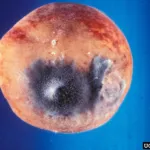 DiseaseRhizopus soft rotRhizopus stolonifer
 DiseaseAlternaria leaf spot and fruit rotAlternaria alternata
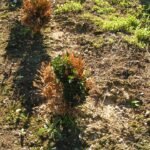 DiseasePhytophthora root and crown rotPhytophthora nicotianae
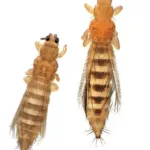 PestOnion thripsThrips tabaci Lindeman
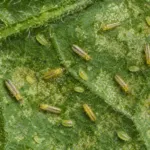 PestMelon thripsThrips palmi Karny
 PestChilli thripsScirtothrips dorsalis Hood
Toxicity and pollen
Hemerocallis species are associated with serious poisoning in cats, including acute kidney injury after ingestion. The exact toxic principle remains unresolved, and cultivar-specific toxicology for 'Bela Lugosi' was not located, so the cultivar should be treated as unsafe for cats. Keep all plant parts away from cats and seek urgent veterinary advice after any exposure. ASPCA lists daylilies as non-toxic to dogs.
- Typical season
- Not specifically documented for this cultivar; flower pollen is present during midsummer bloom.
- Pollination / pollen
- Insect-associated pollen; airborne relevance not established
Daylily pollen is primarily associated with insect-mediated flower visitation rather than abundant wind dispersal. However, cultivar-specific airborne pollen measurements and clinical allergy studies were not located, so a low or zero allergy rating cannot be justified. People with known pollen sensitivity should avoid rubbing eyes after handling flowers and wash hands afterward.
Native habitat
The named cultivar is a cultivated hybrid rather than a wild North American plant. Its Hemerocallis heritage comes from East Asian daylilies, while modern garden hybrids are selected for adaptable performance in temperate landscapes. In cultivation it favors sunny, fertile, reasonably drained soils and survives both cold winters and periodic dry conditions.
Interesting fact
The cultivar was named after actor Bela Lugosi, famous for portraying Dracula.
It is a tetraploid daylily with 44 chromosomes.
The dark purple flowers are noted for strong color stability in sun.
It received the American Hemerocallis Society Lenington All-American Award in 2007.
Frequently asked questions (FAQ)
The most relevant questions about this plant, with short and direct answers.
🌱Quick care
What is Hemerocallis 'Bela Lugosi'?⌄
Hemerocallis 'Bela Lugosi' is an award-winning tetraploid daylily cultivar with deep purple to burgundy flowers and a lime-green throat. It is a vigorous, clump-forming perennial hybridized by Curt Hanson and registered in 1995.
How much sun does Hemerocallis 'Bela Lugosi' need?⌄
Grow Hemerocallis 'Bela Lugosi' in full sun to partial shade, with at least 6 hours of direct sun preferred for the best flowering. Afternoon shade can help protect the dark blooms in very hot climates.
How often should I water Hemerocallis 'Bela Lugosi'?⌄
Water regularly while newly planted, then reduce watering once Hemerocallis 'Bela Lugosi' is established. It has low to average water needs and tolerates short dry periods, but flowering improves when the soil does not become severely dry during bud formation.
How hardy is Hemerocallis 'Bela Lugosi'?⌄
Hemerocallis 'Bela Lugosi' is very cold hardy and is commonly listed for USDA Zones 3 through 9. Winter performance can vary with local drainage, snow cover, and exposure.
How big does Hemerocallis 'Bela Lugosi' get?⌄
Hemerocallis 'Bela Lugosi' typically reaches about 29 to 33 inches tall and spreads approximately 18 to 24 inches. Mature size depends on growing conditions and the age of the clump.
🌤️Environment and placement
What soil is best for Hemerocallis 'Bela Lugosi'?⌄
Plant Hemerocallis 'Bela Lugosi' in moderately fertile, well-drained soil that holds some moisture without staying soggy. It adapts to loam, clay, sandy soil, and a range of soil pH values when drainage is adequate.
Can Hemerocallis 'Bela Lugosi' grow in clay soil?⌄
Yes, Hemerocallis 'Bela Lugosi' can grow in clay soil if excess water drains away. Improve heavy clay with organic matter and avoid planting in low spots where the crown may remain waterlogged.
Can Hemerocallis 'Bela Lugosi' grow in partial shade?⌄
Yes, it can grow in partial shade, but too much shade may reduce the number of flowers and weaken the display. Morning sun or filtered light is generally more reliable than deep shade.
Is Hemerocallis 'Bela Lugosi' drought tolerant?⌄
Established Hemerocallis 'Bela Lugosi' is reasonably drought tolerant, although it performs best with occasional deep watering during prolonged heat or drought. Newly planted divisions need more consistent moisture until rooted.
Is Hemerocallis 'Bela Lugosi' suitable for containers?⌄
Hemerocallis 'Bela Lugosi' can be grown in a large container with drainage holes, but its mature size requires a substantial pot. Use quality potting mix, water when the surface begins to dry, and provide winter protection where container roots are exposed to severe cold.
💧Care and problems
Is Hemerocallis 'Bela Lugosi' easy to grow?⌄
Yes, Hemerocallis 'Bela Lugosi' is considered easy to grow once established. Good drainage, adequate sun, occasional watering during dry weather, and periodic division are usually sufficient.
Why is my Hemerocallis 'Bela Lugosi' not flowering?⌄
The most common causes are insufficient sunlight, newly divided or recently transplanted roots, drought during bud formation, or excessive nitrogen fertilizer. Move or thin surrounding plants if the clump is shaded, and allow time for a recently planted division to establish.
Should I fertilize Hemerocallis 'Bela Lugosi'?⌄
Fertilize only when the soil is poor or growth is weak, using a balanced slow-release fertilizer in spring. Avoid heavy nitrogen applications because they can produce lush foliage at the expense of flowers.
What pests affect Hemerocallis 'Bela Lugosi'?⌄
Hemerocallis 'Bela Lugosi' may be affected by aphids, thrips, slugs, snails, spider mites, or daylily gall midge. Inspect new growth and flower buds regularly, remove damaged tissue, and use a control appropriate for the identified pest.
What diseases can affect Hemerocallis 'Bela Lugosi'?⌄
Possible problems include fungal leaf spot, rust, and bacterial crown or stem rot. Reduce risk by providing good air circulation, watering the soil rather than the foliage, and removing diseased leaves and decaying plant material.
Should I deadhead Hemerocallis 'Bela Lugosi'?⌄
Deadhead spent flowers to improve appearance and prevent energy being directed toward seed production. Removing old blooms may also help reduce conditions favorable to daylily gall midge, but it is not essential for plant survival.
When should I cut back Hemerocallis 'Bela Lugosi'?⌄
Cut flower scapes back after flowering finishes and remove dead or badly damaged foliage as needed. In late fall, old foliage can be cut close to the ground after it has yellowed or been killed by frost.
🪴Planting and repotting
When is the best time to plant Hemerocallis 'Bela Lugosi'?⌄
Plant Hemerocallis 'Bela Lugosi' in spring or early fall when the soil is workable. Spring planting gives the roots a full growing season, while early-fall planting allows establishment before the ground freezes.
How far apart should I plant Hemerocallis 'Bela Lugosi'?⌄
Space Hemerocallis 'Bela Lugosi' about 18 to 24 inches apart, measured from crown to crown. Use the wider spacing for a more open planting and the narrower spacing for quicker visual fullness.
How deep should I plant Hemerocallis 'Bela Lugosi'?⌄
Plant the crown so the junction between the roots and the green shoots is about 1 inch below the soil surface. Spread the roots outward and avoid burying the crown deeply, which can reduce vigor and flowering.
Can I transplant Hemerocallis 'Bela Lugosi' while it is blooming?⌄
You can transplant it during bloom, but spring or early fall is usually less stressful and supports faster root recovery. If moving it in summer, water thoroughly afterward and remove some flower scapes to reduce stress.
✂️Propagation and pruning
How do I divide Hemerocallis 'Bela Lugosi'?⌄
Dig up the clump, separate it into sections with healthy roots and several fans, and replant the divisions with the crown about 1 inch below the soil. Divide in spring or early fall, then water well until new growth is established.
How often should I divide Hemerocallis 'Bela Lugosi'?⌄
Divide Hemerocallis 'Bela Lugosi' about every 3 to 5 years or whenever the clump becomes crowded and flowering declines. Vigorous plants may remain productive longer if they still have room and bloom well.
Can Hemerocallis 'Bela Lugosi' be grown from seed?⌄
Yes, it can be grown from seed, but seedlings will not reliably reproduce the named cultivar. Division is the preferred method when you want new plants identical to the parent.
Is Hemerocallis 'Bela Lugosi' evergreen or dormant in winter?⌄
Hemerocallis 'Bela Lugosi' is classified as semi-evergreen, so some foliage may persist in mild climates while much of it dies back in colder areas. Its winter appearance can vary according to local temperatures and growing conditions.
⚠️Toxicity and safety
Is Hemerocallis 'Bela Lugosi' toxic to cats?⌄
Yes, Hemerocallis 'Bela Lugosi' is toxic to cats if ingested and should be kept away from them. Contact a veterinarian or animal poison service immediately if a cat chews or eats any part of the plant.
Is Hemerocallis 'Bela Lugosi' toxic to dogs?⌄
Hemerocallis 'Bela Lugosi' is not generally listed as toxic to dogs, but eating plant material can still cause stomach upset. Prevent pets from consuming it and consult a veterinarian if symptoms develop.
Can people eat Hemerocallis 'Bela Lugosi' flowers?⌄
Some horticultural references describe daylily flowers as edible, but this should not be assumed safe for every cultivar or growing situation. Do not eat flowers treated with pesticides, and avoid culinary use if the plant’s identity or chemical history is uncertain.
🌸Flowering and special interest
When does Hemerocallis 'Bela Lugosi' bloom?⌄
Hemerocallis 'Bela Lugosi' is a midseason daylily that generally blooms in summer, often around mid-June through July depending on the region. Local climate, latitude, and spring temperatures can shift the exact timing.
What do the flowers of Hemerocallis 'Bela Lugosi' look like?⌄
The flowers are large, single, deep purple to burgundy blooms with a contrasting lime-green throat that may blend into a greenish-gold center. Individual flowers last about one day, but numerous buds open successively over an extended display.
How large are the flowers on Hemerocallis 'Bela Lugosi'?⌄
The flowers are approximately 6 inches across. The cultivar is valued for its large blooms, strong branching, and generally heavy bud count.
Does Hemerocallis 'Bela Lugosi' rebloom?⌄
Hemerocallis 'Bela Lugosi' is primarily classified as a midseason cultivar, and rebloom is not guaranteed in every garden. Some growers report a later flush under favorable conditions, especially with adequate moisture, sunlight, and removal of spent scapes.
Are Hemerocallis 'Bela Lugosi' flowers fragrant?⌄
Hemerocallis 'Bela Lugosi' is generally listed as non-fragrant or without notable fragrance. Its main ornamental features are the dark purple color, lime-green throat, large flowers, and vigorous habit.
Similar plants
 Azure Monkshood (Aconitum carmichaelii) care guideAconitum carmichaelii
 Monkshood (Aconitum ‘Stainless Steel’)Aconitum 'Stainless Steel'
 Monkshood (Aconitum ‘Bressingham Spire’)Aconitum 'Bressingham Spire'
 Golden full moon maple (Acer shirasawanum ‘Aureum’)Acer shirasawanum 'Aureum'
 Globosum (Acer platanoides ‘Globosum’)Acer platanoides 'Globosum'
 Striped maple (Acer pensylvanicum) care guideAcer pensylvanicum