
 Source:
 Northern root-knot nematode
Meloidogyne haplaNorthern root-knot nematode overview
The northern root-knot nematode, Meloidogyne hapla, is a microscopic soil-dwelling pest that penetrates plant roots and induces feeding sites and characteristic galls. It is especially important in cooler regions of the United States, where it can stunt vegetables, strawberries, potatoes, ornamentals and other susceptible crops. Accurate diagnosis requires root inspection and, when management decisions depend on species identity, laboratory soil or root testing.
Typical conditions
Overview
The northern root-knot nematode attacks roots rather than leaves or stems. Aboveground symptoms are often nonspecific: uneven growth, yellowing, midday wilt, reduced vigor, poor establishment and yield loss. Digging up and washing the roots is essential because the nematode itself is microscopic.
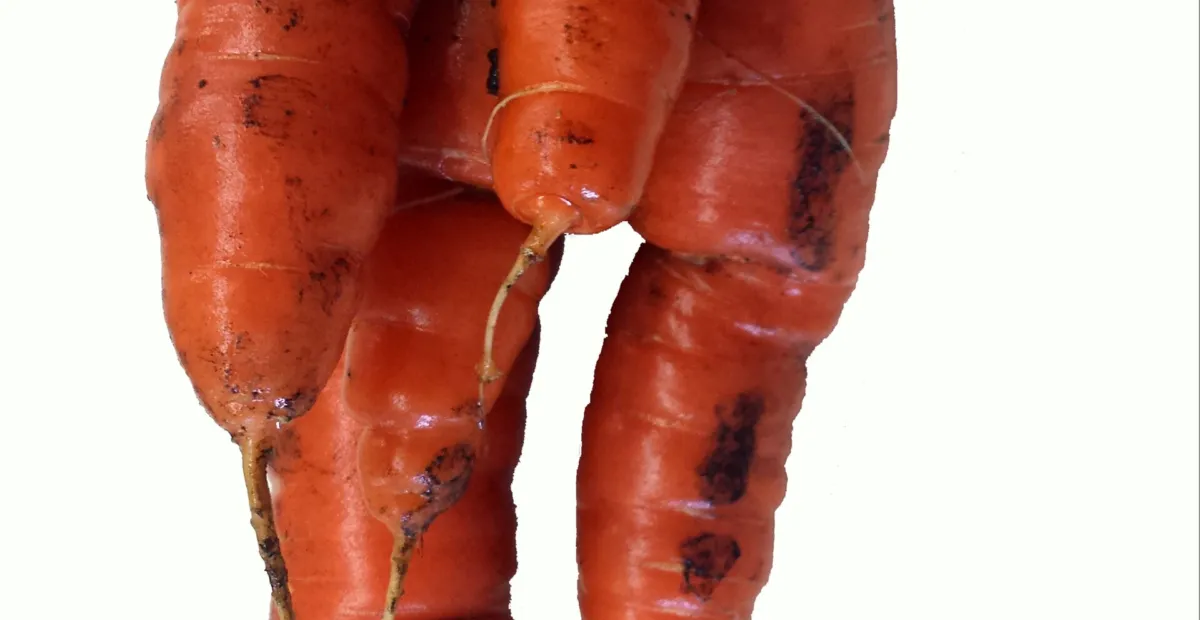
Galling varies with host, cultivar, nematode population and soil conditions. M. hapla often produces relatively small, distinct galls; carrots may become severely forked, while lettuce roots can develop beadlike swellings. Similar symptoms can be caused by other Meloidogyne species, so species-level confirmation should not be assumed from gall appearance alone.
Symptoms and identification
- Small, rounded or beadlike galls on roots, especially lateral roots.
- Forked, branched or distorted carrot roots and reduced market quality.
- Stunting, pale foliage, midday wilt and uneven growth despite adequate irrigation.
- Reduced root mass, poor transplant establishment and lower yield.
- Root decay or increased susceptibility to other soilborne pathogens in heavily infested plants.
- Symptoms often occur in irregular patches that expand as soil is moved.
Confirm the diagnosis by examining washed roots and submitting representative soil and root samples to a qualified diagnostic laboratory. Root galls alone do not reliably distinguish M. hapla from other root-knot nematodes.
Causes and spread
Infective second-stage juveniles hatch from eggs in soil and enter susceptible roots. Feeding triggers the plant to form enlarged cells that become a permanent food source. Eggs are produced in or near the root, usually in a gelatinous egg mass.
Spread occurs mainly through infested transplants, soil attached to tools, equipment, footwear and vehicles, contaminated irrigation or runoff water, and movement of infected roots or soil. Weeds and volunteer crops can maintain populations between production cycles. Host range varies among nematode populations and plant cultivars; many vegetables, legumes, tubers, strawberries, grapes and ornamentals can be susceptible, while grasses and cereals are often poor or nonhosts for northern root-knot nematode populations.
Life cycle and persistence
The life cycle includes an egg, four juvenile stages and an adult. The first molt occurs in the egg. Mobile second-stage juveniles hatch, move through moist soil toward roots, penetrate near the root tip or other susceptible tissue, and establish feeding sites. They molt and become sedentary third- and fourth-stage juveniles and then adults.
Females swell within the root and produce egg masses containing many eggs. Under favorable conditions, a generation may be completed in roughly several weeks, although timing depends strongly on host and temperature. Development and invasion are favored around 68–77°F (20–25°C). Eggs and juveniles can survive freezing field temperatures better than many warm-climate root-knot nematodes, helping the pest persist through northern U.S. winters.
Treatment and control
There is no dependable rescue treatment that removes established nematodes from living roots during the crop cycle. Remove severely affected annual plants and as much root material as practical, dispose of them away from production beds, and avoid incorporating heavily infested roots where susceptible crops will follow.
Base the next steps on a soil and root test. Use a rotation of adequate length with verified poor or nonhost crops, maintain rigorous weed control, and consider heat-based soil treatment such as properly conducted solarization where climate, bed layout and crop timing make it practical. In commercial production, consult the local Extension service or crop adviser about resistant cultivars, preplant treatments, biofumigant cover crops, organic amendments and registered nematode-management products. Results are site-specific and should be evaluated with follow-up sampling.
Low-impact and biological control
Integrated nonchemical management is the main practical approach for gardens and many small-scale systems. Start with clean planting material, remove infested roots, suppress weeds, and rotate away from susceptible crops. Corn or another locally verified nonhost grass/cereal may help lower M. hapla populations, but it should not be assumed effective against every root-knot species.
Solarization can reduce nematodes in the upper soil layer when clear plastic is tightly sealed over moist soil during the hottest part of the season; effectiveness depends on sunlight, soil depth and duration. Compost and other organic amendments may improve plant tolerance and soil biological activity, but they should not be presented as a guaranteed nematode cure. Commercial biological nematicides and biocontrol products can have variable results and should be used only when their label and local recommendations fit the crop and site.
Prevention
- Use clean, certified transplants, crowns, runners and nursery stock; inspect roots when practical.
- Obtain a laboratory nematode assay before choosing a rotation or treatment, particularly where several Meloidogyne species may occur.
- Rotate susceptible vegetables, strawberries and ornamentals with documented poor or nonhost crops. In many northern U.S. production systems, corn and other grasses or cereals can reduce M. hapla populations, but verify the crop and nematode species because some grasses can host other root-knot species.
- Control weeds and volunteer nightshades, legumes and other potential hosts throughout the season and during fallow periods.
- Prevent movement of infested soil: clean tools, tillage equipment, footwear, harvest equipment and containers before entering clean areas.
- Remove crop roots promptly after harvest and avoid moving soil or infected plant debris to new beds.
- Select cultivars described by a reliable regional source as resistant or tolerant to the confirmed nematode population; resistance to one root-knot species does not guarantee resistance to M. hapla.
Interesting facts
- M. hapla is especially associated with cooler regions and is one of the most important root-knot nematodes in the northern United States.
- Its galls are often smaller than those produced by warm-climate species such as M. incognita, but gall size is not a reliable species identification method.
- Carrots may show severe forking, while lettuce can develop distinctive beadlike root galls.
- Eggs and juveniles can survive below 32°F (0°C), contributing to persistence in northern climates.
- Host suitability can vary by nematode population and cultivar, so published host lists should guide—but not replace—local testing.
Use only nematicide products legally authorized for the specific crop, site and northern root-knot nematode problem in the United States, and follow the current product label exactly. Product registrations, crop uses, reentry intervals, protective requirements and application restrictions can change. Do not use a pesticide based solely on root galling or on recommendations for a different Meloidogyne species; consult your state Extension service and confirm the diagnosis first.