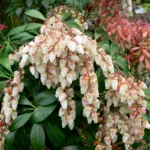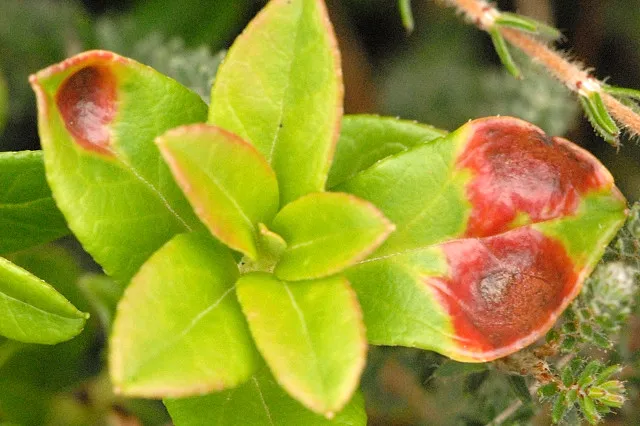
Azalea leaf and flower gall
Exobasidium vacciniiAzalea leaf and flower gall overview
Azalea leaf and flower gall is a fungal disease associated with Exobasidium vaccinii. On azaleas and rhododendrons it produces swollen, thickened, curled leaves, flowers or shoots that may become pale green, pink or white and develop a white spore-producing surface. The disease is usually cosmetic, but prolonged spring wetness, poor airflow and overhead irrigation can increase infection and spread.
Typical conditions
Overview
Azalea leaf and flower gall typically appears in spring on newly expanding leaves, flower parts, shoots or occasionally seed capsules. Infected tissue becomes enlarged, fleshy or leathery, and distorted. Galls may be pale green, pink, white or reddish at first, then develop a white, velvety layer of spore-producing structures during humid weather before drying, browning and hardening.
On blueberry and related Vaccinium hosts, reddish leaf symptoms may occur with little swelling. However, some blueberry leaf-and-fruit diseases once called E. vaccinii are now attributed to other Exobasidium species, so host identity and symptom details matter.
Symptoms and identification
Typical symptoms include localized or whole-leaf swelling, thickening, curling and abnormal enlargement. Early galls are pale green, pink, white or sometimes red. As they mature, a white powdery or velvety spore layer may cover the distorted tissue, especially during prolonged humidity. Later, galls shrivel, turn brown and become hard.
- Azalea and rhododendron: fleshy distorted leaves, shoots or flowers.
- Camellia: thickened, curled, waxy-looking leaves or distorted flowers.
- Some Vaccinium hosts: bright red leaves, blisters, leaf spots or fruit-associated symptoms, which require careful confirmation.
Causes and spread
Spread is favored when spores from mature white-coated galls reach newly emerging tissue during rain, fog, prolonged dew or overhead irrigation. Dense canopies, poor air circulation and shaded locations extend leaf-wetness periods. Splashing water and handling wet infected tissue can move spores locally. The disease is not caused by nutrient excess, and fertilizer will not correct the characteristic galls.
Life cycle and persistence
The fungus survives on infected plant tissue and can remain associated with buds, shoots or other overwintering surfaces. Infection is most important as new leaves and flower buds emerge in spring. Under wet conditions, mature galls produce airborne basidiospores that can move by wind, splashing water and contact with wet foliage. Infection is favored when susceptible young tissue remains wet for extended periods. The disease is commonly described as having one major infection period each season, although epidemiology differs among Exobasidium species and hosts.
Treatment and control
There is no practical cure for tissue already transformed into a gall. In ornamental plantings, hand-pick or prune out infected leaves, flowers and shoot tips, preferably before the white spore-producing surface appears. Make cuts back to healthy tissue where practical and remove fallen or detached galls.
If disease is recurring or severe, improve airflow, reduce overhead wetting and correct site crowding. On blueberry or cranberry, obtain a crop-specific diagnosis before treatment because symptoms historically attributed to E. vaccinii may be caused by other Exobasidium species with different management guidance.
Low-impact and biological control
For home landscapes and organic gardens, remove and discard galled leaves, flowers and shoot tips as soon as they are noticed and before the white spore layer develops. Place diseased material in household trash or remove it from the property; do not compost it unless the composting system reliably reaches pathogen-killing temperatures.
- Prune during dry weather with clean, disinfected tools.
- Thin crowded growth to improve light penetration and airflow.
- Water at the soil line with drip or low-trajectory irrigation rather than wetting foliage.
- Avoid moving wet plant debris or working through infected plants when foliage is damp.
- Maintain appropriate spacing and avoid excessively sheltered, humid planting sites.
Prevention
Inspect azaleas, rhododendrons and other susceptible Ericaceae during bud break and early spring growth. Remove early galls before they sporulate, keep the canopy open with appropriate pruning, and irrigate the root zone without wetting leaves. Avoid planting susceptible shrubs in persistently foggy, poorly ventilated sites. Clean pruning tools between plants, especially when symptoms are present.
For commercial blueberry or cranberry production, use locally validated disease-monitoring and spray-timing recommendations because the correct Exobasidium species and fungicide registrations vary by crop, region and production system.
Interesting facts
- The familiar name “azalea gall” is used even though related symptoms occur on many plants in the heath family.
- Only part of a leaf may be transformed into a gall, leaving the remainder apparently normal.
- The white surface is a reproductive spore-producing layer, not ordinary powdery mildew.
- Older references often used Exobasidium vaccinii broadly; DNA-based studies have separated some formerly combined host-disease groups.
- Most landscape infections are unsightly rather than life-threatening, although repeated severe infection can reduce photosynthetic tissue and flowering.
Use fungicides only when a product is legally authorized and specifically labeled for the crop, site and disease in the United States. Follow the current label exactly, including application timing, personal protective equipment, re-entry and harvest restrictions. For landscape azaleas and rhododendrons, chemical treatment is often unnecessary; sanitation and moisture management are generally more dependable.
Affected plants
The plants below are linked to this problem by structured host-plant data. The list updates automatically as new plant profiles are added.