
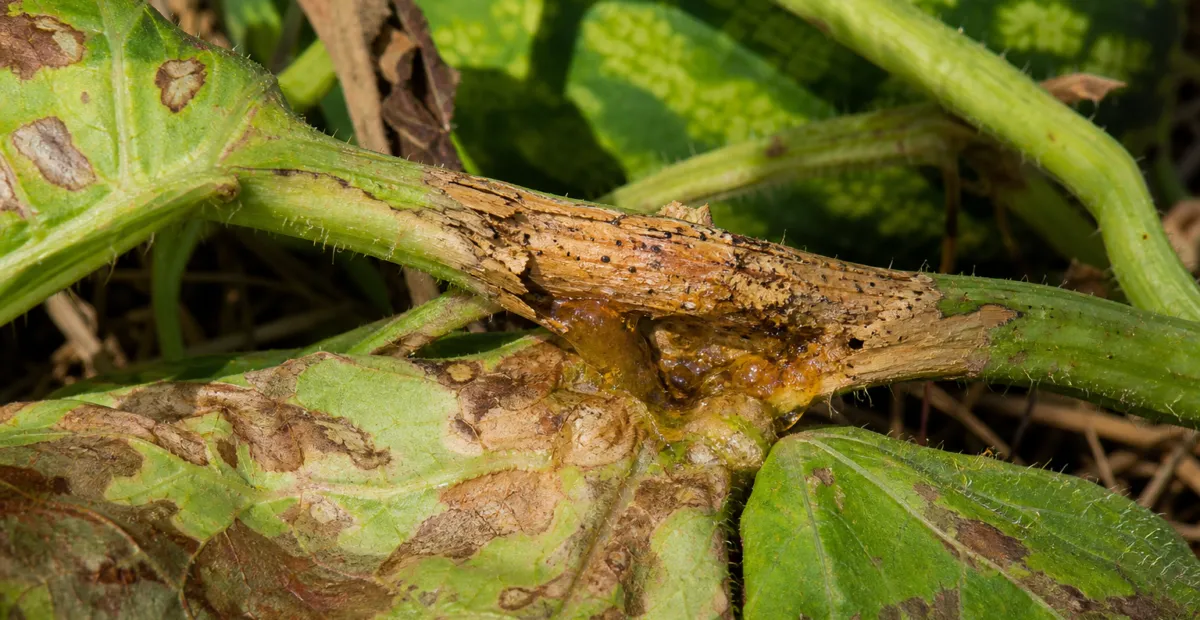
Gummy Stem Blight and Black Rot
Didymella bryoniae (synonym: Stagonosporopsis cucurbitacearum; anamorph: Phoma cucurbitacearum)Gummy Stem Blight and Black Rot overview
Gummy stem blight and black rot is a fungal disease of cucurbits caused by Didymella bryoniae, with leaf blight, cracked stem lesions that may exude amber-colored gum, and fruit rot that becomes dark or black. It is favored by wet foliage, high humidity, infected seed and crop debris, and can be especially damaging in warm, humid production regions of the United States.
Typical conditions
Overview
Didymella bryoniae causes a destructive disease complex affecting cucurbit leaves, petioles, stems, crowns and fruit. Symptoms vary with the host and cultivar, and related Stagonosporopsis species can produce very similar gummy stem blight symptoms. On fruit, infections are generally described as black rot.
The disease is reported from the United States and worldwide. In the United States it is particularly important in warm, humid regions, while greenhouse cucumber and winter squash may also be affected in cooler areas.
Symptoms and identification
- Leaves develop tan to dark-brown spots, often beginning at margins or between veins. Lesions may have yellow halos, crack as they age, and expand into blight.
- Cucumber, pumpkin and summer squash may show brown, wedge-shaped lesions extending inward from the leaf margin. Melon leaves often develop interveinal browning or circular tan spots.
- Tan to brown lesions on stems, petioles or crowns may crack and release sticky amber, tan or reddish-brown gum. Small raised black pycnidia or other dark fruiting structures may be visible.
- Fruit lesions are initially water-soaked and may later become dark brown to black, sunken or soft. Small black pycnidia may develop on the affected surface, and secondary organisms can accelerate collapse.
- Winter squash may show little leaf or stem blight but can still develop black rot on fruit.
Causes and spread
The pathogen can be introduced in infected seed or transplants and can survive between crops in diseased vines and crop debris. Spores are produced during wet weather and spread by splashing rain, overhead irrigation, workers, tools and movement through wet plants. Wounds caused by insects, powdery mildew, pruning, handling or abrasion can increase infection. Dense canopies, prolonged leaf wetness and high humidity favor disease development.
Life cycle and persistence
Didymella bryoniae survives between seasons in infected cucurbit residue and may be seedborne. Under wet conditions, pycnidia and sometimes pseudothecia form in infected tissue and release spores. Spores germinate on wet plant surfaces, enter through wounds or susceptible tissue, and produce expanding leaf, petiole, stem or fruit lesions. New fruiting bodies develop in lesions and repeat local spread during periods of rain, irrigation or persistent humidity. The pathogen grows over approximately 54–90°F, with infection favored near about 68°F on melon and 75–77°F on watermelon and cucumber.
Treatment and control
Remove badly infected leaves, fruit and vine sections when practical, especially in home gardens, and dispose of them away from compost used for cucurbit production. Avoid handling plants while they are wet. Improve air movement, reduce humidity and switch from overhead irrigation to drip irrigation. Fungicides are most useful as part of a preventive program begun before disease is extensive; they generally protect healthy tissue and do not restore severely blighted leaves or rotted fruit. Because similar symptoms can be caused by other Stagonosporopsis species or unrelated pathogens, laboratory diagnosis may be needed for high-value crops or recurring outbreaks.
Low-impact and biological control
- Use resistant cultivars, clean seed, crop rotation and rigorous removal of infected residue as the foundation of control.
- Use drip irrigation, mulch to reduce soil splash, and avoid working in wet foliage.
- Scout weekly, remove isolated lesions or fruit early, and sanitize stakes, trellises, pruners and hands between plants.
- Use biological or organically approved products only when they are specifically labeled for the crop and disease in the United States; efficacy is generally variable and they should supplement sanitation and moisture management rather than replace them.
- Use integrated pest management for cucumber beetles and other insects that wound cucurbit tissue.
Prevention
- Start with certified, disease-free seed and reputable transplants. Do not save seed from symptomatic plants.
- Rotate cucurbits out of the affected bed for at least two years where practical; longer rotations are preferable when residue or recurring disease is severe.
- Use resistant or less susceptible cultivars when available, including resistant selections of watermelon, pumpkin, buttercup squash and canary melon.
- Use drip irrigation or water at the soil surface rather than wetting foliage. Irrigate early enough for leaves to dry before night.
- Provide adequate spacing, trellising where appropriate and good greenhouse ventilation to reduce humidity and leaf wetness.
- Remove and destroy diseased fruit and vines in small gardens. In larger plantings, incorporate residue promptly to encourage decomposition and control volunteer cucurbits.
- Manage cucumber beetles, aphids, powdery mildew and other problems that create wounds or weaken foliage.
Interesting facts
- The same disease is commonly named gummy stem blight when leaves and stems are affected and black rot when fruit is affected.
- Small black pycnidia are useful diagnostic structures, but visual symptoms alone may not reliably distinguish D. bryoniae from related gummy stem blight pathogens.
- The disease affects commonly cultivated cucurbits, but susceptibility varies among species, cultivars and horticultural types.
- Winter squash can escape severe leaf and stem blight yet still develop black rot in fruit.
- Warm, humid regions of the southeastern United States are especially favorable, although greenhouse cucumber and cucurbit crops in other regions can also be affected.
Use only fungicides legally registered and currently labeled in the United States for the specific cucurbit crop and gummy stem blight or black rot problem. Follow the current label exactly, including rate, application interval, personal protective equipment, re-entry interval and preharvest interval. Rotate fungicide FRAC groups where labels permit because resistance to some fungicide groups, including benzimidazole products and azoxystrobin, has been documented in populations of the pathogen. Contact your state extension service for current crop-specific recommendations.