
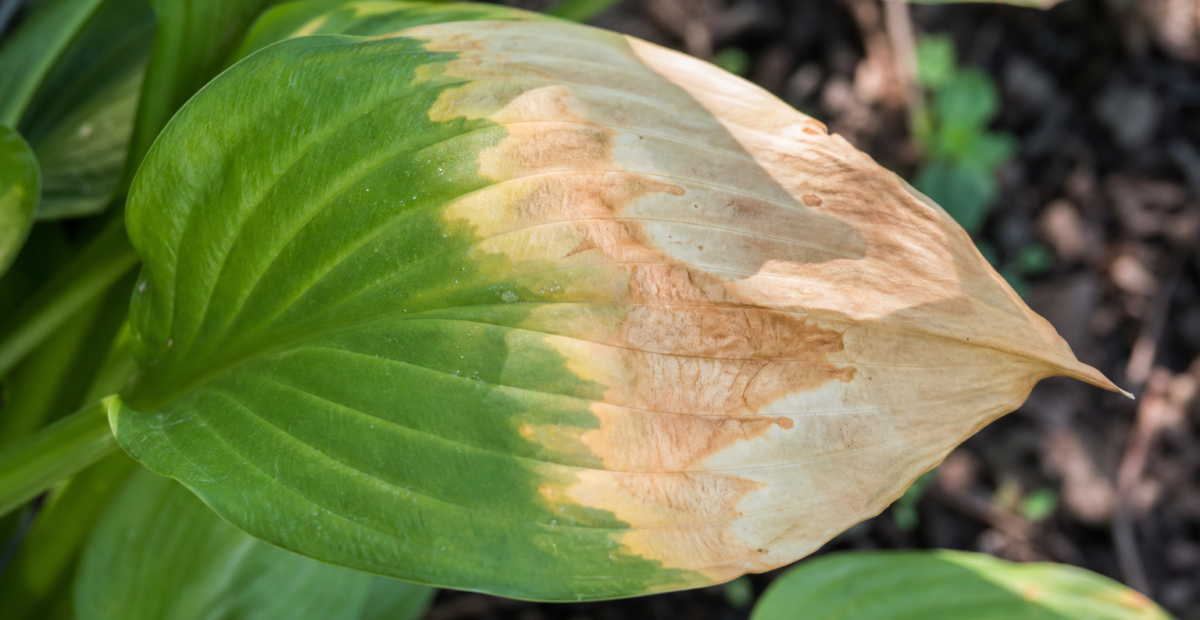
Leaf sunburn
Leaf sunburn overview
Leaf sunburn is permanent injury to foliage caused by light and heat exceeding the plant’s ability to protect and cool its tissues. It is common after shade-grown plants, houseplants, seedlings, or newly transplanted specimens are moved suddenly into full sun. Bleached patches, tan papery areas, and crispy margins may develop within hours or over several hot, dry days. The disorder does not spread biologically, but additional leaves can be damaged while exposure and water stress continue.
Typical conditions
Overview
Leaf sunburn occurs when leaves that are not sufficiently acclimated to intense light are exposed to strong sun, particularly hot afternoon or reflected sunlight. Shade-adapted ornamentals, houseplants moved outdoors, seedlings, recently propagated plants, and newly transplanted specimens are especially vulnerable. The injury is often localized to the sun-facing surface or upper canopy.
Unlike a contagious leaf disease, sunburn does not move from plant to plant. However, the same environmental stress may injure progressively more foliage if the plant remains in excessive light or its root zone becomes too dry.
Symptoms and identification
- Bleached pale green, yellow, cream, or white patches on the most sun-exposed leaf tissue.
- Tan to brown areas that become thin, papery, dry, and crispy.
- Brown leaf margins or tips, leaf curling, wilting, and premature leaf drop during continuing heat or drought stress.
- Damage may be sharply associated with the exposed side, while shaded tissue remains green.
- Sunburned tissue does not develop the progressive spot expansion, fungal structures, ooze, or insect signs typical of many biotic problems.
Causes and spread
Sunburn is not caused by an organism and does not spread biologically. New injury develops when additional leaves remain exposed to excessive light, heat, wind, or reflected radiation. Risk rises after moving a plant from shade to full sun, removing protective canopy, severe pruning, transplanting, root loss, drought, compacted soil, or placing a container on hot pavement. Inadequate root moisture limits cooling through transpiration, while hot wind accelerates water loss.
Life cycle and persistence
There is no pathogen or insect lifecycle. Injury begins when light and leaf temperature exceed the tissue’s protective capacity. Cells in exposed areas are damaged quickly, sometimes within hours, or gradually over several hot, dry days. Dead tissue remains permanently discolored; recovery consists of protecting surviving tissue and producing new leaves adapted to the site.
Treatment and control
First reduce the stress: provide temporary filtered shade, move containers away from hot pavement or reflective walls, and irrigate the root zone thoroughly when soil moisture is inadequate. Do not mist or spray foliage as the primary treatment, and avoid watering at the hottest part of the day when rapid evaporation is likely.
Leave partly green leaves in place because they can still photosynthesize. Remove only leaves that are fully dead, badly torn, or likely to interfere with normal growth, using clean tools. Do not expect burned tissue to turn green again. Monitor new growth over the following weeks; persistent scorch despite corrected light and moisture suggests another problem such as root damage, salt accumulation, chemical injury, nutrient imbalance, or infectious leaf scorch.
Low-impact and biological control
Use cultural and physical measures rather than pesticides:
- Move container plants to bright filtered light or morning sun with afternoon shade.
- Acclimate houseplants, seedlings, and nursery stock gradually over one to two weeks, increasing direct exposure in small steps.
- During extreme heat, suspend white or knitted shade cloth above the foliage rather than laying it directly on the plant. A temporary cloth blocking about 30–50% of sunlight is often useful, but remove or reduce it when heat passes so the plant receives appropriate light.
- Mulch the root zone with about 2–3 inches of organic mulch, keeping mulch away from stems and crowns, to moderate soil temperature and reduce evaporation.
- Water deeply at the root zone when the soil is dry according to the plant’s needs; avoid frequent shallow watering and avoid keeping roots waterlogged.
Prevention
- Match each plant to its documented light requirement and choose sun-acclimated stock when planting in full-sun sites.
- Introduce indoor plants, seedlings, cuttings, and shade-grown nursery plants to outdoor light gradually, beginning in a sheltered, shaded location.
- Prefer morning sun and filtered afternoon light for shade-loving plants such as hostas, caladiums, pothos, philodendrons, peace lilies, and many ferns.
- Maintain consistent root-zone moisture during hot weather, especially after transplanting, without overwatering poorly drained soil.
- Protect plants from hot reflected light and drying wind; use temporary shade during heat waves.
- Keep a healthy canopy on vegetable plants and avoid unnecessary pruning that suddenly exposes leaves or fruit to intense sun.
Interesting facts
- Spring sunlight can be damaging even when air temperatures are mild because plants may still be acclimated to lower winter or indoor light.
- White or reflective walls, pavement, windows, and south- or west-facing exposures can intensify the heat load on foliage.
- Blue-leaved hostas have a waxy surface and generally need more shade than many green-leaved types to avoid bleaching and burn.
- Leaf sunburn is distinct from winter sunscald on thin-barked trunks, although both are forms of direct-sun environmental injury.
No pesticide is effective against leaf sunburn because it is an abiotic disorder. Do not apply fungicides or insecticides unless a separate pest or disease has been positively identified. If any product is considered for another problem, use only products legally authorized for that crop and problem in the United States, and follow the current label exactly.
Affected plants
The plants below are linked to this problem by structured host-plant data. The list updates automatically as new plant profiles are added.
 Caladium ‘Aaron’Caladium 'Aaron'
 Caladium ‘Carolyn Whorton’Caladium 'Carolyn Whorton'
 Caladium ‘Desert Sunset’Caladium 'Desert Sunset'
 Caladium ‘Fiesta’Caladium 'Fiesta'
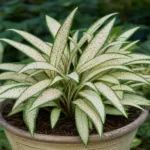 Caladium ‘Gingerland’Caladium 'Gingerland'
 Caladium ‘Kathleen’Caladium 'Kathleen'
 Caladium ‘Lance Whorton’Caladium 'Lance Whorton'
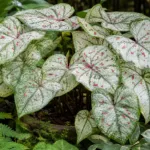 Caladium ‘Marie Moir’Caladium 'Marie Moir'
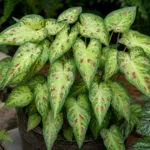 Caladium ‘Miss Muffet’Caladium 'Miss Muffet'
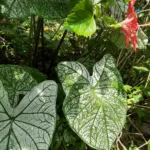 Caladium ‘Moonlight’Caladium 'Moonlight'
 Caladium ‘Pink Symphony’Caladium 'Pink Symphony'
 Caladium ‘Postman Joyner’Caladium 'Postman Joyner'