
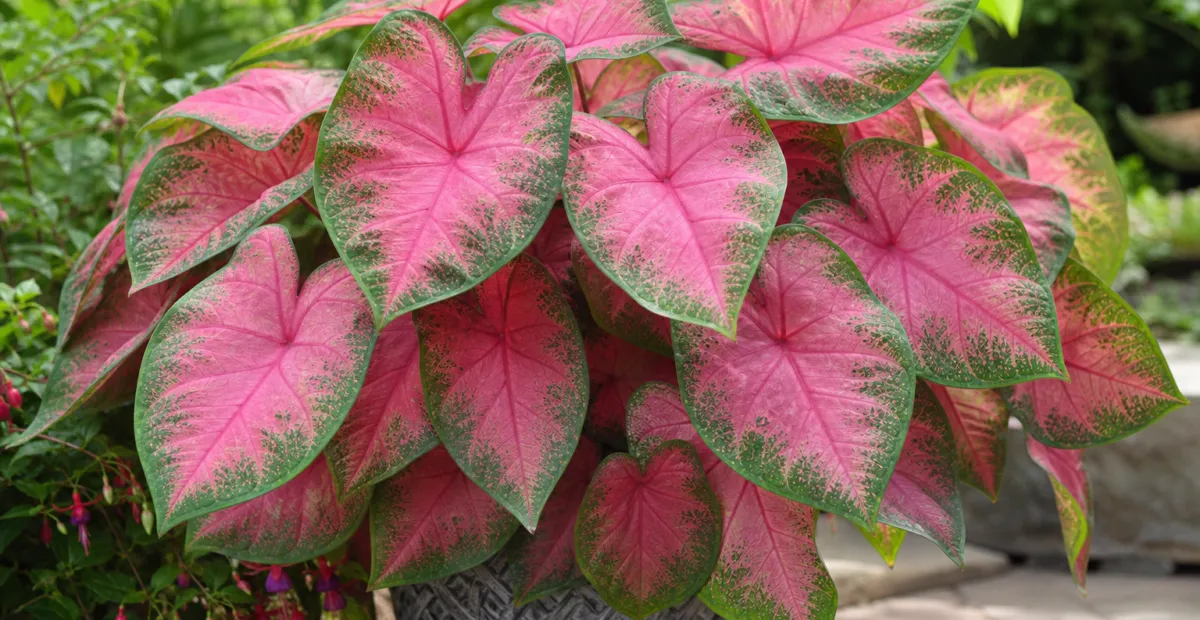
 AI-generated illustration
Caladium ‘Kathleen’ short overview
Caladium 'Kathleen' is a pink fancy-leaved caladium valued for its vivid, heart-shaped foliage rather than its inconspicuous blooms. In the United States it performs best during warm weather in bright filtered light or partial shade, with rich, evenly moist but well-drained soil. Grow it in containers or shaded beds, and lift and store the tubers before cold weather because this tropical plant is not frost hardy.
Taxonomic classification
Caladium ‘Kathleen’ care guide
Light and placement
Give bright filtered light, dappled shade, or gentle morning sun with afternoon protection. A north- or east-facing exposure, shaded patio, or position beneath a light canopy is suitable. Too much direct midday sun can bleach, fade or scorch the pink foliage; too little light produces weaker petioles and less vigorous growth.
Watering and humidity
Keep the mix evenly moist during active growth, watering thoroughly when the upper surface begins to dry and allowing excess water to drain. Increase consistency during hot, bright weather and reduce watering as leaves decline in late season. Maintain humidity around indoor plants, but avoid chronically wet foliage and saturated soil.
Soil and growing medium
Use a loose, organic-rich potting mix or well-amended garden soil that drains freely while retaining some moisture. A mildly acidic substrate is suitable. Avoid dense, waterlogged soil, which encourages tuber rot, and do not let containers stand in runoff.
Feeding
Feed during active leaf growth with a balanced, water-soluble fertilizer at half strength every 3–4 weeks, or use a controlled-release product according to its label. Water first if the mix is dry. Stop feeding as foliage declines and the plant enters dormancy; excess fertilizer can damage roots and tubers.
Growth and habit
This is a clump-forming, tuberous plant that produces successive leaves during warm, humid growth. The foliage display weakens as temperatures and light decline, followed by dormancy. Remove damaged leaves promptly and avoid disturbing developing tubers during the growing season.
Planting and repotting
Plant tubers outdoors after the last frost, when soil is consistently warm, with the growing eyes facing upward and covered by about 1 inch of soil. Space plants roughly 8–12 inches apart, allowing room for a dense foliage clump. Establish gradually with even moisture.
Repot or divide dormant tubers in late winter or early spring, using a clean container with drainage holes. Plant into fresh, lightly moist mix and move the pot into warmth before active growth begins.
Propagation and pruning
Propagation
Propagate commercially and horticulturally by dividing tubers into sections, ensuring each section retains a viable eye. Divide dormant tubers in late winter or early spring, allow cut surfaces to dry briefly, and plant in warm conditions. Seed is not a dependable method for preserving cultivar traits.
Pruning
Pruning is limited to removing yellowing, wind-damaged or diseased leaves at the base with clean shears. Do not cut healthy foliage unnecessarily, since leaves replenish the tuber. Cut back remaining foliage only after it naturally declines before dormancy or storage.
Overwintering
Lift tubers before frost after foliage begins to decline. Dry them gently, remove loose soil, and store in a dry, frost-free place around 70–75°F. Replant in spring only after the danger of frost has passed and the soil has warmed. Container plants can be moved indoors, but dormant tubers still need protection from cold and excess moisture.
Uses
Use 'Kathleen' as a foliage accent in shaded borders, patio containers, window boxes and seasonal indoor displays. Its pink leaves provide color where flowering plants may struggle. It is ornamental only and should not be eaten; handle damaged tissue carefully because the sap is irritating.
Appearance
A fancy-leaved caladium with broad, heart-shaped blades carried on upright, succulent-looking petioles. 'Kathleen' is documented as pink-leaved; commercial and extension descriptions also associate the cultivar with green margins or edging. The leaves are thin and easily torn by wind, hail or rough handling.
Flowering
Caladiums rarely flower in cultivation. When flowering occurs, the plant produces a small arum-type inflorescence: a spadix enclosed by a yellow-green spathe. The display is secondary to the foliage, and reliable cultivar-specific flowering timing for 'Kathleen' is not documented.
Pollination and visitors
No reliable documentation was found for a characteristic animal pollinator or visitor specific to Caladium 'Kathleen'. The rare arum-like inflorescences are not a dependable wildlife-attraction feature, so pollinator attraction is conservatively recorded as unknown.
Diseases and pests
Diseases
Prevent disease by using clean tubers, sterile potting media, containers with drainage, and careful watering. Tuber rot is associated with cold, saturated conditions. Remove collapsing tissue, isolate affected plants, and discard severely rotted tubers rather than replanting them.
Pests
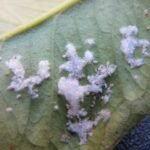
Slugs and snails may chew holes in the leaves; aphids, whiteflies and spider mites can occur indoors or under stress. Reduce hiding places, inspect leaf undersides, hand-pick mollusks, and use targeted controls only when necessary.
Related diseases and pests
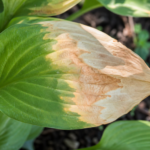
Only Plant Doctor profiles whose host data indicate this plant may be affected are shown here.
Toxicity and pollen
Caladium tissues contain insoluble calcium oxalate crystals. Chewing or swallowing can cause immediate oral pain, burning, swelling, drooling and difficulty swallowing; sap may irritate skin and eyes. Keep plant material and tubers away from children and animals, and seek medical or veterinary advice after ingestion.
- Pollination / pollen
- No cultivar-specific pollen-release data; flowering is rare
Caladium 'Kathleen' rarely produces an inflorescence, and cultivar-specific airborne pollen measurements or allergy reports were not found. Do not treat this as proof of zero allergy risk. Avoid contact with sap and plant tissues for irritation-related reasons, which are separate from pollen exposure.
Native habitat
The Caladium genus is native to tropical regions of Central and northern South America, where plants grow in warm, humid environments with seasonal moisture and filtered light. Cultivated plants favor organic, moisture-retentive but aerated substrates rather than exposed, dry or cold sites.
Interesting fact
The cultivar is classified as a fancy-leaved caladium with pink foliage. University breeding literature identifies 'Kathleen' as a traditional pink cultivar with limited sun tolerance. Caladiums are grown from tubers, although commercial sources often call them bulbs. Leaf color can fade or scorch when plants receive excessive direct sun.
Frequently asked questions (FAQ)
The most relevant questions about this plant, with short and direct answers.
🌱Quick care
How do you care for Caladium 'Kathleen'?⌄
Grow Caladium 'Kathleen' in bright filtered light or partial shade, rich well-drained soil, and evenly moist conditions. Protect it from cold temperatures and harsh direct sun.
Is Caladium 'Kathleen' an indoor or outdoor plant?⌄
Caladium 'Kathleen' can grow indoors or outdoors, but it usually performs best outdoors in warm, humid conditions with filtered light. Indoors, provide bright indirect light, warmth, and consistent moisture.
How much light does Caladium 'Kathleen' need?⌄
Caladium 'Kathleen' needs bright filtered light to partial shade. Gentle morning sun may be tolerated, but strong afternoon sun can scorch or fade its pink leaves.
🌤️Environment and placement
Can Caladium 'Kathleen' grow in full shade?⌄
Caladium 'Kathleen' can tolerate shade, but dense shade may produce slower growth and less vibrant foliage. Bright indirect or dappled light generally gives better results.
Can Caladium 'Kathleen' tolerate direct sunlight?⌄
Caladium 'Kathleen' tolerates limited gentle sun better than intense direct sunlight. Traditional pink cultivars such as 'Kathleen' are more likely to fade or scorch in strong sun than sun-tolerant caladium cultivars.
What temperature is best for Caladium 'Kathleen'?⌄
Caladium 'Kathleen' grows best in warm conditions, generally with temperatures above 60°F. Protect it when temperatures approach 45°F because it is frost tender and may suffer cold damage.
Can Caladium 'Kathleen' survive winter outdoors in the United States?⌄
Caladium 'Kathleen' can overwinter outdoors only in reliably warm areas where the ground does not experience damaging cold. In most of the United States, lift the tubers before frost and store them indoors.
💧Care and problems
How often should I water Caladium 'Kathleen'?⌄
Water Caladium 'Kathleen' whenever the soil surface begins to dry, keeping the mix evenly moist but not waterlogged. Containers may need more frequent watering during hot, dry weather.
Why are the leaves on my Caladium 'Kathleen' turning yellow?⌄
Yellow leaves on Caladium 'Kathleen' commonly result from natural dormancy, cold exposure, overwatering, or insufficient light. If the plant is entering fall dormancy, allow the foliage to decline before storing the tuber.
Why is my Caladium 'Kathleen' wilting?⌄
Caladium 'Kathleen' may wilt when the soil becomes too dry, temperatures fall, or the tuber is entering dormancy. Water thoroughly if the soil is dry, but check for poor drainage or root and tuber rot if it remains wet.
Why are Caladium 'Kathleen' leaves fading or turning tan?⌄
Fading or tan leaves on Caladium 'Kathleen' are often caused by excessive direct sun, especially during hot afternoons. Move it to filtered light and keep the soil evenly moist.
Does Caladium 'Kathleen' need fertilizer?⌄
Caladium 'Kathleen' benefits from light, regular feeding during active growth. Use a balanced liquid fertilizer according to the label, and stop feeding as the plant naturally enters dormancy.
What pests affect Caladium 'Kathleen'?⌄
Caladium 'Kathleen' can be affected by common sap-feeding pests such as aphids, mealybugs, and spider mites. Inspect leaves regularly and address infestations promptly with a suitable treatment labeled for ornamental plants.
🪴Planting and repotting
What soil is best for Caladium 'Kathleen'?⌄
Use rich, organic, well-drained soil that stays evenly moist for Caladium 'Kathleen'. Compost or other organic matter can improve moisture retention without creating stagnant, waterlogged conditions.
When should I plant Caladium 'Kathleen' tubers?⌄
Plant Caladium 'Kathleen' tubers outdoors after the danger of frost has passed and the soil has warmed. In colder parts of the United States, start them indoors several weeks before the expected last frost.
How deep should I plant Caladium 'Kathleen' tubers?⌄
Plant Caladium 'Kathleen' tubers with the eyes or knobby growth points facing upward and cover them lightly with soil. A typical outdoor planting depth is about 2 inches, adjusted slightly for tuber size and soil conditions.
Can Caladium 'Kathleen' grow in a container?⌄
Caladium 'Kathleen' grows well in containers with drainage holes and rich, moisture-retentive potting mix. Choose a container large enough for the tuber and place it in bright filtered light or partial shade.
When should I repot Caladium 'Kathleen'?⌄
Repot Caladium 'Kathleen' when the container is crowded, the mix drains poorly, or the plant is being restarted from dormancy. Handle the tuber carefully and replant it with its growth points facing upward.
✂️Propagation and pruning
How do you propagate Caladium 'Kathleen'?⌄
Propagate Caladium 'Kathleen' primarily by dividing its tuber during dormancy or before active growth begins. Each division must retain at least one healthy eye, and cut surfaces should be allowed to dry before planting.
Can you propagate Caladium 'Kathleen' from a leaf cutting?⌄
A single leaf cutting will not reliably produce a new Caladium 'Kathleen' plant because new growth develops from the tuber. Propagation is normally done by tuber division, while seed is mainly used for breeding and may not reproduce the cultivar accurately.
Should I remove flowers from Caladium 'Kathleen'?⌄
Remove flower stalks from Caladium 'Kathleen' if your priority is continued foliage production. Caladium flowers are inconspicuous, and allowing them to develop may divert energy and encourage earlier dormancy.
How do I overwinter Caladium 'Kathleen' tubers?⌄
Dig Caladium 'Kathleen' tubers in fall before hard frost, allow them to cure in a warm, dry, shaded place for about 1 to 2 weeks, and remove dry foliage. Store them in dry peat moss, vermiculite, or similar material in a cool, dry location where they will not freeze.
Can I leave Caladium 'Kathleen' tubers in the ground year-round?⌄
You can leave Caladium 'Kathleen' tubers in the ground only where winters remain warm and frost-free enough for caladiums. In most U.S. gardens, lifting and storing the tubers is safer than exposing them to cold, wet winter soil.
⚠️Toxicity and safety
Is Caladium 'Kathleen' toxic to cats and dogs?⌄
Yes, Caladium 'Kathleen' is toxic to cats and dogs if eaten because it contains insoluble calcium oxalates. Chewing can cause intense mouth irritation, drooling, swelling, vomiting, and difficulty swallowing; contact a veterinarian or poison service promptly after ingestion.
Is Caladium 'Kathleen' poisonous to people?⌄
Yes, Caladium 'Kathleen' is toxic if eaten and contains insoluble calcium oxalate crystals. Ingestion can cause burning and swelling of the mouth, tongue, and lips, while sap may cause minor skin irritation.
What should I do if someone eats Caladium 'Kathleen'?⌄
Remove any plant material from the mouth, do not induce vomiting, and contact Poison Control in the United States at 1-800-222-1222 for guidance. Seek emergency care immediately for trouble breathing, severe swelling, or difficulty swallowing.
🌸Flowering and special interest
Does Caladium 'Kathleen' produce flowers?⌄
Caladium 'Kathleen' can produce a small, greenish to yellow-green spadix and spathe, but it is grown mainly for its pink foliage and may flower rarely. Remove the flower stalk if you want to prioritize leaf production.
What does Caladium 'Kathleen' look like?⌄
Caladium 'Kathleen' is a pink fancy-leaf cultivar with heart-shaped foliage and green margins. It is generally a medium-sized caladium, commonly reaching about 12 to 24 inches tall depending on tuber size and growing conditions.
Similar plants
 Yellow lantern chili (Capsicum chinense) care guideCapsicum chinense
 Capsicum baccatum care guideCapsicum baccatum
 Serrano (Capsicum annuum ‘Serrano’)Capsicum annuum 'Serrano'
 Purple Beauty (Capsicum annuum ‘Purple Beauty’)Capsicum annuum 'Purple Beauty'
 Numex Twilight (Capsicum annuum ‘Numex Twilight’)Capsicum annuum 'Numex Twilight'
 Explosive Ember Chili Pepper (Capsicum annuum ‘Explosive Ember’)Capsicum annuum 'Explosive Ember'