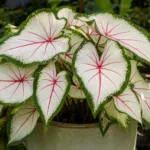
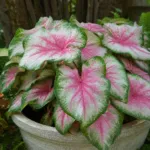
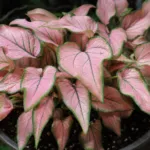
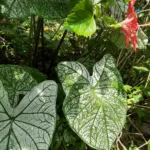
 AI-generated illustration
 Caladium ‘Marie Moir’ short overview
Caladium 'Marie Moir' is a rare, fancy-leaved caladium valued for its striking whitish-green to white leaves, green veining, red spotting, and contrasting brown petioles. It performs best in warm conditions, evenly moist but well-drained soil, and partial shade to shade. The plant grows from a tuber, flowers inconspicuously, and naturally becomes dormant as temperatures fall. In most of the United States, tubers must be lifted and stored indoors before frost.
Taxonomic classification
Caladium ‘Marie Moir’ care guide
Light and placement
Give bright filtered light, partial shade, or shade. An east-facing site with gentle morning sun and afternoon protection is suitable; a north-facing exposure can work in bright climates. Strong midday or afternoon sun may scorch the pale leaves, while very dim light can produce sparse, weaker growth and less effective coloration.
Watering and humidity
Keep the soil consistently moist but never saturated. Water thoroughly when the surface begins to dry, then allow excess water to drain completely. Increase monitoring during hot, windy weather and reduce watering gradually as leaves yellow and dormancy approaches. Indoors, avoid leaving the pot in standing water and provide humidity with good air movement.
Soil and growing medium
Use a rich, loose, moisture-retentive substrate that still drains freely. A mix based on loam, compost or other mature organic matter, and coarse material is suitable for containers. Caladiums generally perform best in slightly acidic soil; avoid compacted or persistently waterlogged conditions, which increase tuber-rot risk.
Feeding
Feed only during active leaf growth. In average rich soil, little fertilizer may be needed; in containers or sandy beds, apply a balanced or foliage-oriented slow-release fertilizer lightly, or use a half-strength liquid feed at intervals on moist soil. Avoid heavy nitrogen and never let granular fertilizer sit against leaves or tubers, as excessive feeding can reduce the white and red coloration.
Growth and habit
This cultivar emerges from a tuber and makes a seasonal clump of long-petioled, fancy leaves. Growth is strongest in warm soil with steady moisture. University of Florida observations found that ‘Marie Moir’ can produce relatively few leaves and may perform inconsistently from year to year, so tuber quality and growing conditions strongly affect display density.
Planting and repotting
Plant outdoors only after frost danger has passed and the soil has warmed to at least 60–70°F. Set the tuber with the puckered eye side upward, about 2 inches deep, and space plants approximately 8–12 inches apart. Water after planting and maintain even moisture while shoots establish.
Repot or transplant only when active growth is beginning and temperatures are warm. Handle the tuber gently, preserve emerging eyes, and use a container with drainage holes. Move up only slightly in pot size; oversized, wet containers can keep the medium cold and encourage rot.
Propagation and pruning
Propagation
Propagate commercially and vegetatively from dormant tubers. Divide only established, healthy tubers with multiple viable eyes, making clean cuts and allowing wounded surfaces to dry briefly before planting. Seed propagation is possible for breeding but does not reproduce the named cultivar reliably.
Pruning
Remove yellowing, damaged, or diseased leaves at the base with clean scissors. Do not cut healthy foliage during active growth. At dormancy, allow leaves to decline naturally before cutting them back, since the plant is transferring resources to the tuber.
Overwintering
In zones colder than 9, lift tubers before frost after foliage has naturally declined. Allow them to dry for 1–3 days in a shaded, ventilated place, then store at about 60°F or warmer in a dry medium such as vermiculite. Inspect periodically and discard soft or diseased tubers. Replant only after warm spring soil conditions return.
Uses
Use as a shaded bedding accent, container specimen, patio plant, or indoor seasonal foliage plant. Its white and red-spotted leaves are effective against dark green backgrounds and in woodland-style combinations. It is ornamental only and should not be eaten or used medicinally.
Appearance
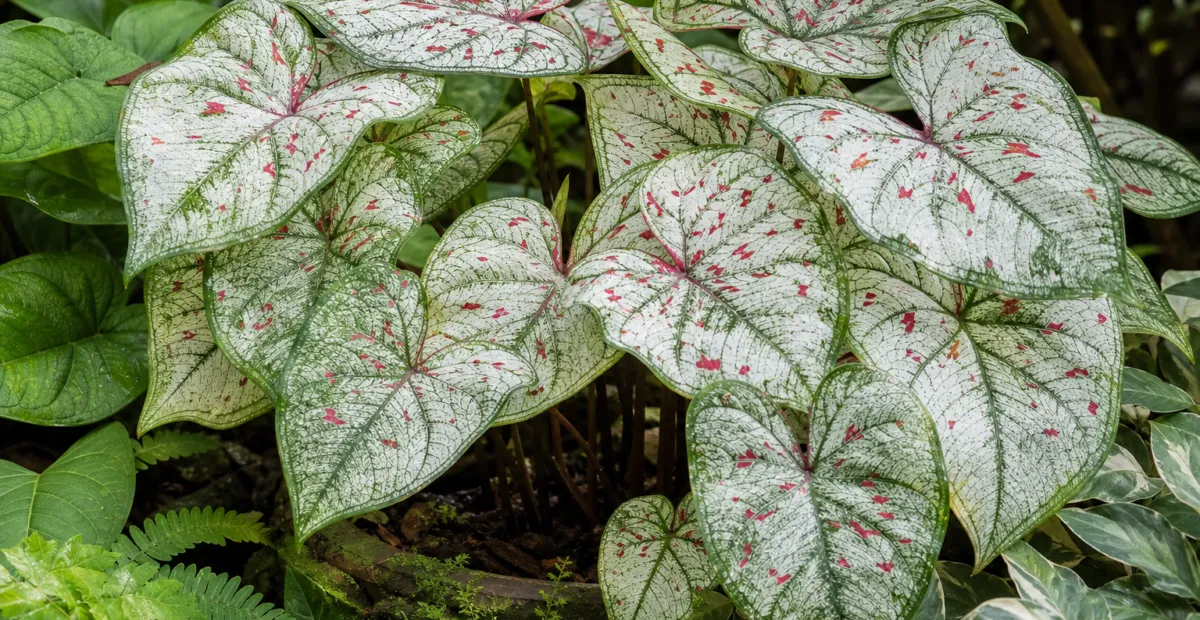
The cultivar has fancy-leaved, heart- to arrowhead-shaped blades with a pale whitish-green ground color, green veins, and conspicuous red spots. Petioles are brown, a useful identification feature when compared with similar spotted caladiums. The foliage is carried on elongated petioles from a short underground tuber rather than on woody stems.
Flowering
Caladiums can produce small, cream to beige arum-type inflorescences consisting of a spathe and spadix, but flowering is inconspicuous and the cultivar is grown primarily for its foliage. Flowers may appear during warm active growth; reliable cultivar-specific timing is not documented.
Pollination and visitors
No reliable cultivar-specific record of animal pollinators or flower visitors was located. The small inflorescences are not the principal ornamental feature, and pollinator attraction should be treated as undocumented.
Diseases and pests
Diseases
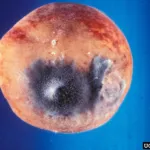
Prevent tuber and root problems by using clean containers, free-draining soil, and careful watering. Excess moisture and cool soil can promote soft rot or fungal decay. Remove affected tissue or discard badly rotted tubers, sanitize tools, and avoid reusing contaminated potting mix.
Pests
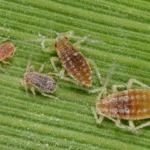
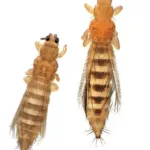
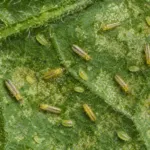
Watch for aphids, thrips, spider mites, mealybugs, and chewing pests, particularly on stressed container plants. Inspect leaf undersides and new growth regularly. Improve airflow, isolate infested plants, remove heavily damaged leaves, and use insecticidal soap or another labeled treatment according to directions. Avoid chronic overwatering, which weakens tubers.
Related diseases and pests
Only Plant Doctor profiles whose host data indicate this plant may be affected are shown here.
 Environmental stressLeaf sunburn
 DiseaseRhizopus soft rotRhizopus stolonifer
 DiseaseBacterial soft rotPectobacterium carotovorum
 PestMealy Plum AphidHyalopterus pruni (Geoffroy, 1762)
 PestOnion thripsThrips tabaci Lindeman
 PestMelon thripsThrips palmi Karny
 PestChilli thripsScirtothrips dorsalis Hood
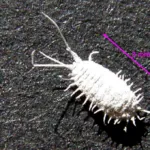 PestObscure mealybugPseudococcus viburni
Toxicity and pollen
Caladiums contain insoluble calcium oxalate crystals. Chewing or ingesting leaves, stems, tubers, or other tissues can cause immediate mouth irritation, pain, swelling, drooling, vomiting, and difficulty swallowing. Keep the plant away from children and pets, wear gloves when handling damaged tissue, and seek medical or veterinary advice after ingestion.
- Pollination / pollen
- Not well documented; pollen is produced in the male portion of the spadix
Caladium pollen and allergy behavior are not well documented for this named cultivar. The plant is not generally grown for airborne pollen, but absence of allergy reports does not establish zero risk. People with significant plant allergies should avoid contact with flowering structures and wear gloves when handling the plant.
Native habitat
The cultivated caladium group derives from tropical South American plants associated with warm, humid climates and moist, organic soils. In cultivation, the tubers require warmth for dependable sprouting and are vulnerable to cold, saturation, and frost. ‘Marie Moir’ is a horticultural cultivar rather than a wild habitat type.
Interesting fact
‘Marie Moir’ is a fancy-leaved cultivar with a novelty color pattern rather than a strap-leaved form. University of Florida trials described its leaves as attractive but relatively few, and reported inconsistent tuber production between growing seasons. Its brown petioles help distinguish it from the similar-looking ‘Strawberry Star’, which has green petioles.
Frequently asked questions (FAQ)
The most relevant questions about this plant, with short and direct answers.
🌱Quick care
What is Caladium 'Marie Moir'?⌄
Caladium 'Marie Moir' is a fancy-leaved caladium grown primarily for its colorful foliage rather than flowers. It typically produces heart-shaped leaves with a light background and red spotting or blotches.
How much light does Caladium 'Marie Moir' need?⌄
Caladium 'Marie Moir' grows best in partial shade to shade with bright, filtered light. Gentle morning sun may be tolerated, but strong afternoon sun can scorch its thin leaves.
How often should I water Caladium 'Marie Moir'?⌄
Water Caladium 'Marie Moir' whenever the soil surface begins to feel slightly dry, keeping the root zone evenly moist but not saturated. Do not allow the potting mix to remain waterlogged, especially while the tuber is emerging.
Is Caladium 'Marie Moir' an indoor or outdoor plant?⌄
Caladium 'Marie Moir' can be grown indoors or outdoors during warm weather. Outdoors it needs shade and frost protection, while indoors it needs bright filtered light, warmth, humidity, and evenly moist soil.
🌤️Environment and placement
What temperature is best for Caladium 'Marie Moir'?⌄
Caladium 'Marie Moir' prefers warm conditions, generally above 60°F, and is damaged by frost and cold soil. Growth slows in cool weather, and the plant naturally enters dormancy as temperatures and day length decrease.
Can Caladium 'Marie Moir' grow in full shade?⌄
Caladium 'Marie Moir' can grow in full shade if the location still receives bright ambient or filtered light. Very dark conditions may produce slower growth and less vigorous foliage.
Can Caladium 'Marie Moir' tolerate direct sun?⌄
Caladium 'Marie Moir' may tolerate a small amount of gentle morning sun, but it is best protected from intense midday and afternoon sunlight. Direct sun combined with dry soil commonly causes leaf scorch and fading.
Does Caladium 'Marie Moir' need high humidity?⌄
Caladium 'Marie Moir' appreciates moderate to high humidity, particularly indoors or in dry climates. Improve humidity with a humidifier or a grouping of plants, while maintaining good airflow and avoiding constantly wet foliage.
What USDA hardiness zones can grow Caladium 'Marie Moir' outdoors?⌄
Caladium 'Marie Moir' is a frost-tender plant that can remain outdoors year-round only in warm, frost-free parts of the United States. In colder USDA zones, grow it as a seasonal plant or lift and store the tubers before frost.
💧Care and problems
Why are the leaves of my Caladium 'Marie Moir' turning yellow?⌄
Yellow leaves can indicate natural seasonal dormancy, overwatering, cold temperatures, or insufficient light. If yellowing occurs during active growth, check drainage and moisture before assuming the plant is entering dormancy.
Why is Caladium 'Marie Moir' drooping?⌄
Caladium 'Marie Moir' may droop because the soil is too dry, the plant is overheated, or the tuber is beginning seasonal dormancy. Water when the mix is slightly dry, provide shade, and reduce watering if the foliage is naturally yellowing in fall.
Why are Caladium 'Marie Moir' leaves curling or developing brown edges?⌄
Curling or brown edges usually result from dry soil, low humidity, excessive sun, heat stress, or fertilizer contacting the leaves. Move the plant to filtered light and keep the soil evenly moist without making it soggy.
Why is my Caladium 'Marie Moir' not producing many leaves?⌄
Few leaves may result from a small or weak tuber, cool soil, insufficient warmth, drought stress, or the cultivar's naturally variable performance. Warm the root zone, maintain even moisture, and provide bright filtered shade.
Does Caladium 'Marie Moir' need fertilizer?⌄
Caladium 'Marie Moir' benefits from light feeding during active growth, using a balanced or slightly low-nitrogen fertilizer. Avoid heavy fertilization because excess nitrogen can promote greener foliage and may damage roots.
What pests commonly affect Caladium 'Marie Moir'?⌄
Caladium 'Marie Moir' may attract aphids, spider mites, mealybugs, whiteflies, or caterpillars, especially when stressed. Inspect the undersides of leaves and improve watering, humidity, airflow, and shade before treating an infestation.
How do I prevent root or tuber rot on Caladium 'Marie Moir'?⌄
Prevent rot by using loose, well-drained soil, a container with drainage holes, and careful watering. Keep the mix evenly moist during growth, but avoid saturated soil and excessive moisture while the tuber is dormant or newly planted.
🪴Planting and repotting
When should I plant Caladium 'Marie Moir' tubers?⌄
Plant Caladium 'Marie Moir' tubers outdoors after the last expected frost, when the soil is consistently at least 60°F. In colder areas, start them indoors about four to six weeks before the average last frost date.
How deep should I plant Caladium 'Marie Moir' tubers?⌄
Plant Caladium 'Marie Moir' tubers about 1 to 2 inches deep, with the knobby or budded side facing upward. Deeper planting may slow emergence, while shallow planting can expose the tuber and roots.
How far apart should Caladium 'Marie Moir' tubers be planted?⌄
Space Caladium 'Marie Moir' tubers about 8 to 12 inches apart for a fuller display while allowing air circulation. Use closer spacing in containers only if the container is large enough to avoid overcrowding and drying.
What soil is best for Caladium 'Marie Moir'?⌄
Caladium 'Marie Moir' prefers rich, loose, moisture-retentive soil that drains freely and is slightly acidic. Incorporate organic matter into poor soil, but do not use a dense mix that stays saturated after watering.
Can Caladium 'Marie Moir' grow in a container?⌄
Caladium 'Marie Moir' grows well in containers with drainage holes and a rich, well-drained potting mix. Choose a container large enough for the tuber and roots, and monitor moisture closely because containers dry faster than garden beds.
How do I overwinter Caladium 'Marie Moir' in cold climates?⌄
In areas subject to frost, dig the tubers after the foliage yellows or before damaging cold arrives, then cure them in a warm, dry place for one to two weeks. Store them in dry peat, vermiculite, or similar material at roughly 60–65°F, and replant after spring soil has warmed.
Can I leave Caladium 'Marie Moir' tubers in the ground over winter?⌄
Leave Caladium 'Marie Moir' tubers in the ground only where winters are reliably warm and frost-free, because cold and wet soil can cause damage or rot. In most colder parts of the United States, lifting and storing the tubers is safer.
✂️Propagation and pruning
How do you propagate Caladium 'Marie Moir'?⌄
Caladium 'Marie Moir' is propagated from its tubers, usually by allowing offsets to develop or carefully dividing a large healthy tuber. Each division must retain at least one viable bud or eye and should be planted in warm soil.
Can Caladium 'Marie Moir' be propagated from leaf cuttings?⌄
Caladium 'Marie Moir' is not reliably propagated from ordinary leaf cuttings because new plants develop from tuber tissue and buds. Use healthy tuber divisions or offsets instead.
Should I remove flowers from Caladium 'Marie Moir'?⌄
Remove flower stalks if they appear and your goal is stronger foliage, because caladium flowers are small and use some of the plant's energy. The plant is grown mainly for its leaves and may flower only occasionally.
⚠️Toxicity and safety
Is Caladium 'Marie Moir' toxic to cats and dogs?⌄
Yes, Caladium 'Marie Moir' is toxic to cats and dogs because it contains insoluble calcium oxalates. Chewing can cause intense mouth irritation, drooling, swelling, vomiting, or difficulty swallowing, so contact a veterinarian if ingestion occurs.
Is Caladium 'Marie Moir' poisonous to children?⌄
Yes, Caladium 'Marie Moir' should be considered poisonous if eaten because its tissues contain insoluble calcium oxalates. Keep the plant and tubers away from children, and seek medical or poison-control advice after suspected ingestion.
Can Caladium 'Marie Moir' irritate skin?⌄
Caladium 'Marie Moir' sap may irritate sensitive skin, although the most serious effects usually follow chewing or ingestion. Wear gloves when handling tubers or damaged leaves, and wash exposed skin with soap and water.
🌸Flowering and special interest
Does Caladium 'Marie Moir' flower?⌄
Caladium 'Marie Moir' can produce a small arum-type flower, but flowering is uncommon and not its main ornamental feature. The inconspicuous spadix and spathe are usually less noticeable than the foliage.
What does a Caladium 'Marie Moir' flower look like?⌄
A Caladium 'Marie Moir' flower is a small, pale arum-like inflorescence consisting of a spadix surrounded by a spathe. It is generally greenish or yellowish and much less showy than the leaves.