
 Source:
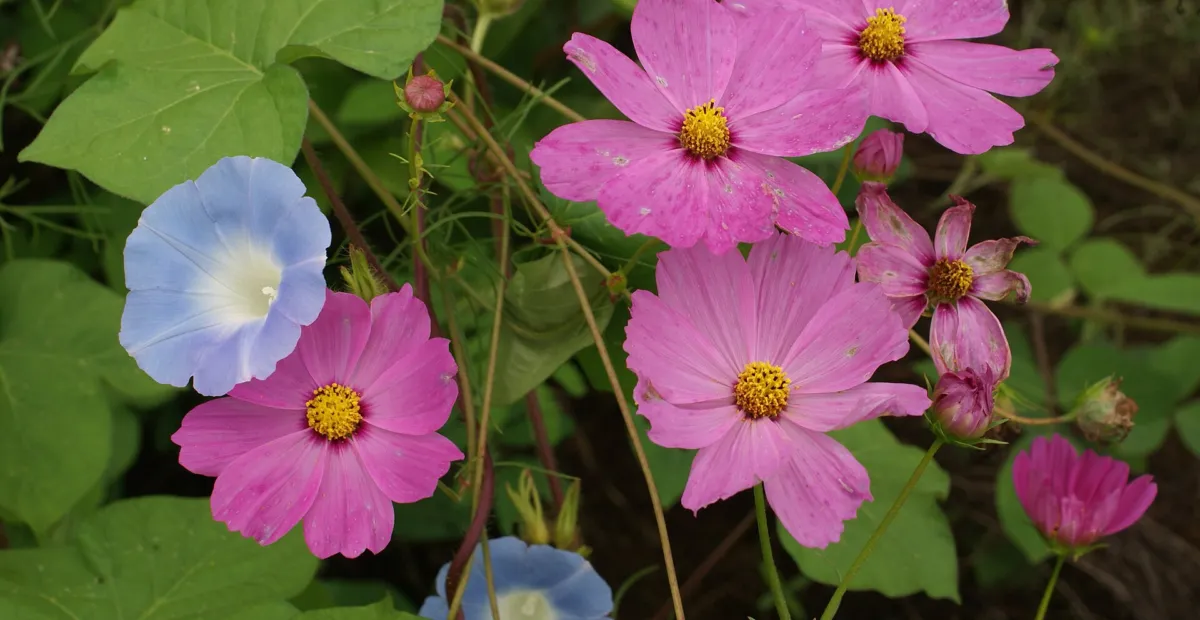
 Garden cosmos (Cosmos bipinnatus) short overview
Garden cosmos is a graceful annual prized for its airy, fernlike foliage and open daisy flowers in white, pink, red, lavender, and violet. Native to Mexico, it grows quickly in full sun and tolerates lean, well-drained soil better than rich, heavily fertilized beds. Its long summer-to-fall display supports bees, bumblebees, butterflies, and other flower visitors, while the slender stems make excellent cut flowers.
Taxonomic classification
Garden cosmos (Cosmos bipinnatus) care guide
Light and placement
Choose an unobstructed site with at least 6 hours of direct sun, preferably with good morning-to-afternoon exposure. South- or west-facing beds usually work well if moisture is adequate. Too little light produces thin, floppy stems and fewer flowers; excessive heat mainly increases watering needs rather than causing a specific light injury.
Watering and humidity
Water deeply when the upper inch of soil dries during establishment, then allow the surface to dry modestly between waterings. Mature plants are fairly drought tolerant but flower better with steady moisture during hot, dry spells. Water at the soil line when possible and reduce watering after flowering or frost.
Soil and growing medium
Use loose, well-drained soil with moderate fertility. Cosmos tolerates sandy or ordinary loamy ground and a broad pH range, from slightly acidic to slightly alkaline. Avoid soggy sites and very rich soil, which can produce lush foliage, weak stems, and fewer flowers.
Feeding
Do not routinely fertilize garden-grown cosmos. They flower well in lean to moderately fertile soil, and excess nitrogen can encourage floppy foliage at the expense of blooms. If container plants are clearly nutrient-deficient, use a weak balanced fertilizer sparingly during active growth, never on dry or heat-stressed soil.
Growth and habit
This fast-growing annual forms an open, branching plant with slender stems and a tendency to become loose or floppy in rich soil, shade, or windy sites. Early pinching encourages branching and a denser framework. Allowing some mature heads to shed seed can establish a recurring display in suitable gardens.
Planting and repotting
Sow outdoors after the danger of frost has passed, or start seeds indoors about 4–5 weeks before the last frost. Press seeds into loosened soil and cover only lightly, about 1/8 inch deep. Space plants 12–24 inches apart; closer spacing can help create mutual support.
Transplant seedlings while young, disturbing the roots as little as possible. Container-grown plants can be moved into a larger pot only when roots fill the current container; avoid repeated repotting once flowering has begun.
Propagation and pruning
Propagation
Propagate from seed. Direct sow after frost when soil is warm, or start indoors 4–5 weeks before the last frost and transplant young seedlings. The species readily self-sows where flowerheads are allowed to mature.
Pruning
Pinch young plants once to encourage branching if a bushier form is desired. Deadhead regularly to extend flowering, or cut stems for bouquets. Leave a few spent heads in place if self-sowing is wanted; remove remaining plants after frost or when the display declines.
Overwintering
Cosmos is killed by frost and is normally discarded at season’s end. In mild climates, leave some seedheads to mature and drop seed for the next season. Container plants are generally replanted rather than overwintered indoors because the species is an annual requiring strong light and space.
Uses
Use garden cosmos for sunny borders, cottage gardens, cutting gardens, containers, and pollinator plantings. Fresh stems are useful for bouquets, and dried flowerheads can provide seed for small birds. It is ornamental rather than a supported medicinal or edible crop.
Appearance
The plant is recognized by its delicate, almost lace-like leaves divided into very narrow threadlike segments. Thin green stems branch freely and hold solitary or loosely arranged daisy-like heads. The open texture and toothed ray florets distinguish it from the coarser foliage of Cosmos sulphureus.
Flowering
Flower heads are composed of a ring of ray florets around a central disk, with ray tips commonly toothed. Plants generally begin flowering about 2–3 months after sowing and can continue from summer into fall, especially when spent flowers are removed or stems are cut regularly.
Pollination and visitors
Open flower heads provide accessible pollen and nectar to honey bees, long-horned bees, bumblebees, butterflies, hoverflies, wasps, and other visiting insects. Oregon State Extension specifically records honey bees, bumblebees, and other bees visiting the flowers.
Cosmos bipinnatus photos
Click any photo for a larger view. Source, author and license are shown separately.
Diseases and pests
Diseases
Provide full sun, good air circulation, and well-drained soil to reduce powdery mildew, leaf spots, canker, and bacterial wilt. Remove badly affected foliage, avoid overhead watering, and discard severely diseased plants rather than composting them. Problems are usually occasional rather than chronic.
Pests
Aphids are the most commonly noted pest. Inspect shoot tips and flower stems, rinse small colonies with water, and conserve lady beetles, lacewings, hoverfly larvae, and other beneficial insects. Avoid routine broad-spectrum insecticides, especially while plants are flowering.
Related diseases and pests
Only Plant Doctor profiles whose host data indicate this plant may be affected are shown here.
 DiseaseAster yellows‘Candidatus Phytoplasma asteris’
 DiseaseSouthern blightAthelia rolfsii
 DiseaseBacterial WiltRalstonia solanacearum species complex
 DiseaseMaple powdery mildewSawadaea bicornis
 PestJapanese beetlePopillia japonica
 PestCereal leaf beetleOulema melanopus
 PestAsparagus BeetleCrioceris asparagi
 DiseaseBacterial blight and cankerPseudomonas syringae pv. syringae
Toxicity and pollen
Cosmos bipinnatus is not listed as a major poisonous garden plant in the sources reviewed, but a species-specific, authoritative pet-toxicity profile was not located. Normal gardening precautions are appropriate: prevent large amounts of plant material from being eaten and seek veterinary or medical advice if symptoms follow ingestion.
- Typical season
- Usually summer through fall in the United States
- Pollination / pollen
- Insect-exposed, spiny Asteraceae pollen
Cosmos pollen is produced in exposed central disk florets and is not completely irrelevant to allergy-sensitive people. Older laboratory and regulatory literature documents allergenic pollen-wall proteins and reported cross-reactivity with some Asteraceae pollens, while practical outdoor exposure is generally considered low to mild compared with major wind-pollinated allergens. Avoid rubbing eyes after handling and wash hands if sensitive.
Native habitat
Cosmos bipinnatus is native chiefly to Mexico and occurs in open disturbed places, roadsides, meadows, and other sunny habitats. It favors warm conditions and soils that drain freely. In the United States it is widely cultivated and may escape or naturalize locally, but it is not native across most of the country.
Interesting fact
The species has unusually fine, threadlike foliage that can look almost fernlike. It often self-sows from fallen seed, allowing a garden population to return without replanting. Flower colors range from white through pink and lavender to deep magenta, while cultivars may have single, semi-double, or double heads.
Frequently asked questions (FAQ)
The most relevant questions about this plant, with short and direct answers.
🌱Quick care
What is garden cosmos (Cosmos bipinnatus)?⌄
Garden cosmos is a frost-tender annual flowering plant in the daisy family, Asteraceae. It is grown for airy foliage and pink, white, red, or lavender daisy-like flowers.
How much sun does garden cosmos need?⌄
Garden cosmos grows best in full sun, with at least 6 hours of direct sunlight daily. It can tolerate some partial shade, but reduced light often produces weaker stems and fewer flowers.
How often should I water garden cosmos?⌄
Water garden cosmos moderately, allowing the soil to dry slightly between waterings. Established plants tolerate short periods of dry weather, while seedlings need more consistently moist soil.
Is garden cosmos an annual or perennial?⌄
Garden cosmos is a frost-tender annual in the United States. It usually dies after a freeze, but it may return the following year from self-sown seed.
🌤️Environment and placement
What kind of soil is best for garden cosmos?⌄
Plant garden cosmos in well-drained sandy or loamy soil, preferably with modest fertility. Rich, heavily amended soil can produce excessive foliage and fewer flowers.
Can garden cosmos grow in poor soil?⌄
Yes, garden cosmos generally performs well in lean, moderately dry soil as long as drainage is good. Avoid waterlogged locations and excessive fertilizer.
Can garden cosmos grow in containers?⌄
Yes, garden cosmos can grow in containers with drainage holes and a well-draining potting mix. Choose a container large enough for the variety and provide full sun; tall types may need support.
How tall does garden cosmos get?⌄
Garden cosmos commonly grows about 2 to 4 feet tall, although compact cultivars may stay closer to 1 to 2 feet. Tall plants are more likely to lean in wind or heavy rain.
💧Care and problems
How do I care for garden cosmos?⌄
Give garden cosmos full sun, moderate water, good drainage, and little or no fertilizer. Deadhead spent flowers and support tall plants when necessary.
Why is my garden cosmos growing tall and floppy?⌄
Garden cosmos often becomes floppy because of insufficient sunlight, rich soil, excess water, wind, or the natural height of the cultivar. Move container plants into brighter light, avoid overfertilizing, and use stakes or grow plants closely enough to support one another.
Should I fertilize garden cosmos?⌄
Usually, garden cosmos does not need regular fertilizing. Too much nitrogen or overly fertile soil can encourage leafy growth at the expense of flowers.
Should I deadhead garden cosmos?⌄
Yes, deadheading encourages garden cosmos to produce more flowers and can reduce unwanted reseeding. Remove spent flower heads before they mature and release seeds.
How do I prevent powdery mildew on garden cosmos?⌄
Improve air circulation, avoid crowding, water the soil rather than the foliage, and remove badly affected leaves. Powdery mildew is more likely late in the season or when foliage stays humid.
Why are my garden cosmos not blooming?⌄
The most common causes are insufficient sunlight, excessive fertilizer, overwatering, or planting too early in cold conditions. Move container plants to full sun and avoid high-nitrogen feeding.
🪴Planting and repotting
When should I plant garden cosmos seeds in the United States?⌄
Sow garden cosmos outdoors after the danger of frost has passed and the soil has warmed to about 65°F. In colder regions this is usually late spring, while warmer areas may sow earlier.
Can I direct-sow garden cosmos seeds?⌄
Yes, direct sowing is one of the easiest ways to grow garden cosmos. Scatter or press the seeds onto loose soil and cover them only lightly, because planting them deeply can hinder germination.
How deep should I plant garden cosmos seeds?⌄
Plant garden cosmos seeds very shallowly, about 1/8 inch deep or simply press them onto the soil surface. Keep the seedbed moist until germination.
How far apart should I plant garden cosmos?⌄
Space garden cosmos about 12 to 18 inches apart, adjusting for the mature size of the cultivar. Compact varieties can be planted closer, while tall types benefit from more airflow and support.
Can I transplant garden cosmos seedlings?⌄
Yes, but garden cosmos generally prefers direct sowing because seedlings develop quickly and can dislike root disturbance. If transplanting, move young plants carefully after frost danger has passed.
✂️Propagation and pruning
How long do garden cosmos seeds take to germinate?⌄
Garden cosmos seeds commonly germinate in about 7 to 21 days when kept lightly moist and warm. Germination is usually best in soil around 65°F or warmer.
How do I save seeds from garden cosmos?⌄
Let the flower heads turn brown and dry on the plant, then collect them before the seeds scatter. Dry the heads indoors, remove the seeds, and store them in a labeled paper packet in a cool, dry place.
Will garden cosmos reseed itself?⌄
Yes, garden cosmos readily self-seeds when mature flower heads are left in place. Remove spent blooms if you want to limit volunteers or keep plants within a defined area.
Can I grow garden cosmos from cuttings?⌄
Garden cosmos is normally propagated from seed rather than cuttings. Direct-sown or transplanted seed is simpler and more reliable for home gardeners.
Should I pinch garden cosmos seedlings?⌄
Pinching the growing tips of young garden cosmos can encourage branching and create bushier plants. It may also delay flowering slightly, so it is most useful for tall plants that need fuller growth.
⚠️Toxicity and safety
Is garden cosmos toxic to dogs or cats?⌄
No confirmed major toxicity was located for garden cosmos, but definitive safety information is limited. Prevent pets from eating large amounts and contact a veterinarian or poison-control service if symptoms occur.
🌸Flowering and special interest
When does garden cosmos bloom?⌄
Garden cosmos usually begins blooming about 2 to 3 months after sowing and can flower through summer into fall. Blooming continues longer when spent flowers are removed regularly.
How can I make garden cosmos bloom more?⌄
Provide full sun, avoid rich fertilizer and excessive water, and deadhead faded flowers regularly. Cutting plants back to about 12 to 18 inches can also encourage renewed flowering.
Is garden cosmos good for pollinators?⌄
Yes, garden cosmos attracts butterflies, bees, and other beneficial insects. Its open flowers make pollen and nectar accessible, while mature seeds can attract small birds.
Is garden cosmos good as a cut flower?⌄
Yes, garden cosmos makes an excellent cut flower for informal arrangements. Cut stems when the flowers are freshly open, remove foliage below the waterline, and place them in water promptly.
Similar plants
 Azure Monkshood (Aconitum carmichaelii) care guideAconitum carmichaelii
 Monkshood (Aconitum ‘Stainless Steel’)Aconitum 'Stainless Steel'
 Monkshood (Aconitum ‘Bressingham Spire’)Aconitum 'Bressingham Spire'
 Golden full moon maple (Acer shirasawanum ‘Aureum’)Acer shirasawanum 'Aureum'
 Globosum (Acer platanoides ‘Globosum’)Acer platanoides 'Globosum'
 Striped maple (Acer pensylvanicum) care guideAcer pensylvanicum