
 Source:
 Compressa (Juniperus communis ‘Compressa’) short overview
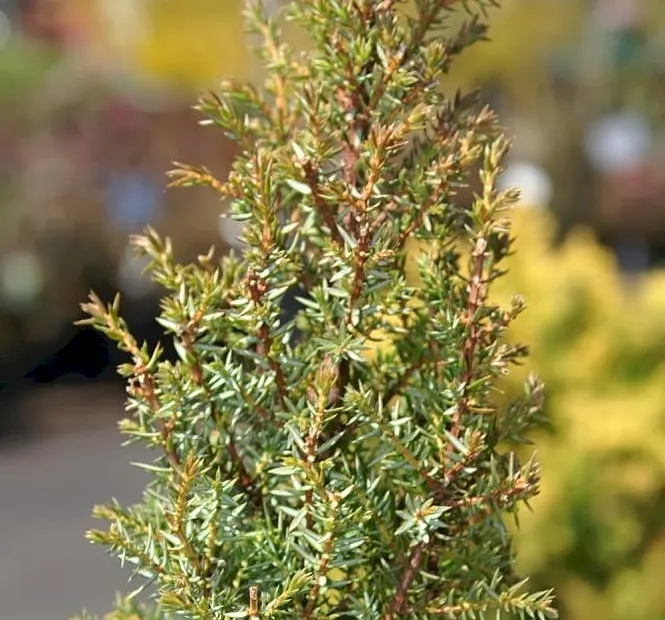
Juniperus communis 'Compressa' is a very slow-growing, narrow, evergreen conifer prized for its dense, upright form and silvery blue-green, prickly foliage. The true selection is notably compact, making it useful as a vertical accent in rock gardens, gravel beds, foundation plantings, and containers. Give it full sun or light partial shade, sharply drained soil, and restrained watering after establishment. Male and female cones occur on separate plants, while female plants may develop blue-black, berry-like seed cones.
Taxonomic classification
Compressa (Juniperus communis ‘Compressa’) care guide
Light and placement
Give the plant full sun for the tightest habit and best foliage density; an east-, south-, or west-facing position is suitable. Light partial shade is tolerated, especially in hot regions, but deep shade can produce weaker, more open growth. Pale, elongated shoots suggest insufficient light, while scorched foliage may indicate reflected heat, drought, or abrupt exposure.
Watering and humidity
Water deeply but infrequently, allowing the upper soil to dry between waterings after establishment. During the first growing season, irrigate when the root zone begins to dry rather than relying on shallow frequent watering. Reduce watering in cool weather and winter, but do not let container plants become bone-dry for extended periods.
Soil and growing medium
Use a sharply drained mineral soil based on sand, loam, gravel, or rocky material. The cultivar tolerates acidic, neutral, and alkaline conditions, including calcareous soils, but persistent winter wetness can damage roots. Avoid compacted sites and heavy organic mixes that stay saturated.
Feeding
Usually needs little fertilizer once established. Apply a light, balanced slow-release fertilizer in early spring only if growth is weak or foliage is pale, following the product label. Compost may be used sparingly around—not against—the root flare. Do not fertilize during drought, immediately before hard frost, or in saturated soil.
Growth and habit
This cultivar forms a dense, tightly branched, narrow upright column and grows very slowly. Commercial plants can become looser or larger than the original selection, especially when propagated from vigorous shoots. Its slow growth and naturally compact branching make it low maintenance; routine shaping is generally unnecessary.
Planting and repotting
Plant in spring or early fall while soil moisture supports establishment. Set the root flare level with the surrounding soil and do not bury the trunk. Allow about 12–24 inches between plants for typical narrow selections; use wider spacing if a looser nursery-grown form is expected.
Repot container plants only when roots have filled the existing pot, preferably in early spring. Use a fast-draining mineral-leaning mix and disturb the root ball as little as possible. Choose a stable, heavy container because the narrow canopy can catch wind.
Propagation and pruning
Propagation
Semi-hardwood cuttings are the practical method for retaining the cultivar. Take healthy material during the appropriate late-season cutting window, use a free-draining rooting medium, and expect slow establishment. Seed is mainly useful for species-level plants because seedlings do not reliably reproduce the cultivar.
Pruning
Little or no pruning is normally needed. If correction is necessary, remove dead, damaged, or clearly misplaced shoots in late winter or early spring. Avoid cutting deeply into old bare wood because junipers often regenerate poorly from branch sections without live foliage.
Overwintering
The cultivar is highly frost hardy in the ground. Protect container roots from repeated freeze-thaw cycles by grouping pots, insulating the container, or moving it to a sheltered unheated location. Water containers lightly during winter thaws when the mix is dry, but never keep them saturated.
Uses
Useful as a narrow evergreen accent, specimen, foundation plant, rock-garden subject, gravel-garden plant, or container conifer. Female plants may produce ornamental blue-black seed cones, and common juniper cones are used as a culinary flavoring, but cultivar identity, plant sex, and safe preparation should be confirmed before any edible use.
Appearance
The plant is recognized by its dense, sharply narrow column, upright branches, and closely packed awl-like foliage. Needles are green to silvery blue-green, often with a pale stomatal band, and juvenile foliage is stiff and prickly. Older stems may show reddish-brown exfoliating bark.
Pollination and visitors
Pollination is by wind rather than animal visitors. Male plants release pollen cones, and separate female plants receive pollen on their ovulate cones. Birds and small mammals may later eat the mature berry-like seed cones and help disperse seeds.
Juniperus communis 'Compressa' photos
Click any photo for a larger view. Source, author and license are shown separately.
Diseases and pests
Diseases
Prevent disease by planting in well-drained soil, avoiding overhead irrigation, and improving airflow. Watch for Phytophthora root disease, cankers, honey fungus, juniper blight, and occasional rust or wilt symptoms. Remove badly affected material and avoid replanting into persistently waterlogged soil.
Pests
Inspect for juniper scale, aphids, mites, borers, bagworms, caterpillars, and occasional midges. Maintain plant vigor, avoid drought followed by flooding, and use targeted controls only when damage is significant. Remove heavily infested shoots and monitor container plants closely.
Related diseases and pests
Only Plant Doctor profiles whose host data indicate this plant may be affected are shown here.
 Environmental stressWaterlogging
 DiseaseHeterobasidion root diseaseHeterobasidion annosum
 DiseasePear trellis rustGymnosporangium sabinae
 DiseaseCedar-Apple RustGymnosporangium juniperi-virginianae Schwein.
 PestBrown Garden SnailCornu aspersum (Müller, 1774)
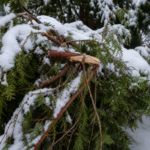 Environmental stressSnow Load Damage
 Environmental stressWind scorch
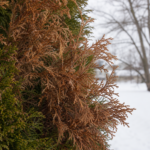 Environmental stressWinter desiccation (winter burn)
Toxicity and pollen
Junipers are not treated as universally harmless. The foliage can cause skin irritation or sensitization in some people, and concentrated use or ingestion of large amounts of juniper material can be problematic. Handle prickly foliage with gloves, avoid ingesting ornamental plant material, and keep children and pets from consuming cones or foliage.
- Typical season
- Late winter through spring in much of the United States; timing varies by region and weather.
- Pollination / pollen
- Light, wind-dispersed conifer pollen
Junipers are wind-pollinated conifers, so male plants can release airborne pollen during the regional spring pollen season. The cultivar's sex is not always stated in nursery listings, and only male plants produce pollen cones. People with seasonal tree-pollen sensitivity may wish to avoid planting male specimens close to frequently used outdoor living areas.
Native habitat
The species is native across much of the cool-temperate Northern Hemisphere, occupying open woodland, heath, rocky slopes, dunes, uplands, and other exposed sites. It commonly tolerates lean, sandy, rocky, or calcareous soils and seasonal dryness, provided roots are not kept waterlogged.
Interesting fact
The cultivar has been known in European nursery trade since before the mid-1800s, although its formal description dates to 1949. The true selection is much narrower and slower than many plants sold under the name. Its blue-black structures are seed cones, not true berries or fruits.
Frequently asked questions (FAQ)
The most relevant questions about this plant, with short and direct answers.
🌱Quick care
What is Juniperus communis 'Compressa' like?⌄
Juniperus communis 'Compressa' is a slow-growing, evergreen juniper with a dense, narrow, upright form and blue-green to silvery foliage. It is valued as a vertical accent for rock gardens, containers, foundation beds, and other small spaces.
How big does Juniperus communis 'Compressa' get?⌄
It commonly reaches about 2–6 feet tall and 1–2 feet wide, although mature size varies by plant strain and growing conditions. True compact forms may remain closer to 2–3 feet tall.
How fast does Juniperus communis 'Compressa' grow?⌄
Juniperus communis 'Compressa' grows slowly, often only a few inches per year. Growth is usually faster in consistently sunny, well-drained conditions than in shade or waterlogged soil.
Is Juniperus communis 'Compressa' evergreen?⌄
Yes, it is an evergreen conifer that retains its foliage year-round. The foliage may develop coppery or bronze tones during colder seasons.
🌤️Environment and placement
How much sun does Juniperus communis 'Compressa' need?⌄
Give it full sun for the best form, density, and foliage color, with at least 6 hours of direct sunlight daily. It can tolerate light partial shade, but heavier shade may produce looser growth.
What USDA hardiness zones are suitable for Juniperus communis 'Compressa'?⌄
This cultivar is considered very cold hardy and is commonly listed for USDA Zones 2 through 6, with some nursery sources extending its use into warmer Zones 7 and 8. Local heat, humidity, and drainage can affect performance in warmer areas.
What type of soil does Juniperus communis 'Compressa' prefer?⌄
Plant it in well-drained sandy, loamy, rocky, or calcareous soil. It tolerates relatively poor soil, but heavy, persistently wet soil can cause root problems.
Can Juniperus communis 'Compressa' tolerate drought?⌄
Yes, it becomes drought tolerant once established. Water it regularly during the first growing season and during prolonged hot, dry weather, especially when grown in a container.
Is Juniperus communis 'Compressa' suitable for a small garden?⌄
Yes, its narrow, slow-growing habit makes it well suited to small gardens, rock gardens, narrow beds, and entry plantings. Confirm the mature width before planting because individual specimens can vary.
Can Juniperus communis 'Compressa' grow in a container?⌄
Yes, it performs well in a container with drainage holes and a sharply draining potting mix. Choose a heavy pot for stability and protect the roots from extreme winter cold when the container is exposed.
💧Care and problems
How often should I water Juniperus communis 'Compressa'?⌄
Water deeply when the soil has begun to dry, then allow excess water to drain away. After establishment, routine irrigation is usually unnecessary except during extended drought or unusually hot weather.
Does Juniperus communis 'Compressa' need fertilizer?⌄
Usually not, provided it is planted in reasonably fertile soil. If growth is weak and a soil test indicates a deficiency, apply a light, slow-release fertilizer in early spring according to the label.
Why is my Juniperus communis 'Compressa' turning brown?⌄
Brown foliage may result from drought, waterlogged roots, winter injury, salt exposure, pests, or disease. Check soil moisture and drainage first, and inspect the plant for webbing, scale, cankers, or localized dieback.
Is Juniperus communis 'Compressa' deer resistant?⌄
It is generally considered relatively resistant to deer browsing, although no plant is completely deer-proof. Hungry deer may still feed on it, particularly when other food is scarce.
Does Juniperus communis 'Compressa' have pest or disease problems?⌄
It is generally low maintenance, but junipers can occasionally develop spider mites, scale, bagworms, tip blight, rust diseases, or root problems. Good air circulation, full sun, and well-drained soil reduce many risks.
🪴Planting and repotting
When is the best time to plant Juniperus communis 'Compressa'?⌄
Plant it in spring or fall when temperatures are moderate and the soil is workable. Fall planting is especially useful in many U.S. regions because cooler weather reduces transplant stress while roots continue developing.
How should I plant Juniperus communis 'Compressa'?⌄
Set the root ball level with or slightly above the surrounding soil, backfill with the excavated soil, and water thoroughly. Do not bury the trunk or crowd the crown with mulch, and provide enough space for the plant’s mature width.
Can Juniperus communis 'Compressa' be grown in rocky or alkaline soil?⌄
Yes, it is well adapted to rocky, sandy, and calcareous soils as long as drainage is good. Improve compacted clay with site preparation rather than creating a small pocket of overly rich, poorly draining soil.
✂️Propagation and pruning
How is Juniperus communis 'Compressa' propagated?⌄
Named plants are normally propagated vegetatively, commonly from cuttings, so their narrow habit is preserved. Seed-grown plants will not reliably reproduce the exact characteristics of this cultivar.
Can Juniperus communis 'Compressa' be pruned?⌄
It usually needs little pruning because it naturally forms a narrow column. If shaping is necessary, prune lightly in early spring and avoid cutting deeply into old, bare wood because junipers may not resprout there.
Can I shear Juniperus communis 'Compressa' into a formal shape?⌄
Light trimming is possible, but frequent shearing is usually unnecessary and can expose brown interior foliage. Preserve its natural upright form and remove only misplaced, damaged, or lightly overlong shoots.
⚠️Toxicity and safety
Is Juniperus communis 'Compressa' toxic to people or pets?⌄
Juniperus communis 'Compressa' should be treated as potentially irritating if eaten, so do not ingest its foliage or berry-like cones. Keep plant material away from children and pets, and seek professional medical or veterinary advice after ingestion.
Are the blue berries on Juniperus communis 'Compressa' edible?⌄
The blue structures are berry-like seed cones, not true berries, and their edibility is not a reason to consume them from an ornamental cultivar. Because juniper parts can be irritating or unsafe in quantity, avoid eating them.
Can Juniperus communis 'Compressa' cause skin irritation?⌄
Yes, its prickly juvenile foliage may irritate skin, and handling can cause scratches or dermatitis in sensitive people. Wear gloves when planting or pruning and avoid rubbing your eyes after contact.
🌸Flowering and special interest
Does Juniperus communis 'Compressa' produce flowers?⌄
No, it does not produce showy flowers because it is a gymnospermous conifer. Male plants produce pollen cones, while female plants may develop berry-like seed cones.
Does Juniperus communis 'Compressa' produce blue berries?⌄
Female plants can produce small green seed cones that mature to waxy blue-black over roughly two to three years. Berry production is not guaranteed because junipers have separate male and female plants.
Do I need a male Juniperus communis 'Compressa' plant to get berries?⌄
Usually, yes: a nearby compatible male juniper is generally needed for pollination because male and female cones occur on separate plants. Even with pollination, fruiting can vary with plant sex, age, weather, and local conditions.
Is Juniperus communis 'Compressa' useful for wildlife?⌄
Female plants with mature seed cones can provide food for some birds and small mammals. Its dense evergreen structure also offers year-round cover, although the cultivar’s narrow size limits how much habitat it provides.
Similar plants
 Siberian Iris (Iris sibirica) care guideIris sibirica
 Jasminum polyanthum care guideJasminum polyanthum
 Algerian Iris (Iris unguicularis) care guideIris unguicularis
 Variegata (Iris laevigata ‘Variegata’)Iris laevigata 'Variegata'
 Argentea Variegata (Iris pallida ‘Argentea Variegata’)Iris pallida 'Argentea Variegata'
 Fiona Sunrise (Jasminum officinale ‘Fiona Sunrise’)Jasminum officinale 'Fiona Sunrise'